
In the intricate world of finance—whether personal or professional—understanding how values change over time is paramount. Few calculations are as universally applicable and critically important as the percentage reduction. From dissecting a discount on a new purchase to analyzing market downturns, or even tracking the effectiveness of a cost-cutting initiative in a business, the ability to accurately calculate a percentage reduction provides clarity, empowers better decision-making, and sheds light on underlying financial trends.
This isn’t merely an academic exercise; it’s a fundamental skill for anyone looking to navigate their financial landscape with precision. A percentage reduction quantifies a decrease from an initial value relative to that initial value, offering a standardized way to compare changes across different scales and contexts. Without this tool, evaluating the true impact of a price drop, a budget cut, or an investment loss becomes a guessing game, rather than an informed assessment. This article will demystify the process, explain its core formula, and illustrate its pervasive relevance across personal finance, investing, and business operations, equipping you with the knowledge to apply this crucial calculation effectively.
Understanding the Fundamentals of Percentage Reduction
At its core, percentage reduction is a straightforward mathematical concept, yet its implications in the financial sphere are profound. Grasping the basics is the first step toward leveraging this tool for better financial management and analysis.
What is Percentage Reduction?
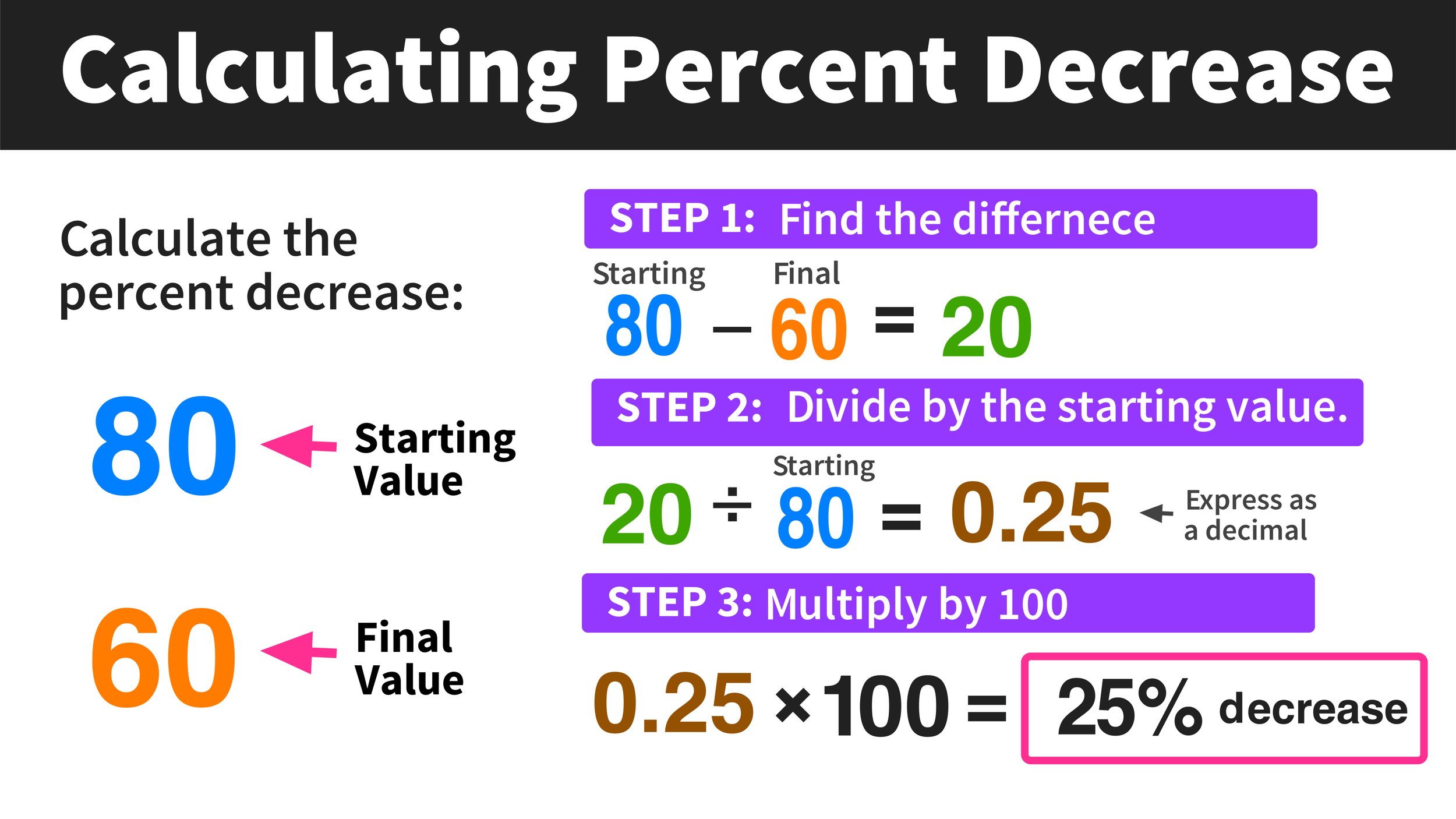
Percentage reduction is a way to express a decrease from an original value as a fraction of that original value, multiplied by 100 to convert it into a percentage. It answers the question: “By what proportion, relative to its starting point, has a value decreased?” For instance, if a stock price drops from $100 to $80, a percentage reduction tells us that it didn’t just drop by $20; it dropped by 20% of its original value. This distinction is crucial because a $20 drop on a $100 stock is far more significant than a $20 drop on a $10,000 stock.
The power of percentage reduction lies in its ability to normalize changes. It provides a common metric that allows for easy comparison of different scenarios, regardless of their absolute monetary values. Whether you’re comparing the impact of a 5% reduction in your utility bill versus a 5% reduction in your car insurance, the percentage offers a consistent benchmark for evaluation.
The Core Formula Explained
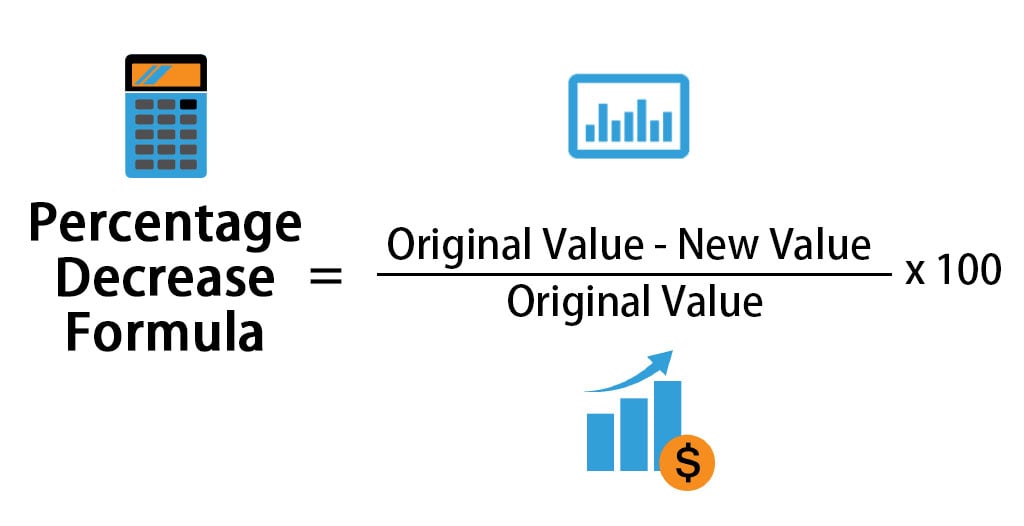
The formula for calculating percentage reduction is elegant in its simplicity and powerful in its application:
Percentage Reduction = [(Original Value – New Value) / Original Value] * 100%
Let’s break down each component:
- Original Value: This is the starting point, the initial number from which the decrease is measured. It’s crucial to identify this accurately, as it forms the denominator of the fraction and dictates the basis of the percentage.
- New Value: This is the current or reduced number after the decrease has occurred.
- Original Value – New Value: This first step calculates the absolute amount of the decrease. This tells you “how much” the value went down in raw numbers.
- [(Original Value – New Value) / Original Value]: Dividing the absolute decrease by the original value converts the decrease into a decimal fraction. This fraction represents the proportion of the original value that was lost.
- * 100%: Multiplying the decimal fraction by 100 converts it into a percentage, making it easier to understand and compare.
Example:
Imagine you bought an investment for $500, and its value has now fallen to $425.
- Original Value = $500
- New Value = $425
- Absolute Decrease = $500 – $425 = $75
- Fractional Decrease = $75 / $500 = 0.15
- Percentage Reduction = 0.15 * 100% = 15%
So, your investment has experienced a 15% reduction in value.
Distinguishing Reduction from Increase
While closely related, it’s vital to differentiate percentage reduction from percentage increase. The core formula remains similar, but the calculation of the “change” and its relationship to the original value shifts. For percentage increase, the formula is [(New Value – Original Value) / Original Value] * 100%. The key difference is that with an increase, the new value is larger than the original, resulting in a positive difference in the numerator.
Confusing the two can lead to significant misinterpretations, especially when dealing with financial reports, market analyses, or personal budgeting. Always ensure you are using the correct formula based on whether the value has gone up or down.
Practical Applications in Personal Finance and Budgeting
For individuals managing their money, the ability to calculate percentage reduction is an invaluable tool. It offers clarity in everyday financial decisions and strategic planning, empowering a more informed approach to personal wealth management.
Discount Shopping and Sales
One of the most common everyday applications of percentage reduction is in understanding discounts and sales. Retailers frequently advertise “X% off” or “Up to Y% reduction.” Knowing how to calculate this allows you to quickly determine the actual savings and compare deals effectively.
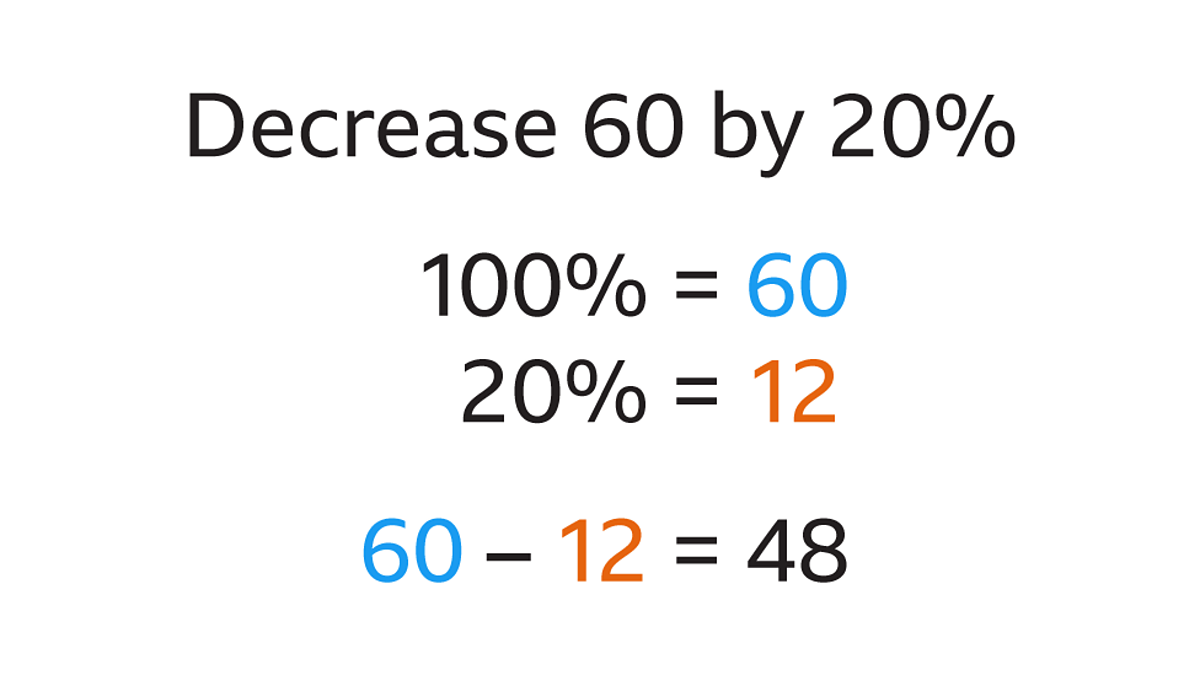
- Calculating Savings: If a shirt originally costs $50 and is advertised at 20% off, you can calculate the discount amount ($50 * 0.20 = $10) and the new price ($50 – $10 = $40). Conversely, if an item is marked down from $60 to $45, you can calculate the percentage reduction: [($60 – $45) / $60] * 100% = ($15 / $60) * 100% = 25%. This helps you understand the true value of the markdown.
- Understanding “Up to X% Off”: This phrasing means some items might have the maximum discount, while others will have less. Applying the calculation to specific items helps ascertain if the individual product you’re eyeing truly offers a significant reduction.
Tracking Expenses and Budget Cuts
Percentage reduction is a powerful metric for personal budgeting. It allows you to track spending patterns and evaluate the effectiveness of efforts to reduce expenses.
- Identifying Reductions: Have you successfully cut down on dining out? If your restaurant spending dropped from $300 last month to $210 this month, that’s a [($300 – $210) / $300] * 100% = 30% reduction. This tangible percentage validates your efforts and highlights areas where you’re making progress.
- Evaluating Cost-Saving Measures: Perhaps you switched to a more energy-efficient light bulb or negotiated a lower internet bill. If your electricity bill decreased from $120 to $108, that’s a 10% reduction. These calculations provide concrete evidence of how much you’re saving, helping you stay motivated and identify successful strategies.
- Overall Spending Reduction: Tracking your total monthly expenses and calculating the percentage reduction month-over-month or year-over-year provides a high-level view of your financial discipline and budget adherence.
Debt Reduction Strategies
For those tackling debt, percentage reduction offers a clear way to visualize progress and stay motivated.
- Monitoring Progress: If you start with a credit card balance of $5,000 and manage to pay it down to $3,500, you’ve achieved a [($5,000 – $3,500) / $5,000] * 100% = 30% reduction in your debt. This isn’t just a number; it’s a testament to your efforts and a motivator to continue.
- Evaluating Strategies: Whether it’s the snowball method or avalanche method, tracking the percentage reduction of each debt, or your total debt burden, provides an objective measure of your strategy’s effectiveness and helps in celebrating milestones.
Percentage Reduction in Investing and Business Finance
Beyond personal budgets, percentage reduction is a cornerstone of financial analysis in the investment world and across business operations. It provides critical insights into market performance, operational efficiency, and revenue health.
Analyzing Investment Losses and Portfolio Performance
In the volatile world of investments, prices fluctuate daily. Understanding percentage reduction is essential for gauging the impact of market downturns and evaluating portfolio performance.
- Understanding Stock Price Drops: If a stock you own drops from $200 per share to $180, it’s a [($200 – $180) / $200] * 100% = 10% reduction. This percentage quantifies the loss relative to its initial value, allowing investors to assess risk, compare performance against benchmarks, and make informed decisions about holding, buying more, or selling.
- Portfolio Depreciation: When the overall value of an investment portfolio decreases, calculating the percentage reduction provides an aggregated view of the impact. This helps investors understand their capital at risk and the extent of market corrections.
- Risk Assessment: Observing the historical percentage reductions of various assets helps in understanding their volatility and potential downside risk, crucial for building a resilient investment strategy.
Business Cost Savings and Efficiency
For businesses, percentage reduction is a vital metric for evaluating operational efficiency and the success of cost-cutting measures.
- Evaluating Cost Initiatives: If a company manages to reduce its raw material costs from $100,000 per quarter to $90,000, that’s a 10% reduction. Such calculations are fundamental for assessing the financial impact of negotiations with suppliers, process improvements, or adoption of new technologies.
- Overhead Reduction: Cutting administrative expenses or utility costs from $50,000 to $42,500 represents a [($50,000 – $42,500) / $50,000] * 100% = 15% reduction. These figures directly impact the bottom line and profitability.
- Improving Margins: By reducing various operational expenses, businesses can improve their profit margins. Tracking these reductions by percentage helps in setting targets and measuring performance across different departments.
Sales Declines and Revenue Impact
Unfortunately, businesses sometimes experience decreases in sales or revenue. Percentage reduction is the primary way to quantify these downturns and understand their severity.
- Quantifying Sales Drops: If a company’s monthly sales revenue falls from $1,000,000 to $850,000, that’s a [($1,000,000 – $850,000) / $1,000,000] * 100% = 15% reduction in sales. This percentage provides a clear indicator of market challenges, decreased demand, or competitive pressures.
- Assessing Market Share Changes: A reduction in sales revenue often correlates with a decrease in market share. Percentage reduction helps analysts and management quantify these shifts and formulate strategies to regain lost ground.
- Impact on Profitability: A percentage reduction in revenue, especially if fixed costs remain stable, can lead to a disproportionately larger percentage reduction in profits. Understanding this relationship is critical for financial forecasting and strategic planning.
Common Pitfalls and Advanced Considerations
While the formula for percentage reduction is straightforward, its application can sometimes lead to errors or require a deeper understanding of financial dynamics. Awareness of these nuances ensures greater accuracy and more insightful analysis.
Avoiding Common Calculation Errors
Accuracy is paramount when dealing with financial figures. A few common mistakes can skew results:
- Incorrect Original Value: Always double-check that you are using the original value as the denominator. A common error is mistakenly using the new (reduced) value, which will lead to an incorrect, inflated percentage.
- Misidentifying Decrease vs. Increase: As discussed, ensure you’re applying the reduction formula when a value has truly decreased. Using it for an increase, or vice-versa, will yield nonsensical results.
- Order of Operations: While simple, ensure you subtract the new value from the original value before dividing by the original value. Parentheses in the formula clearly indicate this order.
- Rounding Errors: Be mindful of how you round numbers, especially intermediate steps. For financial calculations, it’s often best to carry more decimal places until the final step to maintain precision.
The Impact of Compounding (Brief Mention)
It’s crucial to understand that successive percentage reductions are not simply additive. A 10% reduction followed by another 10% reduction does not equate to a 20% total reduction.
Example: If an item costs $100 and is reduced by 10%, it becomes $90. If it’s then reduced by another 10% (of the new value), the reduction is $90 * 0.10 = $9, bringing the price to $81. The total reduction from the original $100 is $19, or 19%, not 20%. This concept is vital when evaluating multiple discounts or successive market losses.
Utilizing Financial Tools for Accuracy
While manual calculation is excellent for understanding the concept, for frequent or complex financial analysis, leveraging specialized tools is both efficient and reduces the likelihood of error.
- Spreadsheets (Excel, Google Sheets): These are perhaps the most versatile tools. You can easily set up formulas to calculate percentage reduction across large datasets, making them invaluable for budgeting, investment tracking, and business finance. Just input your original and new values, and the formula does the rest.
- Online Calculators: Numerous free online calculators are available for quick, one-off percentage reduction calculations. These are convenient for simple tasks like checking a sale price.
- Accounting Software: For businesses, accounting software often includes features that automatically track and report percentage changes in expenses, revenue, and other financial metrics, providing real-time insights without manual calculation.
Conclusion
The ability to accurately calculate percentage reduction is more than just a mathematical skill; it’s a fundamental pillar of financial literacy. Whether you are a diligent budgeter seeking to maximize personal savings, a savvy investor navigating market fluctuations, or a business professional striving for operational efficiency and profitability, this calculation provides the clarity and insight needed to make informed decisions.
From understanding the true value of a discount to quantifying debt reduction progress, or analyzing investment losses and business cost savings, percentage reduction empowers you to interpret financial data with precision. By mastering the core formula, understanding its diverse applications, and being mindful of common pitfalls, you can unlock a deeper understanding of your financial world. Embrace this essential tool, apply it consistently, and watch as your financial acumen and decision-making capabilities grow, leading to more secure and prosperous financial outcomes.
aViewFromTheCave is a participant in the Amazon Services LLC Associates Program, an affiliate advertising program designed to provide a means for sites to earn advertising fees by advertising and linking to Amazon.com. Amazon, the Amazon logo, AmazonSupply, and the AmazonSupply logo are trademarks of Amazon.com, Inc. or its affiliates. As an Amazon Associate we earn affiliate commissions from qualifying purchases.