
In the realms of personal finance and corporate strategy, numbers are more than just digits on a screen; they are the heartbeat of progress. Whether you are tracking the growth of a retirement portfolio, analyzing the quarterly revenue of a startup, or measuring the impact of inflation on your purchasing power, the ability to calculate percentage increase is a fundamental skill. It transforms raw data into actionable insights, allowing investors and business leaders to compare performance across different scales and timeframes.
Understanding how to calculate percentage increase is the first step toward financial literacy and strategic mastery. This guide provides a comprehensive deep dive into the mathematics, applications, and strategic implications of growth metrics within the “Money” niche.
The Fundamental Mathematics of Financial Growth
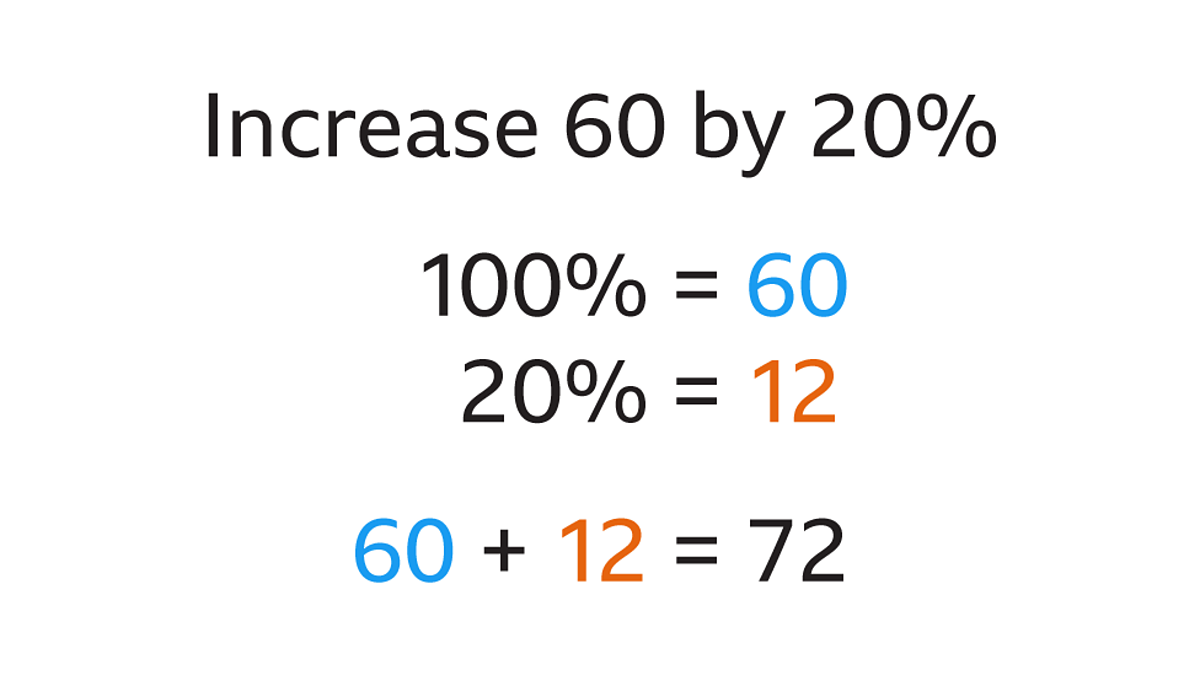
Before diving into complex investment portfolios or corporate balance sheets, one must master the core formula. Percentage increase represents the relative change between an initial value and a final value, expressed as a fraction of 100.
The Core Formula
The mathematical formula for percentage increase is straightforward but powerful:
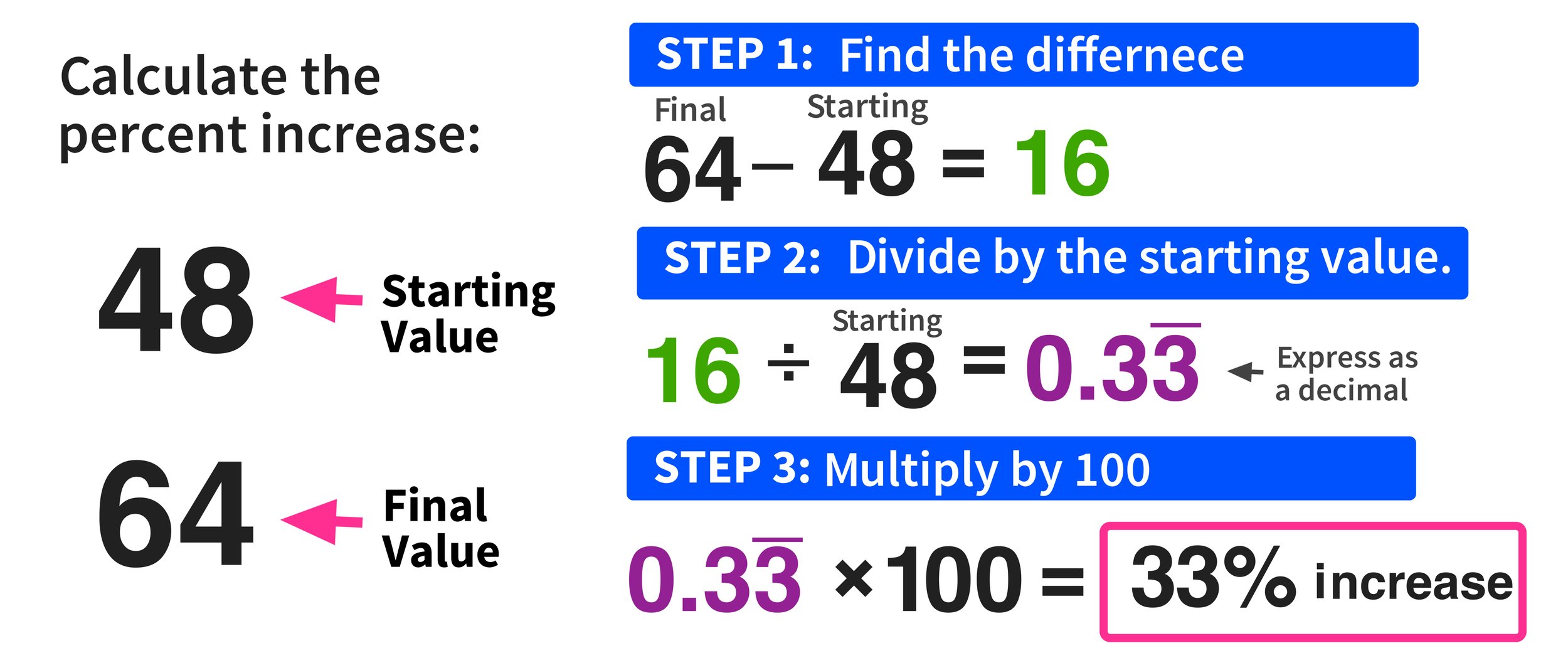
Percentage Increase = [(New Value – Original Value) / Original Value] × 100
To arrive at the result, you follow three distinct steps:
- Find the Difference: Subtract the original value from the new value to determine the absolute growth.
- Divide by the Source: Divide that difference by the original value. This step is crucial because it contextualizes the growth relative to where you started.
- Convert to Percentage: Multiply the decimal result by 100 to get the percentage.
Avoiding Common Calculation Pitfalls
A frequent mistake in financial analysis is dividing by the new value instead of the original value. This error significantly skews the data. For instance, if an asset grows from $100 to $150, the increase is 50%. If you mistakenly divide the $50 gain by the new $150 price, you would report a 33% increase, drastically underrepresenting your investment’s performance.
Another common error involves “percentage points” versus “percentages.” If an interest rate moves from 3% to 4%, it has increased by one percentage point, but the percentage increase of the rate itself is actually 33.3%. Distinguishing between these two is vital for accurate financial reporting.
Understanding Negative Growth
While this guide focuses on increase, it is important to note that the formula remains the same for decreases. If your result is negative, you have a percentage decrease. In the world of money, recognizing a “negative increase” is essential for risk management and identifying when an investment strategy needs a pivot.
Applying Percentage Increase to Personal Finance and Investing
For the individual investor, the percentage increase is the ultimate equalizer. It allows you to compare a $500 gain on a small crypto trade to a $5,000 gain on a large-cap stock index to see which one actually performed better relative to the capital risked.
Measuring Return on Investment (ROI)
ROI is perhaps the most common application of percentage increase in the financial world. When you buy a stock at $200 and sell it at $250, the 25% increase represents your raw ROI. However, sophisticated investors use this calculation to compare different asset classes.
By looking at the percentage increase over specific intervals (monthly, quarterly, or annually), you can determine if your capital is being utilized efficiently. If your real estate holdings are increasing by 5% annually while the S&P 500 is increasing by 10%, the percentage calculation highlights the opportunity cost of your investment choices.
The Impact of Inflation on Real Returns
Money is not static; its value shifts over time due to inflation. To understand your “real” wealth growth, you must subtract the percentage increase of the Consumer Price Index (CPI) from the percentage increase of your assets.
For example, if your high-yield savings account saw a 4% increase over a year, but the cost of living (inflation) increased by 5% in that same period, your “real” percentage increase is actually -1%. Calculating percentage increase in this context prevents the “money illusion,” where individuals feel wealthier because they have more nominal dollars, even though their actual purchasing power has diminished.
Compounding: The Exponential Increase
Percentage increase becomes truly transformative when discussed in the context of compounding. When you earn a 10% increase on an investment and reinvest those gains, the next 10% increase is calculated based on the new, higher original value. Over decades, this “growth on growth” turns linear percentage increases into exponential wealth accumulation. Understanding the math behind this allows savers to visualize why starting early—even with small amounts—is more beneficial than starting later with larger sums.

Measuring Business Performance and Revenue Trends
In the corporate world, percentage increase is the primary language used to communicate health to stakeholders, lenders, and internal teams. It moves the conversation beyond “we made more money” to “we are scaling efficiently.”
Year-Over-Year (YoY) and Quarter-Over-Quarter (QoQ) Growth
Businesses rarely look at revenue in isolation. Instead, they look at the percentage increase compared to a previous period.
- YoY Growth: This compares a period (like Q3 2023) to the same period in the previous year (Q3 2022). This accounts for seasonality—for example, a retail business expecting a massive percentage increase in December compared to November.
- QoQ Growth: This measures immediate momentum. A consistent 5% QoQ increase suggests a healthy, scaling enterprise, whereas a sudden stagnation in percentage growth can be an early warning sign of market saturation or operational inefficiencies.
Analyzing Profit Margins and Scalability
Percentage increase is also applied to expenses and margins. If a company’s revenue increases by 20% but its operating expenses increase by 30%, the business is becoming less efficient despite making more money.
Strategic financial management involves ensuring that the percentage increase in “Top Line” revenue outpaces the percentage increase in “Bottom Line” costs. This is known as operating leverage. By calculating these percentages separately, CFOs can identify exactly where a leak in the company’s finances might be occurring.
Market Share and Competitive Analysis
Businesses also use percentage increase to track their footprint in the industry. If the total market for a product grows by 10% in a year, but a specific company’s sales only grow by 5%, that company is actually losing market share despite its internal growth. In this scenario, the percentage increase calculation acts as a benchmark against competitors, signaling that the brand is underperforming the broader economic trend.
Advanced Financial Tools and Automation for Calculation
While the manual formula is essential for conceptual understanding, the modern financial landscape relies on tools to handle large datasets and complex tracking.
Leveraging Spreadsheets for Financial Modeling
Programs like Microsoft Excel and Google Sheets are the industry standards for financial analysis. To calculate percentage increase in a spreadsheet, you don’t need to type out the math every time. Using a simple formula like =(B2-A2)/A2 (where A2 is the old value and B2 is the new value) allows you to drag that calculation across thousands of rows instantly.
More importantly, these tools allow for “What-If” analysis. An investor can input various projected percentage increases to see how their net worth might look in 10, 20, or 30 years, factoring in different variables like tax rates and additional contributions.
Digital Financial Dashboards and Fintech Apps
We live in an era of automated finance. Apps like Mint, YNAB, or brokerage platforms like Vanguard and Fidelity automatically calculate the percentage increase of your net worth or portfolio daily.
However, a professional approach to money requires looking deeper than the “total return” percentage shown on a dashboard. Insightful investors use these tools to break down increases by sector, asset class, or individual ticker symbol. This granular view helps in rebalancing a portfolio—selling assets that have seen an outsized percentage increase to buy those that are undervalued.
The Role of Financial Calculators in Debt Management
Percentage increase is equally important when looking at the “cost of money”—interest. When taking out a business loan or a mortgage, understanding how a small percentage increase in an interest rate affects the total life of the loan is vital. Using amortization schedules and financial calculators, one can see how a 1% increase in a mortgage rate can result in a 20% increase in the total interest paid over 30 years.
Conclusion: The Strategic Value of the Percentage Increase
In the world of money, the ability to calculate and interpret percentage increase is the difference between being a passive observer and an active strategist. It is a tool that strips away the noise of raw numbers and reveals the underlying truth of financial trends.
For the individual, it provides clarity on whether their savings goals are on track and whether their investments are truly beating inflation. For the business owner, it serves as a North Star for growth, efficiency, and competitive standing.
Ultimately, wealth is not just about the absolute amount of money you have; it is about the rate at which you can grow it, protect it, and leverage it. By mastering the calculation of percentage increase, you equip yourself with the analytical rigor necessary to navigate the complexities of the financial world and build a legacy of sustained economic success.
aViewFromTheCave is a participant in the Amazon Services LLC Associates Program, an affiliate advertising program designed to provide a means for sites to earn advertising fees by advertising and linking to Amazon.com. Amazon, the Amazon logo, AmazonSupply, and the AmazonSupply logo are trademarks of Amazon.com, Inc. or its affiliates. As an Amazon Associate we earn affiliate commissions from qualifying purchases.