
In the world of personal and business finance, numbers are the fundamental building blocks of strategy. However, raw numbers rarely tell the whole story. To understand the true health of an investment, the efficiency of a budget, or the growth of a business, one must speak the language of proportions. Learning how to calculate a percentage with two numbers is more than a basic math skill; it is a critical financial tool that allows investors and earners to compare disparate values on a level playing field.
Whether you are calculating the interest on a high-yield savings account, determining the impact of inflation on your purchasing power, or analyzing the profit margins of a side hustle, percentages provide the context necessary for informed decision-making. By mastering the relationship between two numbers, you gain the ability to look past the surface of your bank statements and see the underlying trends that define your financial future.
The Foundations of Financial Literacy: Why Percentages Matter
Before diving into complex financial models, one must grasp the fundamental mechanics of the percentage. At its core, a percentage is a way of expressing a number as a fraction of 100. In finance, this “fraction” represents the relationship between two specific values: the “part” and the “whole.”
Understanding the Formula: Part, Whole, and the Hundredth
To calculate the percentage of one number in relation to another, you use a straightforward division-based formula. If you have two numbers—let’s call them Number A and Number B—and you want to know what percentage Number A is of Number B, the formula is:
(Number A ÷ Number B) × 100 = Percentage
In this scenario, Number A is the “part” (the specific value you are analyzing) and Number B is the “whole” (the total or baseline value). For example, if you saved $500 out of a $2,000 paycheck, you would divide 500 by 2,000 to get 0.25. Multiplying by 100 gives you 25%. This simple calculation is the bedrock of every financial report, from personal tax returns to Wall Street earnings calls.
Converting Between Fractions, Decimals, and Percentages
Financial documents often fluctuate between decimals and percentages. Understanding how to pivot between these forms is essential for accuracy. A decimal is simply the percentage divided by 100. In the previous example, 0.25 is the decimal equivalent of 25%.
In many financial tools and software, you will enter interest rates or tax rates as decimals (e.g., 0.07 for 7%). Being able to mentally shift the decimal point two places to the right to see the percentage—or two places to the left to see the decimal—ensures that you do not make a “decimal point error,” which could lead to a ten-fold or hundred-fold mistake in your financial projections.
Percentages in Personal Finance: Tracking Your Budget and Savings
The most immediate application of calculating percentages with two numbers is in the management of daily cash flow. A budget is essentially a roadmap of percentages. Financial advisors often suggest the “50/30/20 rule,” which allocates income based on percentage-based categories rather than fixed dollar amounts.
Calculating Your Savings Rate
Your savings rate is arguably the most important number in your personal finance journey. It is calculated by comparing your total savings (Number A) against your total after-tax income (Number B).
If you earn $5,000 a month and save $1,200, your savings rate is 24% ($1,200 ÷ $5,000). By tracking this percentage over time rather than just the dollar amount, you can maintain financial discipline even as your income fluctuates. If you receive a raise but your savings rate stays the same or decreases, you are experiencing “lifestyle creep.” Without the percentage calculation, the raw dollar increase in your savings might blind you to the fact that you are spending a larger portion of your wealth than before.
Debt Management: Understanding Interest Rates and APR
When borrowing money, whether through a credit card, a mortgage, or a personal loan, the “cost” of that money is expressed as a percentage: the Annual Percentage Rate (APR). To understand how much your debt is actually costing you in real dollars, you must work the formula in reverse, but the relationship remains between two numbers: the principal balance and the interest rate.
However, when comparing different loan offers, looking at the two numbers (the monthly payment and the total loan amount) can help you calculate the “real cost” of borrowing. By dividing the total interest paid over the life of a loan by the original amount borrowed, you can see the percentage of “extra” money you are paying for the privilege of credit. This perspective often shifts the decision-making process from “Can I afford the monthly payment?” to “Is this purchase worth a 30% premium?”
The Investor’s Toolkit: Measuring Growth and Return on Investment (ROI)
For those focused on wealth building, percentages are the only way to measure performance accurately. Comparing a $1,000 gain in a stock portfolio to a $1,000 gain in a real estate venture is meaningless without knowing the original investment amounts.

Calculating Percentage Increase and Capital Gains
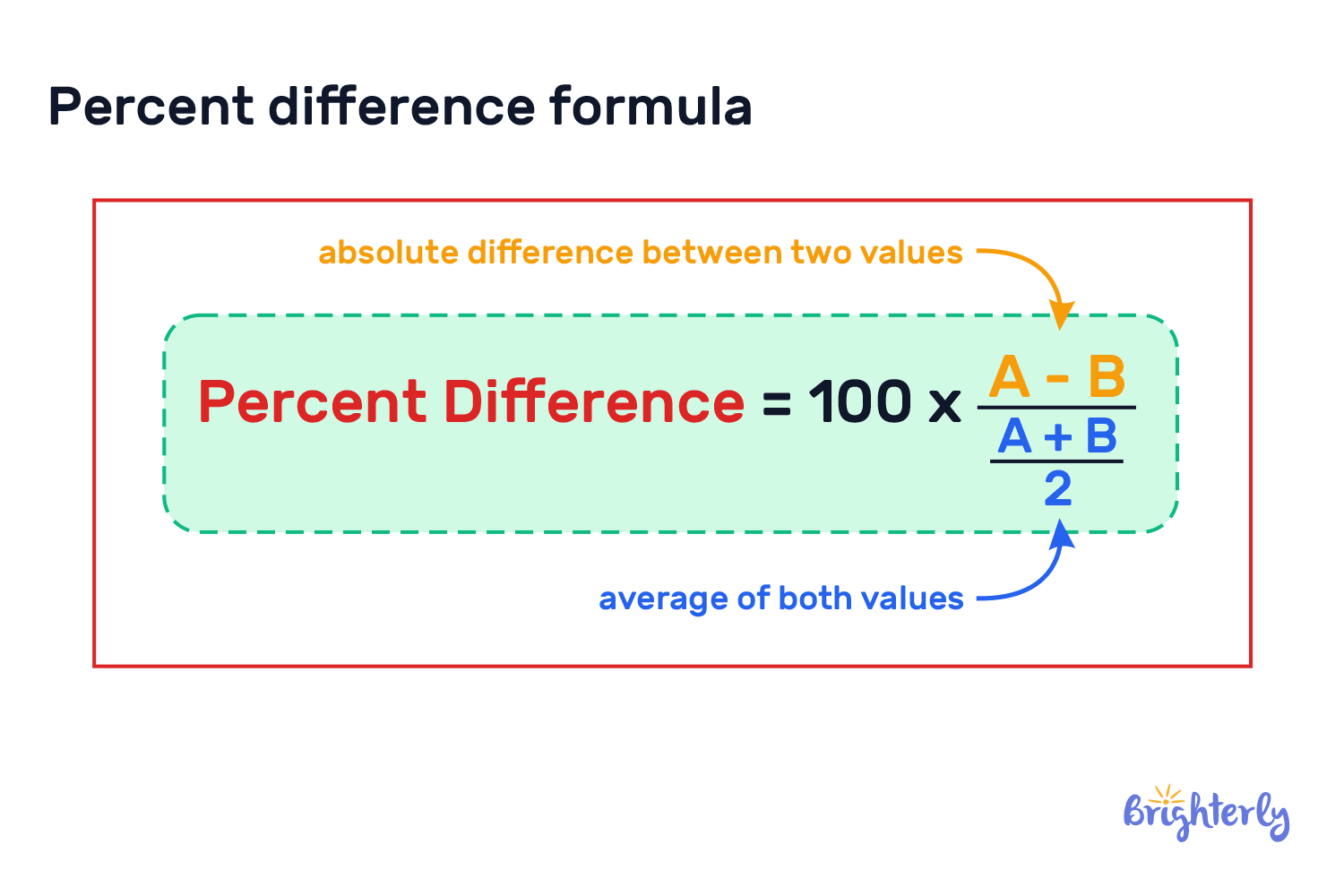
Investors frequently need to calculate the “percentage change” between two numbers to see how much an asset has grown or shrunk. The formula for percentage increase is:
[(New Value – Original Value) ÷ Original Value] × 100
If you bought a share of a tech company for $150 (Original Value) and it is now worth $210 (New Value), your gain is $60. To find the percentage increase, you divide 60 by 150, resulting in 0.40, or a 40% gain. This calculation allows you to compare the performance of your tech stock against other benchmarks, such as the S&P 500 or a high-yield bond, ensuring your capital is working as hard as possible.
The Impact of Compounding and Portfolio Allocation
Portfolio allocation is the practice of dividing your total investment capital into different asset classes (stocks, bonds, cash, real estate). To manage risk, an investor might decide they want 60% of their money in stocks and 40% in bonds.
Periodically, you must calculate the percentage of each asset relative to the total portfolio value to see if you need to “rebalance.” If your stocks performed exceptionally well, they might now represent 75% of your total wealth. By dividing your “Stock Value” (Number A) by your “Total Portfolio Value” (Number B), you identify the imbalance. This percentage-driven approach removes emotion from investing, forcing you to sell high and buy low to return to your target allocation.
Business Finance: Margin, Markup, and Market Positioning
For entrepreneurs and business owners, calculating percentages with two numbers is the difference between a thriving enterprise and bankruptcy. Two of the most common—and often confused—calculations are profit margin and markup.
Gross Profit Margin vs. Net Profit Margin
Profit margin is a percentage that tells you how much of every dollar in revenue your company keeps as profit.
- Gross Profit Margin: This compares your Gross Profit (Revenue minus Cost of Goods Sold) to your total Revenue. If a product sells for $100 and costs $60 to make, the Gross Profit is $40. The margin is 40% ($40 ÷ $100).
- Net Profit Margin: This is a more stringent calculation that compares your final Net Income (after all expenses, taxes, and interest) to your total Revenue.
A business might have a high gross margin but a very low net margin if its overhead (rent, marketing, salaries) is too high. By calculating these percentages, a business owner can identify exactly where their capital is leaking.
Sales Analysis: Year-over-Year (YoY) Growth Metrics
Businesses also use percentage calculations to measure momentum. “Year-over-Year” growth is a comparison of a financial metric in one period versus the same period in the previous year. If a company earned $1.2 million this year and $1 million last year, the YoY growth is 20%.
This percentage is a key indicator for stakeholders. A company might be making millions in profit, but if the YoY percentage is shrinking, it suggests that the market is becoming saturated or that competitors are gaining ground. In the world of business finance, the percentage of growth is often valued more highly than the raw profit figure itself.
Strategic Financial Tools and Automations
While manual calculation is a vital skill, the modern financial landscape offers tools that handle these percentages at scale. Mastering these tools is the final step in achieving financial proficiency.
Leveraging Spreadsheets for Advanced Percentage Analysis
Programs like Microsoft Excel and Google Sheets are designed around the relationship between numbers. To calculate a percentage in a spreadsheet, you simply point to two cells. If Cell A1 contains your expenses and Cell B1 contains your income, the formula =A1/B1 formatted as a percentage will give you your “expense ratio.”
The power of these tools lies in “what-if” analysis. By changing one of the two numbers—for example, increasing your monthly investment by 5%—you can see the compounded percentage growth over 30 years in an instant. This allows for strategic long-term planning that would be nearly impossible to calculate by hand.

Digital Calculators and Financial Apps
Beyond spreadsheets, specialized financial apps use percentage-based algorithms to provide insights. From “Robo-advisors” that automatically rebalance your portfolio percentages to budgeting apps that alert you when your spending in a certain category exceeds 10% of your income, these tools utilize the basic “two-number” formula to provide real-time financial coaching.
However, even the most sophisticated AI tool requires a human operator who understands the underlying logic. By knowing how to calculate a percentage with two numbers, you can verify the outputs of your software, spot errors in your bank’s interest calculations, and ultimately take full control of your financial destiny. Percentages are the pulse of your money; learning to read them is the first step toward lasting wealth.
aViewFromTheCave is a participant in the Amazon Services LLC Associates Program, an affiliate advertising program designed to provide a means for sites to earn advertising fees by advertising and linking to Amazon.com. Amazon, the Amazon logo, AmazonSupply, and the AmazonSupply logo are trademarks of Amazon.com, Inc. or its affiliates. As an Amazon Associate we earn affiliate commissions from qualifying purchases.