
In the dynamic world of finance, numbers tell a story. But raw figures alone often lack the context needed for truly insightful analysis. This is where percent growth steps in, transforming absolute changes into relative measures that illuminate trends, assess performance, and guide critical decisions. Whether you’re tracking your investment portfolio, evaluating a business’s health, or scrutinizing your personal financial progress, understanding how to calculate and interpret percent growth is an indispensable skill. It provides a standardized way to compare performance over time, irrespective of the initial scale, making it a cornerstone of financial literacy and strategic planning.
This guide will demystify percent growth, breaking down its core components, illustrating its diverse applications across personal and business finance, and equipping you with the knowledge to leverage this powerful metric effectively. By the end, you’ll be able to confidently apply this calculation to make more informed choices, identify opportunities, and mitigate risks in your financial journey.
The Fundamental Formula: Understanding the Basics
At its heart, percent growth is a straightforward mathematical concept designed to quantify change. It allows us to express the magnitude of increase or decrease between two values as a percentage of the initial value. This relative measure is often far more informative than an absolute change, as it provides crucial context. For instance, a $100 increase in a $1,000 investment is fundamentally different from a $100 increase in a $10,000 investment, and percent growth effectively captures this disparity.
What is Percent Growth?
Percent growth, also known as percentage change or rate of change, quantifies the extent to which a value has changed over a specific period relative to its starting point. It answers the question: “By what percentage has this value grown (or shrunk)?” It’s a universal metric used to analyze everything from a country’s GDP to a company’s quarterly sales, or even the appreciation of a single asset. Without it, simply knowing a stock went up by $10 doesn’t tell you much; knowing it went up by 20% from its initial value gives you a much clearer picture of its performance relative to its starting price.
The Core Formula Unpacked
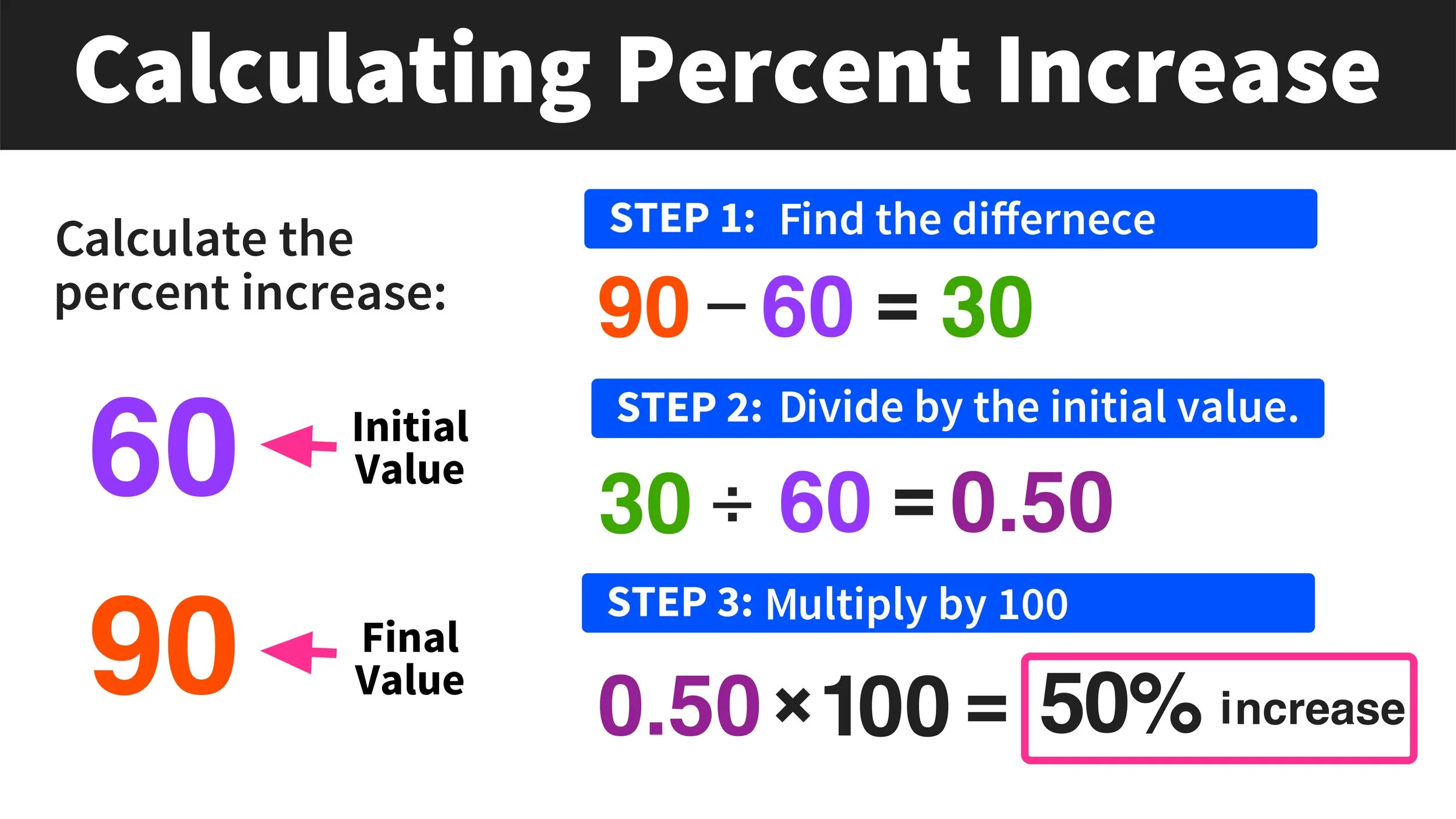
The beauty of percent growth lies in its simplicity. The core formula is as follows:
$$ text{Percent Growth} = left( frac{text{New Value} – text{Old Value}}{text{Old Value}} right) times 100 $$
Let’s break down each component:
- New Value (or Ending Value): This is the value at the end of the period you are analyzing. It could be your current portfolio balance, a company’s most recent sales figure, or the latest appraised value of your home.
- Old Value (or Beginning Value): This is the value at the start of the period you are analyzing. It represents the baseline against which the change is measured.
- Subtraction ($text{New Value} – text{Old Value}$): This first step calculates the absolute change—the raw dollar amount of increase or decrease.
- Division by $text{Old Value}$: Dividing the absolute change by the old value converts the raw change into a proportional change or a decimal. This is what makes it a “relative” measure.
- Multiplication by 100: Finally, multiplying the result by 100 converts the decimal proportion into a percentage, making it easily understandable and comparable.
Example: If your investment portfolio started at $10,000 (Old Value) and grew to $12,000 (New Value) over a year:
Percent Growth = (($12,000 – $10,000) / $10,000) * 100
Percent Growth = ($2,000 / $10,000) * 100
Percent Growth = 0.20 * 100
Percent Growth = 20%
Interpreting the Results: Positive, Negative, and Zero Growth
The result of your percent growth calculation offers immediate insight into the nature of the change:
- Positive Percentage: A positive percent growth indicates an increase in value. For example, a 20% growth in your stock means its value has increased by one-fifth. This is typically the desired outcome in most financial scenarios.
- Negative Percentage: A negative percent growth signifies a decrease or decline in value. For instance, a -15% growth (often expressed as a 15% decline) in a company’s quarterly earnings suggests contraction. Understanding negative growth is just as crucial for identifying underperformance or potential problems.
- Zero Percentage: A 0% growth means there has been no change in value between the old and new values. While uncommon in volatile financial markets, it implies stagnation or stability over the measured period.
The sign of the percentage is paramount. A 25% increase is a vastly different scenario than a 25% decrease, and recognizing this distinction is fundamental to sound financial analysis.
Applications in Personal Finance and Investing
For individuals managing their money, percent growth is more than just an academic exercise; it’s a practical tool for measuring progress, evaluating opportunities, and making informed decisions that shape their financial future.
Measuring Portfolio Performance
One of the most common applications of percent growth is in evaluating the performance of investment portfolios. Whether you own individual stocks, mutual funds, bonds, or real estate, calculating the percent growth (often referred to as Return on Investment or ROI) helps you understand how well your money is working for you.
- Stocks and Funds: If you bought a stock for $50 and it’s now worth $65, your percent growth is (($65 – $50) / $50) * 100 = 30%. This metric helps you compare the performance of different investments, even if they started at different prices or involved different capital amounts. You can also calculate the growth of your entire portfolio over a month, quarter, or year by taking the total value at the end of the period minus the total value at the beginning, divided by the beginning value.
- Real Estate: The appreciation of a property’s value can be measured using percent growth. If you bought a house for $300,000 and it’s now appraised at $375,000, that’s a (($375,000 – $300,000) / $300,000) * 100 = 25% growth. This helps assess the profitability of a real estate investment before factoring in other costs.
Tracking Savings and Debt Growth
Percent growth isn’t just for appreciating assets; it’s equally vital for understanding the dynamics of your savings and debt.
- Savings Accounts: While often modest, tracking the growth of your savings shows the power of compounding interest. If your savings account balance grew from $5,000 to $5,100 in a year due to interest, that’s a 2% growth. This helps you compare different savings products based on their actual interest rates.
- Debt Accumulation: On the flip side, understanding percent growth can highlight the insidious nature of compounding debt. While you wouldn’t typically call it “growth,” calculating the percentage increase in your total debt due to interest can be a powerful motivator for repayment. For example, if a credit card balance increased from $1,000 to $1,020 in a month due to interest, that’s a 2% “growth” in debt—a clear indication of its cost.
Personal Budget Analysis: Income vs. Expense Growth
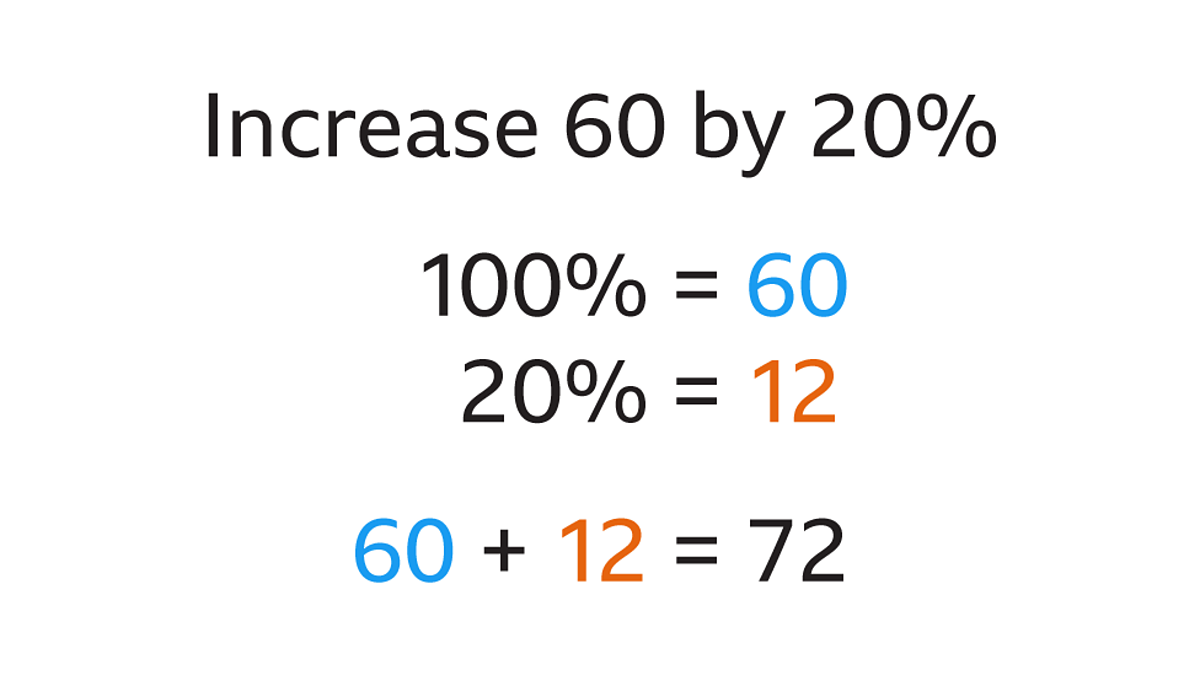
Analyzing percent growth can be highly beneficial in personal budgeting. You can track:
- Income Growth: How much has your salary or side hustle income grown year-over-year?
- Expense Growth: Are your housing, food, or transportation costs growing faster than your income? Identifying rapidly growing expense categories allows you to take corrective action and maintain financial equilibrium.
Business Finance: Assessing Performance and Health
For businesses, percent growth metrics are the lifeblood of financial reporting, strategic planning, and investor relations. They provide a concise and powerful way to communicate success, identify challenges, and benchmark against competitors.
Revenue and Profit Growth
These are perhaps the most closely watched metrics in business finance, as they directly reflect a company’s ability to expand its operations and generate earnings.
- Revenue Growth: Often calculated year-over-year (YoY) or quarter-over-quarter (QoQ), revenue growth indicates how effectively a company is selling its products or services. A consistent high revenue growth rate is attractive to investors, signaling a growing market presence and strong demand. If a company’s revenue increased from $1 million last year to $1.2 million this year, that’s a 20% revenue growth.
- Profit Growth: Beyond just sales, profit growth (e.g., net income growth) tells the story of how efficiently a company is managing its costs and turning revenue into actual earnings. Robust profit growth indicates operational effectiveness and strong financial health. It’s crucial for sustainable business operations and investor returns.
Market Share and Customer Growth
Understanding a company’s position within its industry requires more than just internal financial numbers.
- Market Share Growth: This metric calculates the percentage increase in a company’s proportion of the total sales within its market. If a company’s market share grew from 10% to 12%, that’s a 20% growth in market share, reflecting successful competitive strategies.
- Customer/User Growth: For subscription-based businesses or those reliant on user adoption, tracking the percent growth in their customer base or active users is vital. A high customer acquisition rate can signal strong product-market fit and future revenue potential.
Employee Productivity and Efficiency Growth
Internally, businesses use percent growth to measure improvements in operational efficiency.
- Productivity Growth: This can be measured by comparing the output per employee over different periods. For example, if the average sales per employee increased by 10% year-over-year, it indicates improved training, better tools, or more efficient processes.
- Cost Efficiency Growth (or Reduction): While technically a negative growth (reduction), businesses aim to achieve a negative percent growth in costs relative to revenue or output, indicating better cost control and increased profitability.
Advanced Considerations and Common Pitfalls
While the basic formula for percent growth is simple, real-world financial analysis often requires a more nuanced approach. Understanding these advanced considerations and potential pitfalls is crucial for accurate and meaningful interpretation.
Annualized vs. Cumulative Growth
It’s vital to distinguish between growth over a single period and growth that spans multiple periods.
- Cumulative Growth: This is the total percent growth from a starting point to an ending point, irrespective of the time taken. The basic formula we discussed calculates cumulative growth. For example, if an investment grows 5% in year 1 and 5% in year 2, the cumulative growth over two years is not 10%, but (1.05 * 1.05 – 1) * 100 = 10.25%.
- Annualized Growth (CAGR): For growth over multiple years, the Compound Annual Growth Rate (CAGR) is often used. It represents the geometric mean of growth rates, providing a smoothed annual rate of return over the specified period. The formula for CAGR is:
$$ text{CAGR} = left( left( frac{text{Ending Value}}{text{Beginning Value}} right)^{frac{1}{text{Number of Years}}} – 1 right) times 100 $$
CAGR is particularly useful for comparing investments that have grown over different timeframes, as it normalizes the growth to an annual rate.
The Impact of Inflation
When evaluating growth, particularly over longer periods, it’s crucial to consider the impact of inflation.
- Nominal Growth: This is the percent growth calculated using unadjusted monetary values (the figures you see on statements).
- Real Growth: This adjusts nominal growth for inflation, providing a more accurate picture of purchasing power increase. If your investment grew by 7% (nominal) but inflation was 3%, your “real” growth in purchasing power was approximately 4%. Neglecting inflation can lead to an overestimation of actual financial progress.
Avoiding Misinterpretations and Common Mistakes
Even with the correct calculation, misinterpreting percent growth can lead to flawed conclusions.
- Percentage Points vs. Percentage Change: This is a common source of confusion. If a company’s profit margin increased from 10% to 12%, that’s a 2 percentage point increase. However, the percent growth in the profit margin is (($12% – 10%) / 10%$) * 100 = 20%. Always be clear about which metric you are discussing.
- Choosing Appropriate Time Frames: Short-term percent growth can be highly volatile and misleading for long-term trends. A 50% jump in a stock over a week might not be sustainable, whereas a consistent 10% annual growth over a decade indicates strong underlying performance.
- The “Small Base” Effect: A very large percent growth can be deceptively impressive if the “Old Value” was very small. For example, growing from $100 to $200 is a 100% growth, but it’s only a $100 absolute gain. In business, a startup growing 500% may only represent a small increase in absolute terms compared to a mature company growing 10%. Context is key.
- Beware of Comparing Apples and Oranges: Ensure that the “Old Value” and “New Value” are truly comparable and measured consistently. Different accounting methods, one-off events, or changes in reporting standards can distort growth figures.

Conclusion
Percent growth is more than just a mathematical operation; it’s a powerful lens through which to view financial performance, potential, and risk. From managing personal investments and tracking savings to evaluating business profitability and market expansion, its application is ubiquitous and essential across the entire spectrum of the Money niche.
By mastering the core formula, understanding its diverse applications, and being aware of advanced considerations like annualized rates and inflation, you gain an invaluable tool for informed decision-making. Percent growth empowers you to move beyond raw numbers, giving you the context needed to truly understand financial dynamics, set realistic goals, and strategically navigate your path to financial success. Incorporate this fundamental calculation into your financial toolkit, and you’ll be better equipped to measure progress, identify opportunities, and make smarter choices that drive your financial future forward.
aViewFromTheCave is a participant in the Amazon Services LLC Associates Program, an affiliate advertising program designed to provide a means for sites to earn advertising fees by advertising and linking to Amazon.com. Amazon, the Amazon logo, AmazonSupply, and the AmazonSupply logo are trademarks of Amazon.com, Inc. or its affiliates. As an Amazon Associate we earn affiliate commissions from qualifying purchases.