
Purchasing a vehicle is one of the most significant financial commitments the average consumer will make. While most buyers spend hours researching horsepower, fuel efficiency, and safety ratings, the most critical number often remains the least understood: the interest. Calculating auto loan interest is not merely an academic exercise; it is a fundamental skill in personal finance that empowers you to peel back the curtain on dealership financing and understand the true cost of your mobility.
When you sign a loan agreement, you are essentially renting money. The interest is the rent. However, unlike a fixed apartment rent, the cost of your auto loan changes every single month based on your remaining balance. By mastering the calculation of auto loan interest, you can identify the most cost-effective lending products, avoid predatory terms, and strategically pay down your debt to save thousands of dollars over the life of the loan.
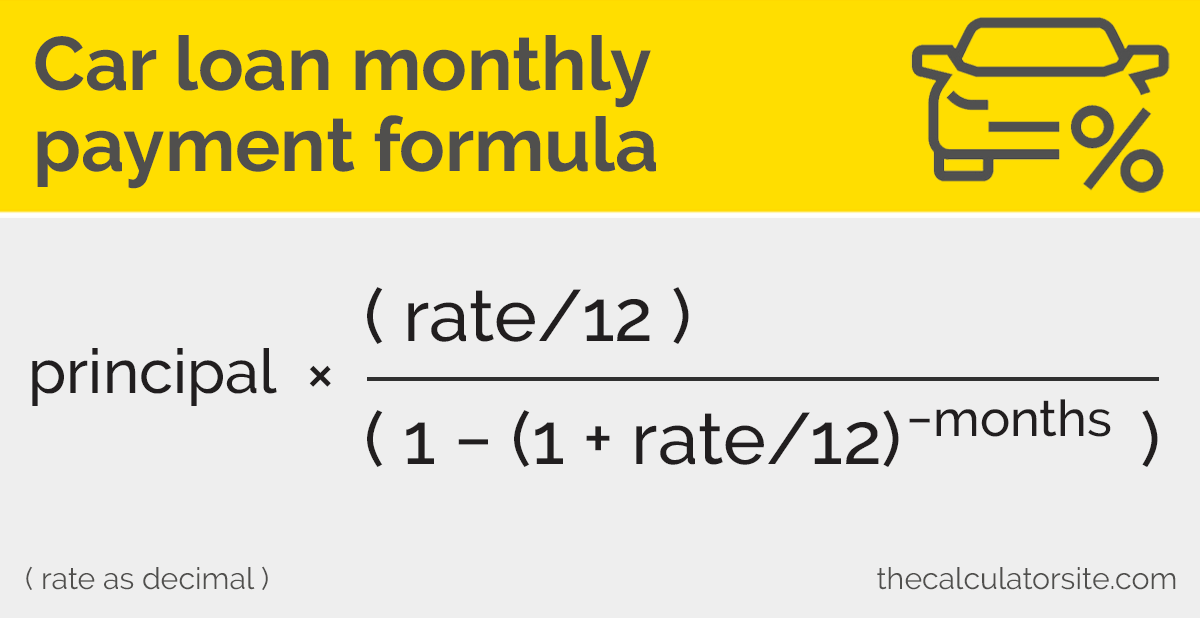
Understanding the Fundamentals of Auto Loan Interest
Before diving into the formulas, it is essential to define the variables that dictate how much you will pay. In the world of personal finance, not all interest is created equal. Auto loans primarily operate on a “simple interest” basis, meaning interest is calculated on the principal balance remaining on the day the payment is due.
What is an Annual Percentage Rate (APR)?
The term “interest rate” and “APR” are often used interchangeably, but they represent different figures. The interest rate is the basic cost of borrowing the principal amount. The APR, however, is a broader measure. It includes the interest rate plus any lender fees, processing charges, or mandatory insurance costs rolled into the loan. When calculating your monthly out-of-pocket costs, the APR provides a more accurate reflection of the total cost of credit. For the purpose of calculation, the APR is the figure you will use to determine your periodic interest rate.
The Role of Your Credit Score in Interest Rates
In the “Money” niche, your credit score is your financial resume. Lenders use this three-digit number to assess risk. A borrower with a “Super Prime” score (above 780) might secure an interest rate of 5%, while a subprime borrower might be quoted 18% or higher. Over a 60-month loan on a $35,000 vehicle, this discrepancy in interest rates can result in a difference of over $13,000 in total interest paid. Understanding this correlation is the first step in realizing that “calculating interest” starts long before you visit the dealership—it starts with credit maintenance.
Fixed vs. Variable Interest Rates
While most auto loans are fixed-rate (meaning the interest rate stays the same for the duration of the loan), some specialized lenders offer variable rates. A fixed-rate loan provides predictability, allowing you to calculate your total interest costs with 100% accuracy on day one. A variable rate, tied to an index like the Prime Rate, means your interest costs could fluctuate, making long-term budgeting more complex.
The Math Behind the Monthly Payment: The Simple Interest Formula
Most auto loans utilize a simple interest amortization schedule. This means that interest is calculated on the outstanding principal balance every month. As you pay down the principal, the amount of interest you owe each month decreases.
The Daily Interest Factor
To understand your monthly interest charge, you must first determine the daily interest factor. Because lenders calculate interest based on the time the money is in your hands, they break your annual rate down into a daily rate. To find this, take your APR and divide it by the number of days in the year.
Formula: (APR / 365) = Daily Interest Rate
For example, if you have a 6% APR:
0.06 / 365 = 0.00016438
This small decimal represents the percentage of your current balance that is “charged” as interest every single day.
Calculating the First Month’s Interest
To find out how much of your very first car payment goes toward interest versus principal, you multiply your starting loan balance by your daily interest rate, and then multiply that by the number of days in the billing cycle (usually 30).
Formula: (Principal Balance × Daily Interest Rate) × 30 = Monthly Interest
If you owe $30,000 at a 6% APR:
($30,000 × 0.00016438) × 30 = $147.94
In this scenario, if your total monthly payment is $580, only $432.06 is actually reducing your debt ($580 – $147.94). The rest is profit for the bank.
How Amortization Impacts Your Balance
Amortization is the process of spreading out loan payments over time. In the early stages of an auto loan, a larger percentage of your payment is diverted to interest because your principal balance is at its highest. As the months progress and your principal drops, the “Daily Interest Factor” is applied to a smaller number, meaning more of your payment starts hitting the principal. This is why paying extra in the first year of a loan is significantly more impactful than paying extra in the final year.
Using Financial Tools and Formulas for Accuracy
While manual calculations are vital for understanding the “why,” financial tools and spreadsheets are better for the “what.” In professional personal finance, we use specific functions to model long-term debt.
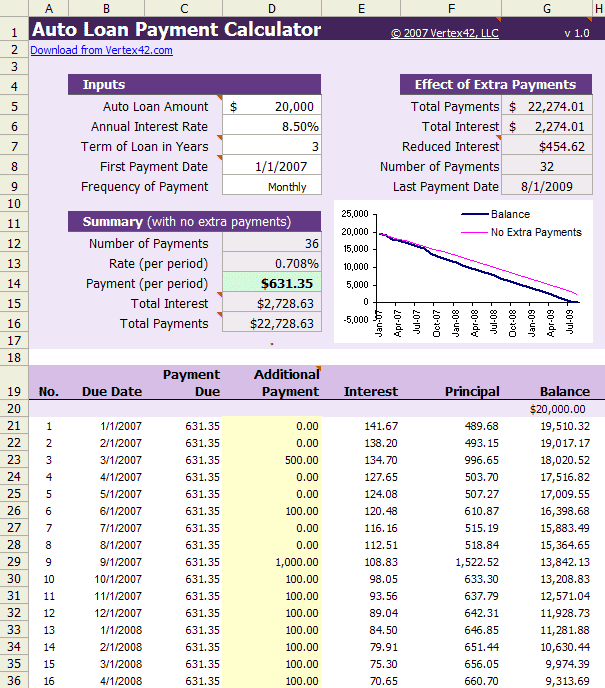
Setting Up an Amortization Schedule in Excel
If you want to see the “long game” of your auto loan, a spreadsheet is your best friend. You can use the PMT function in Excel or Google Sheets to calculate your monthly payment:
=PMT(rate/12, nper, pv)
- Rate/12: Your APR divided by 12 months.
- Nper: The total number of monthly payments (e.g., 60).
- Pv: The “Present Value” or the total amount borrowed.
Once you have the monthly payment, you can build a table that subtracts the interest (Balance × Periodic Rate) from the payment to show the principal reduction. Seeing this visual representation often acts as a catalyst for borrowers to find ways to pay off the loan faster.
Why Online Calculators Are a Starting Point, Not an End
Many consumers rely on “Quick Quote” calculators on dealership websites. While useful, these often omit crucial data points like sales tax, documentation fees, and registration costs. To calculate interest accurately, you must use the “Total Amount Financed,” not just the vehicle’s MSRP. If a car costs $25,000 but you roll $3,000 of taxes and fees into the loan, you are paying interest on $28,000. Always ensure your calculations are based on the “out-the-door” price minus your down payment.
The Impact of Loan Term on Total Interest
One of the most common traps in auto financing is the “low monthly payment” lure. A dealer may offer a 72-month or 84-month loan to make the payment fit your budget. However, a longer term means you are paying interest for a longer period.
- A $30,000 loan at 6% for 60 months results in $4,799 in total interest.
- The same loan for 84 months results in $6,815 in total interest.
By using a financial calculator to compare terms, you can see that the “affordable” monthly payment actually costs you an extra $2,016 in the long run.
Strategies to Minimize Total Interest Paid
Once you understand how to calculate the interest, the next logical step in wealth management is learning how to reduce it. Because auto loans are simple interest loans, you have significant control over the final cost.
Making Bi-Weekly or Principal-Only Payments
If your lender allows it without penalty, making payments every two weeks instead of once a month can shave months off your loan. Because there are 52 weeks in a year, bi-weekly payments result in 13 full monthly payments instead of 12.
Additionally, if you receive a bonus or a tax refund, applying it as a “principal-only” payment drastically reduces the balance that the daily interest factor is applied to. This creates a compounding effect of savings for every month that follows.
The Power of a Larger Down Payment
The most effective way to “calculate” lower interest is to borrow less money. In the “Money” niche, we recommend the 20/4/10 rule: 20% down, a term of no more than 4 years, and total transportation costs (payment + insurance) not exceeding 10% of your gross income. A 20% down payment immediately reduces the principal balance, ensuring that from month one, your interest charges are minimized.
Refinancing: When Does It Make Sense?
Financial markets fluctuate. If you took out a loan when your credit score was 620 and it is now 720, or if market interest rates have dropped, you should recalculate your potential savings through refinancing. By moving your remaining balance to a new loan with a lower APR, you can reduce your monthly interest charge. However, always calculate the “break-even” point—if the new lender charges high origination fees, ensure those fees don’t outweigh the interest savings.

Conclusion: Financial Literacy as a Tool for Savings
Calculating auto loan interest is more than just moving decimals and multiplying fractions; it is about taking command of your financial trajectory. When you understand that interest is a dynamic cost calculated daily, you stop viewing your car payment as a static bill and start viewing it as a balance that can be optimized.
In the realm of personal finance, information is the primary hedge against overspending. By knowing how to calculate your daily interest factor, understanding the weight of amortization, and recognizing the true cost of long-term loans, you position yourself as a savvy consumer. Whether you are currently shopping for a new vehicle or looking to optimize an existing loan, the ability to run these numbers manually or via a spreadsheet ensures that you—not the lender—are in the driver’s seat of your financial future. Knowledge of these mechanics transforms a standard purchase into a calculated move toward greater net worth and financial freedom.
aViewFromTheCave is a participant in the Amazon Services LLC Associates Program, an affiliate advertising program designed to provide a means for sites to earn advertising fees by advertising and linking to Amazon.com. Amazon, the Amazon logo, AmazonSupply, and the AmazonSupply logo are trademarks of Amazon.com, Inc. or its affiliates. As an Amazon Associate we earn affiliate commissions from qualifying purchases.