
In the world of finance, numbers tell a story, and percentages often provide the crucial context. Whether you’re tracking investment growth, calculating sales tax, budgeting for an increase in expenses, or determining a fair tip, the ability to accurately add a percentage to a number is an indispensable skill. It’s more than just arithmetic; it’s a foundational element of financial literacy that empowers individuals and businesses to make informed decisions. This guide will demystify the process, offering clear methods and practical applications rooted deeply in personal and business finance.
Understanding how to correctly add a percentage allows you to look beyond the surface figures, grasping the true impact of changes, growth, or additional costs. It equips you to navigate consumer purchases, evaluate financial products, and strategize for future financial success. Let’s delve into this essential skill, transforming a seemingly simple calculation into a powerful financial tool.
The Foundational Concept: Understanding Percentages
Before we can effectively add a percentage to a number, it’s crucial to have a firm grasp of what a percentage truly represents and how it operates in calculations. This foundational understanding prevents common errors and builds confidence in your financial analyses.
What is a Percentage?
At its core, a percentage is a way of expressing a number as a fraction of 100. The word “percent” literally means “per hundred” or “out of one hundred.” So, 10% means 10 out of 100, or 10/100. It’s a universal way to represent proportions, rates, and parts of a whole, making comparisons easier and more intuitive than dealing with raw fractions. In finance, percentages allow us to express interest rates, discount rates, growth rates, profit margins, and tax rates in a standardized and understandable format.
Converting Percentages to Decimals: The Golden Rule
For any mathematical calculation involving percentages, including adding them to a number, the first and most critical step is to convert the percentage into its decimal equivalent. This is done by dividing the percentage by 100.
For example:
- 10% = 10 / 100 = 0.10
- 25% = 25 / 100 = 0.25
- 5% = 5 / 100 = 0.05
- 125% = 125 / 100 = 1.25
Alternatively, you can achieve the same result by simply moving the decimal point two places to the left. For instance, in 15%, the decimal point is implicitly after the 5 (15.0%). Moving it two places left gives you 0.15.
Why Decimals? Ease of Calculation and Error Prevention
Working with percentages as decimals is essential because computers and calculators (and indeed, most mathematical operations) are designed to handle decimals more directly than percentage symbols. Attempting to multiply a number by “10%” without converting it to 0.10 will lead to incorrect results. The decimal conversion standardizes the value, ensuring that calculations are performed accurately, whether you’re using a basic calculator, a spreadsheet program, or even mental math. This simple conversion step is the linchpin for all subsequent percentage-based financial calculations.
The Core Mechanics: Adding a Percent to a Number
Once you understand percentages and how to convert them into decimals, adding a percentage to a number becomes straightforward. There are two primary methods, each useful in different scenarios and offering varying levels of efficiency depending on your specific financial calculation needs.
Method 1: The Step-by-Step Approach
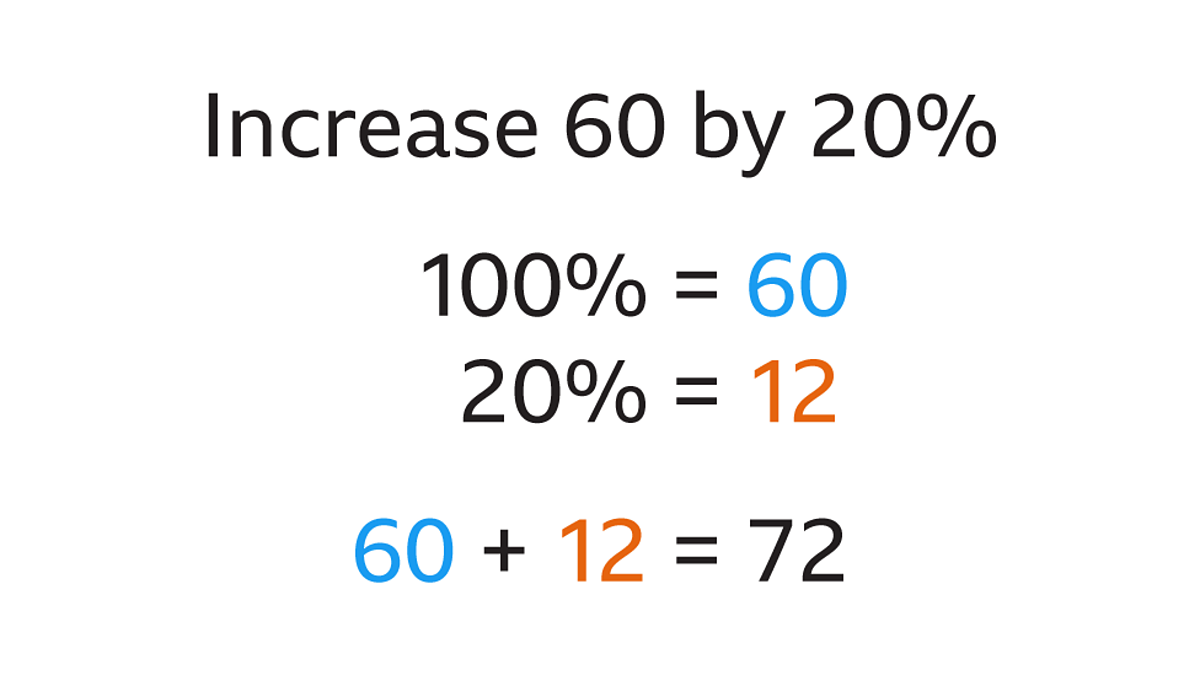
This method is intuitive and excellent for understanding the components of the calculation. It involves two distinct steps:
- Calculate the percentage amount: Convert the percentage to a decimal and multiply it by the original number. This gives you the value of the percentage itself.
- Formula: Percentage Amount = Original Number × (Percentage / 100)
- Add this amount to the original number: Take the calculated percentage amount and add it to your starting number.
- Formula: Final Number = Original Number + Percentage Amount
Example: Calculating Sales Tax on a Purchase
Imagine you’re buying a new gadget for $500, and the sales tax is 8%.
- Convert 8% to a decimal: 8 / 100 = 0.08
- Calculate the sales tax amount: $500 × 0.08 = $40
- Add the sales tax to the original price: $500 + $40 = $540
Your total cost for the gadget, including tax, is $540. This method clearly shows you the exact tax portion you’re paying.
Method 2: The Direct Multiplication Approach
This method is more streamlined, combining the two steps above into a single multiplication. It’s particularly efficient when you only need the final total and not the intermediate percentage amount.
- Add 1 to the decimal percentage: This represents the original number (100%) plus the additional percentage.
- Formula: Multiplier = 1 + (Percentage / 100)
- Multiply the original number by this multiplier:
- Formula: Final Number = Original Number × (1 + Percentage / 100)
Example: Calculating a Salary Increase
Suppose your current salary is $60,000, and you receive a 5% raise.
- Convert 5% to a decimal: 5 / 100 = 0.05
- Create the multiplier: 1 + 0.05 = 1.05
- Multiply your original salary by the multiplier: $60,000 × 1.05 = $63,000
Your new salary after the raise is $63,000. This method is quicker and reduces potential for minor errors by condensing the steps.
Choosing the Right Method
Both methods yield the same correct result.
- Method 1 (Step-by-Step) is ideal when you need to see the component parts of the increase—for example, knowing the exact amount of sales tax or the specific dollar value of a raise. It’s also good for beginners as it visually breaks down the logic.
- Method 2 (Direct Multiplication) is often preferred for speed and efficiency, especially when dealing with multiple calculations or in spreadsheet programs. It’s excellent for calculating compound interest or growth over multiple periods, where the “1 +” factor consistently represents the original base plus the growth.
Practical Applications in Personal Finance
Understanding how to add a percent to a number is not just academic; it’s a daily necessity for effective personal financial management. From managing your budget to making smart purchasing decisions, this skill empowers you to take control of your money.

Budgeting and Savings: Fueling Financial Goals
When budgeting, you might allocate a certain percentage of your income to savings, housing, or entertainment. If your income increases, you’ll need to calculate how that percentage translates to a new dollar amount for each category. For example, if you aim to save 15% of your $4,000 monthly income:
- Calculate 15% of $4,000: $4,000 × 0.15 = $600.
This helps you set clear savings targets and adjust them as your income fluctuates, ensuring you hit your financial milestones. When your income rises, say by 10%, you can quickly calculate your new total income (using Method 2: $4,000 * 1.10 = $4,400) and then re-allocate your savings percentage accordingly.
Discounts and Sales Tax: Decoding the True Cost
Every time you shop, you encounter percentages. Adding sales tax is a classic application. If an item costs $80 and the sales tax is 7.5%, using Method 2:
- $80 × (1 + 0.075) = $80 × 1.075 = $86.
Understanding this helps you avoid surprises at the checkout and ensures you budget for the total price, not just the sticker price. Similarly, when a store announces a “20% off” sale, you might calculate the original price and then add back any applicable sales tax to find your true cost.
Interest and Loan Repayments: The Cost of Borrowing, The Gain of Saving
Interest is arguably the most common and impactful financial percentage. Whether it’s simple interest on a savings account or the interest component of a loan payment, the concept is the same.
If you have $1,000 in a savings account earning 2% simple annual interest, after one year:
- Interest earned: $1,000 × 0.02 = $20
- New total: $1,000 + $20 = $1,020
This calculation forms the basis for understanding how your money grows or how much extra you’ll pay over the life of a loan. While compound interest involves more complex iterations, the core principle of adding a percentage to a growing principal remains fundamental.
Price Changes: Inflation and Value Over Time
Inflation is a key economic indicator, representing the rate at which the general level of prices for goods and services is rising. If an item costs $100 today and inflation is 3% next year, a similar item is likely to cost:
- $100 × 1.03 = $103.
Understanding this helps you grasp the erosion of purchasing power over time and plan for future expenses, such as retirement, where goods and services will undoubtedly cost more.
Strategic Applications in Business & Investing
Beyond personal finances, the ability to add a percentage to a number is a cornerstone of business profitability, investment analysis, and economic forecasting.
Profit Margins and Markups: Driving Business Success
Businesses frequently use percentages for pricing strategies. A markup percentage is added to the cost of a product to determine its selling price. If a product costs a retailer $50 to acquire and they want a 40% markup:
- Markup amount: $50 × 0.40 = $20
- Selling price: $50 + $20 = $70
Alternatively, using Method 2: $50 × (1 + 0.40) = $50 × 1.40 = $70.
Accurate markup calculations ensure profitability and competitive pricing, directly impacting a business’s bottom line.
Investment Growth: Tracking Returns and Portfolio Appreciation
For investors, adding percentages to numbers is crucial for understanding how investments perform. If you invest $10,000 and your portfolio grows by 8% in a year:
- Growth amount: $10,000 × 0.08 = $800
- New portfolio value: $10,000 + $800 = $10,800
Using Method 2: $10,000 × 1.08 = $10,800.
This helps you track the appreciation of your assets, project future growth, and make informed decisions about your investment strategy. Understanding compounded returns, where the percentage growth is added to a new, larger principal each period, is fundamental to long-term wealth building.
Business Discounts and Promotions: Strategic Revenue Management
When a business offers a discount, they’re typically calculating a reduction. However, understanding the reverse calculation—what the original price must have been to arrive at a discounted price, or how much more needs to be added to a wholesale price to account for a desired profit margin after a discount—still relies on the fundamental understanding of how percentages interact with numbers. Businesses also need to calculate the impact of a price increase. If a product costs $20 and they increase the price by 15%:
- New price: $20 × (1 + 0.15) = $20 × 1.15 = $23.
This helps in strategizing promotions and managing revenue targets.
Common Pitfalls and How to Avoid Them
Despite the apparent simplicity, there are common mistakes people make when adding percentages to numbers. Being aware of these can significantly improve your accuracy in financial calculations.
Incorrect Decimal Conversion
The most frequent error is forgetting to convert the percentage to a decimal before multiplying. Forgetting to divide by 100 or move the decimal two places to the left will result in a number that is 100 times too large (e.g., using 10 instead of 0.10 for 10%). Always double-check your decimal conversion before proceeding.
Misinterpreting “Percent Of” vs. “Percent Increase/Decrease”
It’s crucial to distinguish between simply finding a percentage of a number and calculating a percentage increase. For example, 10% of $100 is $10. Adding 10% to $100 makes it $110. While this article focuses on the “add to” scenario, ambiguity in the problem statement can lead to errors. Always ensure you are clear about what the percentage refers to and which base number it applies to.
Order of Operations: Applying Discounts Before or After Tax
In scenarios involving both discounts and sales tax, the order matters significantly. Generally, discounts are applied first, and then sales tax is calculated on the discounted price.
- Correct: Original Price – Discount = Discounted Price. Then, Discounted Price + Sales Tax = Final Price.
- Incorrect: Original Price + Sales Tax – Discount.
Failing to follow the correct order of operations can lead to paying more or less than intended, impacting your budget or business revenue.
Conclusion
The ability to accurately add a percentage to a number is more than a mere mathematical trick; it’s a foundational competency that underpins informed financial decision-making. From the daily minutiae of budgeting and shopping to the strategic planning of investments and business operations, percentages are an omnipresent force in the financial landscape.
By mastering the simple conversion of percentages to decimals and understanding the two core methods of calculation, you gain a powerful tool. This skill empowers you to confidently navigate sales tax, interest rates, salary increases, investment returns, and profit margins. It sharpens your analytical abilities, enabling you to spot hidden costs, identify opportunities for growth, and take greater control over your financial destiny. Practice these calculations, apply them to your everyday financial interactions, and unlock a deeper understanding of the numbers that shape your economic world.
aViewFromTheCave is a participant in the Amazon Services LLC Associates Program, an affiliate advertising program designed to provide a means for sites to earn advertising fees by advertising and linking to Amazon.com. Amazon, the Amazon logo, AmazonSupply, and the AmazonSupply logo are trademarks of Amazon.com, Inc. or its affiliates. As an Amazon Associate we earn affiliate commissions from qualifying purchases.