
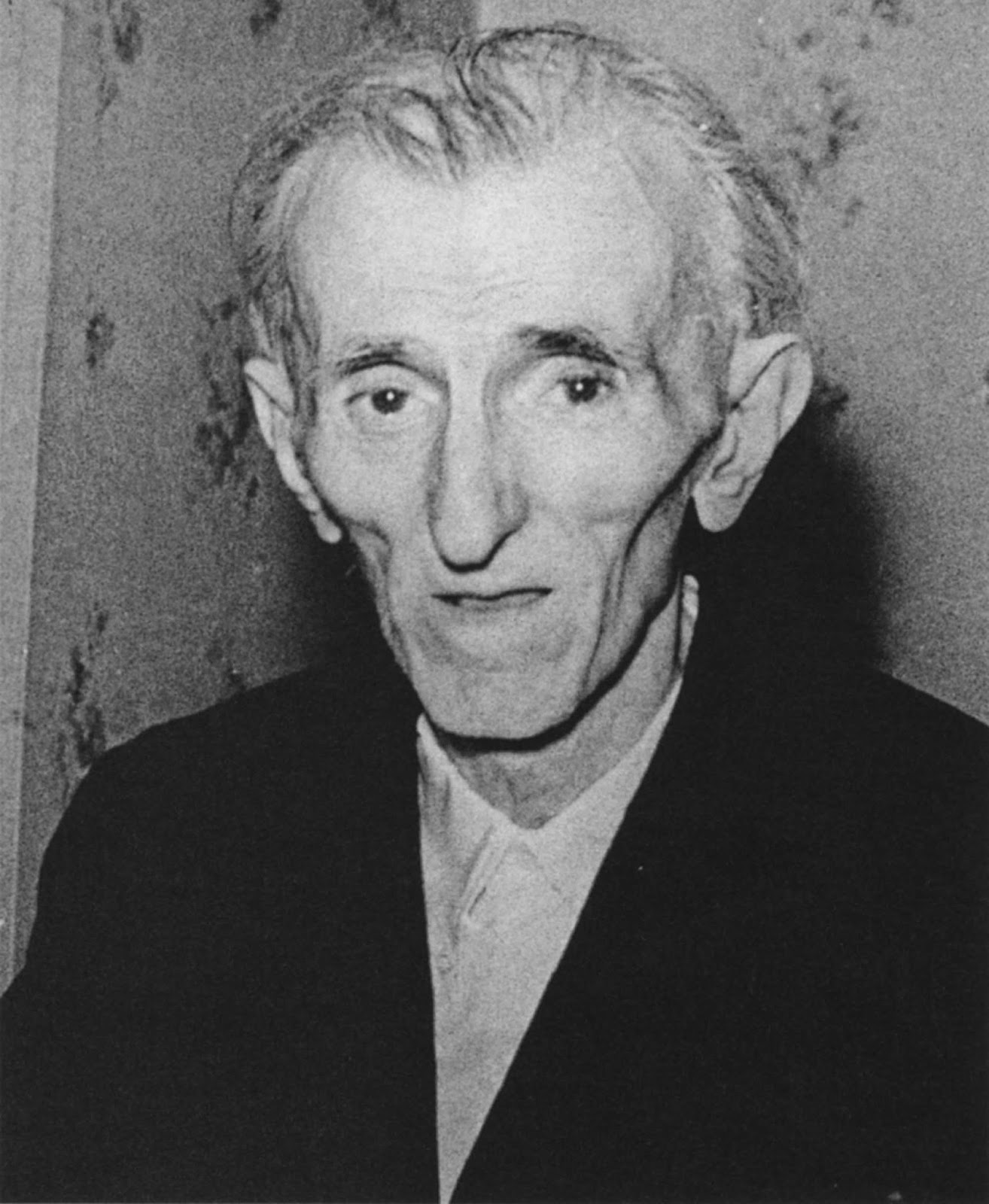
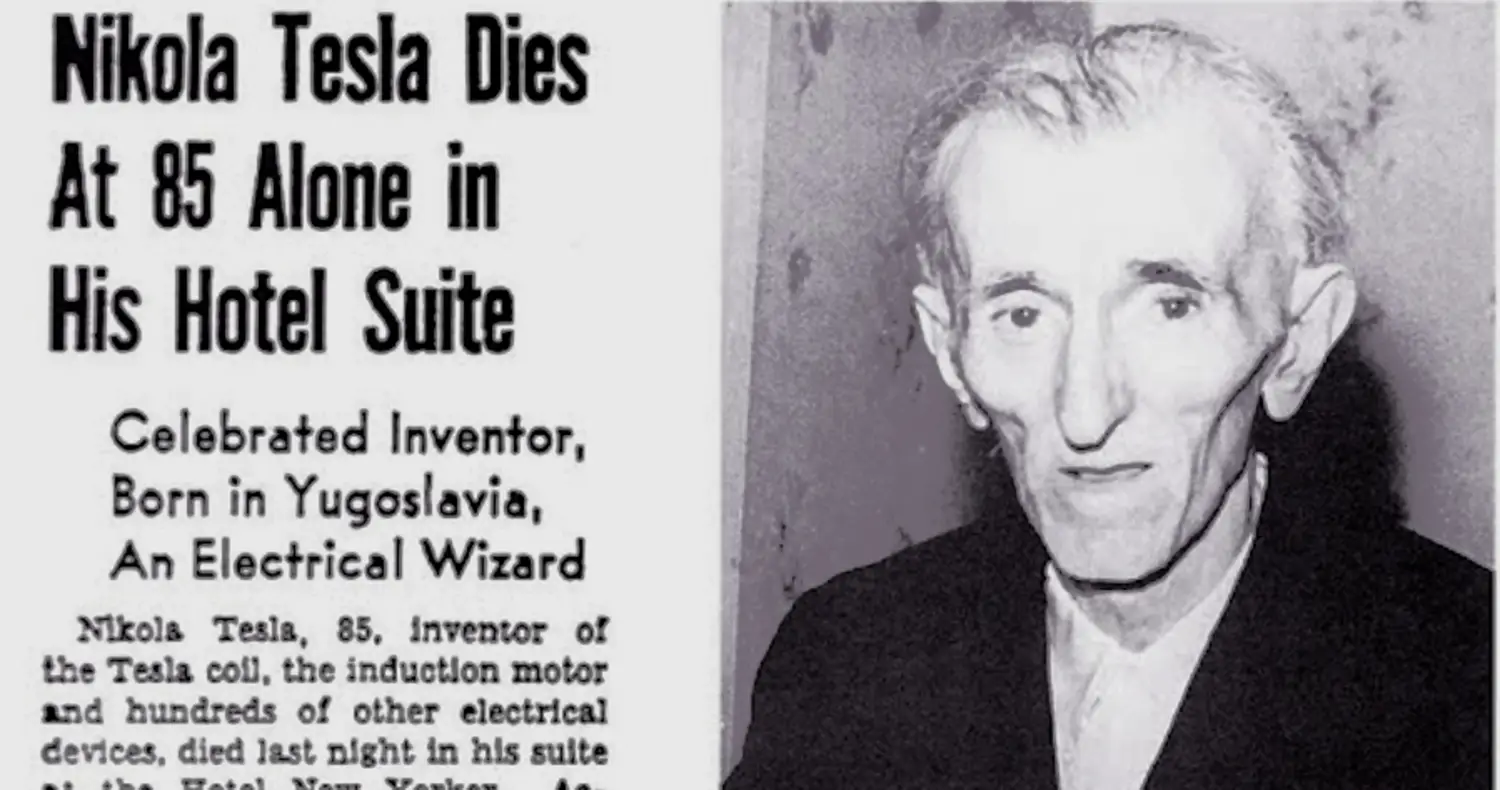
Nikola Tesla, a name synonymous with genius, innovation, and the very fabric of our electrical world, passed away at the age of 86. His death, on January 7, 1943, marked the end of an extraordinary life dedicated to pushing the boundaries of scientific understanding and technological application. While the simple answer to his age at death is straightforward, the true significance lies not just in the number of years he lived, but in the astounding volume of technological breakthroughs he gifted to humanity during those years. His journey from a visionary young engineer to a pioneering inventor profoundly shaped the technological landscape of the 20th century and continues to influence our digital and electrified world today. This article delves into the technological odyssey of Nikola Tesla, exploring the inventions, concepts, and enduring legacy he cultivated throughout his long and impactful life.
The Genesis of a Technological Revolution
Nikola Tesla’s life was a testament to relentless innovation, starting from his early days and culminating in a legacy that powers our modern existence. His profound understanding of electromagnetism and mechanics allowed him to conceive and develop technologies that were centuries ahead of their time, laying the groundwork for much of what we consider standard technology today.
Early Life and Formative Engineering Prowess
Born in Smiljan, Austrian Empire (modern-day Croatia) in 1856, Tesla displayed an early aptitude for invention and a vivid imagination. His formal education at the Polytechnic Institute in Graz, Austria, and later the University of Prague, provided him with a rigorous foundation in engineering and physics. It was during these formative years that the seeds of his greatest ideas began to sprout. He grappled with the inefficiencies of direct current (DC) motors and generators, envisioning a superior system that could revolutionize power transmission. This early dissatisfaction with existing technology was a defining characteristic of his career, driving him to seek radical, more efficient solutions. His initial work at the Continental Edison Company in Paris, where he improved dynamos and motors, further honed his practical engineering skills, setting the stage for his groundbreaking independent work.
The Alternating Current Breakthrough
Tesla’s most celebrated technological contribution, and arguably the most impactful, was his development of the alternating current (AC) electrical system. In the late 19th century, the world was on the cusp of electrification, but the prevailing direct current (DC) system, championed by Thomas Edison, had significant limitations. DC power could not be easily stepped up or down in voltage, meaning power plants had to be located very close to consumers, leading to an inefficient and localized power distribution network.
Tesla’s AC system, based on his polyphase induction motor and transformer designs, offered a revolutionary solution. AC could be transmitted efficiently over long distances at high voltages and then easily “transformed” to lower, safer voltages for consumer use. This technological leap solved the critical problem of widespread power distribution, making universal electrification a viable reality. The “War of the Currents” between Tesla’s AC and Edison’s DC was a pivotal moment in technological history, culminating in Tesla’s victory with the backing of George Westinghouse. This triumph solidified AC as the standard for power transmission globally, a standard that remains in use today.
Laying the Groundwork for Modern Electrification
The adoption of Tesla’s AC system was nothing short of a technological paradigm shift. It enabled the construction of large central power stations, like the Niagara Falls hydroelectric plant, which could generate electricity on a massive scale and transmit it across vast regions. This ushered in an era of unprecedented industrial growth and societal transformation. Factories could operate more efficiently, homes could be lit and heated with ease, and entire cities could thrive with reliable and accessible power. Tesla’s technological ingenuity didn’t just improve existing systems; it created an entirely new infrastructure that catalyzed the Second Industrial Revolution and laid the foundational grid upon which all subsequent electrical technologies would be built. His AC system remains the backbone of power grids worldwide, a silent testament to his enduring foresight and engineering prowess.
Beyond AC: Pioneering Wireless and Remote Technologies
While the AC system is Tesla’s most enduring and widely recognized invention, his technological scope extended far beyond the realm of power transmission. He was a prolific inventor whose mind envisioned a future deeply integrated with wireless communication, remote control, and even the transmission of energy without wires – concepts that were radically futuristic in his time but are commonplace today.
Radio and Wireless Communication
Before Guglielmo Marconi received credit for the invention of radio, Tesla had already conducted extensive research and demonstrated the principles of wireless communication. In 1893, at a National Electric Light Association convention in St. Louis, Missouri, he publicly demonstrated wireless communication, transmitting electromagnetic energy without wires. He designed and built advanced radio frequency oscillators, coils, and transmitting apparatus, which were fundamentally similar to the components used in early radio. His patented technologies included systems for transmitting electrical energy and wireless control of moving vessels, which inherently involved radio waves. It was later, in 1943, after his death, that the U.S. Supreme Court upheld Tesla’s patent precedence over Marconi’s, acknowledging his foundational contributions to radio technology. His work provided the essential theoretical and practical underpinnings for the wireless revolution that followed.
Remote Control and Automation’s Dawn
In 1898, at Madison Square Garden, Tesla unveiled another astonishing technological feat: a radio-controlled boat he dubbed a “teleautomaton.” This demonstration marked the birth of remote control technology. Using a portable radio transmitter, Tesla maneuvered the small vessel around a pool, baffling onlookers who couldn’t comprehend how the boat was moving without physical connection. This wasn’t merely a parlor trick; it was a profound demonstration of automation and the potential for machines to be controlled from a distance using wireless signals. His patents on “Method of and Apparatus for Controlling Mechanism of Moving Vessels or Vehicles” laid the theoretical groundwork for modern robotics, drones, and automated systems. His vision extended to remote-controlled torpedoes and other military applications, showcasing a mind that was already grappling with the implications of automated warfare and industrial automation.
Visions of Wireless Energy Transmission
Perhaps Tesla’s most ambitious, yet ultimately unfulfilled, technological vision was the global wireless transmission of electrical energy. His colossal Wardenclyffe Tower project, built on Long Island, New York, was designed to be a central broadcast station for both wireless communication and transatlantic wireless power transmission. He believed that he could transmit electrical power through the Earth and atmosphere, enabling free, abundant energy access for everyone. While the project ultimately failed due to financial constraints and skepticism from investors who couldn’t grasp its immense potential or profitability model, the underlying scientific principles Tesla explored were revolutionary. His detailed schematics and theoretical frameworks for resonant power transfer and high-frequency alternating currents continue to inspire research in areas like inductive charging, resonant coupling, and other forms of short-range wireless power transmission seen in modern devices. Wardenclyffe stands as a monument to his daring spirit and his belief in a future where energy itself could be a wireless utility.
The Twilight Years: Unrecognized Genius and Persistent Innovation
As Tesla aged, his public profile shifted. While his earlier triumphs had garnered significant attention, his later years were marked by a period of relative isolation, financial struggle, and an increasing focus on more abstract or esoteric scientific concepts. Yet, even in this phase, his mind remained fertile ground for technological ideas, some of which were misunderstood or simply too far ahead of their time.

Continued Experimentation Amidst Isolation
Despite dwindling financial resources and a growing reputation for eccentricity, Tesla never ceased his experimentation and intellectual pursuits. He continued to develop complex theories and intricate designs in his hotel rooms, which served as his makeshift laboratories. He conceptualized designs for flying machines that could take off vertically (precursors to VTOL aircraft), explored theories on particle beam weapons (dubbed “death rays” by the press), and continued to refine his ideas on harnessing cosmic energy. Many of these later concepts, while often lacking practical development due to his limited resources, reveal a mind that was constantly pushing the boundaries of physics and engineering. His detailed notes and drawings from this period, though sometimes cryptic, offer glimpses into an inventor still grappling with fundamental forces and envisioning futuristic technologies.
The Challenges of Practical Implementation
One of the recurring themes in Tesla’s career, particularly in his later years, was the chasm between his brilliant technological ideas and their practical, commercial implementation. Unlike Edison, who was a shrewd businessman as well as an inventor, Tesla often struggled with the financial and entrepreneurial aspects of bringing his inventions to market. His grandiose visions, like Wardenclyffe, required immense capital and a level of societal acceptance that wasn’t always present. Investors often found his concepts too radical or lacked the patience for long-term, speculative development. Furthermore, his preference for working in solitude and his sometimes-strained relationships with collaborators often hindered the systematic development and promotion of his later inventions. This meant that many of his advanced concepts remained in theoretical stages or as prototypes, awaiting future technological advancements and understanding to be fully realized.
His Passing and the Enduring Technological Footprint
Nikola Tesla’s death marked the end of an era, but not the end of his influence. His passing brought about a unique moment of governmental concern over his intellectual property and catalyzed a renewed appreciation for his monumental technological contributions.
The Final Chapter: Nikola Tesla’s Death at 86
On January 7, 1943, Nikola Tesla died alone in room 3327 of the New Yorker Hotel. He was 86 years old. His death, during the height of World War II, sparked immediate interest from the U.S. government due to the potential strategic value of his extensive research notes and patents. For decades, he had been a celebrated but also controversial figure, whose later claims about advanced weaponry and energy systems had both fascinated and bewildered the public. His passing brought a quiet end to a life that had been anything but quiet in its impact on technology.
Government Interest and the Legacy of His Papers
Immediately following his death, the U.S. government, through the Alien Property Custodian, seized all of Tesla’s papers, scientific findings, and laboratory contents. This extraordinary measure was driven by fears that his advanced technological research, particularly in areas like remote control, energy transmission, and particle beam technology, could fall into enemy hands during wartime. Hundreds of boxes of his material were scrutinized by government scientists and engineers. While much of it was deemed theoretical or not immediately applicable, the sheer volume and depth of his work underscored the perceived immense technological value of his intellect. This governmental interest highlights the critical role his inventions played in national security considerations, even if his immediate contributions weren’t fully understood at the time.
The Reawakening of a Tech Icon
For a period after his death, Tesla’s legacy faded somewhat from public consciousness, overshadowed by other inventors and the commercialization of technologies he had pioneered. However, in recent decades, there has been a significant reawakening of interest in Nikola Tesla as a technological icon. His foresight into wireless communication, robotics, and the potential of clean energy has resonated strongly with modern technological trends. The naming of the electric vehicle company “Tesla, Inc.” in his honor is perhaps the most visible manifestation of this resurgence, solidifying his name as a symbol of cutting-edge innovation and sustainable technology. This renewed appreciation is not merely biographical; it is a recognition of how profoundly his technological vision continues to inspire and inform contemporary engineering and scientific pursuits.
Tesla’s Immortal Contribution to Contemporary Tech
Nikola Tesla’s life, though concluding at 86, laid the enduring groundwork for much of the technological world we inhabit. His inventions are not relics of the past but fundamental pillars upon which modern technology is built.
Powering Our Digital Age: The Unseen Influence of AC
Every time you plug in a device, switch on a light, or charge your smartphone, you are directly benefiting from Nikola Tesla’s most significant technological contribution: the alternating current (AC) electrical system. It remains the global standard for power generation, transmission, and distribution. Without the efficient, long-distance transmission capabilities of AC, our interconnected, digitized world would be impossible. Modern data centers, supercomputers, and the vast internet infrastructure all rely on the stable and efficient power supply made possible by Tesla’s polyphase AC system. His invention is the unseen force that powers the entire digital age.
From Remote Control to the Internet of Things
Tesla’s pioneering work in remote control with his “teleautomaton” boat was a conceptual leap that presaged the entire field of automation and cybernetics. Today, this legacy is evident everywhere, from industrial robots in manufacturing plants to consumer drones, autonomous vehicles, and the sprawling network of smart devices that constitute the Internet of Things (IoT). Every remote-controlled device, every smart home appliance communicating wirelessly, and every robotic system owes a debt to Tesla’s early demonstrations of controlling machines from a distance using electromagnetic waves. He envisioned a world where machines could perform tasks intelligently and autonomously, a vision that is rapidly becoming our reality.
The Inspiration for Future Tech Innovators
Beyond his specific inventions, Tesla’s life stands as a beacon of inspiration for countless engineers, scientists, and entrepreneurs in the tech sector. His relentless pursuit of revolutionary ideas, his willingness to challenge established paradigms, and his unwavering belief in the power of innovation to improve humanity continue to motivate new generations. He exemplified the spirit of a true visionary who dared to dream big and then dedicated his life to making those dreams a technological reality. His name has become synonymous with innovation, future-forward thinking, and the relentless pursuit of technological advancement – a guiding star for those who seek to push the boundaries of what is possible.
Nikola Tesla lived a long and incredibly productive life, passing away at the age of 86. However, measuring his impact merely by the length of his life would be a disservice to his unparalleled genius. His journey was a continuous exploration of the technological frontier, leaving behind an indelible mark on everything from global power grids to wireless communication and automation. He didn’t just invent; he envisioned, he pioneered, and he laid the technological groundwork for the future. His death marked the end of an individual life, but his legacy in the world of technology is truly immortal, continuing to illuminate and power our world in countless, often unseen, ways.
aViewFromTheCave is a participant in the Amazon Services LLC Associates Program, an affiliate advertising program designed to provide a means for sites to earn advertising fees by advertising and linking to Amazon.com. Amazon, the Amazon logo, AmazonSupply, and the AmazonSupply logo are trademarks of Amazon.com, Inc. or its affiliates. As an Amazon Associate we earn affiliate commissions from qualifying purchases.