
For many Americans, Social Security is the cornerstone of retirement planning. Yet, despite its importance, the program remains one of the most misunderstood financial systems in the United States. Determining exactly how much you will receive is not a matter of guesswork; it is a calculated result of your lifetime earnings, the age at which you choose to retire, and the specific formulas used by the Social Security Administration (SSA). Understanding these variables is essential for anyone looking to build a robust financial strategy for their later years.
The Core Mechanics: How the Social Security Administration Calculates Your Benefit
At its heart, Social Security is designed to replace a portion of your pre-retirement income based on your highest-earning years. However, the calculation is more nuanced than a simple average of your salary.
Your 35 Highest-Earning Years
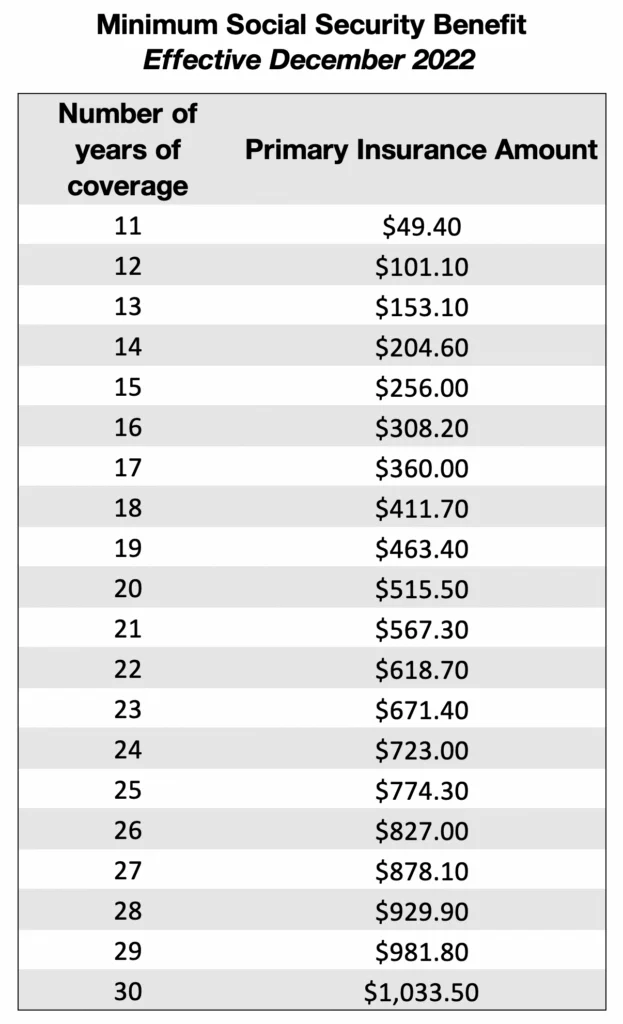
The SSA looks at your entire work history, but they only count your top 35 years of earnings. If you worked for 40 years, the five years where you earned the least are dropped. Conversely, if you only worked for 25 years, the SSA will include 10 years of “zeros” in your average, which significantly pulls down your potential benefit. For those aiming to maximize their checks, ensuring a full 35-year work history is the first step in a professional financial plan.
Indexed Earnings and the AIME
The SSA does not just look at the raw dollar amount you earned in 1985. Because of inflation, $20,000 in the 80s had much more purchasing power than $20,000 today. To account for this, the SSA uses “indexing” to bring your past earnings up to modern standards. Once these figures are indexed, they are added together and divided by 420 (the number of months in 35 years) to arrive at your Average Indexed Monthly Earnings (AIME). This figure represents the base upon which your specific benefit is built.
The Primary Insurance Amount (PIA) and Bend Points
Social Security is a progressive system, meaning it is designed to provide a higher “replacement rate” for lower-income earners than for high-income earners. This is achieved through “bend points.” The SSA applies a formula to your AIME: you receive 90% of the first chunk of your earnings, 32% of the next chunk, and 15% of any amount above that. The resulting total is your Primary Insurance Amount (PIA), which is the monthly benefit you are entitled to if you retire exactly at your Full Retirement Age (FRA).
The Impact of Timing: When You Claim Matters
While your PIA is the “baseline” of your benefit, the actual check you receive depends heavily on when you decide to flip the switch. In the world of personal finance, the “when” is often as important as the “how much.”
Full Retirement Age (FRA) Explained
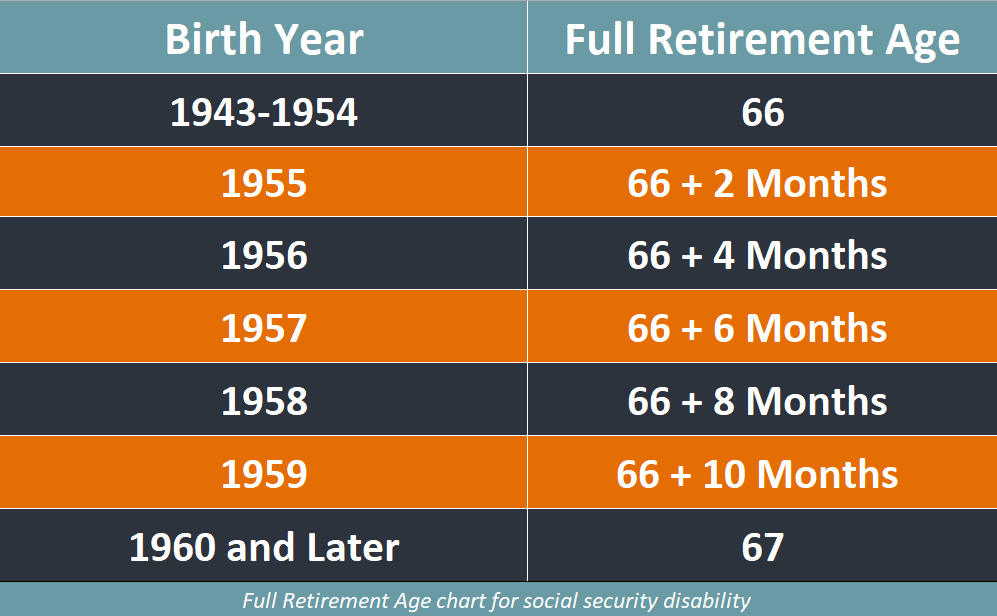
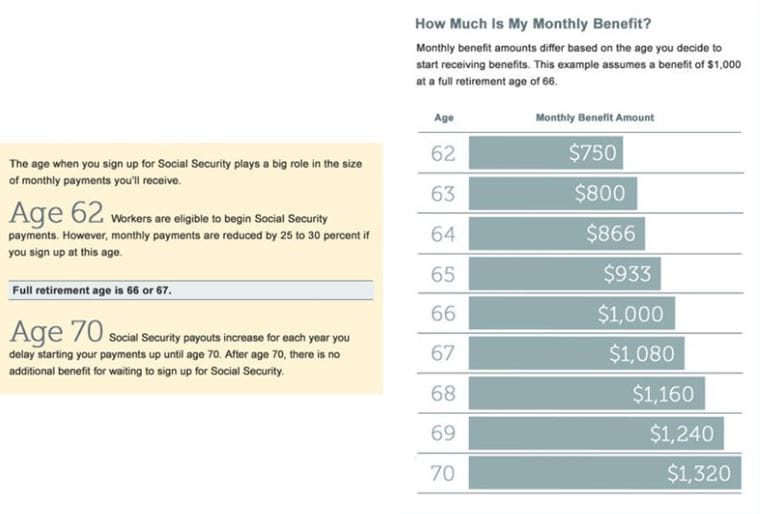
Your Full Retirement Age is the age at which you are entitled to 100% of your PIA. For anyone born in 1960 or later, the FRA is 67. If you were born earlier, your FRA might be 66 and a few months. Claiming exactly at this age ensures you get the benefit you earned through your AIME calculation without any reductions or credits.
The Cost of Early Filing (Age 62)
You can choose to claim Social Security as early as age 62, but there is a steep price for doing so. Claiming early results in a permanent reduction of your monthly benefit—up to 30% if your FRA is 67. From a financial perspective, filing at 62 is often seen as a “liquidity move” for those who need the cash immediately or have health concerns that might shorten their lifespan. However, for those with a longer life expectancy, filing early can result in hundreds of thousands of dollars in “lost” potential income over a lifetime.
The Reward for Delayed Retirement (Age 70)
On the opposite end of the spectrum is the strategy of delayed claiming. For every year you wait past your FRA (up until age 70), your benefit increases by approximately 8% per year. This is known as “Delayed Retirement Credits.” By waiting until age 70, a person with an FRA of 67 would receive 124% of their PIA. In today’s low-yield environment, a guaranteed 8% annual increase is one of the most powerful “investment returns” available in any financial portfolio.
Factors Beyond Basic Earnings
Calculating your personal benefit is only half the battle. Social Security also accounts for family structures, inflation, and the tax man, all of which influence the “net” amount that actually hits your bank account.
Cost-of-Living Adjustments (COLA)
Social Security is one of the few retirement income sources that is indexed for inflation. Every year, the SSA evaluates the Consumer Price Index for Urban Wage Earners and Clerical Workers (CPI-W). If the cost of living has gone up, your benefits increase via a COLA. This is a vital tool for maintaining purchasing power over a retirement that could last 30 years or more. Without COLA, the real value of your benefit would be eroded by the rising costs of healthcare and housing.
Spousal and Survivor Benefits
Social Security is not just an individual benefit; it is a family protection plan. A lower-earning spouse is generally entitled to a “spousal benefit” equal to up to 50% of the higher-earning spouse’s PIA. Furthermore, if a spouse passes away, the survivor can often step into the higher monthly benefit amount. Coordinating these benefits requires a sophisticated understanding of how two people’s work histories interact, particularly for couples with a large gap in lifetime earnings.
The Role of Taxes on Your Benefits
Many retirees are surprised to find that their Social Security benefits are taxable. If your “provisional income” (your adjusted gross income plus non-taxable interest plus half of your Social Security benefits) exceeds certain thresholds, up to 85% of your benefits can be subject to federal income tax. For those with significant 401(k) or IRA distributions, managing these tax “cliffs” is a critical part of wealth preservation in retirement.
Strategies to Maximize Your Monthly Check
Knowing how much you will get is the first step; knowing how much you could get is the second. Professional financial planning often involves specific maneuvers to boost that monthly check.
Increasing Your Income During Peak Earning Years
Since the SSA uses your top 35 years, replacing a low-earning year from your 20s with a high-earning year in your 50s or 60s can move the needle on your AIME. Many professionals choose to work an extra two or three years at the end of their careers specifically to “scrub” lower-income years from their Social Security record.
Coordinating with Your Spouse
Couples should view Social Security as a joint asset. A common strategy is for the lower-earning spouse to claim their benefit early to provide cash flow, while the higher-earning spouse delays until age 70. This maximizes the survivor benefit, ensuring that when one spouse dies, the remaining spouse is left with the highest possible monthly payment for the rest of their life.
The “Wait and See” Approach for High Earners
For those with significant private savings, it often makes sense to spend down IRA or 401(k) assets between ages 62 and 70 to allow the Social Security benefit to grow. This essentially “converts” taxable retirement savings into a larger, inflation-protected, government-guaranteed annuity. This strategy acts as “longevity insurance,” protecting the retiree from the risk of outliving their private savings.
Integrating Social Security into Your Broader Financial Portfolio
Finally, it is essential to remember that Social Security was never intended to be a retiree’s sole source of income. It was designed to be one leg of a “three-legged stool,” alongside personal savings and employer-sponsored pensions.
Social Security as Longevity Insurance
In a modern financial context, Social Security functions best as a hedge against living too long. While a stock portfolio might fluctuate with the market, your Social Security check remains steady and increases with inflation. By treating it as the “fixed-income” or “bond” portion of your portfolio, you may feel more comfortable taking calculated risks with your other investments.
The 4% Rule and Benefit Offsets
When calculating how much you need to save for retirement, you must factor in your Social Security estimate. If you need $6,000 a month to live, and Social Security provides $2,500, you only need to generate $3,500 from your private portfolio. Using the “4% rule” of thumb, this significantly reduces the total “nest egg” required to retire comfortably, allowing for more flexibility in your working years.
Digital Tools for Estimating Your Future Income
The most accurate way to answer “how much will I get?” is to create a “my Social Security” account at SSA.gov. This portal provides a personalized statement based on your actual earnings record. It allows you to run “what-if” scenarios, showing how your benefit changes if you stop working at 62 versus 70. Combining these official estimates with professional financial planning software can provide a clear, data-driven roadmap for your financial future.
Social Security is a complex but predictable system. By understanding the math behind the 35-year average, the importance of the Full Retirement Age, and the tax implications of your benefits, you can transform Social Security from a mysterious government program into a powerful, strategic asset. Knowing exactly what to expect allows you to retire not with hope, but with certainty.
aViewFromTheCave is a participant in the Amazon Services LLC Associates Program, an affiliate advertising program designed to provide a means for sites to earn advertising fees by advertising and linking to Amazon.com. Amazon, the Amazon logo, AmazonSupply, and the AmazonSupply logo are trademarks of Amazon.com, Inc. or its affiliates. As an Amazon Associate we earn affiliate commissions from qualifying purchases.