
In the contemporary automotive landscape, technology has transitioned from being a luxury to a fundamental pillar of safety and convenience. Among the most transformative advancements is the backup camera—a piece of hardware so vital that it became mandatory for all new vehicles manufactured in the United States after May 2018. However, for the millions of vehicles produced before this mandate, or for those seeking to upgrade their factory-standard equipment, understanding the technical nuances and the associated costs of installation is essential.
The question of “how much to install a backup camera” is not merely about a price tag; it is an exploration into hardware quality, digital integration, and the technical labor required to bridge the gap between older analog vehicles and the modern digital ecosystem.
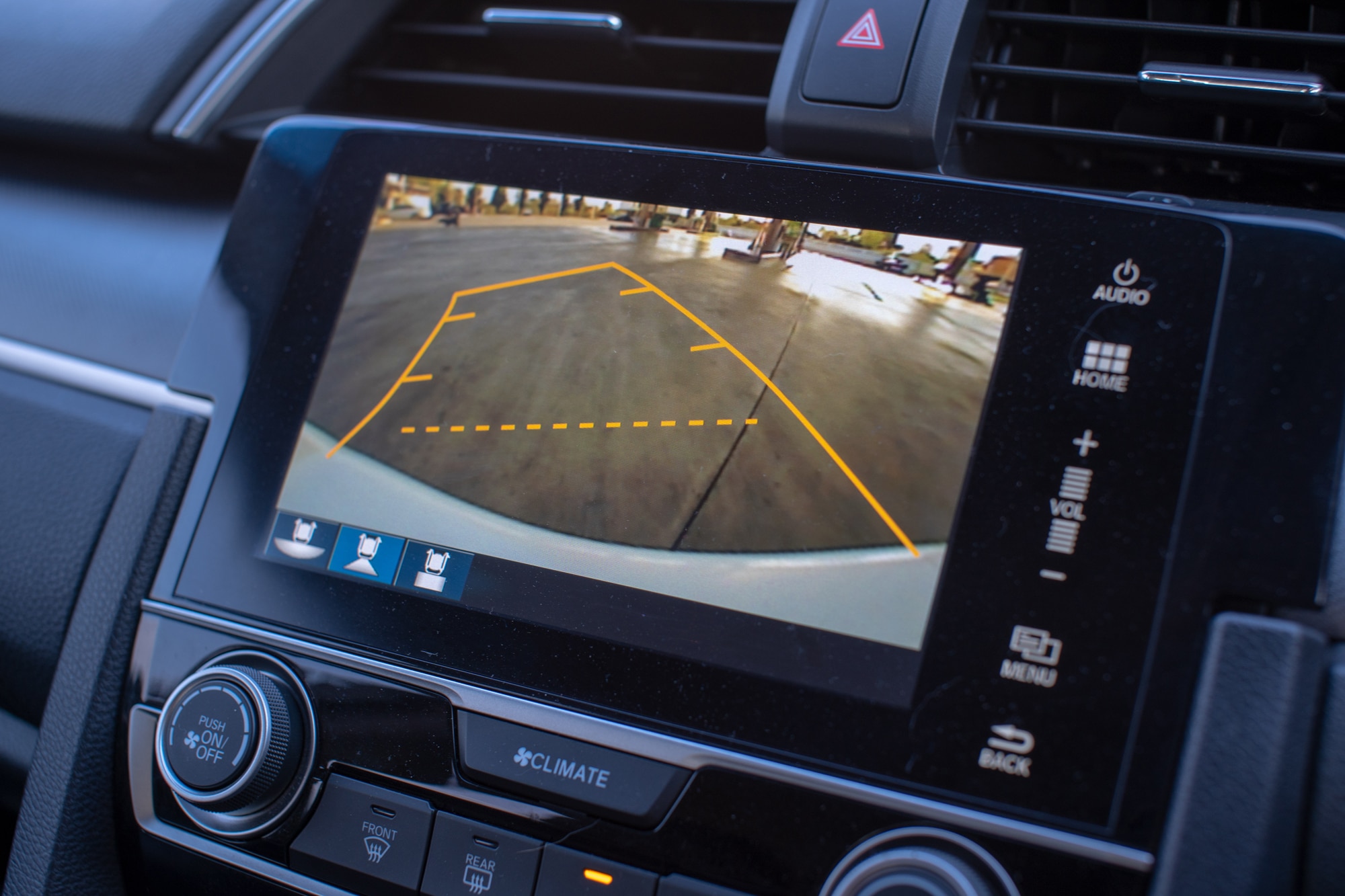
1. Decoding the Hardware: Sensor Technology and Signal Transmission
Before discussing the price of installation, one must understand the technical components that dictate the cost. Not all backup cameras are created equal, and the technology under the hood—or rather, under the trunk—varies significantly in terms of resolution, light sensitivity, and data transmission.
CMOS vs. CCD Sensor Technology
The heart of any backup camera is its image sensor. Most entry-level aftermarket cameras use CMOS (Complementary Metal-Oxide Semiconductor) sensors. These are cost-effective, consume less power, and are compact. However, tech enthusiasts often prefer CCD (Charge-Coupled Device) sensors. CCD sensors offer superior performance in low-light conditions and provide a higher signal-to-noise ratio, resulting in a much clearer image during nighttime reversing. Choosing between these two technologies typically accounts for a $30 to $100 variance in the initial hardware price.
Wired vs. Wireless Data Transmission
From a technical standpoint, the method of transmitting the video feed to the dashboard is a major cost driver.
- Wired Systems: These are the gold standard for reliability. They require a physical video cable (usually an RCA or proprietary multi-pin cable) to be run from the rear bumper, through the vehicle’s interior panels, to the head unit. While the hardware is cheaper, the technical labor is significantly higher.
- Wireless Systems: These utilize digital signals (often 2.4GHz or Wi-Fi) to transmit the image. While easier to install, high-quality digital wireless systems are more expensive than their wired counterparts to ensure there is no “ghosting” or interference from other electronic devices.
Resolution and Viewing Angle
Modern tech has pushed backup cameras into the realm of High Definition (HD). While a standard 480p resolution might suffice for basic obstacle detection, 720p and 1080p cameras provide the clarity needed for identifying smaller hazards. Furthermore, the “field of view” (FOV) is a critical technical spec. A 120-degree lens is standard, but 170-degree wide-angle lenses offer a fish-eye perspective that covers blind spots more effectively, albeit at a higher hardware cost.
2. The Architecture of Installation: Professional Labor and Technical Complexity
The cost of installing a backup camera is heavily weighted toward labor, particularly because modern vehicles are complex machines with integrated computer systems. A professional installation typically ranges from $100 to $600 in labor alone, depending on the vehicle’s architecture.
Integration with Existing Infotainment Systems
If a vehicle already has a screen, the installation process involves “flashing” or interfacing with the existing software. This often requires a vehicle-specific video interface module. These modules act as a bridge between the aftermarket camera’s analog signal and the car’s digital CAN bus system. The technical expertise required to disassemble a dashboard and pin-out a factory harness is high, which reflects in the professional service fee.
Power Sourcing and Triggering Mechanisms
A backup camera shouldn’t be “on” all the time. Technically, it must be wired to a trigger—usually the reverse light circuit. When the driver shifts into reverse, the 12V signal from the reverse light tells the camera to power up and the head unit to switch the display. In newer vehicles with sensitive Electrical Control Units (ECUs), simply tapping into a wire can trigger a “bulb out” warning or electronic interference. Technicians often use relays or signal filters to stabilize the power, adding layers of technical complexity to the “simple” installation.
Mounting Options and Aesthetics
The physical placement of the camera affects both the labor time and the tech performance.
- License Plate Mounts: The least invasive and quickest to install.
- Flush Mounts: Requires drilling into the vehicle’s bodywork or trunk garnish for a factory-installed look.
- Tailgate Handle/Emblem Replacements: Common in trucks, these involve replacing an entire mechanical component with one that houses a camera lens, requiring both mechanical and electrical skill.
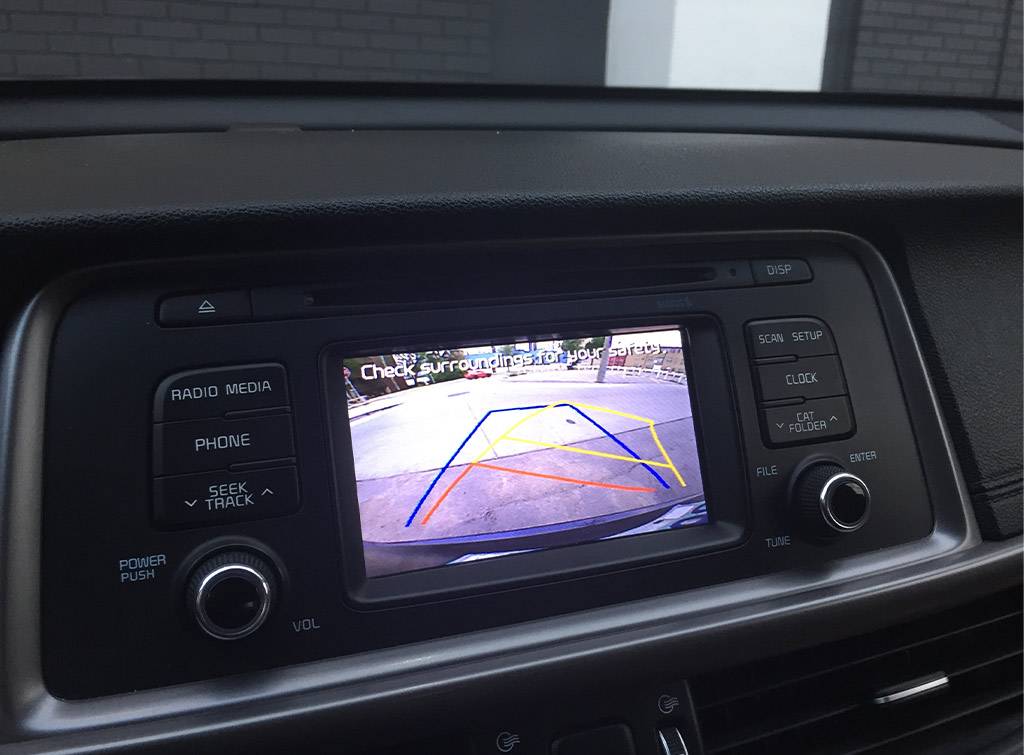
3. Financial Breakdown: Total Cost Ownership and Value Tiers
When budgeting for a backup camera installation, consumers generally find themselves in one of three “tech tiers.” Each tier represents a different balance of hardware sophistication and installation depth.
The Budget/DIY Tier ($50 – $150)
At this level, the consumer is typically purchasing a wireless, license-plate-mounted camera that connects to a separate monitor or a smartphone app. The tech is basic, and the “installation” is often a DIY project involving minimal wiring. While affordable, these systems often suffer from lower resolution and potential signal latency.
The Mid-Range Integrated Tier ($200 – $500)
This is the most common path for owners of vehicles from the 2010s. It involves a high-quality wired CMOS camera and an interface that allows the image to appear on the existing factory screen. The cost is split roughly 50/50 between the hardware (interface module and camera) and the professional labor required to route the wires safely through the vehicle’s chassis.
The High-End/Tech-Forward Tier ($600 – $1,200+)
This tier is for users seeking “Surround View” or “360-degree” monitoring. This installation involves multiple cameras (front, rear, and side mirrors) and a sophisticated processing unit that stitches the images together to create a bird’s-eye view. The technical labor is intensive, often requiring several hours of calibration to ensure the digital stitching is seamless. This is a premium tech upgrade that adds significant resale value to the vehicle.
4. The Digital Evolution: Future-Proofing and ADAS Integration
As we look toward the future, backup camera installation is becoming part of a larger conversation about Advanced Driver Assistance Systems (ADAS). Installing a camera today is often the first step toward a more connected and autonomous driving experience.
Moving Beyond Just Video
Newer aftermarket cameras are beginning to integrate Artificial Intelligence (AI) for object detection. Instead of just showing a video feed, these systems use computer vision to identify pedestrians or cyclists and provide an audible alert before a collision occurs. This “smart” hardware is more expensive but provides a level of digital security that traditional cameras cannot match.
Firmware Updates and Software Compatibility
When installing a modern camera system, software is just as important as the lens. High-end units often feature firmware that can be updated via USB or Wi-Fi to improve image processing algorithms or add new parking grid-line overlays. When considering the cost, tech-savvy consumers look for units that offer long-term software support, ensuring the hardware doesn’t become obsolete as smartphone integration (like Apple CarPlay or Android Auto) evolves.
The Impact on Insurance and Safety Tech
From a financial-tech perspective, many insurance companies recognize the installation of safety tech. While the upfront cost may be several hundred dollars, the reduction in “fender bender” risks and the potential for lower premiums create a long-term return on investment. Furthermore, the installation of high-quality cameras contributes to the “digital health” of the vehicle, making it more compatible with the safety expectations of the modern market.

Conclusion
The journey to determine “how much to install a backup camera” reveals a complex intersection of hardware engineering, digital interfacing, and skilled technical labor. Whether you are opting for a basic $100 DIY kit or a $1,000 multi-camera 360-degree system, the investment is a direct upgrade to the vehicle’s technological profile.
By understanding the differences in sensor types, the intricacies of wired versus wireless transmission, and the necessity of professional integration, vehicle owners can make an informed decision. In an era where automotive safety is increasingly defined by digital eyes, adding a backup camera is more than just a convenience—it is a vital technical upgrade that brings any vehicle into the modern age of intelligent transportation.
aViewFromTheCave is a participant in the Amazon Services LLC Associates Program, an affiliate advertising program designed to provide a means for sites to earn advertising fees by advertising and linking to Amazon.com. Amazon, the Amazon logo, AmazonSupply, and the AmazonSupply logo are trademarks of Amazon.com, Inc. or its affiliates. As an Amazon Associate we earn affiliate commissions from qualifying purchases.