
In the contemporary automotive market, the question “how much does a Tesla cost?” is no longer answered by a single number on a window sticker. For the savvy consumer and the financially minded investor, the cost of a Tesla represents a complex calculation involving fluctuating MSRPs, government subsidies, volatile resale values, and significant shifts in operational expenditure. As Tesla transitions from a niche luxury automaker to a mass-market volume producer, understanding the financial architecture of owning one of these vehicles is essential for any modern portfolio.
Understanding the Upfront Investment: MSRP and Model Breakdown
The primary hurdle for any potential Tesla owner is the initial capital outlay. Unlike traditional dealerships that rely on a franchise model with room for negotiation, Tesla utilizes a direct-to-consumer model with transparent, albeit frequent, price adjustments. This “dynamic pricing” strategy can see the cost of a vehicle shift by several thousand dollars in a single quarter based on supply chain efficiencies and inventory targets.
The Entry Point: Model 3 and Model Y Pricing
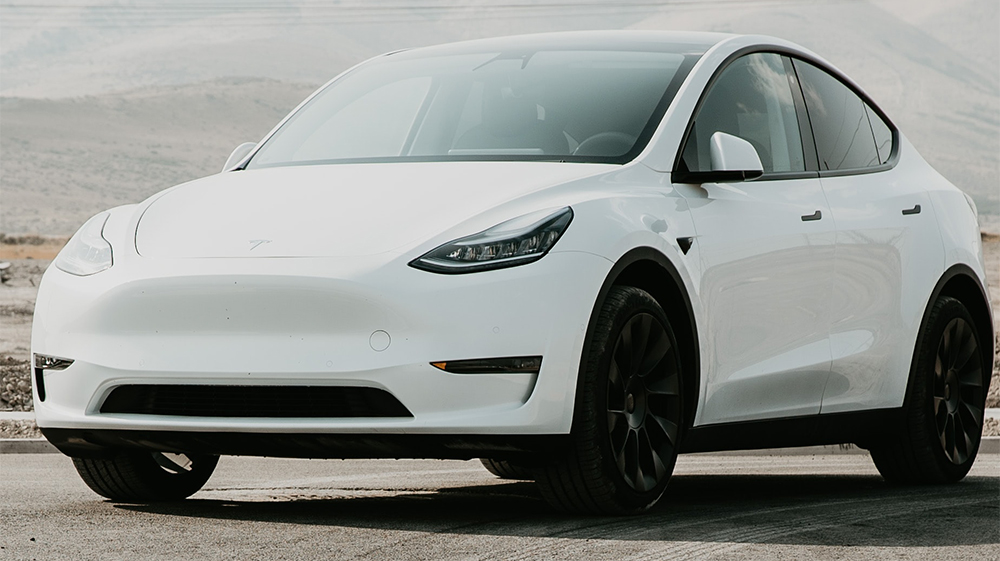
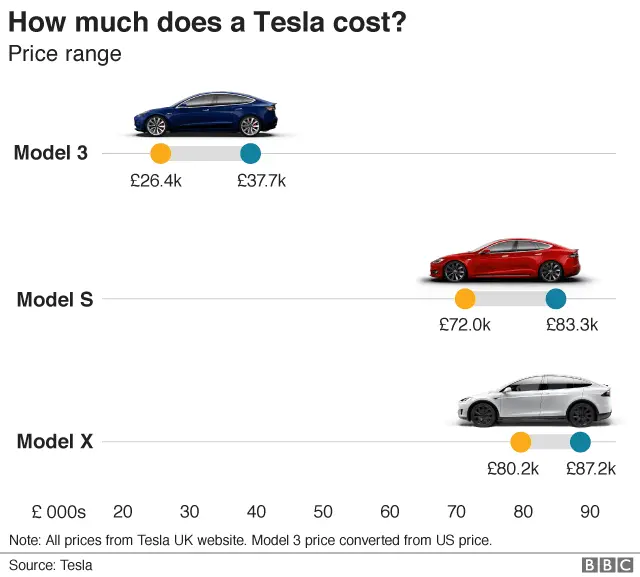
The Model 3 and Model Y represent the “mass market” segment of Tesla’s lineup. As of mid-2024, the Model 3 Rear-Wheel Drive often serves as the entry point, typically hovering between $39,000 and $42,000. For those requiring more utility, the Model Y—currently the world’s best-selling vehicle—starts slightly higher, often in the $44,000 to $48,000 range. From a financial perspective, these models represent the highest value-to-utility ratio, as they provide access to the Tesla ecosystem without the six-figure commitment of the flagship models.
Premium Performance: Model S and Model X
For the high-net-worth individual, the Model S sedan and Model X SUV represent the luxury tier. These vehicles typically start between $75,000 and $80,000, with “Plaid” performance variants exceeding $90,000. Financially, these models face steeper depreciation curves than their more affordable counterparts. Investors and owners should view these not merely as transportation, but as luxury assets where the premium paid is for status, cutting-edge tech, and peak performance rather than pure economic efficiency.
The Cybertruck and Future Pricing Trajectories
The introduction of the Cybertruck has added a new layer to Tesla’s pricing strategy. With initial “Foundation Series” models priced over $100,000, the truck currently sits in the ultra-premium category. However, as production scales, the anticipated entry of lower-trim variants will be a key metric for analysts tracking Tesla’s ability to capture the lucrative light-duty truck market. For the buyer, the cost here includes a “novelty premium” that may normalize as the vehicle becomes a common sight on roads.
Navigating Federal and State Incentives
One of the most significant factors in reducing the net cost of a Tesla is the aggressive landscape of government incentives. In the United States, the Inflation Reduction Act (IRA) has fundamentally changed the math for electric vehicle (EV) buyers, turning a high-ticket purchase into a much more manageable financial commitment.
The Federal EV Tax Credit (Section 30D)
The current federal tax credit offers up to $7,500 for eligible vehicles. A critical financial shift occurred recently allowing this credit to be applied as a “point-of-sale” discount. This means that instead of waiting for a tax refund the following year, buyers can effectively use the $7,500 as part of their down payment. However, financial eligibility is restricted by MSRP caps ($55,000 for sedans, $80,000 for SUVs/Trucks) and Modified Adjusted Gross Income (MAGI) limits ($150,000 for individuals, $300,000 for joint filers). Navigating these limits is essential to ensuring the “sticker price” doesn’t lead to an unexpected tax liability.
State-Specific Rebates and Utility Perks
Beyond federal help, states like California, Colorado, and Massachusetts offer additional rebates ranging from $1,500 to $5,000. Furthermore, many utility companies provide financial incentives for installing home charging stations or offer “Time of Use” (TOU) rates that significantly lower the cost of electricity during off-peak hours. When these are layered together, the effective cost of a Model 3 can drop below that of a Toyota Camry, a pivot point that marks a major shift in automotive economics.
Lease vs. Purchase: Which Maximizes Savings?
Tesla’s leasing programs have become increasingly popular as a hedge against rapid technological obsolescence. While leasing often results in a lower monthly cash outflow, Tesla’s leases are unique in that they historically did not allow for a “buyout” at the end of the term (though policies have fluctuated). From a wealth-management perspective, purchasing allows the owner to capture the vehicle’s residual value, whereas leasing provides a fixed-cost mobility solution with no risk of a “price war” tanking the car’s resale value.
The “Hidden” Costs: Insurance, Maintenance, and Infrastructure
A common financial pitfall for first-time EV buyers is neglecting the secondary costs that accompany the transition away from internal combustion engines (ICE). While you save on gasoline, other line items in your budget will likely increase.
Insurance Premiums for High-Tech EVs
Teslas are notoriously expensive to insure. This is due to several factors: the high cost of repairing the aluminum-intensive chassis, the expensive sensor suites required for Autopilot, and the high performance (acceleration) which puts them in a higher risk bracket for many carriers. On average, a Tesla owner might pay 20% to 50% more for insurance than they would for a comparable luxury gas vehicle. Many owners mitigate this by using “Tesla Insurance,” which uses real-time driving data to determine premiums, though this requires a trade-off in privacy for potential savings.
Home Charging Installation Costs
The convenience of “waking up with a full tank” comes with an upfront infrastructure cost. A Tesla Wall Connector costs approximately $450 to $500, but the professional installation by a licensed electrician can range from $500 to $2,000 depending on the age of the home’s electrical panel. This is a one-time capital expenditure that adds value to the property, but it must be factored into the initial “cost of entry.”
Maintenance Myths vs. Reality
The financial “win” for Tesla owners is in the reduction of moving parts. There are no oil changes, spark plugs, or timing belts. However, Teslas are heavy due to their battery packs and produce high instant torque. This leads to accelerated tire wear. A set of high-performance tires for a Model Y can cost $1,200 to $1,600 and may need replacement every 20,000 to 25,000 miles. While routine maintenance is lower, these periodic “big ticket” items like tires and cabin air filters remain a necessary part of the financial forecast.
Calculating the Long-Term ROI: Fuel Savings and Resale Value
The true cost of a Tesla is best viewed through the lens of the Total Cost of Ownership (TCO) over a five-to-seven-year horizon. This is where the initial higher price point often justifies itself against cheaper gasoline alternatives.
Gas vs. Electricity: The Real-World Spread
The most immediate financial return on a Tesla is the “fuel” savings. If a driver covers 12,000 miles a year, a 25-MPG gas car will consume 480 gallons of fuel. At $4.00 per gallon, that is $1,920 per year. A Tesla Model 3 would use roughly 3,000 kWh to cover that same distance. At a national average of $0.15 per kWh, the cost is only $450. This represents an annual savings of nearly $1,500. Over six years, that $9,000 in savings effectively bridges the gap between the price of an EV and a traditional vehicle.
Depreciation Trends and Resale Performance
Depreciation is the largest “cost” of any vehicle. Historically, Teslas held their value better than almost any other brand. However, recent aggressive price cuts by Tesla to maintain market share have caused used Tesla prices to fluctuate significantly. For the buyer, this means that the “cost” of the car depends heavily on when you buy. Purchasing at the top of a price cycle can lead to high “paper losses” in equity. Conversely, buying during a price trough can result in a very low TCO if the vehicle is held for the long term.

The Cost of Software Upgrades
Finally, one must consider the optional software costs. Full Self-Driving (FSD) capability currently costs either a significant upfront sum (up to $12,000 historically, though it has seen reductions) or a monthly subscription fee. For the budget-conscious, the standard Autopilot included with the car is sufficient. However, for those looking at the Tesla as a “tech asset,” the inclusion of FSD can influence the vehicle’s future resale value—though currently, the secondary market only recaptures a fraction of the software’s initial cost.
In conclusion, the cost of a Tesla is a dynamic figure that requires a holistic view of the financial landscape. By combining the MSRP with tax incentives, subtracting fuel savings, and accounting for slightly higher insurance and tire costs, the “real” cost often reveals a vehicle that is surprisingly competitive with—and often cheaper than—the internal combustion alternatives. For the disciplined investor, a Tesla is not just a car, but a calculated move toward a more efficient personal balance sheet.
aViewFromTheCave is a participant in the Amazon Services LLC Associates Program, an affiliate advertising program designed to provide a means for sites to earn advertising fees by advertising and linking to Amazon.com. Amazon, the Amazon logo, AmazonSupply, and the AmazonSupply logo are trademarks of Amazon.com, Inc. or its affiliates. As an Amazon Associate we earn affiliate commissions from qualifying purchases.