
The question of when to claim Social Security is one of the most consequential financial decisions any American worker will make. While the Social Security Administration (SSA) allows individuals to begin collecting retirement benefits as early as age 62, doing so comes with a permanent reduction in monthly income. Understanding exactly how much you will receive—and the long-term financial implications of that choice—is essential for a sustainable retirement strategy.
In this guide, we will break down the mechanics of the Social Security calculation, the specific penalties associated with filing at 62, and the strategic factors you must consider before signing your application.

Understanding the Math: How the Social Security Administration Calculates Your Check
To understand what you will receive at age 62, you must first understand how the SSA determines your “base” benefit. Your Social Security check isn’t a random number; it is a formulaic result of your lifetime earnings history.
The Role of Average Indexed Monthly Earnings (AIME)
The foundation of your benefit is your Average Indexed Monthly Earnings (AIME). The SSA looks at your entire work history and selects the 35 years in which you earned the most money (adjusted for inflation, or “indexed”). These 35 years are averaged together to create a monthly figure.
If you have fewer than 35 years of covered employment, the SSA fills in the remaining years with zeros. This can significantly drag down your AIME and, consequently, your final benefit. For those considering retirement at 62, it is vital to ensure that you have at least 35 years of earnings to maximize this average.
Primary Insurance Amount (PIA) and the Full Retirement Age (FRA)
Once your AIME is calculated, the SSA applies a formula to determine your Primary Insurance Amount (PIA). The PIA is the monthly amount you are entitled to receive if you wait until your Full Retirement Age (FRA) to claim.
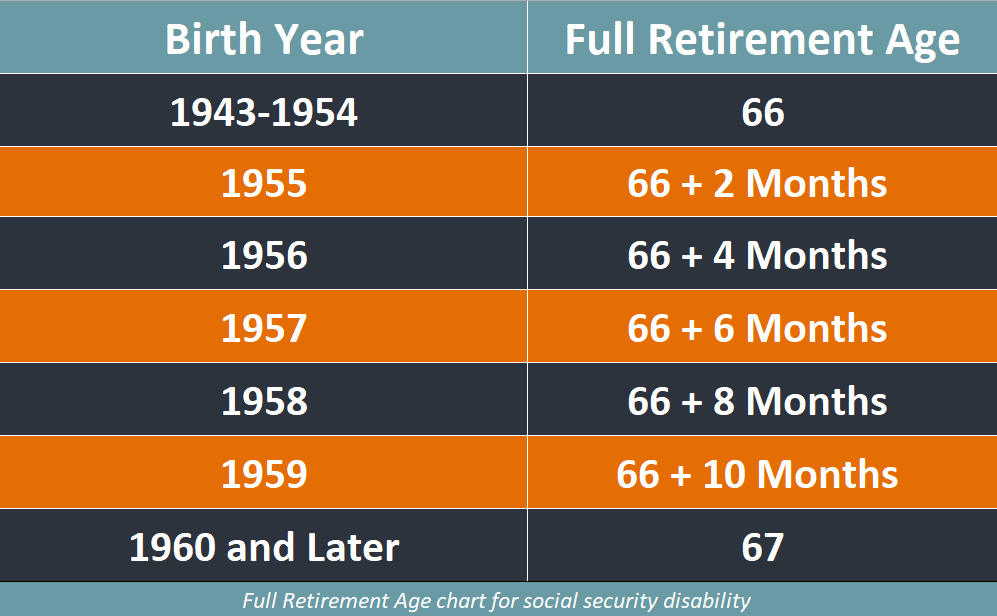
For anyone born in 1960 or later, the FRA is 67. If you were born earlier, your FRA may be 66 and a few months. The PIA serves as the “100% mark.” Any decision to claim before this age results in a reduction, while claiming after results in an increase.
The Financial Impact of Filing at 62: The Reduction Breakdown
Claiming at 62 is tempting because it provides immediate liquidity. However, the SSA applies an “actuarial reduction” to your benefits to account for the fact that you will likely be receiving checks for a longer period of time than someone who waits.
Calculating the Percentage Reduction
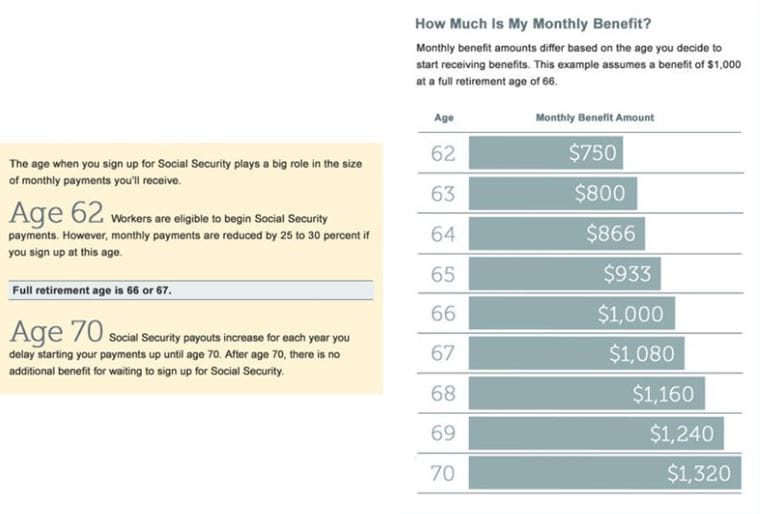
If your Full Retirement Age is 67, claiming at age 62 results in a 30% permanent reduction in your monthly benefit. The reduction is calculated based on a specific formula:
- Benefits are reduced by 5/9 of 1% for each month before FRA, up to 36 months.
- If you claim more than 36 months early, any additional months result in a further reduction of 5/12 of 1% per month.
To put this in perspective: If your projected benefit at age 67 was $2,000 per month, claiming at 62 would leave you with approximately $1,400 per month. This reduction is not temporary; it remains in effect for the rest of your life, though you will still receive annual Cost-of-Living Adjustments (COLA).
The Long-Term Cost of Early Filing
While receiving a check five years early sounds beneficial, the cumulative loss can be staggering. By age 80, a person who waited until 67 or 70 will typically have collected more total lifetime income than the person who started at 62. This “break-even point” usually occurs in one’s late 70s or early 80s. If you expect to live a long life based on family history and current health, filing at 62 represents a significant sacrifice of total wealth.
Strategic Considerations Before Claiming Early
The raw dollar amount is only one part of the equation. Several secondary factors can impact how much of that Social Security check actually stays in your pocket.
The Earnings Test: Working While Receiving Benefits
A common mistake retirees make is claiming Social Security at 62 while continuing to work a high-paying job. If you are under your Full Retirement Age and your earned income exceeds a certain threshold ($22,320 in 2024), the SSA will withhold $1 in benefits for every $2 you earn above that limit.
While these withheld benefits are eventually “returned” to you in the form of a slightly higher monthly check once you reach FRA, the immediate impact is that you may not actually receive the Social Security income you were counting on.
Spousal and Survivor Benefit Implications
Your decision to claim at 62 doesn’t just affect you; it can affect your spouse. If you are the higher-earning spouse, your monthly benefit amount sets the ceiling for the survivor benefit your spouse would receive if you pass away first. By locking in a lower monthly amount at age 62, you are effectively reducing the potential life insurance-like protection that Social Security provides to your surviving partner.
Tax Obligations on Social Security Income
Social Security is not always tax-free. Depending on your “combined income” (adjusted gross income + tax-exempt interest + half of your Social Security benefits), you may owe federal income taxes on up to 85% of your benefits.
- Individuals: If combined income is between $25,000 and $34,000, you may pay tax on 50%. Above $34,000, up to 85%.
- Joint Filers: If combined income is between $32,000 and $44,000, you may pay tax on 50%. Above $44,000, up to 85%.
For many, receiving a reduced benefit at 62 while having other income sources can push them into a higher tax bracket, further eroding the value of the early claim.
Tools and Resources to Estimate Your Specific Benefit
Because every individual’s earnings history is unique, you should not rely solely on general estimates. You need to see your specific numbers.
Using the ‘my Social Security’ Account
The most accurate way to find out what you will get at 62 is to create a “my Social Security” account at SSA.gov. This portal provides a personalized Social Security Statement that lists your yearly earnings history and provides estimates for benefits at age 62, your FRA, and age 70. It is crucial to review this document for errors, as a missing year of earnings could result in a lower check for life.
Third-Party Calculators and Financial Planning Tools
For a more holistic view, many financial institutions offer “Social Security Optimization” tools. These tools allow you to input your spouse’s data, your expected investment returns, and your anticipated longevity to see how different filing ages impact your total portfolio’s “success rate.” In many cases, drawing down from an IRA or 401(k) for a few years while delaying Social Security can actually lead to a higher net worth in your 80s and 90s.
Making the Decision: Is 62 the Right Age for You?
Despite the 30% reduction, there are scenarios where claiming at 62 is the most rational financial move.
Evaluating Health and Longevity
If you have chronic health issues or a family history that suggests a shorter-than-average lifespan, claiming early may be the best way to ensure you receive the benefits you paid into the system. The “break-even” math only works if you live long enough to reap the rewards of a higher monthly check. If you don’t expect to reach age 78 or 80, the reduced check at 62 often yields more total lifetime dollars.
Considering Your Total Retirement Portfolio
Some retirees choose to claim at 62 to preserve their investment accounts. If the stock market is performing poorly, taking Social Security early can prevent you from having to sell stocks at a loss to cover living expenses. This is known as managing “sequence of returns risk.”
Additionally, if you have no other source of income and cannot continue working, Social Security at 62 acts as a vital safety net. However, if you are healthy, have a stable job, and want to maximize your guaranteed, inflation-adjusted income for life, waiting until at least your Full Retirement Age—or even age 70—is usually the superior financial strategy.
Final Thought:
Taking Social Security at 62 is a trade-off between “time” and “money.” You get five extra years of payments, but you pay a 30% “tax” on your monthly income for the rest of your life. Before you file, run the numbers on the SSA website, consult with a financial advisor, and look honestly at your health and budget. Once you start receiving benefits, you only have a 12-month window to change your mind (and you must pay back everything you received), so it is a decision you want to get right the first time.