
For millions of Americans, Social Security forms a cornerstone of their financial security in retirement, during disability, or for their survivors. Yet, despite its widespread importance, many find themselves asking the fundamental question: “How much Social Security will I get?” The answer, far from a simple dollar figure, is a dynamic calculation influenced by a multitude of factors unique to each individual’s work history, age, and family situation. Understanding these variables is crucial not only for financial planning but also for making informed decisions that can significantly impact your retirement income. This article delves into the intricacies of Social Security benefits, demystifying the calculation process, exploring the factors that affect your payouts, and offering strategies to maximize your entitlements.
The Foundation of Social Security: How Benefits Are Calculated
The Social Security Administration (SSA) employs a sophisticated formula to determine your monthly benefit amount. It’s not a simple average of your lifetime earnings but rather a weighted calculation designed to provide a higher replacement rate for lower-income workers while still offering substantial benefits to those with higher earnings.
Earning Credits: The Gateway to Eligibility
Before you can receive any Social Security benefits, you must first become “insured” by earning enough Social Security credits. In 2024, you earn one credit for every $1,730 in earnings, up to a maximum of four credits per year. Most people need 40 credits, which typically translates to 10 years of work, to qualify for retirement benefits. Once you’ve earned these 40 credits, you’re considered “fully insured” and eligible to receive benefits, subject to other conditions.
The AIME Formula: Your Earning History Matters
The core of your Social Security benefit calculation is based on your Average Indexed Monthly Earnings (AIME). The SSA takes your earnings from your 35 highest-earning years, adjusting (or “indexing”) them to account for changes in the average wage level in the economy over time. This indexing ensures that past earnings reflect their current value, providing a more accurate representation of your lifetime contributions. If you have fewer than 35 years of earnings, the missing years are counted as zero, which can significantly reduce your AIME.
Primary Insurance Amount (PIA): Your Full Retirement Age Benefit
Once your AIME is determined, it’s run through a progressive formula to arrive at your Primary Insurance Amount (PIA). The PIA is the monthly benefit you would receive if you claim exactly at your Full Retirement Age (FRA). The formula uses “bend points” – specific dollar amounts – that divide your AIME into segments. Each segment is multiplied by a different percentage, with lower segments receiving a higher percentage (e.g., 90% of the first segment, 32% of the next, and 15% of the highest segment). This progressive structure means that lower-income workers receive a higher percentage of their pre-retirement earnings as benefits compared to higher-income workers, even though the latter receive a higher dollar amount.
Cost-of-Living Adjustments (COLAs): Keeping Pace with Inflation
Once you start receiving benefits, they are subject to annual Cost-of-Living Adjustments (COLAs). These adjustments are designed to help your purchasing power keep pace with inflation. COLAs are determined by the Consumer Price Index for Urban Wage Earners and Clerical Workers (CPI-W) and are typically announced in October for the following year. This mechanism is vital for maintaining the real value of your benefits over what could be many years in retirement.
Key Factors Influencing Your Social Security Benefit Amount
While the AIME and PIA form the foundation, several other critical factors can significantly alter the actual monthly Social Security payment you receive.
Your Earning History: A Lifetime of Contributions
As mentioned, your 35 highest-earning years are used to calculate your AIME. This underscores the importance of a consistent work history and strong earnings throughout your career. Years with low or no earnings can pull down your average, reducing your eventual benefit. Conversely, working longer, especially in your prime earning years, and ensuring your earnings exceed the Social Security taxable maximum can increase your benefits, as those higher-earning years replace earlier, lower-earning ones in the calculation.
Your Claiming Age: The Most Significant Variable
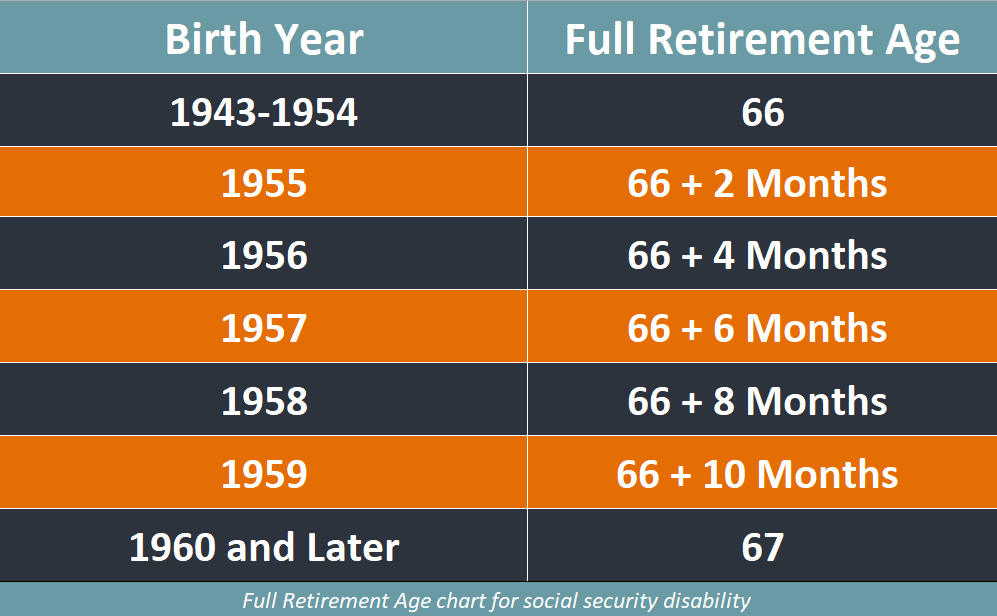
Perhaps the single most impactful decision regarding your Social Security benefits is when you choose to claim them. You can claim retirement benefits as early as age 62, but doing so results in a permanent reduction in your monthly payment. Your Full Retirement Age (FRA) – the age at which you’re entitled to 100% of your PIA – varies depending on your birth year (e.g., 66 for those born between 1943 and 1954, gradually increasing to 67 for those born in 1960 or later). Delaying benefits beyond your FRA, up to age 70, results in “delayed retirement credits,” which increase your monthly benefit by approximately 8% for each year you delay. This creates a powerful incentive to wait, if financially feasible.
Spousal and Survivor Benefits: Extending the Safety Net
Social Security isn’t just for individual retirees; it also provides benefits to spouses, ex-spouses, and survivors. A spouse can claim up to 50% of their partner’s PIA if they claim at their own FRA, even if they never worked or had limited earnings. Survivor benefits are paid to a widow or widower (and sometimes dependent children) after a beneficiary passes away. These benefits can be substantial, often up to 100% of the deceased worker’s PIA. Understanding these auxiliary benefits is crucial for family financial planning and can significantly boost a household’s total Social Security income.
Working While Receiving Benefits: Potential Reductions
If you claim Social Security benefits before your FRA and continue to work, your benefits may be reduced if your earnings exceed certain annual limits. For instance, in 2024, if you’re under FRA, the SSA deducts $1 from your benefits for every $2 you earn above $22,320. In the year you reach FRA, the deduction is $1 for every $3 earned above a higher limit ($59,520 in 2024), up to the month you reach FRA. Once you reach your FRA, there are no limits on how much you can earn, and the SSA will recalculate your benefits, giving you credit for any benefits that were withheld due to these earnings limits.
Navigating When to Claim: Early, Full, or Delayed?
The decision of when to start receiving your Social Security benefits is a deeply personal one with long-term financial implications. There’s no single “best” age for everyone, as the optimal choice depends on various factors.
Claiming Early: The Trade-off for Immediate Income
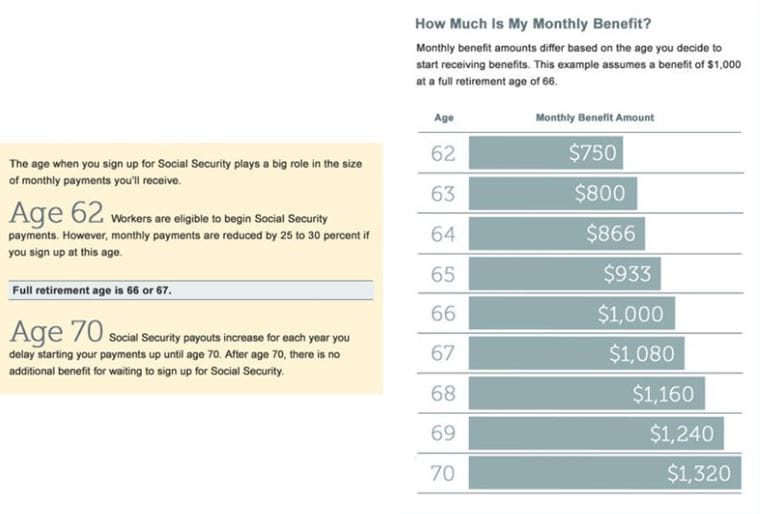
You can start receiving retirement benefits as early as age 62. However, claiming early means your monthly benefit will be permanently reduced. The reduction can be as much as 30% if your FRA is 67. While it provides immediate income, it comes at the cost of a significantly lower monthly payout for the rest of your life. This option is often chosen by those who can no longer work, face health issues, or need the income to cover essential living expenses.
Reaching Your Full Retirement Age (FRA): The Benchmark
Claiming at your FRA allows you to receive 100% of your PIA. For many, this represents a balanced approach, avoiding the reductions of early claiming while not requiring the financial resilience to delay benefits further. It’s often a good choice for those who are ready to retire and don’t feel the need or have the means to wait longer.
Delaying Benefits: Boosting Your Monthly Payout
For each year you delay claiming beyond your FRA, up to age 70, your monthly benefit increases by approximately 8% through delayed retirement credits. This can lead to a substantial increase in your monthly payment – potentially 24-32% higher than your FRA amount if you wait until age 70. This strategy is particularly appealing to those who are in good health, have other retirement savings to draw from, or simply enjoy working longer. It acts as a form of longevity insurance, providing a higher guaranteed income stream for potentially many years.
Considering Health and Longevity: A Personal Decision
A key consideration in your claiming strategy should be your health and family longevity history. If you anticipate a shorter lifespan due to health issues, claiming earlier might be more advantageous to ensure you receive benefits for more years, even if at a reduced rate. Conversely, if you expect to live a long life, delaying benefits can provide a significantly higher income stream that could pay off handsomely over two or three decades of retirement. This aspect highlights the importance of personal circumstances over a generalized rule.
Strategies to Maximize Your Social Security Benefits
Understanding the rules is one thing; strategically applying them to your personal situation is another. There are several approaches you can take to potentially maximize the total amount of Social Security benefits you and your family receive.
Coordinating with a Spouse: Optimizing Household Income
For married couples, coordinating claiming strategies can yield a higher combined lifetime benefit. Often, the higher-earning spouse might delay claiming until age 70 to maximize their individual benefit (and thus the potential survivor benefit for the spouse), while the lower-earning spouse might claim earlier, potentially on their own record or as a spousal benefit, to provide some income in the interim. The optimal strategy depends on age differences, earning histories, and health status of both partners. Careful planning here is paramount.
Understanding the “File and Suspend” (Pre-2016) and “Restricted Application” (Pre-2016) Rules
It’s important to note that changes in Social Security law in 2016 eliminated or severely restricted some popular claiming strategies. “File and Suspend” allowed an individual to file for benefits at FRA, immediately suspend them to earn delayed retirement credits, and simultaneously allow a spouse or dependent to claim benefits based on their record. This is largely no longer an option, though those who filed and suspended before the deadline are grandfathered in. Similarly, the “Restricted Application for Spousal Benefits” (allowing an individual at FRA to claim only spousal benefits while letting their own benefit grow) is now only available to those born on or before January 1, 1954. If you fall into this age group, investigating this strategy could still be beneficial. For everyone else, the rules are more straightforward: you generally apply for all benefits you’re eligible for, and the SSA pays you the higher of your own benefit or your spousal benefit.
Working Longer and Earning More: Increasing Your AIME
Since your benefits are based on your 35 highest-earning years, continuing to work in your later career, especially if those years replace lower-earning years from your past, can increase your AIME and thus your PIA. Even if you’ve already accumulated 35 years of earnings, a higher-earning year can push out a lower-earning year from your top 35, leading to a bump in your benefit calculation. This is particularly effective for those who experience career growth and higher salaries later in life.
Monitoring Your Social Security Statement: Accuracy is Key
The Social Security Administration provides an annual statement detailing your earnings record and estimated future benefits. It’s crucial to review this statement regularly (accessible online via a mySocialSecurity account) to ensure that your earnings history is accurate. Mistakes can occur, and incorrect earnings records could lead to lower benefits. Correcting errors while you’re still working is much easier than trying to rectify them years into retirement. This statement is also an invaluable tool for planning, as it provides personalized estimates of your benefits at different claiming ages.
The Future of Social Security and Financial Planning
Social Security is a dynamic program, and its long-term solvency is a frequent topic of discussion. While concerns exist, understanding its role in your broader financial strategy is key.
Trust Fund Solvency: Understanding the Challenges
The Social Security Trust Funds (OASI and DI) are projected to be able to pay 100% of promised benefits until approximately the mid-2030s. After that, without Congressional action, they would only be able to pay about 80% of scheduled benefits. It’s important to note that Social Security is not “going broke” but rather faces a shortfall. While this requires attention and potential adjustments (e.g., changes to the full retirement age, adjustments to the wage base, or modest tax increases), it’s highly improbable that benefits will cease entirely. Social Security remains a vital and popular program.
Integrating Social Security into Your Broader Retirement Plan
For most people, Social Security is meant to be a foundational layer of retirement income, not the sole source. It’s crucial to integrate your estimated Social Security benefits into your overall retirement plan, alongside personal savings (e.g., 401(k)s, IRAs), pensions, and other investments. Knowing how much Social Security you’re likely to receive helps you determine how much you need to save independently to achieve your desired retirement lifestyle. This holistic view ensures a more secure financial future.
Seeking Professional Financial Advice: A Holistic Approach
Given the complexity of Social Security rules, especially concerning spousal benefits, claiming strategies, and interactions with other income sources, seeking guidance from a qualified financial advisor is often invaluable. A professional can help you analyze your specific situation, model different claiming scenarios, and integrate Social Security into a comprehensive financial plan tailored to your goals and risk tolerance. Their expertise can help uncover opportunities to maximize your benefits that you might otherwise overlook.
In conclusion, “how much Social Security do you get” is a question with a multi-faceted answer, deeply rooted in your individual work history, earning patterns, and critical claiming decisions. By understanding the calculation methods, the factors that influence your benefits, and the strategic options available, you empower yourself to make informed choices that can significantly enhance your financial well-being throughout retirement. Social Security remains a powerful and essential component of America’s financial safety net, and optimizing your approach to it is a cornerstone of robust retirement planning.
aViewFromTheCave is a participant in the Amazon Services LLC Associates Program, an affiliate advertising program designed to provide a means for sites to earn advertising fees by advertising and linking to Amazon.com. Amazon, the Amazon logo, AmazonSupply, and the AmazonSupply logo are trademarks of Amazon.com, Inc. or its affiliates. As an Amazon Associate we earn affiliate commissions from qualifying purchases.