
When the question “How much is Lululemon?” is posed within the corridors of Wall Street or among private equity analysts, the answer transcends the price tag of a pair of Align high-rise pants. In the context of business finance and investment, “how much” refers to the enterprise value, the market capitalization, and the fiscal weight of a company that has redefined the retail landscape. Lululemon Athletica Inc. (LULU) has evolved from a niche yoga outfitter in Vancouver into a global powerhouse with a market valuation that rivals long-standing luxury conglomerates and athletic titans.

Understanding the true value of Lululemon requires an analysis of its balance sheet, its market position relative to competitors, and the financial metrics that justify its premium valuation in a volatile retail sector.
Understanding Lululemon’s Market Capitalization and Valuation Metrics
To answer how much Lululemon is worth, one must first look at its market capitalization—the total dollar market value of a company’s outstanding shares of stock. As of mid-2024, Lululemon’s market cap has fluctuated between $45 billion and $60 billion, depending on broader market sentiment and quarterly earnings reports.
The Price-to-Earnings (P/E) Ratio Analysis
One of the most telling indicators of Lululemon’s financial “worth” is its Price-to-Earnings (P/E) ratio. Historically, Lululemon has traded at a significant premium compared to the broader consumer discretionary sector. While traditional apparel retailers might trade at a P/E of 15x to 20x, Lululemon frequently commands a multiple of 25x to 35x. This elevated “price” reflects investor confidence in the company’s ability to sustain double-digit growth and maintain industry-leading margins. Investors aren’t just buying current earnings; they are paying a premium for a high-growth financial engine.
Comparative Valuation: Lululemon vs. Nike and Adidas
When assessing how much Lululemon is worth, it is essential to place it alongside its peers. While Nike remains the titan of the industry with a market cap often exceeding $140 billion, Lululemon’s efficiency metrics often outperform the industry leader. Lululemon’s revenue per square foot and operating margins often eclipse those of Nike and Adidas, suggesting that while the company is smaller in total volume, its “value density”—how much profit it generates per unit of sale—is arguably superior. This efficiency is a core component of its total business valuation.
Revenue Streams and the Profitability of the Direct-to-Consumer Model
A company’s value is inherently tied to its ability to generate consistent, high-margin revenue. Lululemon’s financial strength is rooted in its sophisticated Direct-to-Consumer (DTC) strategy, which accounts for a massive portion of its total net shift.
The Power of Gross Margins
Lululemon’s gross margin is a marvel in the retail world, often hovering above 55%. For comparison, many mid-tier apparel brands struggle to maintain 40%. The “worth” of the company is bolstered by its ability to sell products at full price, rarely relying on the heavy discounting cycles that erode the value of brands like Gap or Under Armour. This pricing power ensures that for every dollar of revenue, a larger portion flows directly to the bottom line, enhancing the company’s cash reserves and overall valuation.
Digital Sales and Inventory Efficiency
The digital segment of Lululemon’s business is a critical pillar of its financial worth. By leveraging a robust e-commerce platform, the company reduces the overhead costs associated with physical retail while gathering valuable consumer data. Furthermore, Lululemon’s inventory management is highly optimized. In business finance, “how much” a company is worth is often dictated by how quickly it can turn inventory into cash. Lululemon’s high inventory turnover ratio reduces the risk of capital being tied up in stagnant stock, a common pitfall that devalues many fashion-forward enterprises.
The Investment Thesis: Why the Market Values Lululemon at a Premium
The question of “how much” also involves looking at the intangible assets that drive tangible financial returns. For Lululemon, its brand equity functions as a financial moat, protecting its market share and allowing for continued expansion.

Brand Loyalty as a Financial Asset
In valuation modeling, brand loyalty is often quantified through customer acquisition costs (CAC) and customer lifetime value (LTV). Lululemon enjoys a remarkably high LTV because its customer base is not merely transactional; it is communal. By fostering a “sweatlife” culture, the company ensures repeat purchases without the need for excessive marketing spend. This high retention rate makes the company’s future cash flows more predictable, which in turn increases the Net Present Value (NPV) of the business in the eyes of institutional investors.
Strategic Capital Allocation
How much a company is worth is also a reflection of how it uses its money. Lululemon has demonstrated a disciplined approach to capital allocation, focusing on share buybacks and strategic reinvestment into high-growth areas rather than over-extending into risky acquisitions. Their 2020 acquisition of Mirror, while presenting challenges, showed a willingness to invest in the “connected fitness” ecosystem, though the company has since pivoted back to focus on its core high-margin apparel business to protect shareholder value.
Future Growth Catalysts and Financial Outlook
To determine how much Lululemon will be worth in the coming decade, we must look at its “Power of Three ×2” growth strategy. This roadmap is designed to double the company’s 2021 revenue of $6.25 billion to $12.5 billion by 2026.
International Expansion and the China Growth Story
A significant portion of Lululemon’s future valuation lies in international markets. While the North American market is mature, the growth potential in China and Europe is immense. Financial analysts closely monitor the company’s store opening cadence in Tier 1 and Tier 2 cities in China. Given that international margins are becoming increasingly accretive to the total business, successful global penetration could see Lululemon’s market cap escalate toward the $100 billion milestone within the next five to seven years.
Diversification into Men’s and Footwear
Lululemon began as a female-centric brand, but its “how much” factor is now heavily influenced by its expansion into men’s apparel and footwear. The men’s category is growing at a faster rate than the women’s category, representing a multi-billion dollar opportunity. By diversifying its product lines, Lululemon mitigates the risk of being tied to a single demographic, creating a more robust and resilient financial profile. Footwear, though a highly competitive and lower-margin category initially, serves as a “head-to-toe” strategy to capture a larger share of the consumer’s wallet.
Risks to the Valuation: Inflation and Competition
No financial analysis of a company’s worth is complete without addressing the risks that could devalue it. Lululemon operates in the “premium” segment, which makes it sensitive to macroeconomic shifts.
Macroeconomic Pressures on Discretionary Spending
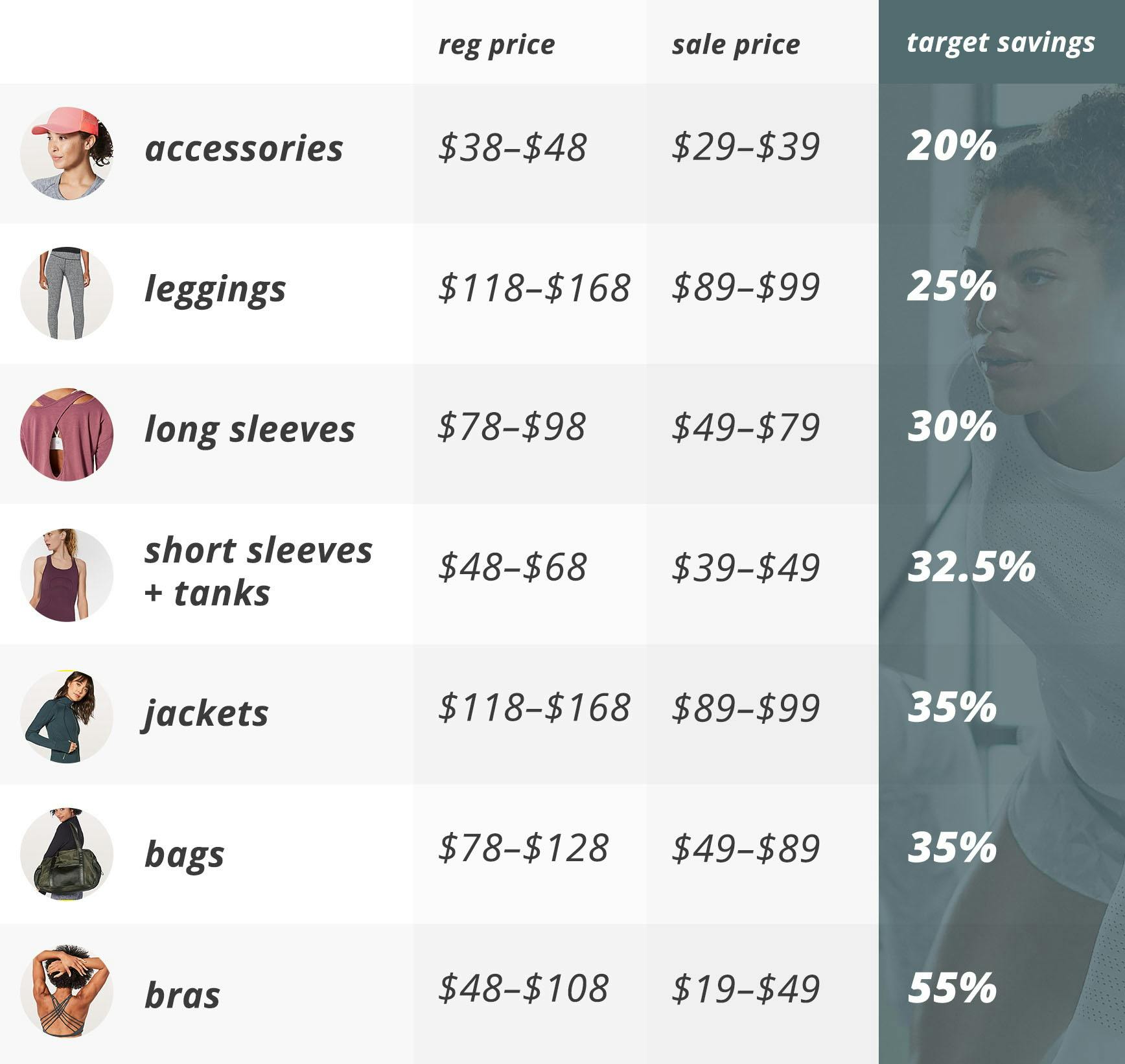
As inflation impacts household budgets, the “worth” of premium retail companies is often called into question. If consumers pivot from $120 leggings to more affordable private-label alternatives (like those offered by Amazon or Alo Yoga), Lululemon’s growth could stall. However, historically, Lululemon’s core demographic has proven to be “recession-resilient,” maintaining their spending habits even during economic downturns, which provides a safety net for the stock’s valuation.
The Competitive Landscape
The rise of “dupe” culture and the emergence of fast-growing competitors like Vuori and Hoka present a challenge to Lululemon’s market dominance. To maintain its high valuation, Lululemon must continue to innovate in fabric technology—such as their Luxtreme and Nulu fabrics—to justify its premium price point. In the world of business finance, a company is worth only as much as its competitive advantage remains defensible.
Conclusion: The Financial Reality of Lululemon
So, how much is Lululemon? On the surface, it is a $50-billion-plus company with nearly $10 billion in annual revenue. But beneath the numbers, Lululemon is a masterclass in high-margin retail execution and strategic brand positioning. Its value is derived from a potent combination of high gross margins, a dominant Direct-to-Consumer channel, and an aggressive but calculated global expansion strategy.
For the investor, Lululemon represents a high-growth asset that trades at a premium because it consistently delivers industry-leading returns on invested capital. For the business student, it is a case study in how to scale a niche product into a global lifestyle powerhouse without Diluting the brand’s financial integrity. As the company continues to execute its “Power of Three ×2” strategy, the answer to “how much is Lululemon” is likely to be significantly higher in the years to come, provided they continue to turn community and sweat into consistent, scalable profit.
aViewFromTheCave is a participant in the Amazon Services LLC Associates Program, an affiliate advertising program designed to provide a means for sites to earn advertising fees by advertising and linking to Amazon.com. Amazon, the Amazon logo, AmazonSupply, and the AmazonSupply logo are trademarks of Amazon.com, Inc. or its affiliates. As an Amazon Associate we earn affiliate commissions from qualifying purchases.