
Navigating the complexities of the internal revenue code is a daunting task for even the most financially literate individuals. As tax season approaches, the primary question on many taxpayers’ minds is not just how much they will receive in a refund, but how much they will have to pay to get there. H&R Block, a titan in the tax preparation industry, offers a variety of service levels designed to meet different financial needs. However, the “sticker price” is rarely the final number on the invoice. Understanding the nuanced pricing structure of H&R Block is essential for effective personal finance management and ensuring that the cost of compliance does not outweigh the benefits of professional filing.

The Tiers of Tax Preparation: Decoding the H&R Block Pricing Model
H&R Block operates on a multi-tiered pricing system that scales based on the complexity of your financial situation. Whether you are a student with a simple W-2 or a small business owner with multiple streams of passive income, the brand offers three primary pathways: DIY Online, In-Person Office Visits, and the hybrid Virtual Tax Pro service.
DIY Online Filing: From Free to Premium
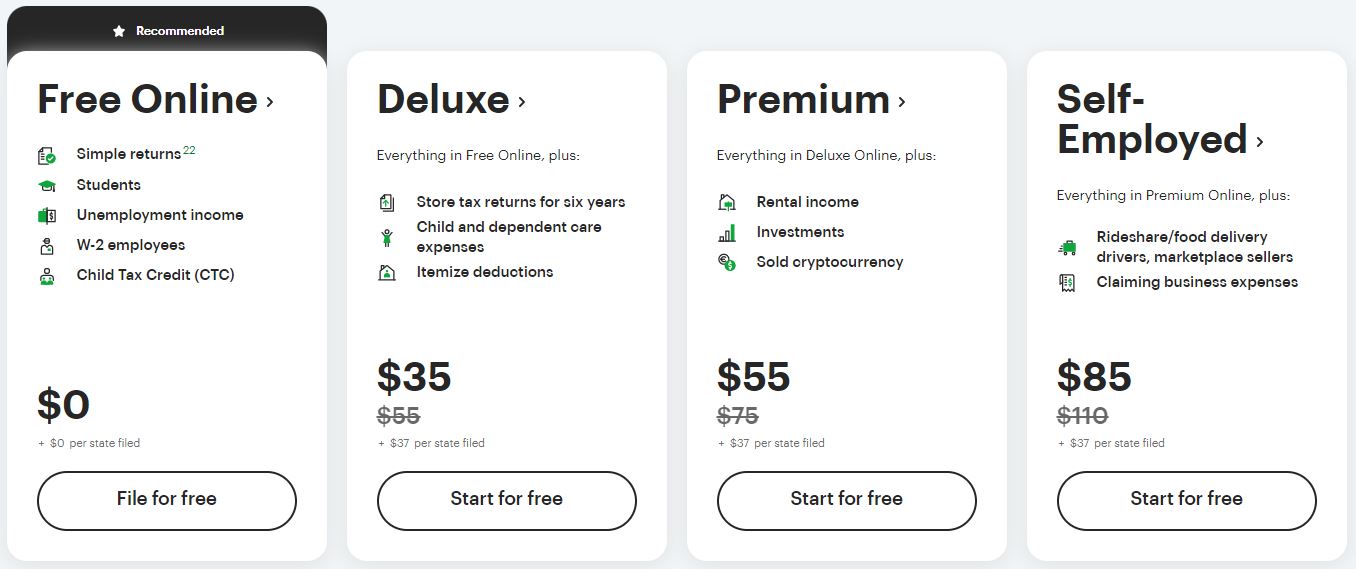
For the tech-savvy individual looking to minimize costs, H&R Block’s online software is the most accessible entry point. The “Free Online” version is remarkably robust, catering to simple returns, including W-2 income, unemployment income, and student loan interest deductions. However, as your financial life matures, so does the price.
The “Deluxe” tier is typically the next step, aimed at homeowners and those with itemized deductions. Following this is the “Premium” tier, which is necessary for those with investments, such as stocks or cryptocurrency, and rental property income. Finally, the “Self-Employed” tier is the most expensive online option, designed specifically for freelancers, contractors, and small business owners who need to file a Schedule C. Each jump in tier usually adds a significant amount to the base price, often ranging from $35 to $110, excluding state filing fees.
In-Person Office Visits: Paying for Expertise
For many, the peace of mind that comes from sitting across a desk from a human expert is worth the premium. In-person filing costs are significantly higher than online versions because you are paying for the tax professional’s time and the overhead of the physical branch.
Pricing for in-person services is rarely fixed. Instead, it is based on the complexity of the forms required to complete your return. A basic 1040 might have a starting fee, but every additional schedule—whether for capital gains (Schedule D) or supplemental income (Schedule E)—adds an incremental cost. On average, most taxpayers can expect to pay anywhere from $150 to over $500 for a full-service in-office experience.
Virtual Tax Pro: The Middle Ground
Recognizing the shift toward digital convenience, H&R Block introduced the “Tax Pro Review” and “Tax Pro Go” services. These options allow you to upload your documents to a secure portal and have a certified professional handle the heavy lifting without you ever having to leave your home. This hybrid model is priced between the DIY online software and the full in-office experience, offering a balance of professional oversight and digital efficiency.
Factors That Influence Your Final Bill
When asking “how much is H&R Block,” it is a mistake to look only at the base package price. The final cost of tax preparation is often a composite of several variables that can fluctuate based on your specific financial activities during the tax year.
Complexity of Income Sources
The single greatest driver of tax preparation costs is complexity. In the eyes of a tax service, not all income is created equal. A standard W-2 is straightforward, but the moment you introduce 1099-NEC forms for side hustles, K-1s from partnerships, or complex foreign earned income exclusions, the labor required to ensure accuracy increases. H&R Block charges more for these scenarios because they require more sophisticated software algorithms and, in the case of in-person filing, more senior-level expertise.
State Filing Fees
A common point of frustration for taxpayers is the “hidden” cost of state returns. While the federal return price is usually the one advertised in bold letters, state returns almost always carry an additional fee per state. If you lived or worked in multiple states during the year, these costs can multiply quickly. For DIY online users, each state return can cost between $37 and $45. For in-person filing, state fees are integrated into the overall service quote but represent a significant portion of the total bill.
Audit Support and Peace of Mind Guarantees
H&R Block offers several “add-on” financial products designed to mitigate risk. The “Peace of Mind” Extended Service Plan is a popular option that provides users with representation in the event of an IRS audit. While this provides a safety net, it adds an extra fee to your total. Additionally, options like “Tax Identity Shield” offer protection against tax-related identity theft. For the risk-averse individual, these tools are valuable, but they must be factored into the total cost-benefit analysis of the service.
Comparing Value: H&R Block vs. the Competition
To determine if H&R Block is the right financial choice for you, it is necessary to compare it against the broader market. The tax preparation industry is highly competitive, with players ranging from Silicon Valley tech giants to local independent CPAs.
H&R Block vs. TurboTax: The Battle of the Giants
The most frequent comparison is between H&R Block and Intuit’s TurboTax. Historically, H&R Block has positioned itself as the slightly more affordable alternative to TurboTax, particularly in the mid-to-high complexity tiers. While TurboTax is often praised for its “interview-style” user interface, H&R Block provides a more transparent look at the forms as you fill them out. From a money-saving perspective, H&R Block often wins on price for those who need professional help, as their network of physical offices is much larger, allowing for more localized competitive pricing.
When to Choose a Private CPA Over a Retail Chain
There is a tipping point where a retail tax chain like H&R Block may no longer be the most cost-effective or strategic choice. If you are a high-net-worth individual with complex corporate structures, international assets, or intricate estate planning needs, a dedicated Certified Public Accountant (CPA) might offer better value. While a CPA’s hourly rate may be higher, their ability to provide year-round tax planning advice can save you thousands in the long run—something a seasonal tax preparer at a retail branch is generally not equipped to do.
Maximizing Your Refund While Minimizing Costs
Smart personal finance is not just about filing your taxes; it is about doing so with a strategy that protects your bottom line. There are several ways to reduce the amount you pay for H&R Block’s services.
Early Bird Discounts and Promotional Offers
H&R Block frequently offers “early bird” pricing in January and early February. As the April deadline approaches, prices for online software and in-office services often increase due to higher demand. By gathering your documents early and filing before the rush, you can lock in lower rates. Furthermore, many banks and credit card companies offer referral links or discounts for H&R Block services as a perk for their members.
Utilizing Free File for Lower Income Brackets
It is important to note that through the IRS Free File program, taxpayers with an Adjusted Gross Income (AGI) below a certain threshold (typically around $79,000) can access name-brand software for free. H&R Block participates in various iterations of these programs, though the specifics change from year to year. For those in the lower income brackets, utilizing these programs is the most efficient way to handle tax obligations without eroding their savings.

The Long-Term Financial Impact of Professional Tax Help
Ultimately, the cost of H&R Block should be viewed through the lens of an investment rather than an expense. A common mistake in personal finance is being “penny wise and pound foolish”—saving $100 on tax prep only to miss out on a $1,000 deduction.
Professional tax services provide a layer of verification that reduces the likelihood of costly mathematical errors or missed credits, such as the Earned Income Tax Credit (EITC) or the Child Tax Credit. Furthermore, the time saved by outsourcing this task allows individuals to focus on their primary income-generating activities or personal well-being.
When evaluating “how much is H&R Block,” consider your own “hourly rate.” If it takes you ten hours to navigate a complex return that a professional could do in one, the service has likely paid for itself in time alone. By understanding the pricing tiers, being aware of additional fees, and timing your filing strategically, you can ensure that you are getting the best possible value for your money during tax season. In the world of finance, clarity is the precursor to success, and understanding your tax prep costs is a vital step toward total financial health.
aViewFromTheCave is a participant in the Amazon Services LLC Associates Program, an affiliate advertising program designed to provide a means for sites to earn advertising fees by advertising and linking to Amazon.com. Amazon, the Amazon logo, AmazonSupply, and the AmazonSupply logo are trademarks of Amazon.com, Inc. or its affiliates. As an Amazon Associate we earn affiliate commissions from qualifying purchases.