
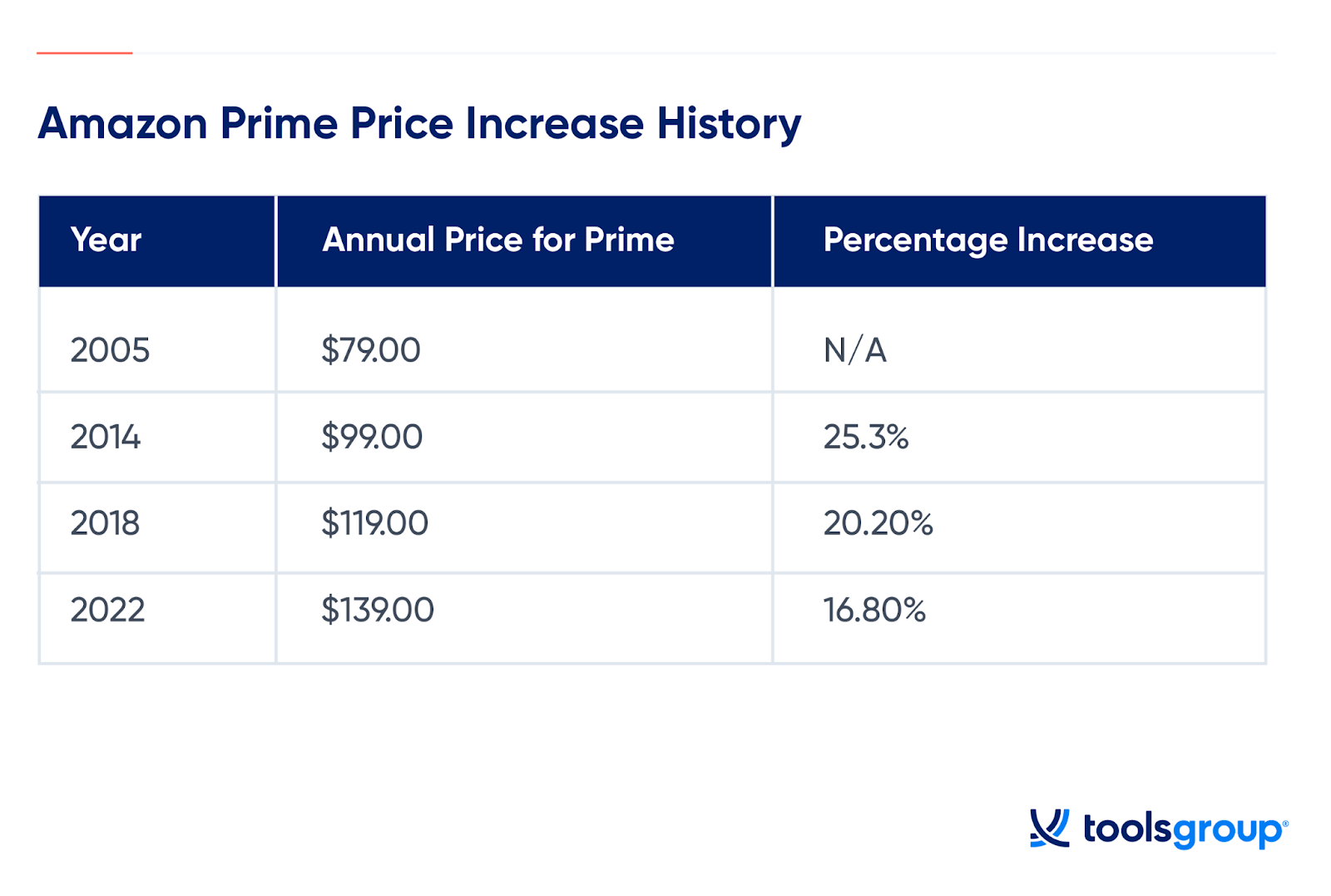
In the modern landscape of personal finance, the subscription economy has become a double-edged sword. Among the most ubiquitous of these recurring expenses is Amazon Prime. What began in 2005 as a simple $79-per-year expedited shipping service has evolved into a multi-faceted digital ecosystem. For the savvy consumer, the question is no longer just “how much is an Amazon Prime membership?” but rather, “what is the tangible return on investment (ROI) for my household budget?”
As of 2024, the standard cost of an Amazon Prime membership in the United States is $14.99 per month or $139 per year. While these figures are the baseline, understanding the financial implications of this membership requires a deep dive into the tiered pricing structures, the hidden savings potential, and the psychological impact on consumer spending habits.
Understanding the Pricing Structure: A Financial Breakdown
When integrating a subscription into a monthly or annual budget, the first step is identifying which pricing tier offers the highest utility relative to its cost. Amazon has diversified its pricing to capture different demographic segments, each with its own financial logic.
Monthly vs. Annual Subscriptions
The decision between paying $14.99 monthly or $139 annually is a classic exercise in cash flow management versus long-term savings. The annual fee effectively reduces the monthly cost to approximately $11.58. For those who have the liquidity to pay the lump sum upfront, the annual plan yields a yearly saving of roughly $40.88— a 22% discount. From a wealth-building perspective, choosing the annual option is the equivalent of a guaranteed 22% return on that specific capital allocation.
Discounted Rates: Prime Student and Prime Access
Amazon offers significant subsidies for specific groups, which can drastically alter the financial equation.
- Prime Student: At $7.49 per month or $69 per year, this is a 50% discount intended for those with a valid .edu email address. For students managing tight budgets, this tier often pays for itself through the savings on textbook shipping alone.
- Prime Access: Designed for recipients of government assistance (such as SNAP, EBT, or Medicaid), this tier costs $6.99 per month. For lower-income households, this reduced barrier to entry can provide essential access to lower-priced bulk goods and grocery delivery in “food desert” areas.
Hidden Costs and the Impact of Sales Tax
It is a common oversight in personal budgeting to ignore the impact of localized sales tax. Depending on your state of residence, the $139 annual fee can easily climb to $150 or more. When performing a “break-even” analysis, consumers must use the total post-tax figure to accurately measure the service’s impact on their discretionary income.
Maximizing the Value Proposition: More Than Just Free Shipping
To justify the $139 annual expense, a consumer must look beyond the “free” two-day shipping. In a rigorous financial audit, the membership should be viewed as a “bundle” that can potentially replace other line items in a budget.
Prime Video and Music: Consolidation of Entertainment Expenses
The average American household spends over $50 a month on various streaming services. A Prime membership includes Prime Video and a tiered version of Amazon Music. For a household willing to consolidate their entertainment, canceling a $15.49/month Netflix plan in favor of Prime Video creates an immediate net positive cash flow. When viewed as a replacement for other digital subscriptions, the “cost” of the shipping benefits effectively drops to zero.
Grocery Savings at Whole Foods and Amazon Fresh
For those who prioritize high-quality nutrition, the integration of Whole Foods Market into the Prime ecosystem offers exclusive “Yellow Tag” deals—often 10% off sale items. Additionally, Prime members can access Amazon Fresh for grocery deliveries. For a family spending $800 a month on groceries, a 5% average saving through Prime-exclusive discounts results in $480 of annual savings, which covers the membership fee nearly three and a half times over.

The Amazon Prime Visa: The 5% Cashback Strategy
One of the most powerful financial tools associated with the membership is the Amazon Prime Visa card. It offers 5% back on all Amazon.com and Whole Foods purchases. For a power user who spends $3,000 annually on the platform, the cashback alone ($150) covers the cost of the membership. This turns the Prime fee from an expense into a self-funding mechanism for high-volume shoppers.
The Consumer Psychology of Prime: Does It Lead to Overspending?
While the mathematical benefits of Prime are clear, a professional financial analysis must also account for behavioral economics. The “Amazon Prime effect” can have a deleterious impact on net worth if not managed with discipline.
The “Sunk Cost” Fallacy in Subscription Models
Once a consumer pays $139 upfront, they often feel a psychological pressure to “get their money’s worth.” This leads to a higher frequency of orders. Financial data suggests that Prime members spend significantly more annually than non-members. The convenience of “Buy Now” buttons and one-click ordering removes the “pain of paying,” a psychological friction that usually helps consumers regulate their spending.
Impulse Buying and the Frictionless Checkout Experience
The primary value of Prime is the removal of friction. In personal finance, friction is often a friend; it provides time to reconsider a purchase. The 24-hour delivery window encourages impulse buys for items that are wants rather than needs. To maintain a healthy balance sheet, Prime members should implement a “24-hour cart rule,” where items must sit in the cart for a full day before the transaction is finalized, regardless of how fast the shipping is.
Evaluating the Opportunity Cost
Every dollar spent on a Prime membership (and the subsequent purchases it encourages) is a dollar that is not being invested in a high-yield savings account or a diversified index fund. For a young professional, $139 invested annually with a 7% return over 30 years would grow to approximately $13,000. While this isn’t a reason to avoid the membership, it highlights the importance of ensuring the service provides genuine utility rather than just a dopamine hit from frequent deliveries.
Strategic Alternatives and Budgeting for Prime
In a competitive market, Amazon is no longer the only player offering a comprehensive membership program. A sophisticated financial plan involves comparing these services to find the best fit for your specific spending patterns.
Comparing Prime to Walmart+ and Target Circle 360
- Walmart+: At $98 per year, Walmart+ is significantly cheaper than Prime. It offers similar free shipping benefits and includes a Paramount+ subscription. For rural residents or those who shop frequently at big-box retailers, the lower price point might offer a better ROI.
- Target Circle 360: Target’s new entry into the space focuses on same-day delivery via Shipt. For urban professionals where time is the scarcest resource, the premium paid for Shipt services through Target might outweigh the digital benefits of Amazon.
Performing a Quarterly Subscription Audit
Financial health is maintained through constant vigilance. Consumers should perform a “Prime Audit” every three months. This involves:
- Reviewing Order History: Totaling the amount saved on shipping versus the membership fee.
- Tracking Usage: Identifying if Prime Video, Reading, or Gaming are actually being used.
- Assessing Alternatives: Checking if items can be bought cheaper locally or in bulk elsewhere.

Is Prime Worth It? The Final Financial Verdict
The answer to “how much is an Amazon Prime membership” is $139, but the value is subjective. If you utilize the 5% cashback card, stream your movies via Prime Video, and save on groceries at Whole Foods, the membership is a powerful tool for financial optimization. However, if the membership serves primarily as a gateway for unchecked impulse spending, it becomes a liability to your long-term financial goals.
Ultimately, Amazon Prime should be treated like any other financial tool: it requires a strategy. By calculating your break-even point and being mindful of the psychological traps of convenience, you can transform this recurring expense into a strategic asset that enhances your lifestyle without compromising your financial future.
aViewFromTheCave is a participant in the Amazon Services LLC Associates Program, an affiliate advertising program designed to provide a means for sites to earn advertising fees by advertising and linking to Amazon.com. Amazon, the Amazon logo, AmazonSupply, and the AmazonSupply logo are trademarks of Amazon.com, Inc. or its affiliates. As an Amazon Associate we earn affiliate commissions from qualifying purchases.