
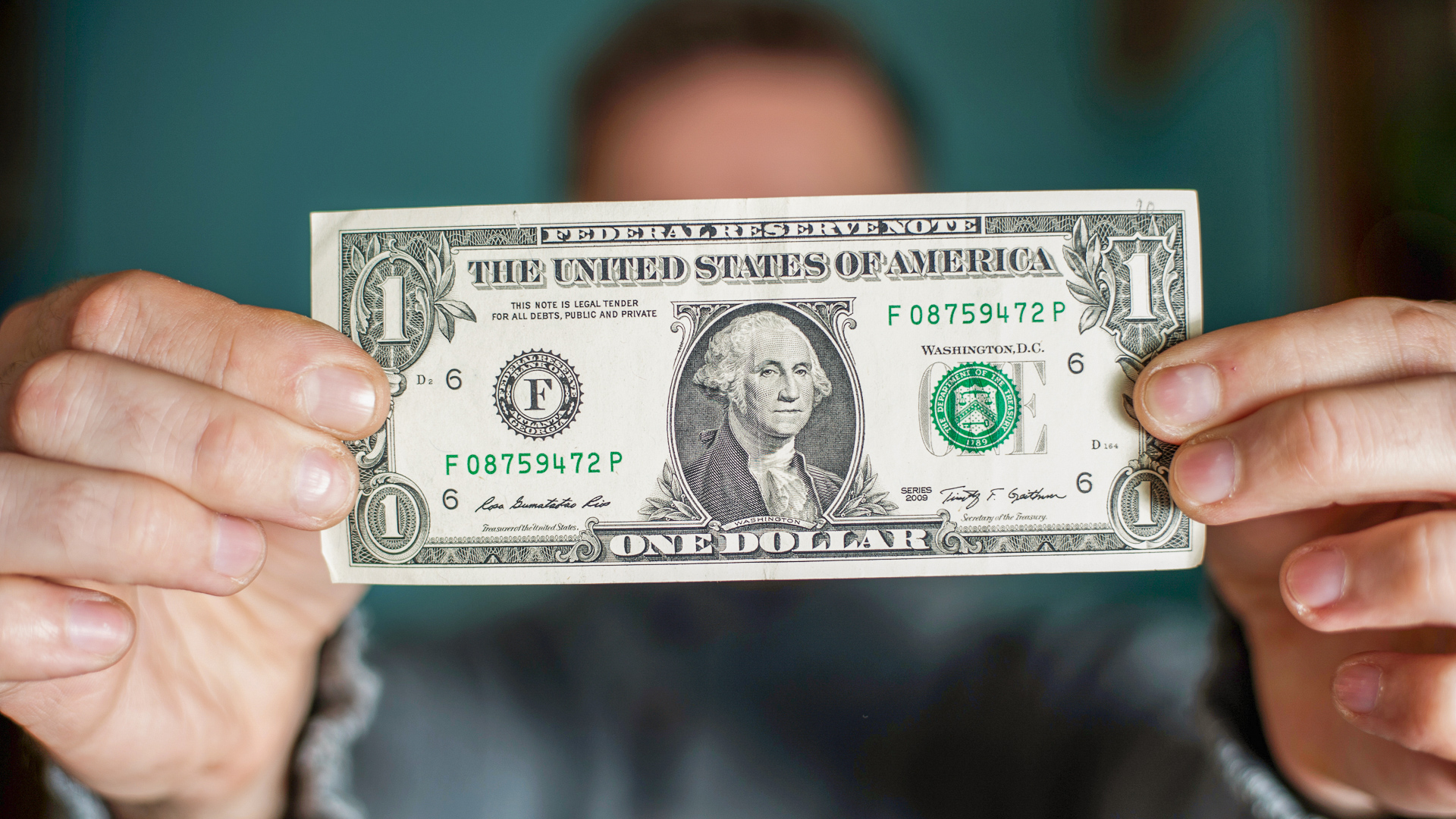
The question “how much is a dollar worth?” might seem deceptively simple, almost rhetorical. After all, a dollar is a dollar—it’s 100 cents, the fundamental unit of currency in the United States and a globally recognized medium of exchange. Yet, beneath this apparent simplicity lies a profound economic complexity. The true “worth” of a dollar is a dynamic, multifaceted concept, influenced by a myriad of economic forces, geopolitical shifts, and even individual financial choices. It’s not merely its face value, but rather its purchasing power, its international standing, and its ability to act as a store of value that truly defines its worth. Understanding these layers is crucial for anyone navigating personal finance, investing, or simply trying to comprehend the broader economic landscape.
The Dollar’s Worth: A Shifting Landscape of Purchasing Power
At its most fundamental level, the worth of a dollar is determined by what it can buy. This concept, known as purchasing power, is not static; it constantly fluctuates, primarily driven by the forces of inflation and, less frequently, deflation.
Understanding Inflation: The Silent Eroder of Value
Inflation is perhaps the most significant factor affecting a dollar’s worth over time. It represents the rate at which the general level of prices for goods and services is rising, and consequently, the purchasing power of currency is falling. When inflation is high, your dollar buys less today than it did yesterday. This phenomenon is often measured by indices like the Consumer Price Index (CPI), which tracks the average change over time in the prices paid by urban consumers for a market basket of consumer goods and services.
Consider a historical perspective: a dollar in 1970 could buy significantly more goods—from a gallon of milk to a movie ticket—than a dollar today. This erosion of purchasing power is a direct consequence of cumulative inflation. While moderate inflation is often viewed as a sign of a healthy, growing economy, unchecked inflation can drastically diminish the value of savings, make long-term financial planning difficult, and disproportionately affect those on fixed incomes. Central banks, like the U.S. Federal Reserve, actively monitor and attempt to manage inflation through monetary policy, aiming for a stable economic environment where the dollar retains a predictable level of purchasing power.
Deflation: A Different Kind of Economic Pressure
While inflation dominates economic discussions, deflation offers another perspective on the dollar’s worth. Deflation is the sustained decrease in the general price level of goods and services, resulting in an increase in the purchasing power of currency. On the surface, this might sound positive—your dollar buys more! However, widespread deflation is often a symptom of severe economic contraction. When prices consistently fall, consumers tend to delay purchases, anticipating even lower prices in the future. This reduced demand can lead to cuts in production, job losses, and a downward spiral that chokes economic growth. For businesses, falling prices mean lower revenues and profits, making it harder to service debt or invest. Thus, while inflation erodes the dollar’s value by making things more expensive, deflation can signal an economy where the dollar’s increased individual purchasing power is offset by broader economic stagnation and uncertainty.
Real vs. Nominal Value: The Core Distinction
To truly grasp the dollar’s worth, it’s essential to differentiate between its nominal value and its real value. The nominal value of a dollar is its face value—one dollar bill is always one dollar. However, the real value refers to the actual goods and services that dollar can purchase. When we account for inflation, we are effectively calculating the real value of money. For instance, if you earn a 3% raise in your salary (nominal increase) but inflation is also 3%, your real purchasing power has not changed. If inflation is 5%, your real purchasing power has decreased, despite the nominal raise. This distinction is critical for investors, savers, and policymakers alike, as financial decisions based solely on nominal values can lead to a false sense of security or prosperity. Understanding real returns on investments, real wage growth, and real economic growth provides a much clearer picture of economic health and individual financial well-being.
Global Dynamics: The Dollar’s Strength on the World Stage
Beyond its domestic purchasing power, the dollar’s worth is profoundly influenced by its global standing. As the world’s primary reserve currency and a dominant currency in international trade, the U.S. dollar’s value against other currencies has far-reaching implications.
Exchange Rates: Valuing the Dollar Against Other Currencies
The most immediate measure of the dollar’s global worth is its exchange rate against other currencies. An exchange rate tells you how much one currency is worth in terms of another. For example, if 1 USD equals 0.90 EUR, it means one U.S. dollar can buy 0.90 Euros. These rates are determined by a complex interplay of supply and demand in foreign exchange markets, influenced by factors such as interest rate differentials, economic growth forecasts, geopolitical stability, and trade balances.
A strong dollar means that U.S. goods are more expensive for foreign buyers, potentially hurting exports, but it makes imports cheaper for U.S. consumers and businesses. Conversely, a weak dollar makes U.S. exports more competitive but increases the cost of imports. For travelers, a strong dollar means more purchasing power abroad, while a weak dollar makes international travel more expensive. For investors, fluctuations in exchange rates can significantly impact the value of international investments and returns on foreign assets.
Geopolitical Influence and Economic Stability
The U.S. dollar’s role as the world’s leading reserve currency bestows upon it a unique status and influences its global worth. Central banks and financial institutions worldwide hold significant dollar reserves, not just for trade but also as a safe haven asset during times of global uncertainty. This demand helps maintain the dollar’s strength. The stability of the U.S. economy, the reliability of its legal and political systems, and the policies of the Federal Reserve all contribute to this perceived safety and, consequently, the dollar’s global dominance. Major geopolitical events, shifts in global trade agreements, or significant changes in U.S. economic policy can cause substantial volatility in the dollar’s exchange rate, reflecting its intrinsic link to global stability.
Commodities and the Dollar: An Intertwined Relationship

Many critical commodities, most notably crude oil and gold, are typically priced and traded in U.S. dollars on international markets. This practice means there’s an inverse relationship between the value of the dollar and the price of these commodities. When the dollar strengthens, commodities become more expensive for buyers holding other currencies, which can suppress demand and lead to lower commodity prices (denominated in USD). Conversely, a weakening dollar makes commodities cheaper for international buyers, potentially driving up their dollar-denominated prices. This relationship highlights another facet of the dollar’s worth—its power to influence global energy costs, raw material prices, and the profitability of industries worldwide.
Beyond Transactional Value: The Dollar as a Store of Wealth
While the dollar’s immediate purchasing power and global exchange rate are crucial, its worth also lies in its ability to serve as a store of wealth—a means by which economic value can be saved and retrieved in the future.
Savings Accounts and Fixed Deposits: Preserving Nominal Value
For many, the simplest way to store wealth is through traditional savings accounts, money market accounts, or fixed deposits. These vehicles offer security and typically provide a modest interest rate. In this context, a dollar placed in a savings account will nominally remain a dollar (plus interest). However, their ability to truly preserve or grow real worth is often challenged by inflation. In a low-interest-rate environment where the annual interest earned is less than the rate of inflation, the real value of those saved dollars is diminishing over time. While these tools are excellent for liquidity and short-term financial goals, they often fall short in enabling significant wealth accumulation that outpaces the erosion of purchasing power.
Investing: Battling Inflation and Growing Real Worth
To make a dollar worth more over time, especially when factoring in inflation, investing becomes paramount. By allocating dollars into various asset classes such as stocks, bonds, real estate, mutual funds, or exchange-traded funds (ETFs), individuals aim to achieve returns that exceed the rate of inflation, thus growing their real wealth. Investing inherently involves risk, but it also offers the potential for significant capital appreciation and income generation. A dollar invested wisely today could be worth multiple dollars in real terms decades from now, through the power of compounding and economic growth. This transformation from a simple unit of currency to a growth engine underscores a fundamental aspect of the dollar’s worth in a forward-looking context.
Diversification: Protecting Against Fluctuations
A critical strategy in ensuring the dollar’s enduring worth as a store of wealth is diversification. This involves spreading investments across different asset classes, industries, and geographies. The rationale is simple: if one investment performs poorly, others might perform well, mitigating overall risk and protecting the total value of one’s accumulated dollars. Different asset classes react differently to economic conditions; for instance, bonds might perform better during economic downturns, while stocks thrive during periods of growth. By diversifying, investors aim to create a portfolio that can weather various economic storms, preserving and potentially enhancing the real worth of their capital over the long term, rather than leaving it vulnerable to the whims of any single market segment.
The Personal Dimension: What a Dollar Means to You
Ultimately, the question “how much is a dollar worth?” carries a profoundly personal dimension. Its value is not just an abstract economic calculation but is deeply intertwined with individual circumstances, financial behaviors, and life goals.
Income and Expenses: Your Personal Purchasing Power
For each individual, the worth of a dollar is directly tied to their personal income level and spending habits. A dollar earned by someone with a high income might represent a smaller fraction of their total wealth and thus carry less perceived “weight” than a dollar earned by someone on a tight budget. Similarly, the discretionary nature of an expense affects its perceived value. A dollar spent on a necessity like groceries has a different meaning than a dollar spent on a luxury item or an investment. Effective budgeting and financial planning are about optimizing the allocation of each dollar, ensuring it contributes most effectively to personal financial goals and quality of life. Understanding where your dollars go and consciously directing them maximizes their personal utility and worth.
Debt and Opportunity Cost: Dollars with Strings Attached
The worth of a dollar is significantly diminished when it comes with the burden of debt. A borrowed dollar, while providing immediate purchasing power, typically incurs interest, meaning the borrower must pay back more than the original dollar amount. The true cost of that dollar, therefore, is higher, reducing its effective worth. Furthermore, every dollar spent or saved carries an opportunity cost—the value of the next best alternative that was not taken. A dollar spent on a non-essential item today is a dollar that cannot be invested for future growth, used to pay down high-interest debt, or saved for an emergency. Recognizing these opportunity costs forces a deeper evaluation of how each dollar contributes to overall financial well-being.
Financial Literacy: Empowering Your Dollar
Perhaps the most empowering aspect of the dollar’s worth is the individual’s ability to influence it through financial literacy. An informed individual who understands inflation, investing principles, budgeting, and debt management can make their dollars work harder and stretch further. Financial literacy transforms a dollar from a simple unit of exchange into a powerful tool for building wealth, achieving financial independence, and securing a stable future. It empowers individuals to navigate economic complexities, make judicious decisions about saving, spending, and investing, and ultimately unlock the maximum potential value of every dollar they earn and control.

Conclusion
The question “how much is a dollar worth?” unveils a intricate tapestry of economic, global, and personal factors. Its value is not fixed but is constantly re-evaluated by the relentless forces of inflation, the dynamics of international exchange rates, the security it offers as a store of wealth, and the individual choices we make every day. From the purchasing power eroded by rising prices to its standing as the world’s reserve currency, and from its potential to grow through shrewd investment to its personal significance within a household budget, the dollar is far more than just 100 cents. Understanding these multifaceted dimensions is not merely an academic exercise; it is an essential component of informed financial decision-making, enabling individuals and businesses alike to navigate the complexities of the modern economy and optimize the true worth of their money.
aViewFromTheCave is a participant in the Amazon Services LLC Associates Program, an affiliate advertising program designed to provide a means for sites to earn advertising fees by advertising and linking to Amazon.com. Amazon, the Amazon logo, AmazonSupply, and the AmazonSupply logo are trademarks of Amazon.com, Inc. or its affiliates. As an Amazon Associate we earn affiliate commissions from qualifying purchases.