
In the world of modern finance, few questions are as frequently asked—or as complex to answer—as “How much is a Bitcoin worth?” To a casual observer, the answer is a simple flickering number on a digital exchange, a price point that can swing by thousands of dollars in a single afternoon. However, for the serious investor, the “worth” of Bitcoin extends far beyond its current market price. It encompasses a multifaceted ecosystem of scarcity, utility, macroeconomic trends, and institutional sentiment.
To understand the value of Bitcoin, one must distinguish between price—what you pay—and value—what you get. As an asset class that did not exist fifteen years ago, Bitcoin defies traditional financial modeling. It has no cash flow, no dividends, and no physical commodity backing it. Yet, it has grown into a trillion-dollar asset. This article explores the financial mechanics that determine Bitcoin’s worth from a professional investment perspective.

1. The Fundamental Mechanics of Bitcoin’s Price
At its most basic level, the price of a Bitcoin is determined by the intersection of supply and demand on global exchanges. Unlike fiat currencies, which can be printed at the discretion of central banks, Bitcoin operates on a fixed algorithmic schedule.
The Role of Absolute Scarcity and the Halving
The most significant driver of Bitcoin’s long-term value is its hard-capped supply of 21 million coins. This programmed scarcity is a sharp contrast to the inflationary nature of the U.S. Dollar or the Euro. Approximately every four years, an event known as the “Halving” occurs, which reduces the rate at which new Bitcoins are created by 50%.
From a “Money” perspective, this creates a recurring supply shock. If demand remains constant or increases while the rate of new supply drops, the price naturally faces upward pressure. Investors often view the Halving cycles as the heartbeat of Bitcoin’s valuation, marking phases of accumulation followed by rapid price discovery.
Market Liquidity and Order Books
While scarcity provides the floor, liquidity determines the stability. Bitcoin’s worth is realized through order books on major exchanges. When high-net-worth individuals or “whales” place large buy orders, they absorb the available “ask” prices, driving the value up. Conversely, if a large holder liquidates their position, it can cause a temporary dip. The depth of the market—how much capital is required to move the price by 1%—is a critical metric for institutional investors who need to enter and exit positions without causing excessive slippage.
2. Beyond the Ticker: Methods for Valuing Bitcoin
Traditional finance uses Price-to-Earnings (P/E) ratios or Discounted Cash Flow (DCF) models to value stocks. Since Bitcoin is more akin to a digital commodity or a monetary network, analysts have developed bespoke financial models to determine its “fair value.”
The Stock-to-Flow Model
One of the most popular frameworks in the “Money” niche is the Stock-to-Flow (S2F) model. Originally used for precious metals like gold and silver, S2F measures the ratio of the existing supply (stock) against the annual production (flow).
Gold has a high S2F ratio because it is difficult to significantly increase the total supply through mining. As Bitcoin’s “flow” halves every four years, its S2F ratio increases, eventually surpassing that of gold. Proponents of this model argue that Bitcoin’s worth is directly correlated to this increasing scarcity, positioning it as a superior “Store of Value” for the digital age.
Metcalfe’s Law and Network Utility
Another way to calculate what a Bitcoin is worth is to view it as a network rather than a coin. Metcalfe’s Law states that the value of a telecommunications network is proportional to the square of the number of connected users.
When applied to Bitcoin, this suggests that as more wallets are created and more transactions occur, the utility of the network grows exponentially. The “worth” of a single Bitcoin, therefore, represents a fractional stake in a global, borderless financial network. As adoption moves from retail hobbyists to corporate treasuries and nation-states, the network effect provides a fundamental floor for its valuation.
3. Macroeconomic Drivers Influencing Bitcoin’s Worth
Bitcoin does not exist in a vacuum. Its price is heavily influenced by the global “macro” environment—the decisions made by central banks and the health of the broader economy.
Inflation and Central Bank Policy
Bitcoin is often referred to as “Digital Gold,” acting as a hedge against the debasement of fiat currency. When central banks engage in quantitative easing (printing money) or maintain low-interest rates, the purchasing power of traditional currency often declines.
In this environment, investors seek “hard assets” that cannot be manipulated. If the market perceives that the U.S. Federal Reserve is being too aggressive with money supply expansion, Bitcoin’s worth typically rises as investors “flee to safety” in a decentralized asset. Conversely, when interest rates rise and the dollar strengthens, Bitcoin may face short-term headwinds as capital flows back into “risk-free” assets like Treasury bonds.
Institutional Adoption and Spot ETFs
The entry of institutional capital has fundamentally changed how Bitcoin is valued. For years, Bitcoin was a retail-driven market. However, the approval of Spot Bitcoin Exchange-Traded Funds (ETFs) in major financial hubs has opened the floodgates for pension funds, insurance companies, and family offices.
These institutions bring massive “sticky” capital. Unlike retail traders who might panic-sell during a 10% dip, institutional investors often operate on multi-year horizons. The inclusion of Bitcoin in diversified portfolios (even at a 1% allocation) creates a massive, sustained demand that significantly alters the price floor.
4. Risks and Volatility: The Price of Discovery
Any discussion about what Bitcoin is worth must acknowledge its notorious volatility. For some, Bitcoin is “worth” nothing because of its price swings; for others, the volatility is simply the price of participating in the fastest-growing asset class in history.
The Regulatory Landscape
The worth of Bitcoin is intrinsically tied to its legal status. In jurisdictions where Bitcoin is embraced as legal tender or a regulated commodity, its value tends to stabilize and grow. However, the threat of restrictive legislation—such as bans on mining or heavy capital gains taxes—can create “FUD” (Fear, Uncertainty, and Doubt).
Professional investors monitor the regulatory landscape closely. A clear legal framework provides the “green light” for institutional money, which in turn increases the asset’s worth. Sudden regulatory crackdowns in major economies remain one of the primary risks to Bitcoin’s short-term valuation.
Market Sentiment and Speculation
Because Bitcoin is a 24/7 global market, it is highly sensitive to sentiment. Social media, news cycles, and even the comments of influential financial figures can cause rapid fluctuations. This “speculative premium” can sometimes push Bitcoin’s price far above its fundamental value (a bubble) or far below it (a capitulation). Understanding the “worth” of Bitcoin requires the ability to look past the “noise” of daily price action and focus on the underlying financial health of the network.
5. The Future Outlook: What Determines Long-Term Value?
As we look toward the next decade, the question of what a Bitcoin is worth will likely shift from “How many dollars is it?” to “How much of the world’s wealth does it represent?”
Integration into Global Finance
The ultimate valuation of Bitcoin depends on its level of integration. If Bitcoin becomes the primary settlement layer for international trade—a neutral, digital reserve currency—its worth could reach heights that currently seem unimaginable. As a “Money” tool, its ability to facilitate instant, permissionless transactions across borders adds a layer of utility value that traditional gold simply cannot match.
The Evolution of the “Digital Gold” Narrative
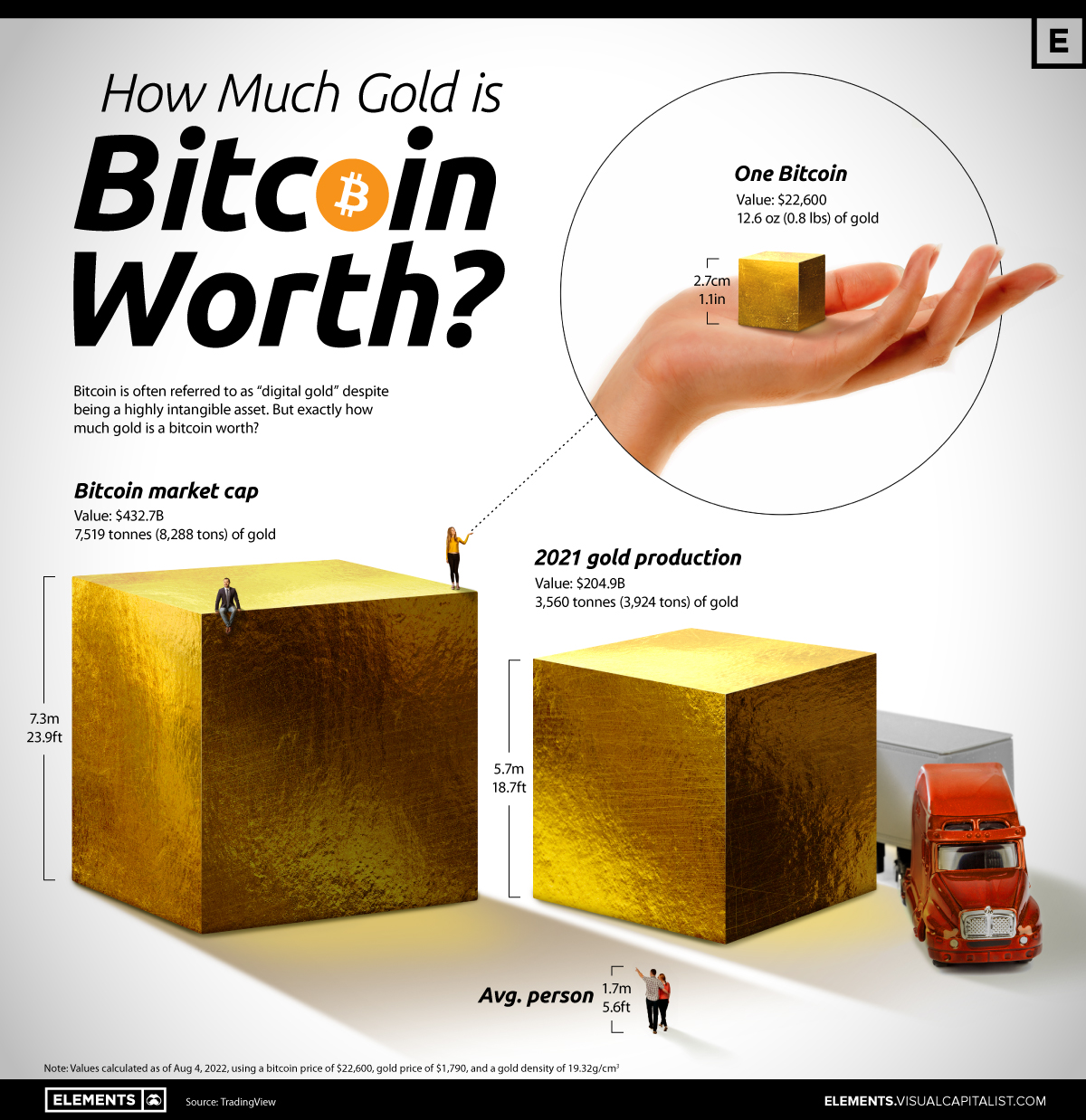
As younger generations, who are “digital natives,” begin to inherit and manage wealth, the preference for digital assets over physical assets like gold is expected to grow. This generational wealth transfer is a powerful tailwind for Bitcoin. If Bitcoin captures even half of the market capitalization of the global gold market, its price per coin would exceed hundreds of thousands of dollars.
In conclusion, a Bitcoin is worth exactly what the market is willing to pay for it at any given moment. However, that price is anchored by the reality of 21 million coins, a growing global network of users, and a macroeconomic environment that is increasingly searching for alternatives to traditional fiat systems. Whether you view it as a speculative asset or the future of money, Bitcoin’s worth is a reflection of the world’s evolving relationship with value, scarcity, and trust.
aViewFromTheCave is a participant in the Amazon Services LLC Associates Program, an affiliate advertising program designed to provide a means for sites to earn advertising fees by advertising and linking to Amazon.com. Amazon, the Amazon logo, AmazonSupply, and the AmazonSupply logo are trademarks of Amazon.com, Inc. or its affiliates. As an Amazon Associate we earn affiliate commissions from qualifying purchases.