
In the world of personal finance and high-stakes investing, few assets have captured the global imagination quite like Bitcoin. Once an obscure experiment in digital cryptography, it has evolved into a premier financial asset class. For those asking “how much is 100 Bitcoins worth,” the answer is far more complex than a simple currency conversion. While a basic calculation involves multiplying the current spot price by one hundred, the true value of such a holding involves an analysis of market liquidity, historical growth, tax implications, and strategic wealth management.

Holding 100 Bitcoins today places an investor in the prestigious category of a “whale”—a term used to describe entities that hold enough of the asset to potentially influence market movements. At current market valuations, this amount represents a multi-million dollar portfolio, signaling not just wealth, but a significant stake in the future of the global financial system.
The Current Valuation: Navigating Market Volatility and Liquidity
To determine the exact value of 100 Bitcoins at any given moment, one must look at the global spot price, which is determined by the equilibrium of supply and demand across various international exchanges. However, for an investor holding this volume of capital, the “worth” is also tied to the ability to liquidate those assets without causing significant “slippage” (a price change occurring during the execution of a large trade).
Understanding the Spot Price and Market Cap
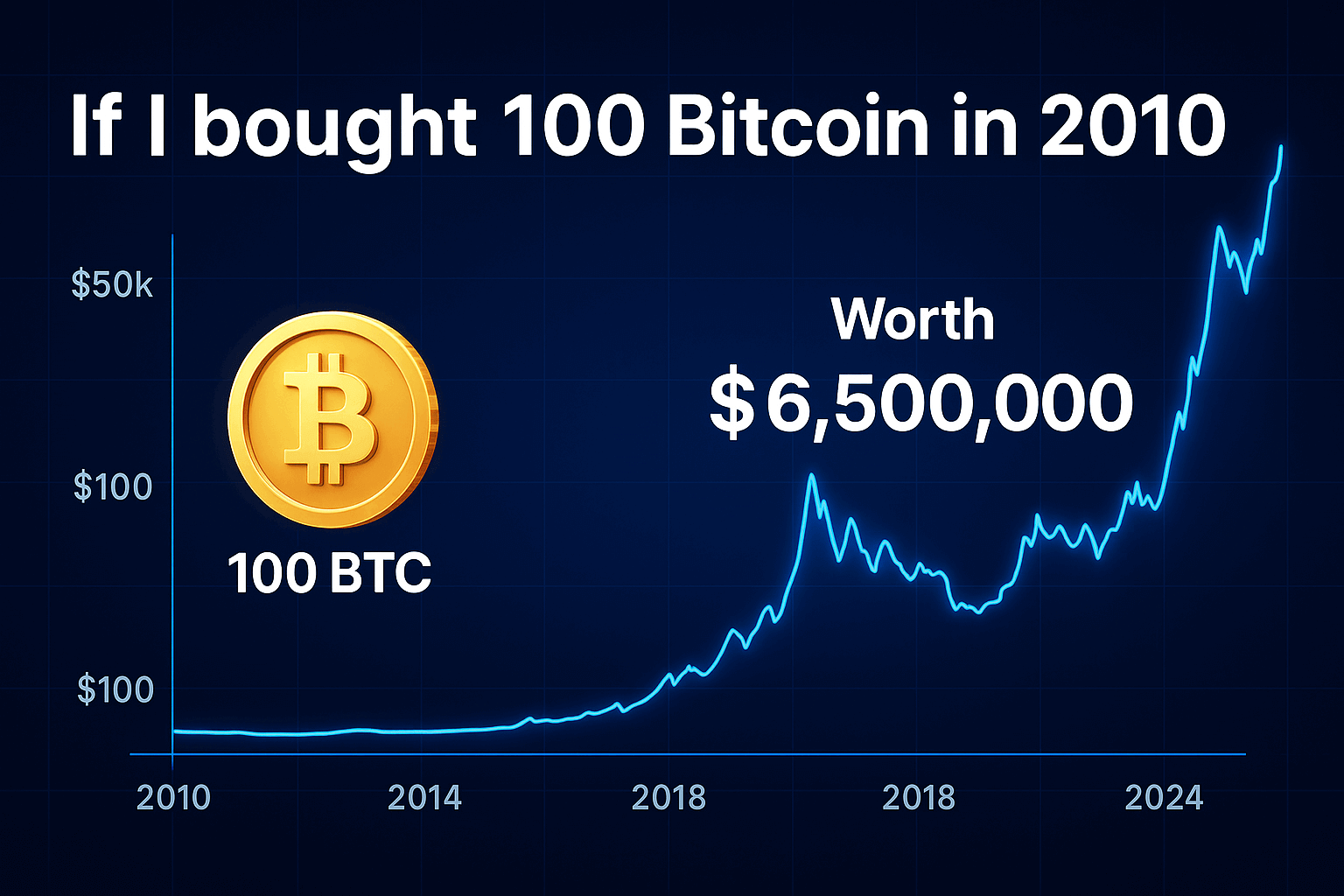
The spot price is the current price at which Bitcoin can be bought or sold for immediate delivery. Because Bitcoin operates on a 24/7 global market, this number is in constant flux. When calculating the value of 100 BTC, investors must monitor real-time data from aggregate sites like CoinMarketCap or specialized financial terminals. For instance, if Bitcoin is trading at $65,000, the raw value is $6.5 million. If it surges to $100,000, that portfolio jumps to $10 million.
The Importance of Market Liquidity
For an individual holding 100 BTC, liquidity is a critical financial metric. Unlike a retail investor selling a fraction of a Bitcoin, a whale must consider how the market absorbs a 100-unit sale. High liquidity means the assets can be converted to fiat currency (like USD or EUR) quickly with minimal impact on the price. In the current mature market, 100 BTC is easily absorbed by major exchanges, but in periods of extreme volatility, the “effective” worth might vary depending on the platform used for the trade.
Currency Pairings and Global Purchasing Power
The value of 100 Bitcoins is most commonly measured in U.S. Dollars, but its “worth” is relative to the investor’s local currency. For investors in regions experiencing high inflation or currency devaluation, the worth of 100 BTC may grow exponentially faster in local terms than it does in USD. This highlights Bitcoin’s role as a hedge against sovereign currency risks.
Historical Context: From “Pizza Money” to Generational Wealth
To truly appreciate the value of 100 Bitcoins, one must look at the asset’s trajectory. The financial journey of Bitcoin is unprecedented in the history of investing, outperforming traditional stocks, gold, and real estate over the last decade.
The Early Days and Low-Value Transactions
In 2010, 100 Bitcoins were worth virtually nothing—perhaps a few cents. This was the era of the famous “Bitcoin Pizza” transaction, where 10,000 BTC were used to purchase two pizzas. At that time, 100 BTC would have been a negligible amount of digital “play money.” Understanding this history is vital for modern investors because it illustrates the asymmetric upside potential that characterized early crypto-investing.
The 2017 and 2021 Bull Cycles
The valuation of 100 Bitcoins took a massive leap during the 2017 bull run, where prices neared $20,000, making 100 BTC worth $2 million. However, it was the 2021 cycle that cemented Bitcoin as a heavy-hitter in the financial world, with prices peaking near $69,000. At that peak, 100 BTC was worth nearly $7 million. These cycles demonstrate that the “worth” of Bitcoin is not just a static number but a reflection of growing institutional adoption and scarcity.
The Halving Cycles and Scarcity Value
Bitcoin’s value is intrinsically linked to its “halving” events, which occur approximately every four years and reduce the rate at which new Bitcoins are created. Historically, these events lead to a supply shock. For a holder of 100 BTC, these cycles are the primary drivers of long-term valuation increases, as the fixed supply of 21 million coins makes each individual unit more valuable as demand grows.
Strategic Wealth Management for Large Bitcoin Holdings
Owning 100 Bitcoins transitions an individual from a casual saver to a high-net-worth individual (HNWI). This level of wealth requires a sophisticated approach to financial management, focusing on security, tax efficiency, and portfolio balance.
Tax Implications and Capital Gains
In most jurisdictions, selling or even swapping Bitcoin is a taxable event. If an investor bought 100 BTC at a lower price and sells them at current market rates, they face significant capital gains taxes. Wealth management for 100 BTC involves calculating the “cost basis” and determining whether long-term or short-term capital gains tax rates apply. In many cases, investors choose to borrow against their Bitcoin using DeFi (Decentralized Finance) or institutional lending desks to access liquidity without triggering a taxable sale.
Secure Custody and Risk Mitigation
The “worth” of 100 Bitcoins is zero if the private keys are lost or stolen. For an asset worth millions, standard exchange storage is often considered insufficient. High-net-worth investors typically utilize “Cold Storage” (offline hardware wallets) or multi-signature institutional custody services. These services provide insurance and layers of security that ensure the capital is preserved for the long term.
Diversification vs. Concentration
A common dilemma for those holding 100 BTC is whether to remain “concentrated” in Bitcoin or diversify into other asset classes like real estate, bonds, or equities. While Bitcoin has been the best-performing asset, its volatility can be a risk to total net worth. Professional financial advisors often suggest “rebalancing”—selling a small portion of the 100 BTC to fund other investments, thereby locking in gains and reducing the overall risk profile of the investor’s estate.
Bitcoin’s Role in Modern Wealth Preservation
Beyond the immediate dollar value, 100 Bitcoins represent a strategic stake in a “digital gold” standard. As global debt increases and central banks continue to expand the money supply, the role of Bitcoin in wealth preservation has become a central theme in business finance.
A Hedge Against Inflation
Traditional personal finance teaches that cash loses value over time due to inflation. Bitcoin, with its hard cap of 21 million coins, is viewed by many as the ultimate hedge. For someone holding 100 BTC, the primary value is often seen as “purchasing power preservation.” Even if the dollar value fluctuates, the percentage of the total Bitcoin supply owned remains constant (100 out of 21 million), which is a powerful psychological and financial metric.
Institutional Integration and ETFs
The value of Bitcoin has been bolstered by the entry of institutional giants like BlackRock and Fidelity. The approval of Spot Bitcoin ETFs (Exchange Traded Funds) has provided a bridge for traditional capital to enter the market. For the private holder of 100 BTC, this institutionalization adds a layer of “legitimacy” and “floor price” support that didn’t exist in the early years. It means that the 100 BTC is now part of a global, regulated financial ecosystem.
The “Orange Pill” Philosophy in Business Finance
Many modern corporations, most notably MicroStrategy, have begun adding Bitcoin to their balance sheets. This shift in corporate finance philosophy treats Bitcoin as a primary reserve asset. For an individual or a small business owner, holding 100 BTC is an extension of this strategy—treating the asset not as a speculative trade, but as the foundational “hard money” upon which a financial future is built.
Future Outlook: The Long-Term Trajectory of 100 BTC
Predicting the future value of 100 Bitcoins is a favorite pastime of financial analysts. While the past is no guarantee of the future, the structural supply/demand dynamics suggest a continued upward trend over long time horizons.
Price Targets and Market Projections
Many prominent investors, such as those at Ark Invest or various Wall Street analysts, have projected that Bitcoin could eventually reach $500,000 or even $1,000,000 per coin as it captures a larger share of the gold market. At $1 million per coin, 100 Bitcoins would be worth $100 million. While these figures are speculative, they form the basis for why many holders refuse to sell their 100 BTC “stack” despite short-term price drops.
The Exit Strategy: Selling vs. Borrowing
As we look toward the future of money, the concept of an “exit strategy” is changing. Instead of selling 100 BTC for a fiat currency that is losing value, many wealthy holders plan to use their Bitcoin as collateral. In a future where Bitcoin is a recognized global reserve, you might never “sell” your 100 Bitcoins; instead, you would take out low-interest loans against them to fund your lifestyle or business ventures, allowing the underlying asset to continue appreciating.

Conclusion: The True Worth of 100 Bitcoins
In summary, 100 Bitcoins is currently worth millions of dollars, but its value transcends the immediate price tag. It represents a significant percentage of the world’s most successful digital asset, a hedge against economic instability, and a gateway to sophisticated wealth management strategies. Whether viewed through the lens of current market liquidity, historical growth, or future potential, holding 100 BTC is a definitive marker of financial independence in the digital age. For the modern investor, the goal is not just to know what it is worth today, but to understand how to manage that worth for the decades to come.
aViewFromTheCave is a participant in the Amazon Services LLC Associates Program, an affiliate advertising program designed to provide a means for sites to earn advertising fees by advertising and linking to Amazon.com. Amazon, the Amazon logo, AmazonSupply, and the AmazonSupply logo are trademarks of Amazon.com, Inc. or its affiliates. As an Amazon Associate we earn affiliate commissions from qualifying purchases.