
The year 2008 is etched into the annals of financial history as a period of profound economic upheaval, marked by the most severe financial crisis since the Great Depression. For millions of investors, businesses, and households worldwide, it was a harrowing time as stock markets plunged, wiping out trillions of dollars in wealth. Understanding the magnitude of this market drop is crucial not only for historical context but also for gleaning invaluable lessons about risk, resilience, and prudent financial management. The dramatic events of 2008 reshaped regulatory frameworks, investor psychology, and the global economic landscape, providing a stark reminder of the interconnectedness and fragility of modern financial systems.
The crisis, often referred to as the Great Recession, began subtly with issues in the U.S. housing market but rapidly spiraled into a full-blown global financial meltdown. Its impact was felt far beyond Wall Street, affecting Main Street through job losses, foreclosures, and a pervasive sense of economic uncertainty. For anyone interested in personal finance, investing, or business finance, analyzing the 2008 crash offers critical insights into market cycles, systemic risks, and strategies for navigating future volatilities.
The Financial Earthquake of 2008: A Quantitative Overview
To truly grasp the severity of the 2008 stock market drop, one must look at the raw numbers that illustrate the unprecedented destruction of market value. The period from late 2007 through early 2009 saw a relentless downward trajectory, culminating in some of the sharpest single-day and quarterly declines on record.
The S&P 500’s Steep Descent
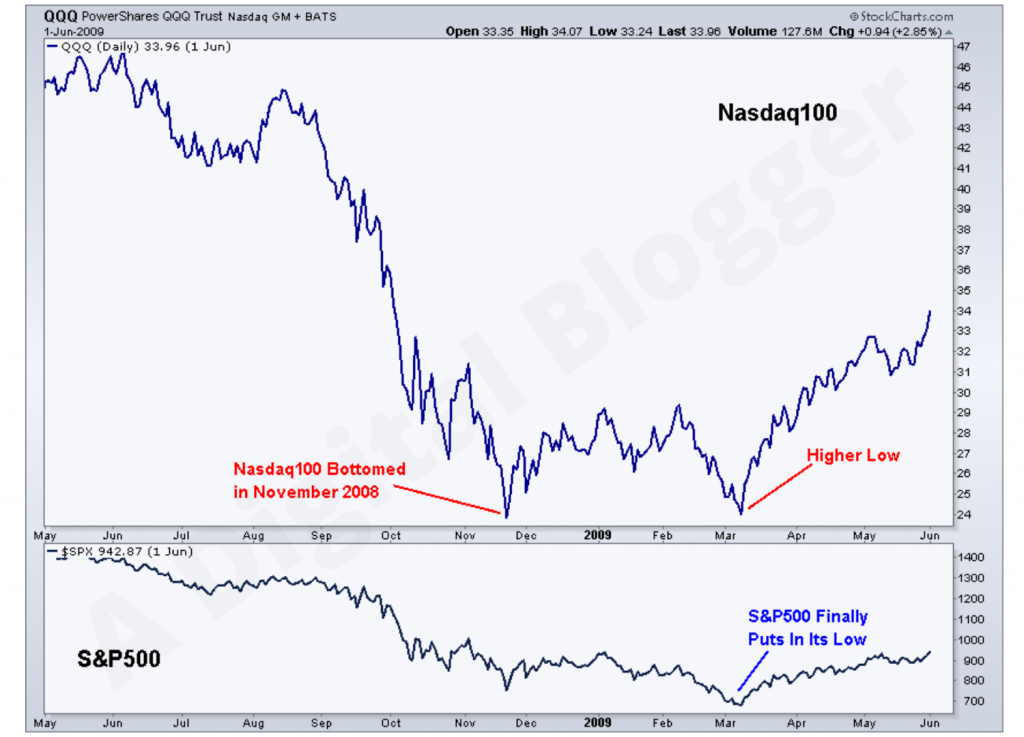
The S&P 500, widely considered the best gauge of large-cap U.S. equities, experienced a brutal decline. From its peak of 1,565.15 on October 9, 2007, the index plummeted, eventually reaching a low of 676.53 on March 9, 2009. This represented a staggering 56.78% peak-to-trough decline. While the absolute bottom was reached in early 2009, the bulk of this decline occurred throughout 2008.
Specifically for 2008, the S&P 500 finished the year down 38.49%. This made 2008 the worst year for the S&P 500 since 1937, and one of the worst years in its entire history. To put this into perspective, an investor holding a diversified portfolio tracking the S&P 500 would have seen nearly two-fifths of their investment value vanish in just twelve months. This wasn’t merely a correction; it was a devastating bear market that tested the resolve of even the most seasoned investors.
Other Key Indices and Global Impact
The S&P 500 was not alone in its suffering. Other major U.S. indices mirrored its performance:
- Dow Jones Industrial Average (DJIA): The Dow, representing 30 large U.S. companies, fell by 33.84% in 2008, closing the year at 8,776.39. From its October 2007 peak of 14,198.10 to its March 2009 trough of 6,440.08, the DJIA shed 54.4% of its value.
- NASDAQ Composite: Heavily weighted towards technology stocks, the NASDAQ also suffered immensely, declining by 40.54% in 2008. From its October 2007 peak of 2,861.50 to its March 2009 trough of 1,265.52, it experienced a 55.8% drop.
The contagion wasn’t limited to U.S. borders. Global markets experienced synchronized collapses:
- FTSE 100 (UK): Down approximately 31% in 2008.
- DAX (Germany): Down around 40% in 2008.
- Nikkei 225 (Japan): Down approximately 42% in 2008.
- Hang Seng Index (Hong Kong): Down around 48% in 2008.
These figures underscore the global nature of the crisis, demonstrating how interconnected financial markets had become and how a shock originating in one major economy could quickly ripple across the world.
Peak-to-Trough Decline: The Raw Numbers
While the yearly figures for 2008 are striking, the true measure of devastation for investors who held throughout the entire downturn is the total peak-to-trough decline. The S&P 500’s fall of nearly 57% from October 2007 to March 2009 meant that, on average, for every $100 invested at the peak, only $43 remained at the bottom. This level of value destruction had profound implications for retirement portfolios, college savings, and general household wealth, impacting consumer confidence and spending for years to come.
Unpacking the Causes: Why the Market Crashed
The 2008 financial crisis was not the result of a single isolated event but rather a complex interplay of systemic failures, reckless practices, and inadequate regulation that collectively built an unsustainable house of cards.
The Subprime Mortgage Crisis
The roots of the crisis lay in the U.S. housing market. During the early 2000s, an era of historically low interest rates led to a boom in housing demand. Lenders, driven by competition and the promise of lucrative returns, began to relax their underwriting standards, extending mortgages to borrowers with poor credit histories or insufficient income – known as “subprime” borrowers. Many of these loans featured adjustable rates, meaning payments would reset to higher levels after an initial fixed period. This created a ticking time bomb.
Securitization and Derivatives: Toxic Assets
The problem was exacerbated by the financial industry’s sophisticated yet flawed practices of securitization. Lenders would bundle thousands of these subprime mortgages into complex financial products called Mortgage-Backed Securities (MBS). Investment banks then packaged these MBS into even more complex instruments, such as Collateralized Debt Obligations (CDOs). Rating agencies, often incentivized by the very banks issuing these products, assigned high credit ratings to these “toxic assets,” misleading investors into believing they were safe.
When housing prices began to stagnate and then fall in 2006-2007, and as adjustable-rate mortgages reset to higher payments, many subprime borrowers defaulted. The value of the underlying mortgages collapsed, making the MBS and CDOs held by banks, pension funds, and other financial institutions virtually worthless.
Regulatory Failures and Systemic Risk
A critical contributing factor was the lack of adequate regulatory oversight. Policymakers had allowed the financial industry to innovate without sufficient checks and balances, leading to an explosion of opaque, unregulated derivative markets. The “shadow banking system” – a network of financial institutions outside traditional commercial banking – grew exponentially, accumulating massive amounts of risk without the capital reserves or oversight of traditional banks. Regulators failed to anticipate or effectively address the systemic risks posed by these interconnected financial products and institutions.
The Domino Effect: From Housing to Global Finance
The collapse of the subprime mortgage market triggered a terrifying domino effect. Banks that held large amounts of worthless MBS and CDOs faced massive losses, leading to a severe credit crunch. Institutions became reluctant to lend to each other, fearing their counterparties might collapse. This froze interbank lending, the lifeblood of the global financial system. Major institutions like Bear Stearns collapsed, Fannie Mae and Freddie Mac were nationalized, and the refusal to bail out Lehman Brothers in September 2008 sent shockwaves through the market, pushing it into freefall and signaling that no institution was truly “too big to fail.”
Impact on Investors and the Broader Economy
The financial crisis of 2008 had far-reaching consequences that extended beyond the trading floors, profoundly impacting individuals, businesses, and governments worldwide.
Erased Wealth and Retirement Savings
For individual investors, the market crash was devastating. Retirement accounts, 401(k)s, and personal investment portfolios saw massive depreciation. Many individuals who were nearing retirement found their savings significantly diminished, forcing them to postpone retirement, re-enter the workforce, or drastically alter their post-work plans. The psychological toll of watching decades of savings evaporate was immense, fostering deep distrust in financial institutions and markets for a generation of investors.
Business Failures and Job Losses
The credit crunch made it incredibly difficult for businesses, especially small and medium-sized enterprises, to obtain financing for operations, expansion, or even payroll. This led to widespread business failures and an accelerating wave of job losses across almost all sectors. The unemployment rate in the U.S. soared from below 5% in early 2008 to 10% by October 2009, indicating millions of lost jobs. The loss of income exacerbated the housing crisis, leading to more foreclosures and further depressing consumer spending, creating a vicious cycle.
Government Intervention and Bailouts
In response to the crisis, governments and central banks around the world unleashed unprecedented intervention measures. The U.S. government implemented the Troubled Asset Relief Program (TARP), injecting hundreds of billions of dollars into struggling financial institutions and auto manufacturers. The Federal Reserve aggressively cut interest rates to near zero and initiated quantitative easing programs to inject liquidity into the financial system. These actions, while controversial, are widely credited with preventing a complete collapse of the global financial system and averting another Great Depression.
Psychological Scars and Investor Behavior
The 2008 crisis left lasting psychological scars. Many investors, particularly those who experienced significant losses, became much more risk-averse. This led to a prolonged period of cautious investment behavior, with a preference for safer assets and a reluctance to fully re-engage with the stock market even as it recovered. This shift in investor psychology influenced market dynamics and asset allocation strategies for years, highlighting the emotional component of financial decision-making.
Lessons Learned for Modern Investors
The painful experience of 2008 offered profound lessons that continue to shape personal finance and investing strategies today.
The Importance of Diversification
One of the clearest takeaways was the critical role of diversification. Investors who had concentrated their wealth in a single asset class, such as real estate or specific sectors of the stock market, suffered disproportionately. A well-diversified portfolio across various asset classes (stocks, bonds, real estate, commodities), geographies, and industries can help mitigate risk during market downturns. When one part of the market struggles, other parts might hold their value or even perform well, providing a buffer.
Understanding Risk and Volatility
The crisis underscored that all investments carry risk, and market volatility is an inherent part of investing. It highlighted the need for investors to honestly assess their risk tolerance and ensure their portfolio aligns with it. Understanding that sharp downturns are possible, even if infrequent, helps investors prepare mentally and financially for such events, preventing panic-driven decisions.
Long-Term Perspective vs. Panic Selling
Perhaps the most challenging lesson for many was the detrimental impact of panic selling. Those who sold their investments at the bottom of the market locked in their losses and missed the subsequent recovery. Investors who maintained a long-term perspective, understood that market downturns are temporary, and even continued to invest during the dip, were ultimately rewarded as the market recovered. This reinforced the wisdom of Warren Buffett’s adage: “Be fearful when others are greedy and greedy when others are fearful.”
Regulatory Changes and Investor Protections
In the wake of the crisis, significant regulatory reforms were enacted, most notably the Dodd-Frank Wall Street Reform and Consumer Protection Act in the U.S. This legislation aimed to increase oversight of the financial system, protect consumers, and prevent a repeat of the crisis by enhancing capital requirements for banks, creating the Consumer Financial Protection Bureau (CFPB), and regulating derivatives markets more stringently. These measures, while not perfect, represent an effort to build a more resilient financial system and offer greater protection for investors and consumers.
Navigating Future Market Volatility
While the specific circumstances of 2008 were unique, market downturns are an inevitable part of the investment cycle. Prudent financial planning incorporates strategies to weather these storms.
Building an Emergency Fund
A robust emergency fund, typically covering 3-6 months of living expenses (or more for self-employed individuals), is a non-negotiable component of personal finance. This fund acts as a financial safety net, preventing investors from being forced to sell their long-term investments at a loss to cover immediate expenses during an economic crisis or personal hardship.
Dollar-Cost Averaging
Dollar-cost averaging is an effective strategy for managing market volatility. It involves investing a fixed amount of money at regular intervals, regardless of market conditions. This means buying more shares when prices are low and fewer when prices are high. Over time, this strategy can reduce the average cost per share and mitigate the risk of investing a lump sum at an unfavorable market peak. It also removes emotional decision-making from the investment process.
Seeking Professional Financial Advice
Engaging a qualified financial advisor can be invaluable, especially during times of market stress. A good advisor can help investors understand their risk tolerance, create a diversified portfolio tailored to their goals, and provide emotional guidance to prevent impulsive decisions during downturns. They can also help navigate complex financial products and tax implications.

Staying Informed and Avoiding Emotional Decisions
While staying informed about economic news is important, it’s equally crucial to avoid letting headlines drive emotional investment decisions. The financial markets are inherently noisy, and sensational news often encourages reactive behavior. Successful long-term investing requires discipline, patience, and a commitment to a well-thought-out investment plan, rather than reacting to every fluctuation or dire prediction. Understanding the historical context of market crashes, like 2008, can provide a valuable perspective that helps investors maintain calm and conviction during turbulent times.