
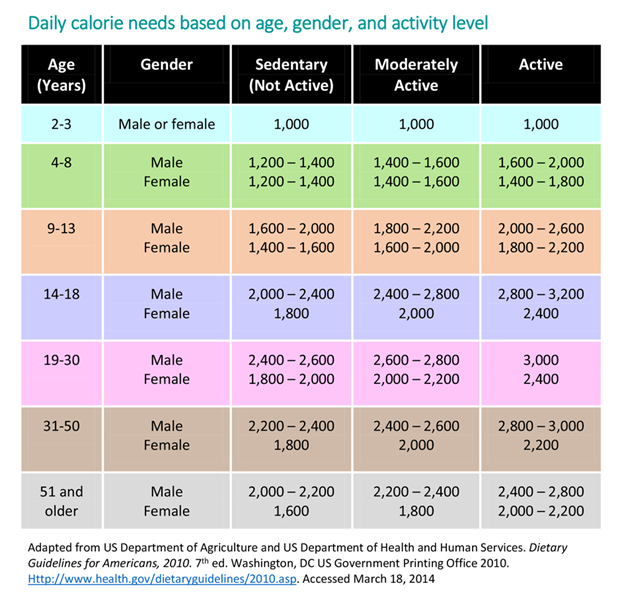
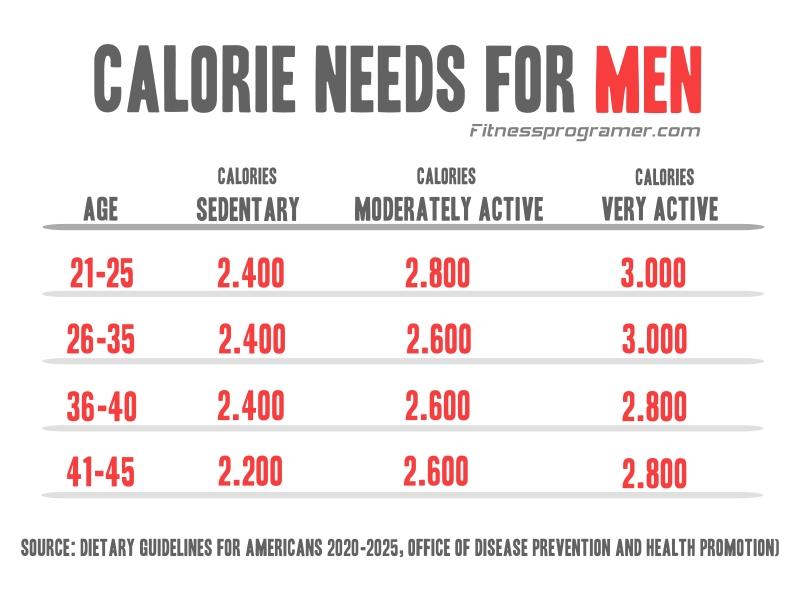
In the previous decade, if you asked the question, “How many calories do I need in a day?” you would likely be met with a generic answer: 2,000 for women and 2,500 for men. This standardized approach, while useful for broad public health labeling, is the nutritional equivalent of “one size fits all” clothing—it rarely fits anyone perfectly. Today, the intersection of biology and technology has birthed a new era of precision nutrition. We no longer rely on guesswork or static charts; instead, we leverage sophisticated algorithms, wearable sensors, and machine learning to calculate our metabolic requirements with surgical precision.

This shift from estimation to quantification is driven by the “Quantified Self” movement, a tech-led revolution that treats the human body as a data-generating machine. By understanding the software and hardware behind caloric calculation, we can move beyond the “average” and tap into a personalized health strategy powered by the latest innovations in HealthTech.
The Evolution of Bio-Metric Tech: Beyond Simple Calculators
For years, the gold standard for calculating caloric needs was the Harris-Benedict equation or the Mifflin-St Jeor formula. While scientifically sound, these were manual calculations that accounted for only basic variables: age, height, weight, and a subjective “activity multiplier.” In the modern tech landscape, these formulas have been integrated into complex software backends, enhanced by real-time data inputs that make the original math look primitive.
From Static Equations to Dynamic Machine Learning
Modern health applications no longer just solve a math problem; they build a model. When you input your data into a high-end fitness app, the software uses machine learning (ML) to refine its estimates based on your progress. For instance, if the app suggests 2,200 calories but your weight remains stagnant despite a high activity level, the algorithm adjusts your estimated Total Daily Energy Expenditure (TDEE) automatically. This “feedback loop” is a hallmark of AI-driven health tech, allowing the software to “learn” your specific metabolic rate over time.
Wearable Integration and Real-Time Metabolic Monitoring
The most significant leap in determining daily caloric needs has come from the hardware on our wrists. Devices like the Apple Watch, Garmin, and Whoop utilize Photoplethysmography (PPG) sensors to monitor heart rate and heart rate variability (HRV) 24/7.
By streaming this data into proprietary algorithms, these devices can distinguish between “active burn” (calories burned during exercise) and “passive burn” (Basal Metabolic Rate). Tech companies are now pushing the boundaries further by integrating skin temperature sensors and respiratory rate monitors. These additional data points allow the tech stack to identify when your body is under stress or recovering, adjusting your caloric “budget” to match your physiological state in real-time.
AI-Driven Nutritional Analysis: The Future of Dieting Apps
Knowing how many calories you burn is only half the equation; the tech industry has also revolutionized how we track how many calories we consume. The manual entry of every morsel of food was once a significant barrier to entry for many users. Today, Artificial Intelligence and Computer Vision have streamlined this process, making caloric tracking almost friction-less.
Computer Vision: Identifying Calories via Camera
One of the most impressive applications of AI in the health space is image recognition. Apps like SnapCalorie and various experimental AI modules use computer vision to identify food items through a smartphone camera. By analyzing the dimensions and types of food on a plate, these tools can estimate portion sizes and caloric density.
This tech utilizes deep learning models trained on millions of food images. While still evolving, the ability of an AI to distinguish between a 6-ounce ribeye and an 8-ounce ribeye just by looking at a photo is a massive technological milestone. It removes human bias and “under-reporting,” providing a more accurate data set for the daily caloric balance.
Predictive Modeling for Weight Management
Beyond mere tracking, advanced software suites are now using predictive analytics to forecast future outcomes. If a user consistently hits a specific caloric target, AI models can project their weight loss or muscle gain over a 90-day period with high accuracy. These models take into account “metabolic adaptation”—the process where the body becomes more efficient and burns fewer calories as weight is lost. By predicting this plateau before it happens, the technology can suggest proactive adjustments to the user’s caloric intake, ensuring continuous progress.
The Role of Big Data in Personalized Health Ecosystems
In the current tech climate, data siloization is the enemy. To truly answer the question of caloric needs, the industry has moved toward “Health Ecosystems” where different apps and devices communicate through APIs (Application Programming Interfaces). This interconnectedness allows for a holistic view of human health that was previously impossible.
Syncing Life: How Apple Health and Google Fit Create a Holistic View
Platforms like Apple Health and Google Fit act as centralized data warehouses. Your smart scale (like Withings) sends your body fat percentage; your Oura ring sends your sleep quality data; your MyFitnessPal sends your macronutrient breakdown; and your Peloton sends your high-intensity workout data.
When these data points are synthesized, the “caloric need” is no longer a static number but a living, breathing metric. For example, the ecosystem might recognize that after a night of poor sleep (detected by your ring), your insulin sensitivity is lower and your hunger hormones are likely higher. The integrated AI can then recommend a caloric ceiling or specific macronutrient shifts to help you manage your energy levels for that specific day.
Privacy and Data Security in the HealthTech Space
As we feed more biological data into the cloud to refine our caloric needs, digital security becomes paramount. The tech industry is currently navigating the fine line between personalization and privacy. The transition toward “Edge Computing”—where data is processed locally on the device rather than sent to a central server—is a burgeoning trend. By keeping sensitive metabolic data on the encrypted hardware of a smartphone or wearable, tech companies aim to provide high-level insights without compromising user anonymity or falling foul of HIPAA and GDPR regulations.
Choosing the Right Tech Stack for Your Health Goals
To accurately determine your caloric needs, you need more than just an app; you need a coordinated tech stack. The hardware you choose dictates the quality of the data, which in turn dictates the accuracy of the caloric algorithm.
Smart Scales and Bio-Impedance Analysis (BIA)
The journey begins with body composition. Traditional scales are “dumb” in that they only measure total mass. Modern smart scales use Bio-Impedance Analysis—sending a tiny, unfelt electrical current through the body—to estimate the ratio of muscle to fat. Since muscle tissue is more metabolically active than fat tissue, a person with high muscle mass requires more calories at rest. High-end scales sync this body composition data directly to your fitness ecosystem, ensuring the BMR (Basal Metabolic Rate) calculation is tailored to your physical makeup.
CGM (Continuous Glucose Monitors) and Metabolic Efficiency
Perhaps the most “cutting-edge” consumer tech in this space is the Continuous Glucose Monitor (CGM), popularized by companies like Levels and Nutrisense. Originally designed for diabetics, these wearable sensors are now used by biohackers and athletes to see how their blood sugar responds to specific foods in real-time.
A CGM provides the ultimate answer to caloric “need” by showing metabolic efficiency. If a specific caloric intake causes massive glucose spikes and crashes, the body is likely storing energy as fat rather than utilizing it for fuel. This data allows users to fine-tune their caloric intake not just by quantity, but by the “quality” of the metabolic response, representing the pinnacle of modern HealthTech.
The Synergy of Silicon and Biology
The question “how much calories do I need in a day” is no longer a mystery to be solved with a pencil and paper. It is a data-driven inquiry handled by a sophisticated network of sensors, algorithms, and cloud computing. We have moved from the era of “General Recommendations” to the era of “Algorithmic Precision.”
As AI continues to evolve and wearable sensors become more non-invasive (with rumors of non-invasive glucose monitoring in future smartwatches), the accuracy of these caloric estimates will only increase. For the tech-savvy individual, the goal is no longer to follow a diet, but to manage a biological dashboard. By embracing these tools, we can optimize our energy, enhance our performance, and maintain our health with a level of accuracy that was once the stuff of science fiction. The future of nutrition is digital, and it is perfectly calibrated to the unique rhythm of your life.
aViewFromTheCave is a participant in the Amazon Services LLC Associates Program, an affiliate advertising program designed to provide a means for sites to earn advertising fees by advertising and linking to Amazon.com. Amazon, the Amazon logo, AmazonSupply, and the AmazonSupply logo are trademarks of Amazon.com, Inc. or its affiliates. As an Amazon Associate we earn affiliate commissions from qualifying purchases.