
In the traditional financial world, the concept of “unlimited” is often the norm. Central banks can print more currency, and governments can issue more debt, often leading to the gradual erosion of purchasing power known as inflation. Bitcoin, however, introduced a revolutionary counter-narrative to this system: absolute mathematical scarcity. For investors, financial planners, and the “crypto-curious,” the question of “how many Bitcoins are there” is not just a matter of counting—it is the foundational pillar of Bitcoin’s value proposition as “digital gold.”
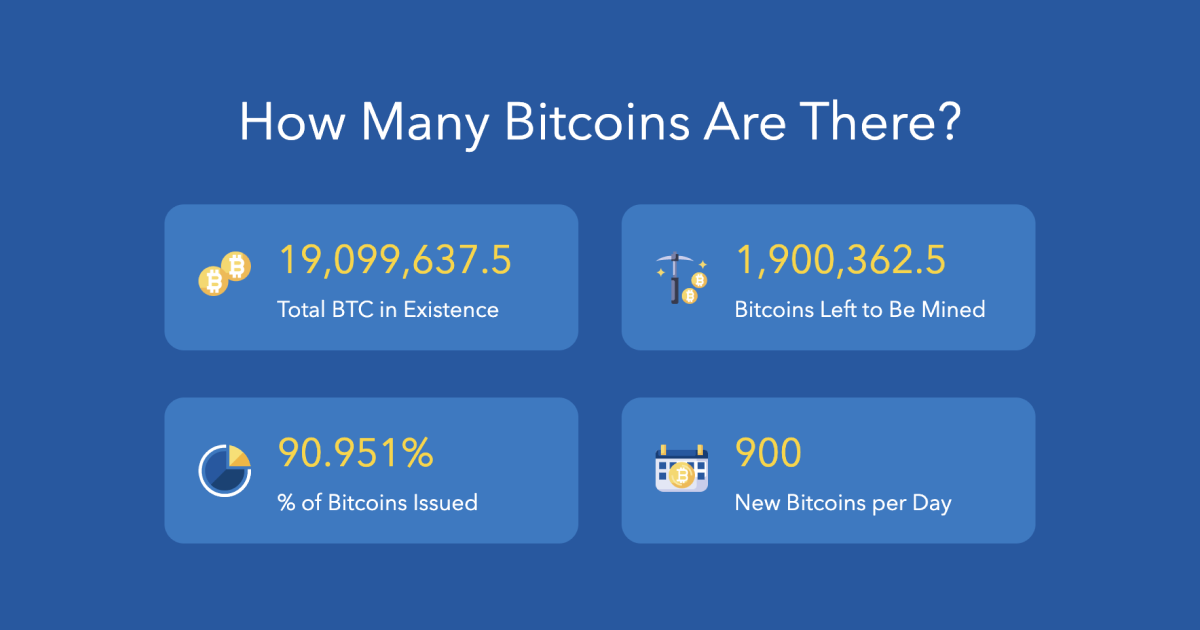
As of 2024, approximately 19.7 million Bitcoins have been mined and entered circulation. However, the story behind these numbers involves a complex interplay of programmed supply, lost assets, and a future economic shift that will redefine how we perceive digital wealth.
The Hard Cap: Why There Will Only Ever Be 21 Million Bitcoin
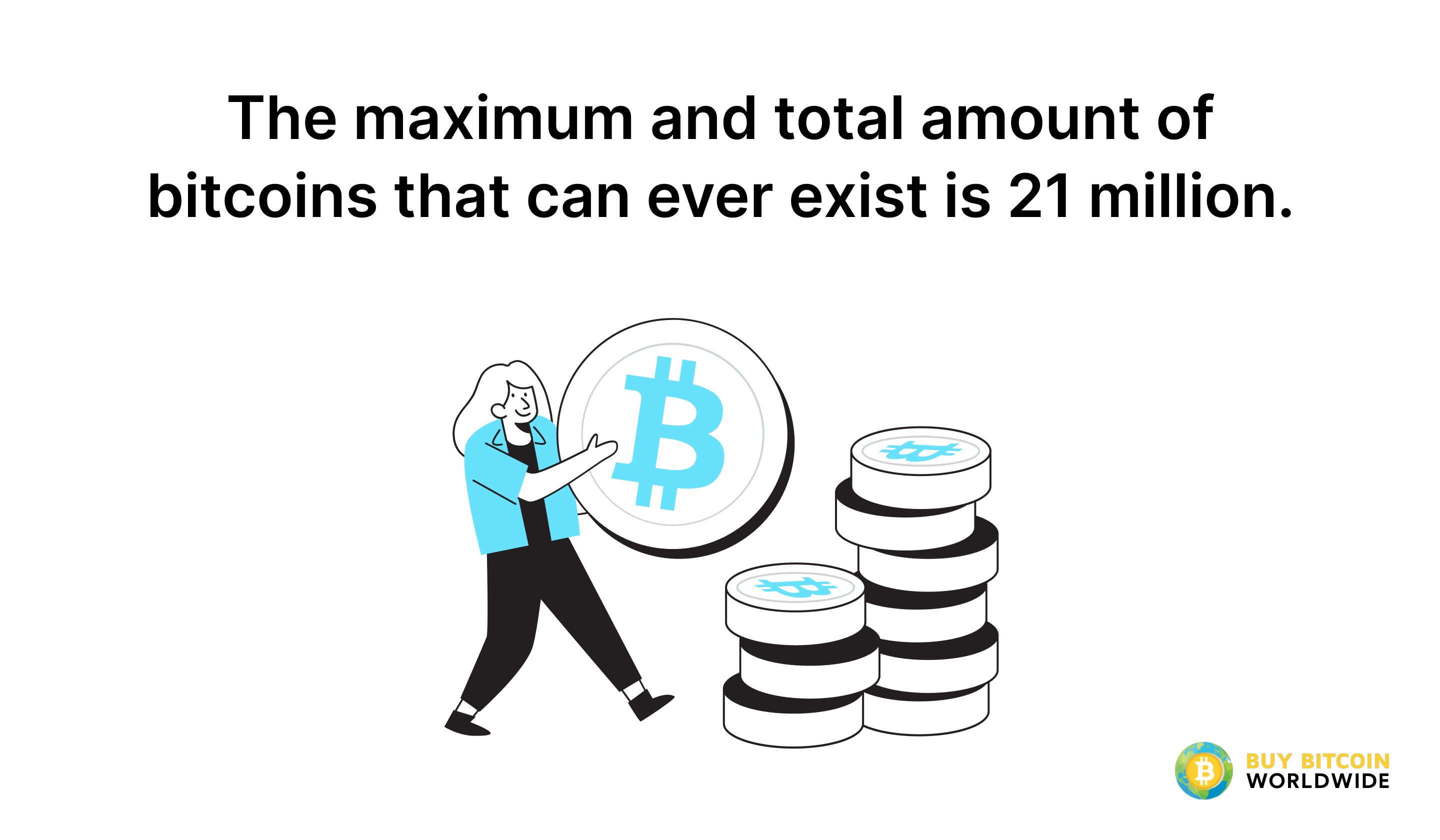
At the heart of Bitcoin’s monetary policy lies a hard cap of 21 million coins. This limit was hard-coded into the Bitcoin protocol by its anonymous creator, Satoshi Nakamoto, and remains one of the most significant departures from modern fiat economics.
The Genesis of Digital Scarcity
Before Bitcoin, digital items were infinitely reproducible. You could copy a file, an image, or a line of code a thousand times at no cost. Nakamoto solved the “double-spend” problem, creating a digital asset that could not be copied. By imposing a 21 million limit, Nakamoto introduced the concept of “digital scarcity.” From a money-management perspective, this makes Bitcoin the first provably scarce global asset. Unlike gold, where a massive new discovery could theoretically devalue the market, we know with 100% certainty that no more than 21 million Bitcoins will ever exist.
How the Protocol Enforces the Limit
The 21 million limit is not just a suggestion; it is enforced by a global network of computers (nodes) running the Bitcoin software. For the limit to change, a majority of the network would have to agree to an update that increases the supply—an event that is virtually impossible because it would directly devalue the holdings of every participant in the network. In the world of finance, this is known as “monetary policy via code,” providing a level of predictability that central banks cannot match.
The Issuance Schedule: Mining and the Halving Cycles
Bitcoin does not enter the market all at once. Instead, it is released through a process called mining, where computers solve complex mathematical problems to secure the network. In exchange for this work, miners are rewarded with newly minted Bitcoin.
Block Rewards and the Distribution Phase
When Bitcoin first launched in 2009, the reward for mining a single block was 50 BTC. Every ten minutes, 50 new coins entered the economy. This high initial issuance was necessary to distribute the coins among early adopters and incentivize the growth of the network. Over time, this reward decreases through a mechanism known as the “Halving.”
The Significance of the Halving Events
Every 210,000 blocks (roughly every four years), the block reward is cut in half. The first halving in 2012 reduced the reward to 25 BTC; the second in 2016 reduced it to 12.5 BTC; the third in 2020 to 6.25 BTC; and the most recent halving in April 2024 reduced it to 3.125 BTC.
From an investment standpoint, these halving events represent a “supply shock.” While the demand for Bitcoin may stay the same or grow, the rate at which new supply enters the market is slashed. Historically, these events have been catalysts for significant price appreciation, as the decreasing inflation rate emphasizes the asset’s scarcity.
Circulating Supply vs. Lost Supply: The Hidden Numbers
While the protocol states that nearly 19.7 million coins have been “mined,” the actual number of Bitcoins available for trade—the circulating supply—is significantly lower. This is a crucial distinction for anyone looking at Bitcoin through a lens of personal finance or market capitalization.
The Reality of “Zombie” Bitcoins
In the early days of Bitcoin, the coins had almost no monetary value. Consequently, many early miners and investors were careless with their private keys (the digital passwords required to access the coins). If a private key is lost, the Bitcoin associated with it remains on the blockchain forever but is unreachable. These are often referred to as “Zombie Bitcoins.”
Blockchain analytics firms, such as Glassnode and Chainalysis, estimate that between 3 million and 4 million Bitcoins may be lost forever. This includes the famous 1.1 million BTC held by Satoshi Nakamoto, which has not moved in over a decade.
How Private Key Loss Impacts Total Liquidity
For the investor, the loss of these coins actually increases the value of the remaining supply. If 4 million coins are lost, the effective hard cap is not 21 million, but closer to 17 million. This “unintentional burning” of supply further tightens the market. When you ask “how many Bitcoins are there,” the answer for an investor is: “fewer than you think, and fewer than are currently being reported on price charts.”
Bitcoin as the Ultimate Monetary Hedge
The fixed supply of Bitcoin makes it a unique tool in the world of personal finance and institutional investing. It serves as a hedge against the “debasement” of fiat currencies like the Dollar, Euro, or Yen.
Comparing Bitcoin to Fiat Currency Inflation
In traditional finance, “inflation” refers to the increase in the money supply, which leads to a decrease in the value of each unit of currency. Since the 1970s, the US Dollar has lost the vast majority of its purchasing power. Bitcoin is designed to be “disinflationary.” Its inflation rate (the rate of new supply) is currently lower than 1%, and it will continue to drop every four years until it hits zero. This makes Bitcoin an attractive “store of value” for those looking to preserve their wealth over long periods.
The “Stock-to-Flow” Model and Value Appreciation
Financial analysts often use the “Stock-to-Flow” (S2F) model to value commodities like gold and silver. It measures the existing supply (stock) against the annual production (flow). A high S2F ratio indicates that an asset is scarce. Following the 2024 halving, Bitcoin’s S2F ratio surpassed that of gold, making it—mathematically speaking—the scarcest liquid asset on the planet. This scarcity is the primary driver of its long-term price trajectory.
What Happens When the Last Bitcoin is Mined?
A common question among those looking at Bitcoin as a multi-generational asset is what happens when we reach the 21 million limit. Based on the current halving schedule, the last fraction of a Bitcoin will not be mined until approximately the year 2140.
The Shift from Block Rewards to Transaction Fees
Currently, miners are paid in two ways: new Bitcoin (the block reward) and transaction fees paid by users. As the block reward continues to diminish every four years, it will eventually become negligible. By 2140, miners will be compensated entirely through transaction fees. For the network to remain secure, the value of the transactions on the network must be high enough to incentivize miners to keep their hardware running.
Long-term Economic Sustainability of the Network
Critics often argue that without a block reward, the network will collapse. However, proponents of Bitcoin’s monetary model point to the growing “Layer 2” ecosystems (like the Lightning Network) and the increasing institutional use of the main chain. If Bitcoin becomes a global settlement layer for high-value transactions, the fees generated will likely be more than enough to sustain the network. From a financial perspective, this represents a transition from an inflationary “growth” phase to a stable, fee-based “utility” phase.
Conclusion: The Power of 21 Million
Understanding “how many Bitcoins there are” is essential for grasping why this asset has captured the attention of the global financial industry. Unlike real estate, which can be developed, or stocks, which can be diluted, Bitcoin offers a level of supply certainty that is unprecedented in human history.
With nearly 94% of all Bitcoins already mined, and a significant portion of those lost forever, the window of “early adoption” is closing. For the modern investor, Bitcoin represents a shift from trust-based systems to math-based systems. In a world of infinite money printing, the finite nature of Bitcoin’s 21 million coins serves as a digital anchor—a rare opportunity to own a fixed percentage of a global monetary network. Whether viewed as a side hustle, a long-term investment, or a hedge against economic instability, Bitcoin’s value is inextricably linked to its scarcity. There will only ever be 21 million, and in the world of money, that is the most important number to remember.
aViewFromTheCave is a participant in the Amazon Services LLC Associates Program, an affiliate advertising program designed to provide a means for sites to earn advertising fees by advertising and linking to Amazon.com. Amazon, the Amazon logo, AmazonSupply, and the AmazonSupply logo are trademarks of Amazon.com, Inc. or its affiliates. As an Amazon Associate we earn affiliate commissions from qualifying purchases.