
In the world of traditional finance, the concept of “unlimited supply” has become a somber reality. Central banks across the globe frequently engage in quantitative easing, printing currency to manage economic crises, which often leads to the erosion of purchasing power. However, in the digital realm, a different experiment is unfolding—one governed by immutable code rather than political whim. At the heart of this experiment is a singular question that investors and financial enthusiasts ask with increasing frequency: How much Bitcoin is left?
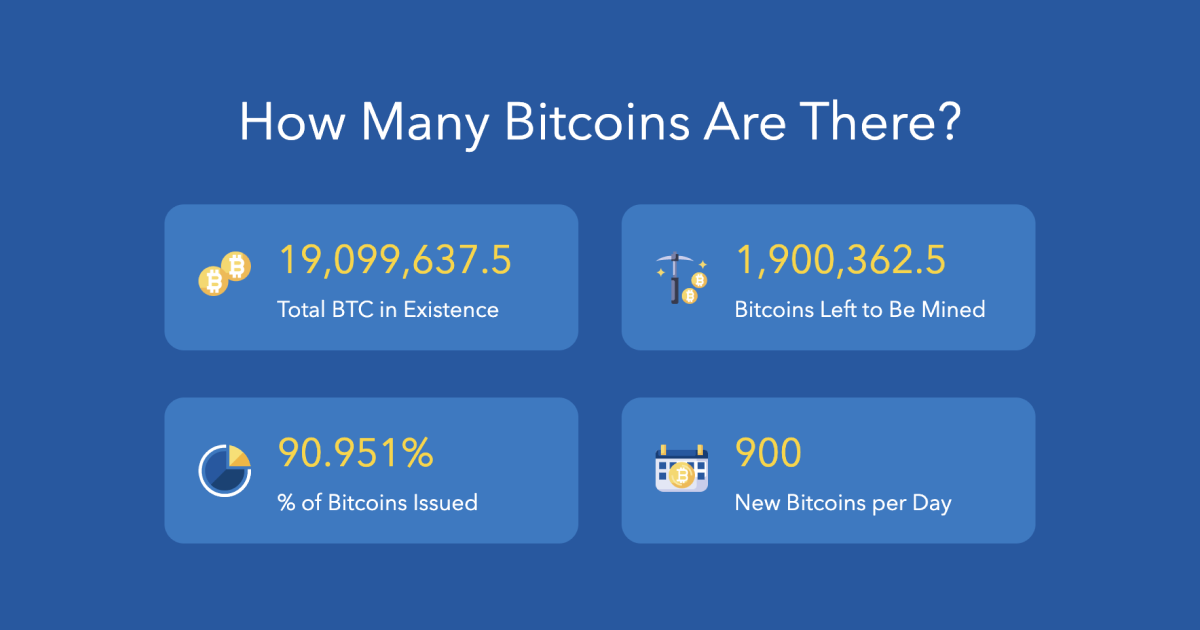
As of mid-2024, approximately 19.7 million Bitcoins have already been mined and entered circulation. This leaves fewer than 1.3 million Bitcoins left to be created. For the modern investor, understanding the mechanics of this dwindling supply is not just a matter of curiosity; it is a fundamental pillar of digital asset valuation and a masterclass in the economics of scarcity.
The Economics of Scarcity: Understanding the 21 Million Limit
The most revolutionary aspect of Bitcoin as a financial tool is its hard cap. Unlike gold, which can be mined more aggressively if the price rises, or fiat currency, which can be printed at will, Bitcoin’s total supply is mathematically fixed at 21 million units. This makes it the world’s first provably scarce digital asset.
Satoshi’s Protocol: The Hard Cap Explained
When Satoshi Nakamoto released the Bitcoin whitepaper in 2008, the intention was to create a “peer-to-peer electronic cash system” that functioned without a central authority. To ensure the currency held value over time, Nakamoto programmed a strict limit into the source code. This limit ensures that no more than 21,000,000 BTC can ever exist.
This decision was rooted in the Austrian school of economics, which emphasizes the dangers of inflationary monetary policy. By setting a hard cap, Nakamoto created a deflationary (or disinflationary) asset that mimics the properties of precious metals. From a money management perspective, this fixed supply provides a predictable framework that allows investors to calculate their “percentage ownership” of the total network—a feat impossible with the U.S. Dollar or the Euro.
Current Circulating Supply vs. Total Supply
As we stand today, over 93% of all Bitcoin that will ever exist has already been mined. While this might suggest that the “mining phase” is nearly over, the timeline tells a different story. Due to the way the network is designed, the remaining 1.3 million Bitcoins will not finish entering the market until approximately the year 2140.
For the personal finance enthusiast, this creates a unique market dynamic. We are currently in a period of high issuance compared to the future, yet that “high” issuance is already lower than the inflation rates of most national currencies. This widening gap between a stagnant supply and increasing global demand is the primary driver of Bitcoin’s long-term price appreciation.
The Halving Mechanism: Controlling the Monetary Spigot
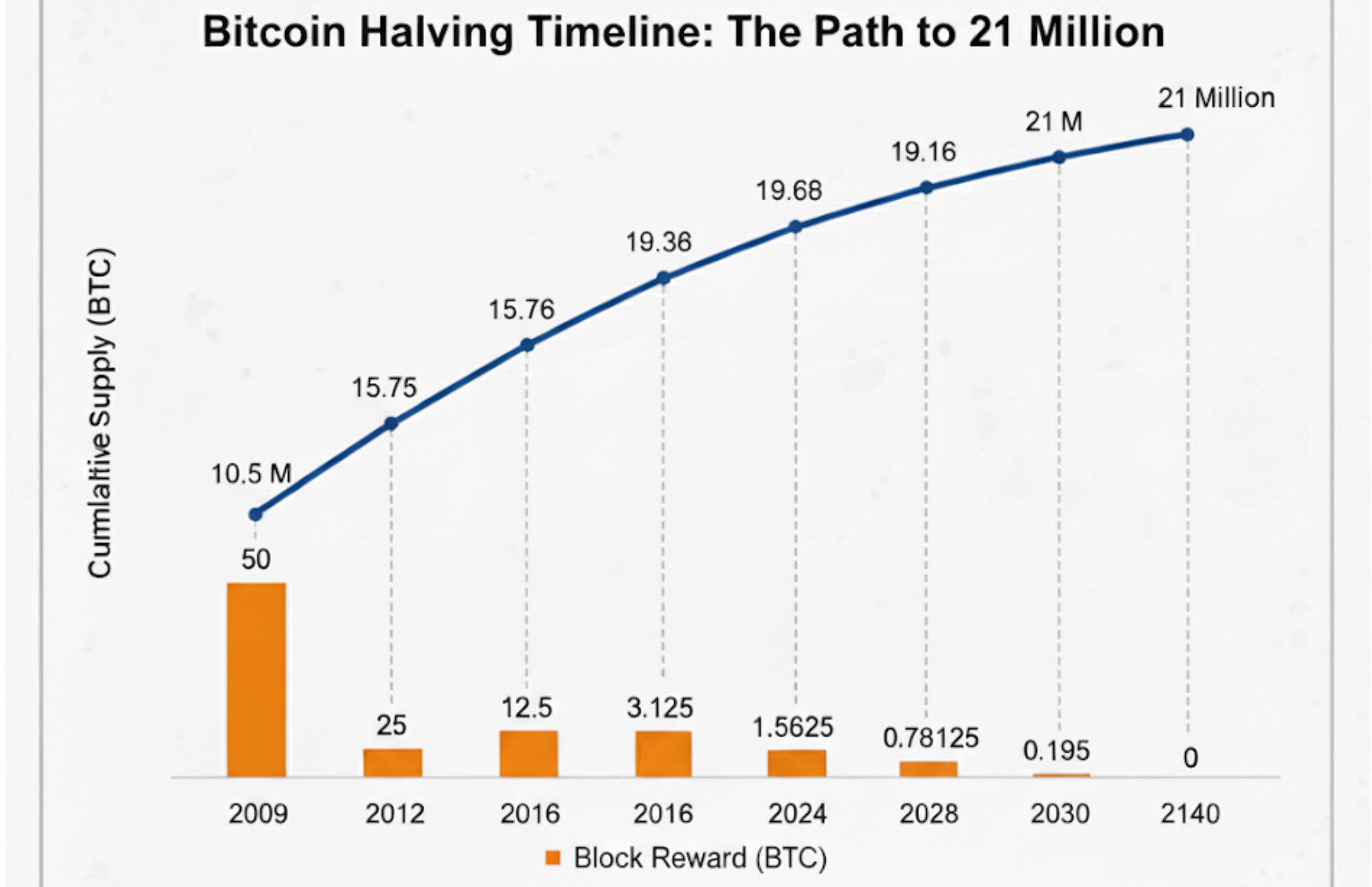
The reason it will take over a century to mine the final 7% of Bitcoin is a process known as “The Halving.” This is a pre-programmed event that occurs every 210,000 blocks, or roughly every four years.
How Block Rewards Shape the Financial Landscape
Bitcoin enters the market through “block rewards.” Miners use powerful hardware to secure the network, and in exchange, they are rewarded with newly minted Bitcoin. In the beginning, the reward was 50 BTC per block. In 2012, it dropped to 25; in 2016, to 12.5; in 2020, to 6.25; and in April 2024, it dropped again to 3.125 BTC.
This “monetary spigot” is tightening. For an investor, the halving represents a “supply shock.” If demand for the asset stays the same or increases while the production of new supply is cut in half, the fundamental laws of supply and demand suggest an upward pressure on price. This is why halving cycles are often associated with the start of major “bull markets” in the crypto space.
Historical Impact of Halvings on Asset Valuation
Looking back at the 2012, 2016, and 2020 halvings, a clear pattern emerges. In each instance, the reduction in daily “sell pressure” from miners led to a significant re-evaluation of Bitcoin’s market cap. While past performance is never a guarantee of future results, the financial logic remains sound: Bitcoin is the only asset in the world where the supply schedule is known with 100% certainty decades in advance. This transparency allows for sophisticated financial planning and institutional modeling that other commodities simply cannot offer.
The “Lost” Bitcoin Factor: Liquid vs. Illiquid Supply
While the math says 19.7 million Bitcoins are “in circulation,” the reality for the market is quite different. The “effective” supply of Bitcoin is significantly lower than the total amount mined.
Dormant Wallets and the Impact of Private Key Loss
In the early days of Bitcoin, the coins had very little monetary value. As a result, many early adopters were careless with their private keys—the digital passwords required to access the coins. Blockchain analysis firms like Glassnode and Chainalysis estimate that between 3 million and 4 million Bitcoins are lost forever.
These lost coins are effectively “burned.” They sit in addresses where the keys are gone, meaning they can never be sold or moved. From an investment standpoint, this “accidental” scarcity makes the remaining coins even more valuable. If 4 million coins are lost, the actual circulating supply is not 21 million, but closer to 17 million. This hidden scarcity is often overlooked by casual observers but is a key factor in the asset’s long-term value proposition.
Institutional Accumulation: Reducing “Available” Market Supply
Beyond lost coins, we must consider “illiquid supply.” This refers to Bitcoin held by long-term investors (HODLers) and, increasingly, by large institutions and Exchange-Traded Funds (ETFs). When companies like MicroStrategy or BlackRock’s Bitcoin ETF purchase thousands of coins, they generally move them into “cold storage” (offline wallets) for the long term.
As more institutions treat Bitcoin as a reserve asset, the “liquid” supply available on exchanges for trading begins to dry up. We are currently witnessing a “supply crunch” where the amount of Bitcoin available for purchase on exchanges is at multi-year lows. For someone looking at Bitcoin as a side hustle or a wealth-building tool, this suggests that even small increases in retail demand could lead to volatile price jumps due to the lack of available inventory.
Investing in a Deflationary Asset: Strategies for the 21st Century
Bitcoin’s scarcity changes the way we think about saving and investing. In a world of inflation, the goal is to outrun the devaluation of the dollar. In a world with a fixed-supply asset, the goal shifts toward wealth preservation and long-term accumulation.
Comparing Bitcoin to Fiat Currency and Gold
To understand Bitcoin’s value, one must compare it to its competitors. Fiat currency is “easy money”—it is easy to produce and has an infinite supply. Gold is “hard money”—it is difficult to find and mine, but its supply still increases by about 1.5% to 2% every year. Bitcoin is “absolute hard money.” It is the only asset where the supply is completely decoupled from the effort put into producing it. Even if every human on Earth started mining Bitcoin tomorrow, not a single extra coin would be produced beyond the programmed schedule.
Risk Management and Long-Term Holding Strategies
Because there is so little Bitcoin left to be mined, the market is characterized by high volatility. However, for those focused on “Online Income” or “Personal Finance,” the strategy of Dollar-Cost Averaging (DCA) has historically been the most effective. By purchasing a fixed dollar amount of Bitcoin at regular intervals, investors mitigate the risk of buying at a “top” and instead focus on accumulating a larger share of the total 21 million supply. In the digital age, your “share of the network” is the ultimate measure of financial sovereignty.
The Future Beyond 2140: What Happens When the Well Runs Dry?
A common concern among skeptics is what happens to the security of the network once all 21 million Bitcoins have been mined. If there are no more new coins to reward miners, why would they continue to secure the network?
Transitioning from Block Rewards to Transaction Fees
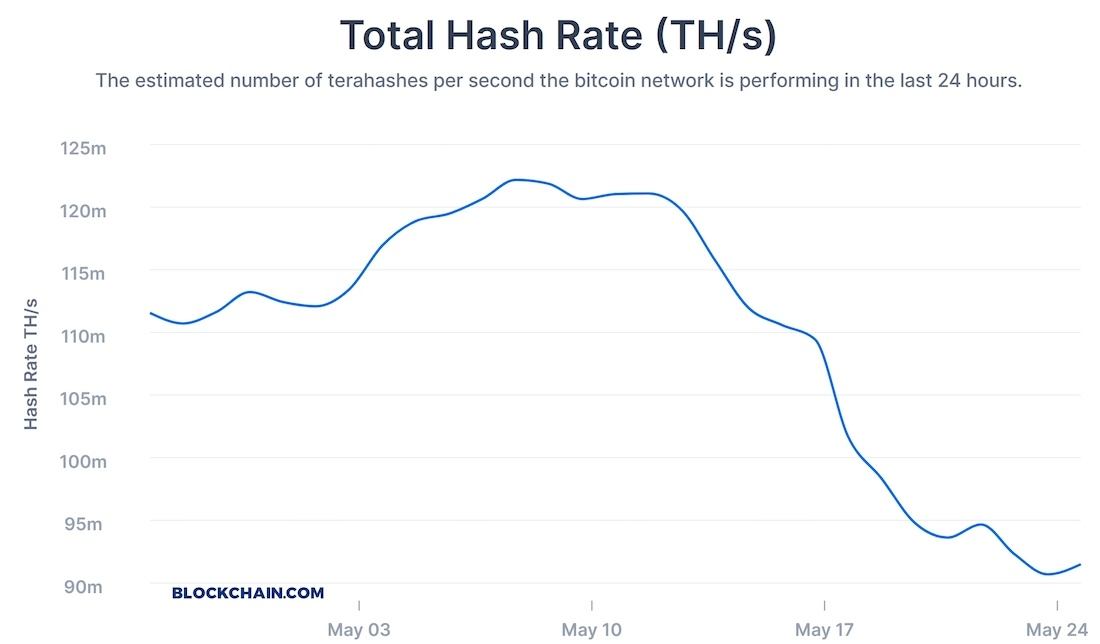
The Bitcoin protocol has an elegant solution: the fee market. Currently, miners are paid through a combination of new block rewards and transaction fees paid by users. As the block reward diminishes every four years, transaction fees are intended to take over as the primary incentive for miners.
As the Bitcoin network grows and more layers (like the Lightning Network) are built on top of it, the volume of high-value settlements on the main blockchain is expected to increase. This will create a robust “fee economy.” For investors, this means that Bitcoin will transition from an “issuance-based” security model to a “usage-based” security model, ensuring the network’s longevity well past our lifetimes.
The Long-Term Viability of the Bitcoin Network
The fact that so little Bitcoin is left is not a bug; it is the ultimate feature. It creates a “ticking clock” that incentivizes early adoption and rewards those who recognize the value of scarcity. As we approach the final stages of the digital gold rush, the focus is shifting from “how do I mine it?” to “how do I keep it?”
In conclusion, there is very little Bitcoin left to be discovered. With 93% already in existence and a significant portion of that lost or locked away by institutions, the window for acquiring a meaningful stake in this global monetary network is narrowing. For the modern investor, Bitcoin represents the ultimate “side hustle”—a way to opt out of inflationary systems and participate in the growth of the world’s most transparent and scarce financial asset. The countdown to 21 million is well underway; the question is, how much of that final supply will you own?
aViewFromTheCave is a participant in the Amazon Services LLC Associates Program, an affiliate advertising program designed to provide a means for sites to earn advertising fees by advertising and linking to Amazon.com. Amazon, the Amazon logo, AmazonSupply, and the AmazonSupply logo are trademarks of Amazon.com, Inc. or its affiliates. As an Amazon Associate we earn affiliate commissions from qualifying purchases.