
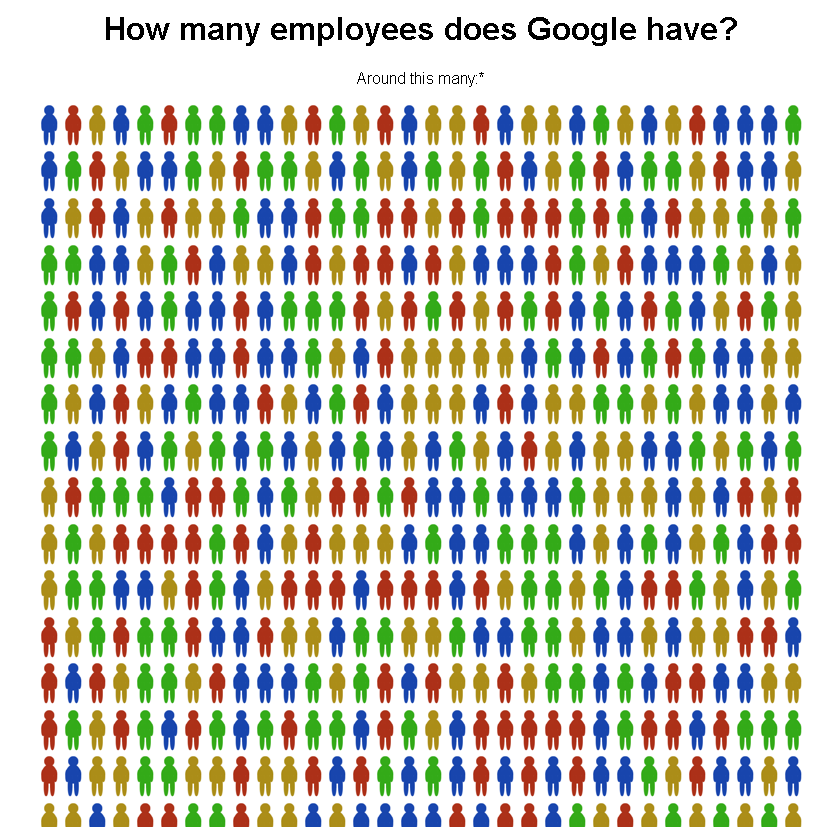
In the landscape of modern business finance, few metrics are as scrutinized as the headcount of a “Magnificent Seven” company. For Alphabet Inc., the parent company of Google, the question of “how many employees does Google have” is far more than a matter of census; it is a critical indicator of operational efficiency, fiscal health, and strategic pivot points. As of the most recent fiscal reports, Alphabet employs approximately 180,000 full-time professionals. However, to an investor or a business analyst, this number is a dynamic variable that represents the single largest expense—and the most significant asset—on the balance sheet.

Understanding Google’s workforce requires looking through the lens of corporate finance. We must examine how the company transitioned from a period of aggressive, post-pandemic hyper-growth to a disciplined “year of efficiency,” and what these shifts signal about the future of human capital in the age of artificial intelligence.
The Evolution of Alphabet’s Human Capital
The trajectory of Google’s employee count serves as a roadmap of the broader tech economy’s financial cycles. For nearly two decades, Google was synonymous with “unlimited” growth. Between 2017 and 2022, the company’s workforce more than doubled, driven by an era of low interest rates and a digital gold rush.
The Hyper-Growth Era: Post-Pandemic Surge
Following the onset of the COVID-19 pandemic, Google, like many of its peers in the Nasdaq-100, saw a massive spike in demand for digital services. Revenue from Google Workspace, YouTube, and Search surged as the world moved online. In response, Alphabet embarked on one of the most aggressive hiring sprees in corporate history. In 2021 and 2022 alone, the company added tens of thousands of roles. From a financial perspective, this was a defensive and offensive play: capturing market share while preventing competitors from snatching up top-tier engineering talent. During this period, the headcount peaked at over 190,000 employees.
The 2023 Correction: Right-Sizing for the AI Era
The financial climate shifted abruptly in late 2022 as inflation rose and the cost of capital increased. In early 2023, Alphabet announced the largest layoff in its history, reducing its workforce by approximately 12,000 roles. This was not a sign of distress, but rather a strategic “right-sizing.” Investors had begun to demand higher margins and a clearer focus on profitability over pure scale. The reduction in force (RIF) was designed to eliminate redundancies in middle management and sunset projects that were no longer aligned with the company’s core financial goals—specifically, the pivot toward generative AI.
Headcount as a Metric of Operational Efficiency
In business finance, the raw number of employees is less important than the value those employees generate. To evaluate whether Google has “too many” or “too few” employees, analysts look at specific financial ratios that measure productivity.
Revenue Per Employee: The Gold Standard of Tech Productivity
One of the most telling metrics for Google is “Revenue per Employee.” Even with a massive workforce of 180,000, Alphabet consistently generates staggering figures. With annual revenues exceeding $300 billion, Google’s revenue per employee remains significantly higher than traditional industrial firms and many other tech giants.
This high ratio is a testament to the scalability of software. Unlike a manufacturing firm where more output requires more labor, Google’s core search algorithms and advertising platforms generate incremental revenue with very little additional human intervention. When headcount grows faster than revenue, it signals “corporate bloat.” Conversely, when Google maintains high revenue growth while stabilizing headcount, its profit margins expand, driving the stock price higher.
The Rising Cost of Technical Talent
The financial burden of a Google employee is significantly higher than the average corporate salary. Beyond base pay, Alphabet’s compensation packages include Stock-Based Compensation (SBC), bonuses, and extensive benefits. For the finance department, SBC is a double-edged sword. While it preserves cash in the short term, it dilutes existing shareholders.
Managing the “all-in” cost of 180,000 high-earning professionals requires a sophisticated treasury strategy. As the market for AI researchers and specialized engineers becomes more competitive, the cost per head is rising. Google must balance the need to pay top dollar for talent that drives innovation against the mandate to maintain healthy operating margins for Wall Street.

The Financial Impact of Strategic Shifts
Every time Google hires or fires, there is a direct impact on the company’s income statement and cash flow. The management of this workforce is deeply integrated into Alphabet’s capital allocation strategy.
Restructuring Costs and Severance Liabilities
The layoffs of 2023 and 2024 were not “free” maneuvers. Alphabet recorded billions of dollars in restructuring charges related to severance payments and the closing of physical office spaces. From a short-term accounting perspective, these charges hit the bottom line. However, from a long-term investment perspective, these costs are viewed as “one-time items” that pave the way for a leaner, more profitable future. Investors typically reward companies that take these difficult steps to protect their long-term fiscal health.
R&D Allocation vs. Administrative Overhead
A key focus for Alphabet’s CFO, Ruth Porat, and the executive team has been the “re-allocation” of talent. The goal is to move headcount away from “General and Administrative” (G&A) roles and toward “Research and Development” (R&D).
In the current fiscal environment, every dollar spent on a non-technical role is a dollar not spent on developing the next generation of LLMs (Large Language Models). By stabilizing the total headcount but shifting the internal composition of the workforce, Google is attempting to increase its “innovation density.” This ensures that the 180,000 employees are focused on the highest-ROI (Return on Investment) projects, such as Google Cloud and Gemini AI.
Future Outlook: Automation and AI vs. Human Labor
As we look toward the next five years, the question of “how many employees does Google have” may become increasingly complex. The very technology Google is building—artificial intelligence—is designed to automate tasks that previously required human intervention.
Algorithmic Efficiency in Internal Operations
Google is increasingly using its own AI tools to streamline internal operations. From automated coding assistants for their engineers to AI-driven customer support for Google Ads, the company is looking for ways to grow its business without a linear growth in headcount. If Google can successfully integrate AI into its internal workflows, it may be able to reach $500 billion in revenue with the same—or even fewer—employees than it has today. This “decoupling” of labor from revenue is the ultimate goal of high-margin software businesses.
Balancing Shareholder Returns with Talent Retention
Finally, the size of Google’s workforce is a reflection of its brand power in the labor market. While investors want a lean machine, they also recognize that Google’s value is entirely contained within the minds of its staff. If the company cuts too deep or creates a culture of extreme frugality, it risks losing its best “value creators” to startups or competitors like OpenAI and Meta.
Therefore, the current headcount of approximately 180,000 represents a strategic equilibrium. It is large enough to maintain global operations across Search, YouTube, Cloud, and Waymo, yet refined enough to demonstrate fiscal discipline to the market.
Conclusion
The number of employees at Google is more than a statistic; it is a barometer for the health of the global tech economy and a testament to Alphabet’s financial strategy. By navigating the transition from the “growth at all costs” era to the “efficiency” era, Google has shown that it can manage its massive human capital with the same precision it applies to its algorithms.
For the investor, the takeaway is clear: Google’s focus is no longer on how many people it can hire, but on how much value it can extract from its existing talent pool through the leverage of AI and disciplined capital allocation. As long as the revenue-per-employee remains high and R&D continues to outpace administrative growth, Google’s workforce will remain one of the most profitable engines in the history of business finance.
aViewFromTheCave is a participant in the Amazon Services LLC Associates Program, an affiliate advertising program designed to provide a means for sites to earn advertising fees by advertising and linking to Amazon.com. Amazon, the Amazon logo, AmazonSupply, and the AmazonSupply logo are trademarks of Amazon.com, Inc. or its affiliates. As an Amazon Associate we earn affiliate commissions from qualifying purchases.