
The sheer scale of a retail empire like Costco Wholesale Corporation is often distilled into a singular, compelling metric: its global store count. This figure, far from being just a numerical tally, serves as a dynamic indicator of a brand’s reach, its strategic market penetration, and the enduring power of its unique value proposition. For Costco, a brand synonymous with bulk value, member-exclusive benefits, and an almost cult-like following, the number of its warehouses worldwide tells a profound story of corporate identity, marketing efficacy, and a meticulously crafted brand strategy that has resonated across diverse cultures and economies.
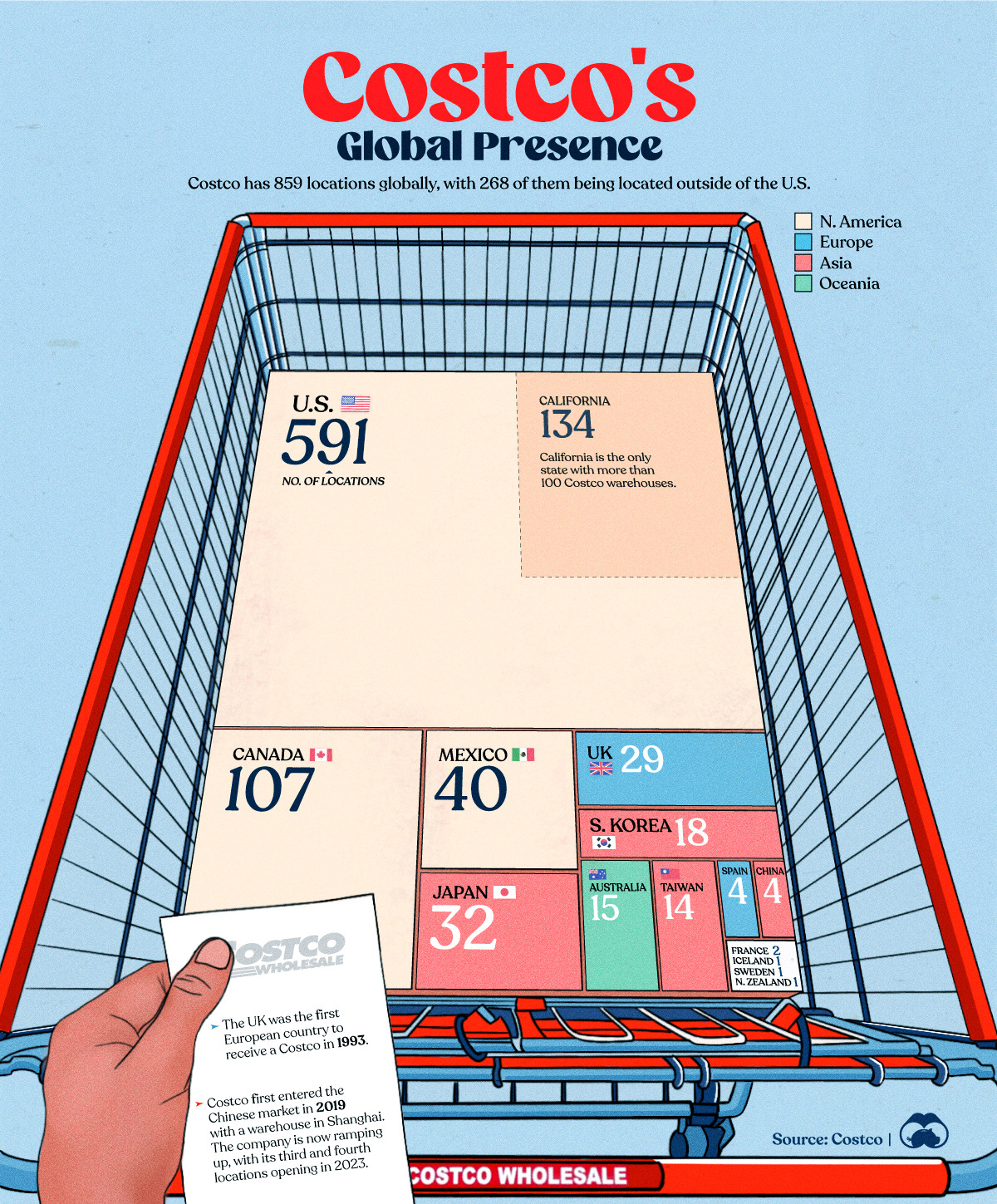
As of early 2024, Costco operates over 870 warehouses globally, a figure that continues to expand with new openings strategically planned each year. This impressive footprint is predominantly concentrated in the United States and Canada, its home markets, but extends significantly into Mexico, the United Kingdom, Japan, Korea, Australia, Taiwan, China, Spain, France, Iceland, and New Zealand. Each new store represents not just an addition to an asset ledger, but a deliberate expansion of the Costco brand into new communities, reinforcing its identity as a global powerhouse in member-based wholesale retail. This extensive network is a testament to a brand strategy that prioritizes consistent experience, operational efficiency, and a deep understanding of consumer purchasing habits, allowing it to cultivate loyalty and achieve sustained growth on an international scale.
The Global Footprint of a Retail Giant: An Overview
The question “how many Costco stores are there?” immediately directs our attention to the physical manifestation of a brand’s strategy. For Costco, its numerous warehouses are more than just points of sale; they are tangible touchpoints that embody its corporate identity and brand promise. The sheer volume and geographical spread of these stores underscore a brand that has mastered the art of replicating its successful model while subtly adapting to local market nuances.
A Snapshot of Costco’s Worldwide Presence
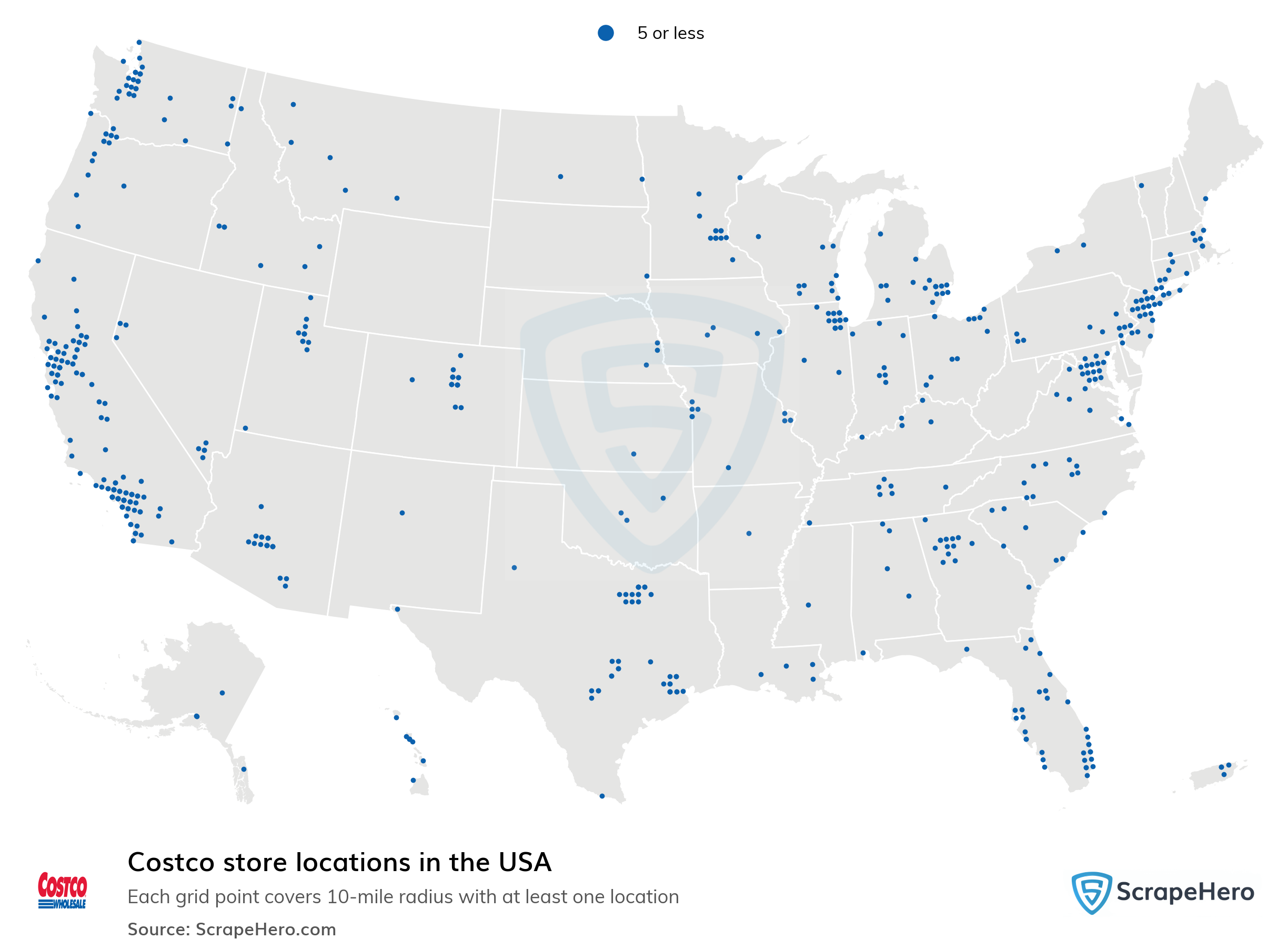
The majority of Costco’s warehouses are located in North America, with the United States hosting over 600 stores and Canada contributing over 100. This saturation in its foundational markets speaks to a deep understanding of consumer behavior and logistical networks established over decades. Beyond North America, Costco has strategically expanded its presence across several continents. Asia, in particular, has seen significant growth, with Japan, South Korea, Taiwan, and notably, mainland China (with its highly successful Shanghai location and subsequent openings), representing fertile ground for its membership model. Europe, led by the United Kingdom, France, and Spain, also shows a steady, albeit slower, expansion. Australia and New Zealand represent strong presences in the Oceania region. This deliberate, calculated spread is not haphazard; it’s a carefully executed brand strategy to identify markets ripe for its unique offering, considering factors like population density, disposable income, and existing retail competitive landscapes. Each market entry is typically preceded by extensive research to ensure that the Costco brand, with its core tenets, can successfully integrate and thrive.
Decoding the Membership Model’s Global Appeal
At the heart of Costco’s brand identity is its iconic membership model. Unlike traditional retailers, Costco charges an annual fee for access to its warehouses and their discounted, bulk offerings. This membership fee isn’t merely a revenue stream; it’s a critical component of its brand strategy, fostering a sense of exclusivity and belonging among its members. Globally, this model has proven remarkably resilient and appealing. Consumers worldwide are drawn to the promise of high-quality products at competitive prices, the thrill of the “treasure hunt” shopping experience, and the perception of being part of a selective club.
The global appeal of the membership model lies in its inherent value proposition. For a brand, establishing a direct, recurring relationship with its customer base is invaluable. It allows Costco to maintain lower margins on products, knowing that a significant portion of its profit comes from predictable membership renewals. This creates a virtuous cycle: members perceive greater value, leading to high retention rates, which in turn allows Costco to negotiate better deals with suppliers, further enhancing value for members. This model has transcaced cultural barriers, demonstrating that the universal desire for value, quality, and a unique shopping experience can effectively anchor a global brand identity, regardless of geographical location or cultural background. The consistent application of this model across all its stores, regardless of country, is a cornerstone of its consistent brand identity.
Costco’s Brand Strategy: Expansion as Identity
Costco’s brand strategy is inextricably linked to its physical presence. The consistent design, layout, and operational efficiency of its warehouses across the globe are not mere coincidences; they are deliberate elements that reinforce its corporate identity and streamline the member experience. Each new store opening is an extension of this carefully cultivated brand, ensuring that members, whether in Seattle or Seoul, recognize and trust the Costco promise.
Consistency in the Member Experience, Globally
One of Costco’s most remarkable achievements in brand management is its ability to deliver a remarkably consistent member experience across its diverse international footprint. Step into a Costco in California, London, or Tokyo, and you’ll immediately recognize the wide aisles, the towering pallets of merchandise, the distinctive Kirkland Signature brand products, the bustling food court, and the familiar return policy. This consistency is a cornerstone of its brand identity. It communicates reliability, predictability, and a universal standard of quality and value. For members who travel or relocate, this familiarity provides a comforting sense of home and assurance. From a branding perspective, this global uniformity simplifies marketing efforts and strengthens brand recognition. It tells consumers that regardless of location, the core values of the Costco brand – quality, value, and customer satisfaction – remain unwavering. This deliberate replication of the “Costco experience” builds a powerful, unified brand image that transcends geographical boundaries and cultural specificities.
Adapting the Brand While Maintaining Core Values
While consistency is key, Costco’s global expansion is not without intelligent adaptation. The brand demonstrates a nuanced understanding of local markets by subtly tailoring its product assortments and services, without compromising its core value proposition. For instance, in Japan, you’ll find a greater emphasis on local seafood and specific Japanese household goods, while in the UK, product sizes and selections might lean towards European preferences. The food court menu, while globally featuring the iconic hot dog and soda combo, often includes region-specific items. These adaptations are crucial for market relevance and demonstrate a sophisticated approach to global branding: maintain the strong, recognizable brand framework, but allow for localized flexibility. This strategy ensures that while the “Costco” identity remains globally coherent, it also feels accessible and relevant to local populations. It’s a testament to a brand that understands the balance between global unity and local affinity, preventing the brand from feeling alien or out of touch in diverse markets.
The ‘Treasure Hunt’ Experience as a Brand Pillar
Beyond bulk savings, a defining element of the Costco brand experience, replicated worldwide, is the “treasure hunt” aspect of shopping. The ever-changing inventory of unique, often high-end, limited-time products creates an exciting and somewhat unpredictable shopping environment. Members know that a particular designer item, gourmet food product, or seasonal gift might be available today but gone tomorrow. This deliberate strategy encourages frequent visits and fosters a sense of urgency and discovery. From a brand perspective, this “treasure hunt” differentiates Costco from traditional retailers and even other wholesale clubs. It transforms a mundane shopping trip into an engaging experience, reinforcing the brand’s identity as a place for unexpected finds and exceptional deals. This experiential branding is consistent across all its global locations, turning each warehouse into a potential adventure and strengthening the emotional connection between members and the brand, which is a powerful driver of repeat business and loyalty.
Market Penetration and Brand Resonance: A Strategic Imperative
The number of Costco stores reflects more than just physical expansion; it represents a strategic imperative for market penetration and establishing deep brand resonance. Each store opening is a calculated move to capture market share, build community presence, and solidify the brand’s standing within new and existing territories.
Entering New Territories: Tailoring the Value Proposition
When Costco expands into a new country or region, its strategy is deeply rooted in tailoring its existing value proposition to resonate with local consumers. This involves extensive market research to understand local purchasing power, cultural shopping habits, and the competitive landscape. While the core promise of value through membership remains constant, the execution can be highly localized. For example, in markets like China, where e-commerce is dominant, Costco has made significant strides to integrate its online presence with its brick-and-mortar stores, ensuring a seamless omnichannel experience. Product selection is meticulously curated, incorporating local staples alongside international favorites, and marketing campaigns are designed to highlight the specific benefits that appeal most to the target demographic in that region. This isn’t just about selling products; it’s about selling the Costco lifestyle – one of smart shopping, quality assurance, and exclusive access. This adaptive yet consistent approach to market entry is crucial for achieving rapid brand acceptance and sustainable growth.
Competing in Diverse Retail Landscapes
Costco’s global footprint places it in direct competition with a myriad of local and international retail giants, from traditional supermarkets and hypermarkets to specialized discount stores and online retailers. Its ability to thrive in these diverse landscapes speaks volumes about the strength of its brand and business model. In highly competitive markets, Costco leverages its efficient supply chain, direct purchasing power, and private label (Kirkland Signature) to offer prices that often undercut competitors. The unique membership model also provides a stable revenue base, allowing greater flexibility in pricing strategies. Furthermore, the experiential aspect of shopping at Costco, combined with its curated selection of high-quality goods, creates a distinct niche. This allows the brand to stand apart, not merely as another retailer, but as a destination. The ongoing expansion, indicated by the growing number of stores, signifies Costco’s confidence in its ability to outmaneuver competitors by continually delivering superior value and a differentiated brand experience that transcends geographical and cultural boundaries.
Building Brand Loyalty Through Accessibility and Scale
Every new Costco store contributes to increasing the brand’s accessibility, which in turn, is a powerful driver of brand loyalty. As more stores open closer to population centers, the convenience factor for members significantly increases, making it easier and more attractive to shop at Costco regularly. This expanded physical presence directly translates into higher membership penetration and engagement. The scale of Costco’s operations, exemplified by its vast store count, also reinforces the brand’s image as a dominant, reliable player in the retail sector. Consumers often associate scale with stability and trustworthiness, which strengthens brand perception. Moreover, the brand actively fosters a sense of community around its stores, through local events, charity drives, and consistent customer service, creating a deeper connection than just transactional interactions. This comprehensive approach – combining accessibility, scale, and community engagement – is fundamental to building a loyal member base that views Costco not just as a store, but as an indispensable part of their lifestyle, thereby solidifying its brand resonance in every market it enters.
Challenges and Evolution in Global Brand Expansion
While Costco’s expansion has been largely successful, scaling a brand of its magnitude globally is not without its challenges. From navigating complex regulatory environments to adapting to rapidly changing consumer behaviors and technological advancements, the brand’s evolution is continuous.
Navigating Cultural Nuances and Regulatory Hurdles
Expanding a brand like Costco across international borders means encountering a spectrum of cultural nuances and regulatory hurdles. What works in one market may not translate seamlessly to another. Dietary preferences, shopping habits, preferred payment methods, and even parking customs can vary drastically. For example, in some Asian markets, smaller family sizes might necessitate different packaging strategies compared to the larger families typical in North America. Beyond consumer culture, each country presents its own set of business regulations, labor laws, import duties, and property acquisition complexities. Successfully navigating these requires a deep understanding of local laws, robust legal teams, and a willingness to adapt operational procedures without diluting the core brand promise. Costco’s strategy typically involves methodical market entry, often through joint ventures or careful feasibility studies, ensuring that each new store can operate efficiently and profitably while remaining compliant and culturally sensitive. This nuanced approach helps maintain the integrity of the global brand while allowing for necessary localized adjustments.
The Role of E-commerce in a Brick-and-Mortar Brand
For a brand built fundamentally on a brick-and-mortar “treasure hunt” experience, the accelerating shift towards e-commerce presents both a challenge and an opportunity. While Costco’s physical warehouses remain central to its brand identity, a robust online presence has become indispensable for global relevance. The brand has invested in enhancing its digital platforms, offering online shopping and delivery services in many of its operating countries. This integration allows members the convenience of online purchasing for specific items, while still incentivizing visits to the physical stores for the unique experience and broader selection. From a branding perspective, e-commerce extends the brand’s reach beyond the immediate vicinity of its physical stores, attracting and retaining a demographic that values digital convenience. It’s about creating an omnichannel brand experience where the physical and digital seamlessly complement each other, ensuring that Costco remains competitive and accessible in an increasingly interconnected global marketplace without losing the essence of its core brand identity.
Sustaining Growth and Brand Relevance in a Changing World
The retail landscape is in constant flux, driven by technological innovation, shifting consumer values (e.g., sustainability, ethical sourcing), and geopolitical events. For a global brand like Costco, sustaining growth and brand relevance requires continuous adaptation and foresight. This involves not only opening new stores but also reimagining existing ones, optimizing supply chains for efficiency and resilience, and integrating new technologies to enhance the member experience. The brand must also stay attuned to evolving consumer expectations, particularly around corporate social responsibility and environmental impact, as these factors increasingly influence purchasing decisions and brand perception. Costco’s long-term brand strategy will likely focus on reinforcing its core value proposition while demonstrating agility in adapting to new market dynamics, investing in sustainable practices, and leveraging data to personalize member experiences. This forward-looking approach ensures that the brand remains robust, appealing, and relevant to future generations of global consumers.
The Enduring Power of the Costco Brand: More Than Just Stores
Ultimately, the answer to “how many Costco stores are there?” is a dynamic, ever-increasing number, reflecting a brand in constant motion. Yet, the true power of the Costco brand extends far beyond this impressive store count. It lies in the intricate ecosystem of value, experience, and community that each warehouse cultivates, creating a global phenomenon that resonates deeply with its members.
The Community Aspect of the Costco Brand
Each Costco warehouse functions as more than just a retail outlet; it often becomes a community hub. The consistency in the brand experience, from the friendly staff to the familiar layout and product offerings, fosters a sense of belonging among members. Costco stores are often points of social interaction, where families shop together, friends meet, and local charity events are supported. This community aspect is a vital, often understated, component of its global brand strategy. By embedding itself within local communities, offering employment, and contributing to local economies, Costco builds strong relationships that translate into fierce brand loyalty. This local integration, replicated across hundreds of locations, creates a powerful collective identity for the brand—one that is perceived as a reliable, valuable, and responsible member of the global community. It’s this human element, cultivated at the ground level of each store, that truly amplifies the brand’s enduring appeal.

From Store Count to Brand Legacy
The journey of Costco, marked by its continuous global expansion and the growing number of its warehouses, is a testament to its powerful brand legacy in the making. This legacy is not merely about market capitalization or sales figures, though those are impressive. It’s about a brand that has redefined wholesale retail, established a loyal global membership base, and consistently delivered on its promise of quality and value. Every new store, whether in a bustling metropolis or a growing suburban area, adds another chapter to this narrative, further solidifying Costco’s corporate identity as an innovator and a leader. The brand’s ability to maintain a strong, consistent identity while intelligently adapting to diverse global contexts ensures its relevance and appeal for years to come. The question of “how many Costco stores are there” will always be answered with a growing number, symbolizing a brand that is continuously expanding its footprint, deepening its roots, and enriching its enduring legacy across the world.
aViewFromTheCave is a participant in the Amazon Services LLC Associates Program, an affiliate advertising program designed to provide a means for sites to earn advertising fees by advertising and linking to Amazon.com. Amazon, the Amazon logo, AmazonSupply, and the AmazonSupply logo are trademarks of Amazon.com, Inc. or its affiliates. As an Amazon Associate we earn affiliate commissions from qualifying purchases.