
MicroStrategy, a prominent business intelligence, mobile software, and cloud-based services company, has become synonymous with corporate Bitcoin acquisition. Under the leadership of its co-founder and former CEO, Michael Saylor, the company initiated a groundbreaking strategy in August 2020: to adopt Bitcoin as its primary treasury reserve asset. This audacious move shifted MicroStrategy from a conventional software firm into a de facto Bitcoin proxy, drawing both fervent praise and sharp criticism from the financial world. The ongoing accumulation of Bitcoin has not only reshaped MicroStrategy’s balance sheet but has also set a significant precedent for how publicly traded companies might manage their capital reserves in an evolving global economy.

The question of “how many Bitcoins does MicroStrategy own?” is not merely an exercise in financial reporting; it represents a barometer for a company’s conviction in a nascent asset class, a case study in corporate treasury management, and a fascinating exploration into the intersection of traditional finance and digital assets. This article delves into the specifics of MicroStrategy’s Bitcoin holdings, the strategic rationale behind their aggressive accumulation, and the profound financial implications for the company and the broader market.
MicroStrategy’s Bold Bet on Bitcoin
MicroStrategy’s pivot to Bitcoin was not a gradual evolution but a deliberate and decisive strategic shift spearheaded by Michael Saylor. The company’s initial foray into Bitcoin in mid-2020 marked the beginning of an unprecedented corporate adoption strategy, positioning it at the forefront of institutional cryptocurrency investment.
The Genesis of a Corporate Bitcoin Strategy
In an era of unprecedented monetary expansion and rising inflation concerns, MicroStrategy’s management team, led by Saylor, began exploring alternative treasury reserve assets beyond traditional cash and short-term debt instruments. The search was for an asset that could not only preserve but potentially enhance shareholder value in a rapidly devaluing fiat currency environment. After extensive research and internal debate, Bitcoin emerged as the preferred solution. Its decentralized nature, finite supply, censorship resistance, and potential as a hedge against inflation made it an attractive, albeit unconventional, choice. This strategic pivot was explicitly communicated as a means to maximize long-term value for the company’s shareholders, rather than holding cash that was perceived to be eroding in purchasing power.
Michael Saylor’s Vision and Conviction
Michael Saylor has been the principal architect and most vocal advocate for MicroStrategy’s Bitcoin strategy. His deep conviction in Bitcoin as “digital gold” and a superior store of value has been a driving force behind the company’s aggressive accumulation. Saylor views Bitcoin as the hardest money ever created, possessing properties that make it an ideal long-term investment. He has consistently articulated a vision where Bitcoin transcends mere speculative asset status to become a foundational layer for a new digital economy. This philosophical stance permeated MicroStrategy’s corporate culture and investment decisions, transforming the company into a leading evangelist for Bitcoin adoption within the corporate sector. His belief system isn’t just about financial gains; it’s about a paradigm shift in wealth preservation and economic freedom, which he frequently discusses in public forums, investor calls, and interviews.
Diversification and Inflation Hedge Argument
MicroStrategy’s justification for holding Bitcoin is firmly rooted in the principles of modern finance, albeit applied to a novel asset. The company argued that allocating a significant portion of its treasury to Bitcoin served as a strategic diversification away from conventional assets, which were yielding negative real returns. The primary economic rationale presented was Bitcoin’s potential as a robust inflation hedge. In an environment where central banks globally were engaging in quantitative easing and governments were implementing massive stimulus packages, the specter of inflation loomed large. Bitcoin, with its programmed scarcity and predictable supply schedule, was seen as a superior alternative to fiat currencies for preserving capital and protecting against purchasing power erosion over the long term. This approach challenged traditional corporate treasury management, which typically prioritizes liquidity, capital preservation, and modest returns through low-risk instruments.
Unpacking MicroStrategy’s Bitcoin Holdings
The journey of MicroStrategy’s Bitcoin accumulation has been characterized by consistent, large-scale purchases, funded through a variety of innovative financial mechanisms. Tracking these acquisitions reveals the sheer scale of their commitment.
Tracking the Accumulation: A Timeline of Acquisitions
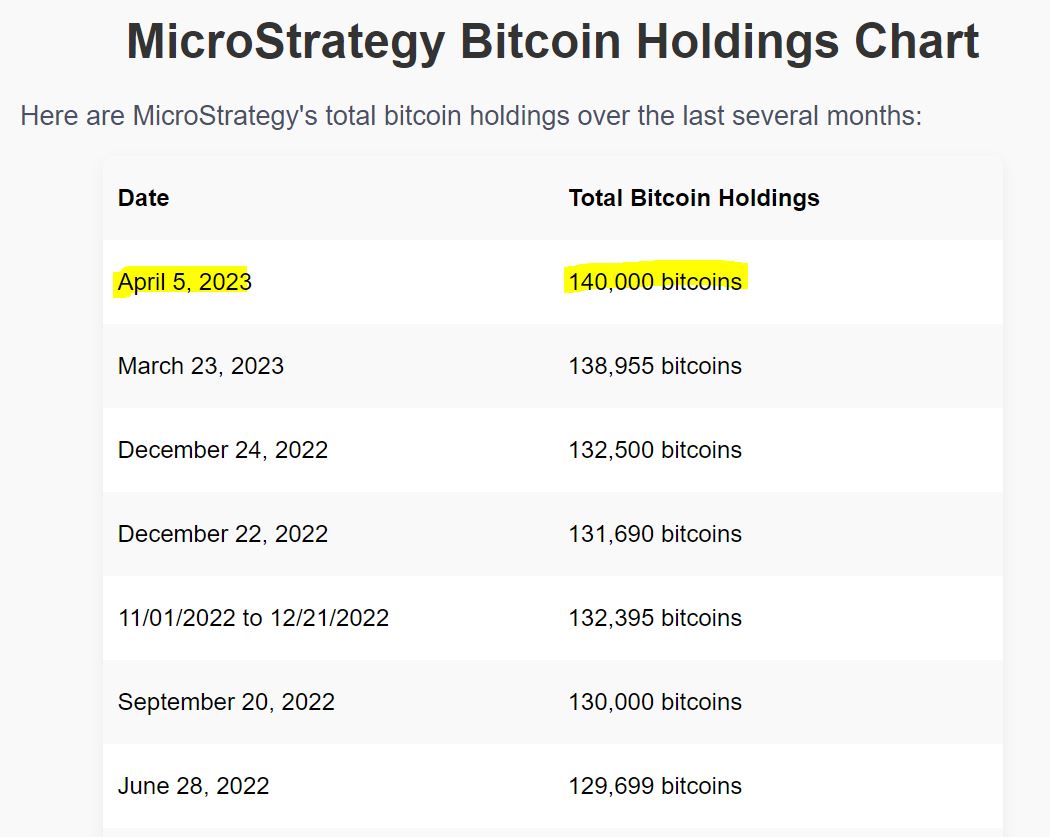
MicroStrategy began its Bitcoin acquisition journey in August 2020, with an initial purchase of 21,454 BTC for $250 million. This was quickly followed by another significant buy in September 2020, adding approximately 16,796 BTC for $175 million. Since then, the company has executed numerous subsequent purchases, often utilizing the public markets to announce these transactions and detail the average price paid. These announcements became regular events, with each new acquisition bolstering their total holdings and often moving the market. By consistently buying Bitcoin through market dips and rallies, MicroStrategy has demonstrated a long-term dollar-cost averaging strategy, accumulating substantial amounts over time. The exact number of Bitcoins owned is regularly updated by MicroStrategy through SEC filings, press releases, and investor presentations, making their holdings transparent to the market. This transparency has been a critical component of their strategy, fostering trust among their investor base and providing clear insight into their financial position.
Financial Mechanisms for Bitcoin Purchases
To fund its ambitious Bitcoin strategy, MicroStrategy did not solely rely on its existing cash reserves. The company has ingeniously employed several financial mechanisms, demonstrating flexibility and a willingness to leverage various capital markets instruments. Early purchases were made using excess cash from operations. However, as the accumulation continued, MicroStrategy resorted to issuing convertible senior notes and secured notes, raising hundreds of millions and, at times, billions of dollars specifically for Bitcoin acquisition. These debt offerings often came with attractive interest rates and were oversubscribed, indicating significant investor appetite for exposure to Bitcoin through a publicly traded entity. Furthermore, MicroStrategy has also utilized at-the-market (ATM) equity offerings, selling shares to raise capital for additional Bitcoin purchases. This diversified funding approach highlights MicroStrategy’s innovative use of corporate finance to execute its treasury strategy, effectively transforming itself into a leveraged Bitcoin investment vehicle.
The Scale of Their Investment Portfolio

The cumulative effect of MicroStrategy’s consistent purchases is a Bitcoin treasury of immense scale. At any given point, the company typically holds tens of thousands, and often well over a hundred thousand, Bitcoins. This positions MicroStrategy as one of the largest corporate holders of Bitcoin globally, dwarfing the holdings of most other publicly traded companies. The value of this portfolio fluctuates dramatically with Bitcoin’s price movements, often representing a significant portion of MicroStrategy’s overall market capitalization. For instance, at times, the value of their Bitcoin holdings has exceeded the market cap of their core software business. This scale has profound implications for MicroStrategy’s financial statements, its stock price volatility, and its perception in the investment community. It effectively makes investing in MicroStrategy shares a proxy for investing in Bitcoin, with the added operational layer of their software business and the strategic decision-making of its management.
The Financial Implications and Market Impact
MicroStrategy’s substantial Bitcoin holdings have fundamentally altered its financial profile, transforming its balance sheet and influencing its market valuation. This strategic shift has had ripple effects, not only for its shareholders but also for the broader financial landscape.
MicroStrategy’s Balance Sheet Transformation
The most immediate and apparent impact of MicroStrategy’s Bitcoin strategy is on its balance sheet. What once featured conventional cash and short-term investments now prominently displays a massive Bitcoin asset. This has led to significant shifts in the company’s asset composition, often with Bitcoin representing the vast majority of its liquid assets. The accounting treatment for Bitcoin as an intangible asset, under current GAAP rules, means that price increases are not recognized until the asset is sold (mark-to-market), while impairment losses (if the price drops below the purchase price) must be recorded. This accounting nuance can lead to significant swings in reported profitability on paper, even if the company hasn’t sold any Bitcoin. The company’s financial statements, therefore, offer a unique lens through which to observe the dynamics of large-scale corporate cryptocurrency investment, highlighting both the opportunities for value appreciation and the challenges of managing asset volatility within traditional accounting frameworks.
Shareholder Value and Volatility Considerations
For MicroStrategy shareholders, the Bitcoin strategy has been a double-edged sword. On one hand, investors who believe in Bitcoin’s long-term potential have seen their shares become a direct conduit for exposure to the cryptocurrency, often at a premium or discount depending on market sentiment. During periods of Bitcoin rallies, MicroStrategy’s stock (MSTR) has frequently outperformed Bitcoin itself due to a perceived “Saylor premium” or due to its leveraged financing structure. On the other hand, the company’s stock price has become highly correlated with Bitcoin’s price movements, leading to significant volatility. Shareholders are now exposed to the inherent price swings of the cryptocurrency market, which can be far more extreme than those typically associated with a traditional software company. This increased volatility requires a different risk tolerance from investors and has likely altered MicroStrategy’s shareholder base, attracting those with a strong conviction in Bitcoin.
Setting a Precedent for Corporate Treasury Management
MicroStrategy’s pioneering embrace of Bitcoin has unquestionably set a precedent within the corporate world. Its actions have sparked discussions, debates, and even imitation among other public and private companies considering similar treasury strategies. While few companies have adopted Bitcoin with the same aggressive conviction as MicroStrategy, its strategy has demonstrated that it is possible for a publicly traded entity to make a significant allocation to digital assets. It has forced traditional financial institutions and corporate treasury departments to re-evaluate their conservative approaches to cash management in an inflationary environment. Whether Bitcoin becomes a widespread corporate treasury asset remains to be seen, but MicroStrategy has certainly opened the door, providing a detailed, real-world case study for others to analyze and potentially emulate.
Risks, Rewards, and the Future Outlook
MicroStrategy’s journey with Bitcoin is far from over, and its continued strategy faces both significant opportunities and considerable challenges. The future trajectory will depend on market dynamics, regulatory developments, and the company’s continued conviction.
Navigating Market Volatility and Regulatory Scrutiny
The primary risk associated with MicroStrategy’s Bitcoin strategy is the inherent volatility of the cryptocurrency market. Bitcoin’s price can experience dramatic swings, leading to substantial fluctuations in the company’s asset values and stock price. While MicroStrategy has expressed a long-term view, navigating these short-term market corrections and bear markets requires unwavering conviction and robust financial management. Furthermore, the regulatory landscape for cryptocurrencies is still evolving. Potential changes in taxation, accounting rules, or direct regulation could impact MicroStrategy’s holdings or its ability to manage them. The company must remain vigilant and adaptable to these external factors, which could introduce unforeseen costs or operational complexities. The scrutiny from financial analysts and regulatory bodies regarding the appropriateness of such a strategy for a public company also remains a constant factor.
Potential Upside and Strategic Positioning
Despite the risks, the potential upside for MicroStrategy remains substantial. If Bitcoin achieves widespread adoption as a global store of value and its price appreciates significantly over the long term, MicroStrategy stands to benefit immensely. Their early and aggressive accumulation strategy positions them to capture a disproportionate share of this potential growth. Beyond direct financial gains, MicroStrategy’s leadership in this space has also generated considerable brand recognition and thought leadership. They are perceived as innovators, attracting a new demographic of investors and potentially creating synergies with their core software business through blockchain-related applications or services in the future. Their strategic positioning as a major corporate player in the Bitcoin ecosystem could unlock unforeseen opportunities as the digital economy matures.
The Broader Landscape of Corporate Crypto Adoption
MicroStrategy’s bold move has initiated a broader conversation about corporate crypto adoption. While few companies have mirrored their aggressive strategy, many are now exploring smaller allocations to Bitcoin or other cryptocurrencies, either directly or through indirect investment vehicles. Tesla’s brief foray into holding Bitcoin, and later divesting most of it, showed the complexities and divided opinions even among tech giants. However, the trend towards exploring digital assets for treasury management is undeniable. The eventual development of clearer regulatory frameworks, more robust institutional infrastructure, and increased understanding of crypto assets will likely encourage more companies to consider similar strategies, albeit perhaps with more conservative allocations than MicroStrategy’s. MicroStrategy serves as a pioneer, offering invaluable lessons and data for others considering their own path into the digital asset frontier.
In conclusion, MicroStrategy’s decision to accumulate a substantial amount of Bitcoin is one of the most significant financial stories of recent years. It represents a radical departure from traditional corporate treasury management, driven by a deep conviction in Bitcoin’s long-term value proposition. While the strategy comes with inherent risks, particularly market volatility and regulatory uncertainty, it also offers immense potential upside and has established MicroStrategy as a prominent player in the evolving landscape of corporate finance and digital assets. Their journey continues to be a captivating case study for investors, financial professionals, and anyone interested in the future of money.
aViewFromTheCave is a participant in the Amazon Services LLC Associates Program, an affiliate advertising program designed to provide a means for sites to earn advertising fees by advertising and linking to Amazon.com. Amazon, the Amazon logo, AmazonSupply, and the AmazonSupply logo are trademarks of Amazon.com, Inc. or its affiliates. As an Amazon Associate we earn affiliate commissions from qualifying purchases.