
In the traditional financial world, central banks have the authority to print money at will, often leading to the devaluation of currency over time. This inflationary model stands in stark contrast to Bitcoin, the world’s first decentralized digital asset. At the heart of Bitcoin’s value proposition is a hard-coded limit on its total supply. The question “how many bitcoins are left?” is more than just a technical curiosity; it is a fundamental pillar of the asset’s economic theory and a primary driver for investors who view it as “digital gold.”
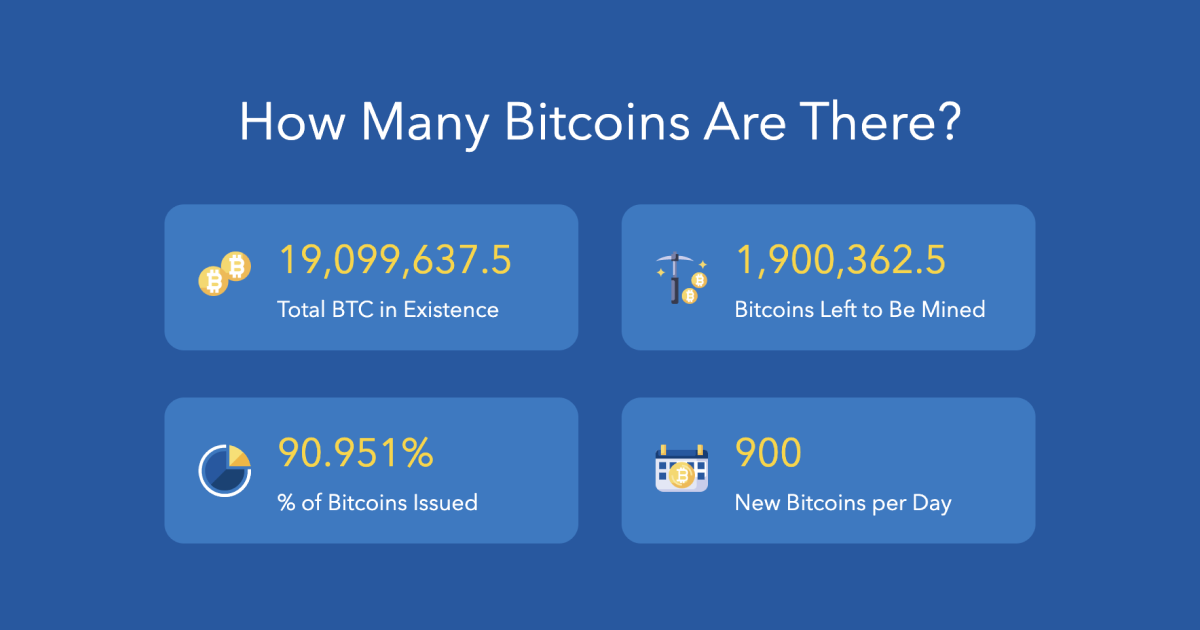
As of today, approximately 19.7 million bitcoins have already been mined and entered circulation. This leaves roughly 1.3 million bitcoins yet to be discovered. However, the process of bringing these remaining coins to market is designed to slow down over time, creating a unique economic environment that rewards patience and long-term holding.
The Scarcity Principle: Understanding the 21 Million Cap
The most defining characteristic of Bitcoin is its fixed supply. When Satoshi Nakamoto released the Bitcoin whitepaper in 2008, the protocol established that there would only ever be 21 million coins. This mathematical certainty is what differentiates Bitcoin from fiat currencies like the US Dollar or the Euro, which have no upper limit on supply.
Satoshi Nakamoto’s Vision for Sound Money
The decision to cap the supply at 21 million was a deliberate move to create “sound money.” Nakamoto wanted a currency that could not be manipulated by any government or institution. By making Bitcoin scarce, it mirrors the properties of precious metals like gold. Just as there is a finite amount of gold in the Earth’s crust, there is a finite amount of Bitcoin in the digital realm. For investors, this scarcity is the bedrock of Bitcoin’s store-of-value narrative.
How Inflation Protection Works in the Digital Age
In a world where inflation can erode the purchasing power of savings, Bitcoin’s fixed supply acts as a hedge. When more money is printed, each individual unit of that money becomes less valuable. Conversely, because the supply of Bitcoin cannot be increased beyond 21 million, an increase in demand theoretically leads to an increase in price. This deflationary pressure is a core reason why institutional investors and retail savers alike are increasingly allocating a portion of their portfolios to Bitcoin.
The Mechanics of Issuance: Mining and Block Rewards
Bitcoin does not enter the market all at once. Instead, it is released through a process known as “mining.” Miners use powerful computers to solve complex mathematical puzzles that secure the network and verify transactions. In exchange for this work, the protocol rewards them with newly minted bitcoins.
Proof of Work Explained
The “Proof of Work” (PoW) consensus mechanism is the engine that drives Bitcoin’s issuance. It ensures that new coins are created at a predictable, steady rate. Every ten minutes, a new block is added to the blockchain, and the miner who successfully “solves” that block is granted the block reward. This is currently the only way new bitcoins can enter the circulating supply.
The Role of Miners in Circulating New Coins
Miners are the lifeblood of the Bitcoin economy. Not only do they secure the network, but they are also the primary sellers in the market. To cover the high costs of electricity and hardware, miners often sell a portion of their newly earned Bitcoin. This creates a constant flow of new supply into the market. However, because the reward for mining decreases over time, the “sell pressure” from miners also gradually diminishes, contributing to the asset’s long-term price appreciation.
The Halving Cycle: Why the Last Bitcoin Won’t Be Mined Until 2140
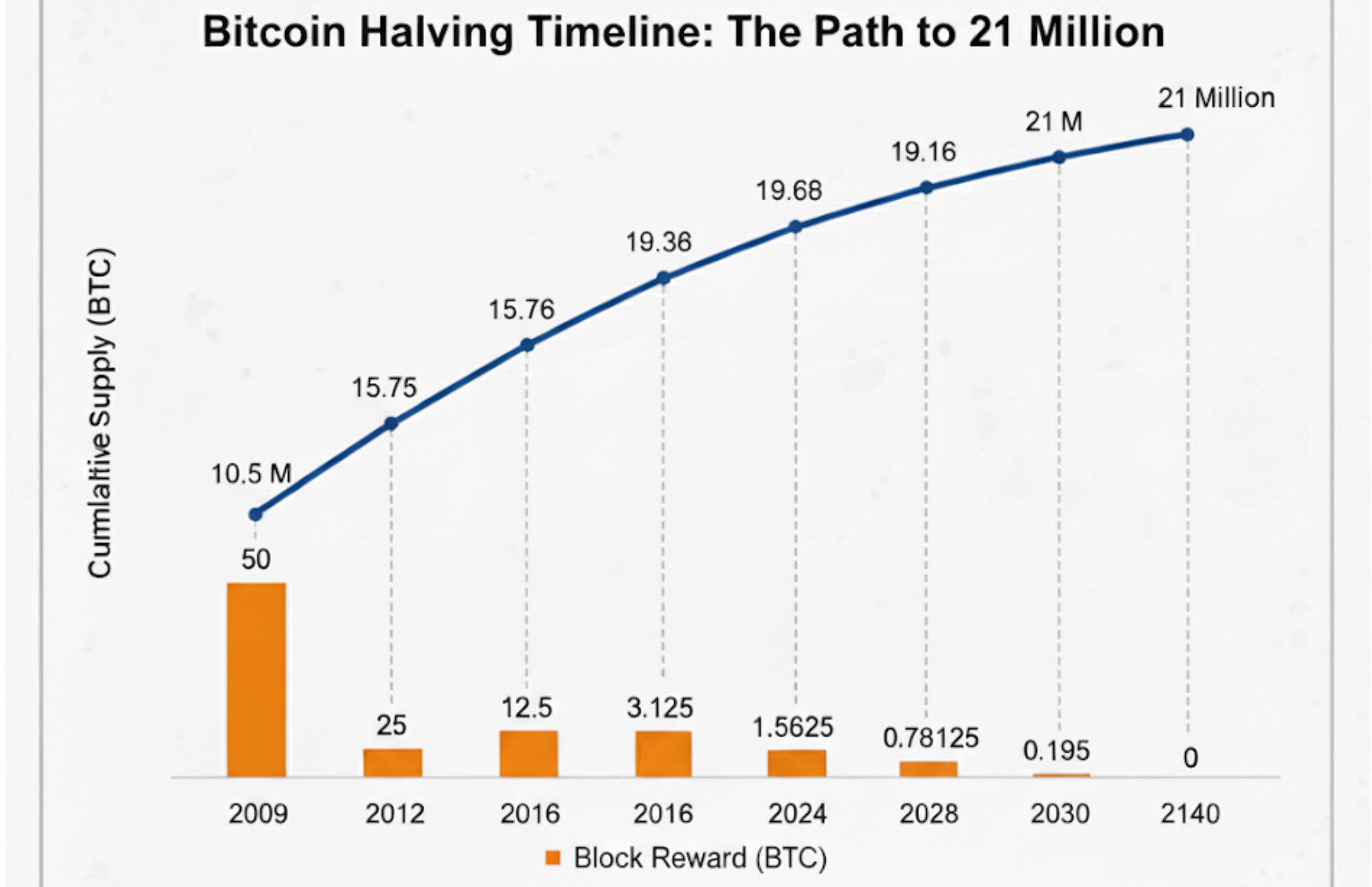
While there are only 1.3 million bitcoins left to mine, it will take over a century to reach the final coin. This is due to a pre-programmed event known as “The Halving.” Approximately every four years (or every 210,000 blocks), the reward given to miners is cut in half.
What is “The Halving”?
The Halving is Bitcoin’s way of managing its own inflation rate. At the launch of the network in 2009, the block reward was 50 BTC. In 2012, it dropped to 25 BTC. In 2016, it became 12.5 BTC, and in 2020, it fell to 6.25 BTC. The most recent halving in April 2024 reduced the reward to 3.125 BTC per block. This process will continue until the block reward reaches zero, which is estimated to happen around the year 2140.
Historical Impact on Price and Adoption
Historically, the Halving has been a major catalyst for Bitcoin’s “bull runs.” By cutting the rate of new supply in half while demand remains steady or increases, the Halving creates a supply shock. From an investment perspective, these cycles have provided a predictable framework for market movements. While past performance does not guarantee future results, the Halving remains the most anticipated event in the crypto-financial calendar because it reinforces the asset’s scarcity.
Lost Bitcoins and the “True” Circulating Supply
When we ask how many bitcoins are left, the answer provided by the blockchain (19.7 million currently in existence) doesn’t tell the whole story. A significant portion of those 19.7 million coins is likely gone forever, meaning the actual “liquid” supply is much lower than the total supply.
Dormant Wallets and Lost Private Keys
In the early days of Bitcoin, the asset had very little monetary value. Many early miners and enthusiasts were careless with their “private keys”—the digital passwords required to access and move Bitcoin. If a private key is lost, the Bitcoin associated with it remains on the blockchain but can never be spent. Estimates from blockchain analysis firms like Chainalysis suggest that between 3 to 4 million bitcoins have been lost permanently. This includes the famous 1.1 million bitcoins held by Satoshi Nakamoto, which haven’t moved in over a decade.
The Difference Between Total Supply and Liquid Supply
For a financial analyst, the “liquid supply” is more important than the total supply. Liquid supply refers to the amount of Bitcoin that is actually available to be bought and sold on exchanges. With millions of coins lost and a growing number of “HODLers” (investors who refuse to sell regardless of price volatility), the actual amount of Bitcoin available for purchase is surprisingly small. This “supply crunch” is a major factor in Bitcoin’s price volatility; when a large institution tries to buy a significant amount of Bitcoin, there simply isn’t enough liquid supply to meet the demand without the price moving upward significantly.
Investment Implications: What Scarcity Means for Your Portfolio
Understanding how many bitcoins are left is essential for anyone looking to incorporate digital assets into their financial strategy. The shrinking supply and the immutable 21 million cap create a unique environment for capital appreciation.
Bitcoin as “Digital Gold”
The “Digital Gold” thesis rests on the idea that Bitcoin is a superior version of gold for the modern era. Like gold, it is scarce and durable. However, unlike gold, Bitcoin is easily transportable, divisible, and verifiable via the blockchain. In a diversified investment portfolio, Bitcoin serves as a non-correlated asset—meaning its price movements are often independent of the stock or bond markets. As the remaining supply of Bitcoin continues to dwindle, its role as a premier store of value is likely to strengthen.
Future Outlook for Investors
As we approach the final million bitcoins, the competition to own a piece of the network will intensify. We are already seeing “nation-state adoption” and massive corporate balance sheet allocations from companies like MicroStrategy and Tesla. For the individual investor, the takeaway is clear: the opportunity to acquire a “whole coin” is becoming increasingly difficult and expensive. Because the supply is fixed and the remaining issuance is slowing down, the “cost of waiting” to enter the market could be significant.
Conclusion
The question of “how many bitcoins are left” serves as a reminder of the asset’s revolutionary design. With only 1.3 million coins left to be mined over the next 116 years, Bitcoin is the scarcest liquid asset humanity has ever created. For the world of money and finance, this represents a shift away from trust in central authorities toward trust in mathematics and decentralized protocols. Whether you are a casual saver or a professional investor, understanding the mechanics of Bitcoin’s supply is the first step in navigating the future of the global financial landscape. As the clock ticks toward 2140, the value of those remaining coins—and the ones already in circulation—is positioned to play a defining role in the preservation of wealth for generations to come.
aViewFromTheCave is a participant in the Amazon Services LLC Associates Program, an affiliate advertising program designed to provide a means for sites to earn advertising fees by advertising and linking to Amazon.com. Amazon, the Amazon logo, AmazonSupply, and the AmazonSupply logo are trademarks of Amazon.com, Inc. or its affiliates. As an Amazon Associate we earn affiliate commissions from qualifying purchases.