
In the world of traditional finance, the concept of “scarcity” is often relative. Central banks can print more currency, gold mines can discover new veins, and companies can issue more shares. Bitcoin, however, introduced a revolutionary concept to the global economy: absolute mathematical scarcity. For any investor or individual interested in personal finance, the question “how many Bitcoin are there?” is not just a query about a number; it is an inquiry into the fundamental monetary policy that governs the most successful digital asset in history.
The Hard Cap: Exploring the 21 Million Limit
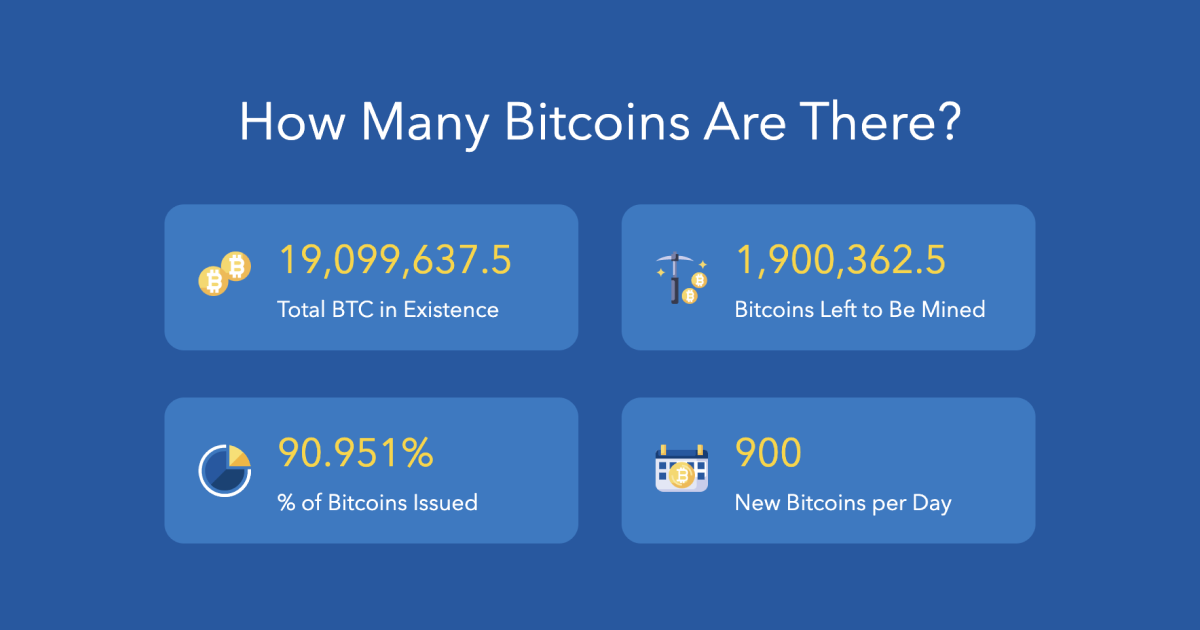
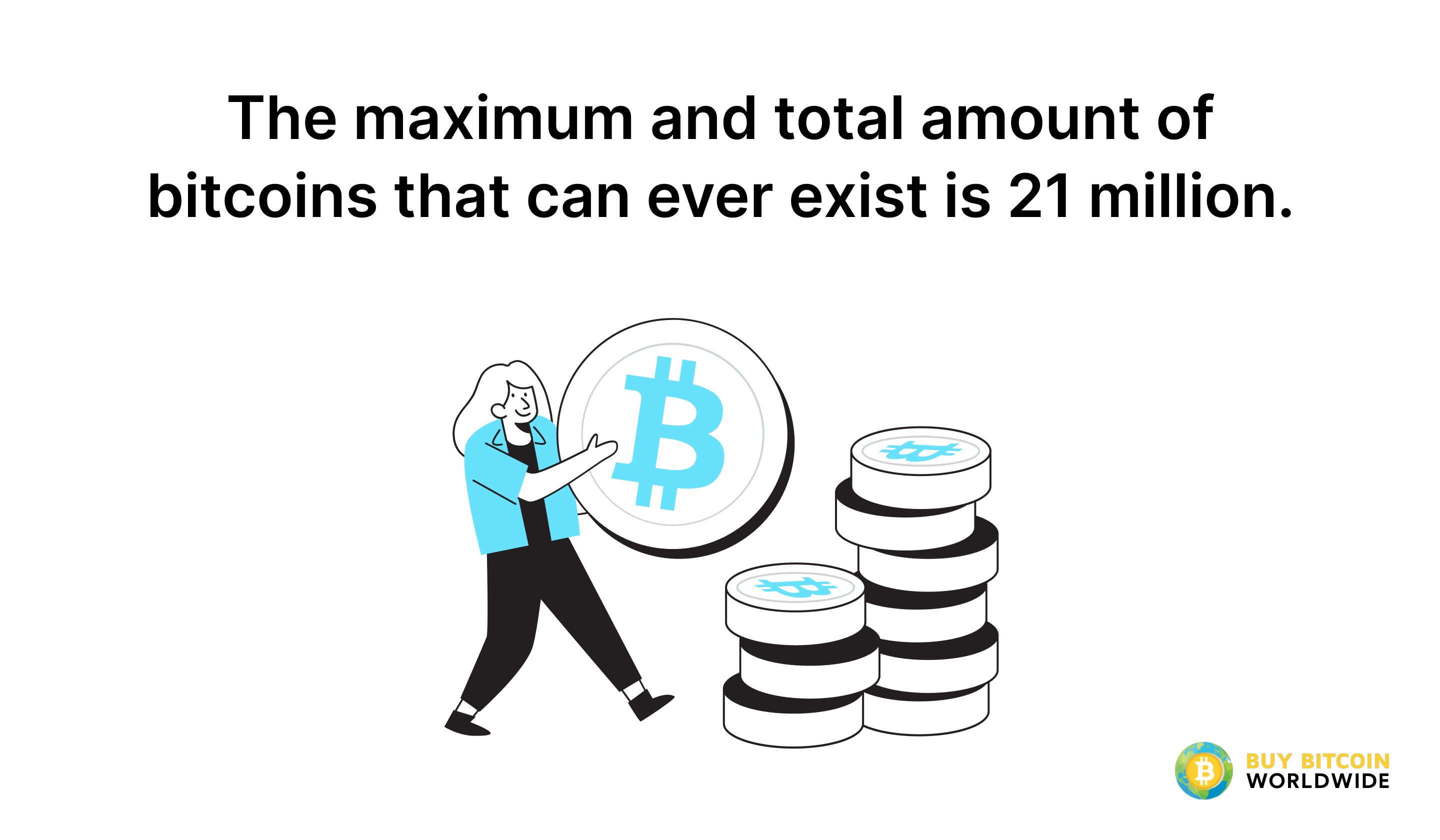
At the heart of Bitcoin’s value proposition is its “Hard Cap.” Unlike the US Dollar, the Euro, or any other fiat currency, the total number of Bitcoin that will ever exist is strictly limited to 21,000,000. This limit is hard-coded into the Bitcoin protocol and enforced by a global network of computers.
The Genesis of Scarcity
When Satoshi Nakamoto released the Bitcoin whitepaper in 2008, the goal was to create a peer-to-peer electronic cash system that did not rely on a central authority. Central to this vision was the elimination of the “double-spending” problem and the prevention of arbitrary inflation. By setting a fixed supply of 21 million, Nakamoto ensured that Bitcoin would behave more like a digital version of gold than a government-issued currency. This scarcity is the bedrock of Bitcoin’s “Sound Money” status, providing a hedge against the purchasing power erosion seen in traditional financial systems.
Current Circulating Supply vs. Total Supply
As of mid-2024, approximately 19.7 million Bitcoins have already been mined and are in circulation. This represents over 93% of the total supply that will ever exist. For investors, this is a critical metric. It means the vast majority of the “supply shock” has already occurred. While the remaining 1.3 million coins will take over a century to enter the market, the bulk of the asset is already held by participants. Understanding the difference between the total supply (the 21 million ceiling) and the circulating supply (what is currently available) helps investors assess the current market capitalization and the future dilution risk—which, in Bitcoin’s case, is mathematically predictable and decreasing over time.
The Mechanics of Issuance: Mining and the Halving Cycles
Bitcoin does not enter the market all at once. Instead, it follows a programmatic issuance schedule known as “Mining.” This process is essential for securing the network and ensuring a fair distribution of the asset.
How New Bitcoins Enter the Market
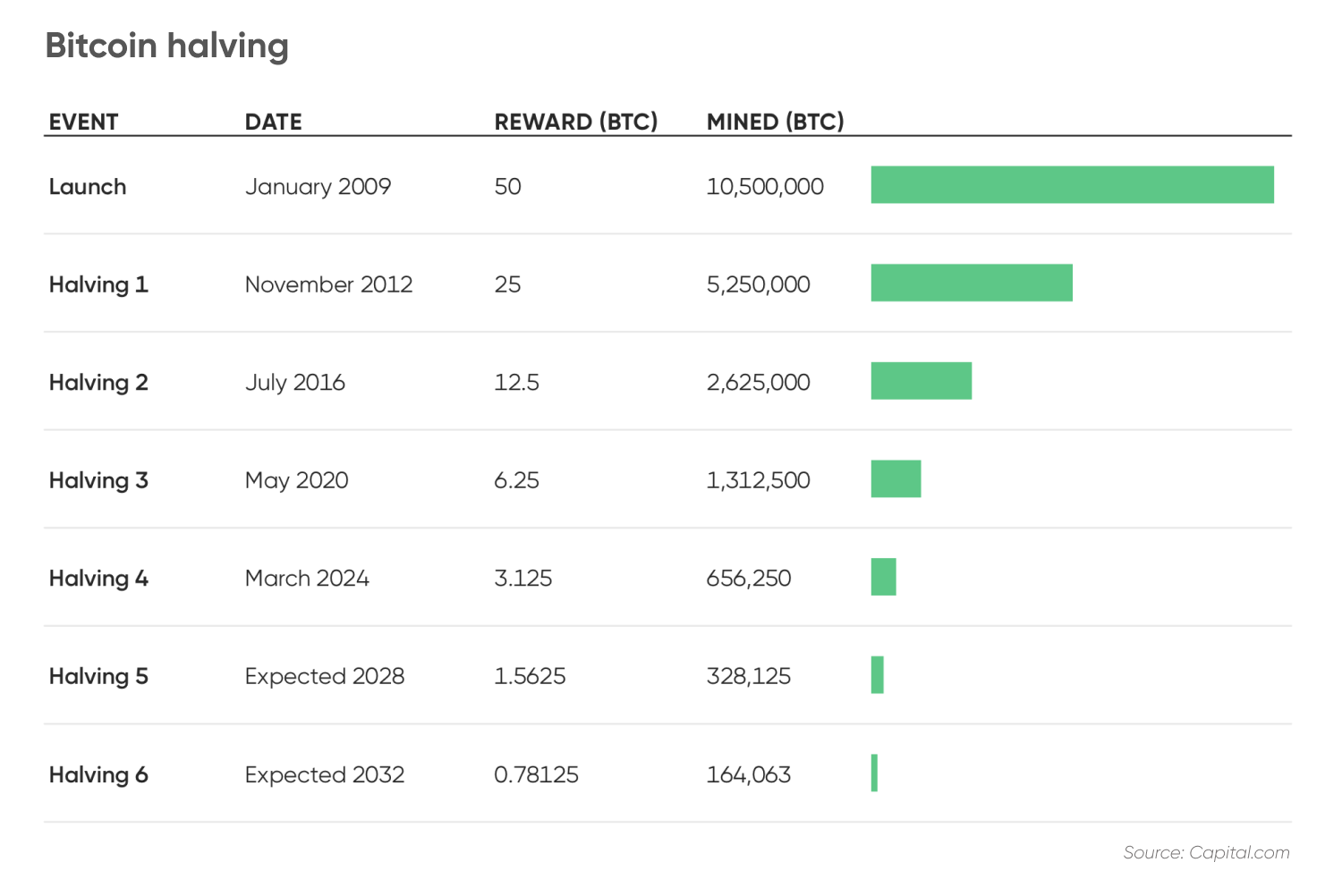
New Bitcoins are created as a reward for “miners” who use high-powered hardware to solve complex mathematical puzzles. These puzzles verify transactions and add them to the blockchain. Every time a block of transactions is successfully added (roughly every 10 minutes), a specific amount of Bitcoin is “minted” and awarded to the successful miner. In the early days of 2009, this reward was 50 BTC per block. This mechanism ensures that the money supply expands at a known, steady rate, removing the need for a central bank to decide when to “print” more.
The Role of the “Halving” in Reducing Inflation
To ensure that the 21 million limit is never exceeded and to simulate the increasing difficulty of extracting natural resources, Bitcoin employs a mechanism called the “Halving.” Approximately every four years (or every 210,000 blocks), the reward given to miners is cut exactly in half.
The first halving in 2012 reduced the reward to 25 BTC; the second in 2016 to 12.5 BTC; the third in 2020 to 6.25 BTC; and the most recent halving in April 2024 reduced it to 3.125 BTC. This periodic reduction in new supply creates a disinflationary environment. From a financial perspective, if demand for the asset remains constant or increases while the rate of new supply production drops by 50%, the upward pressure on price becomes a logical economic outcome. This cycle is one of the most anticipated events in the crypto-financial world.
The “Lost” Bitcoins: Why the Practical Supply is Even Lower
While the ledger says there are 19.7 million Bitcoins in existence, the effective supply available for trade is significantly lower. In the early years of Bitcoin, many users treated the asset as a technical curiosity rather than a high-value financial instrument, leading to significant amounts of “lost” capital.
Evaluating Dormant and Inaccessible Wallets
Blockchain analysis firms like Chainalysis and Glassnode estimate that between 3 million and 4 million Bitcoins may be lost forever. These are coins stored in wallets where the private keys (the digital passwords) have been lost, or the hardware storing them has been destroyed. Famous examples include individuals who discarded hard drives containing thousands of BTC or the legendary 1.1 million BTC held by Satoshi Nakamoto, which hasn’t moved since the network’s inception. When you subtract these lost coins from the circulating supply, the true number of available Bitcoin is likely closer to 15 or 16 million.
The Impact of Illiquid Supply on Price Volatility
In the world of investing, “liquidity” refers to how easily an asset can be bought or sold without affecting its price. Because a large portion of the Bitcoin supply is held by long-term “HODLers” (investors who refuse to sell) or is lost entirely, the “liquid supply”—the amount actually sitting on exchanges ready to be traded—is remarkably small. This scarcity within scarcity means that when large institutional buyers (like Wall Street ETFs) enter the market, they are competing for a very small pool of available assets, which can lead to rapid and dramatic price appreciation.
Bitcoin as a Monetary Asset: Scarcity vs. Traditional Finance
To truly understand why the number of Bitcoin matters, one must compare it to the current state of global personal finance and macroeconomics.
Digital Gold and the Store of Value Proposition
Gold has been the gold standard (literally) for wealth preservation for centuries because it is difficult to find and expensive to extract. Bitcoin is often referred to as “Digital Gold” because it shares these properties but improves upon them. Unlike gold, Bitcoin is divisible (down to eight decimal places), portable (can be sent anywhere in the world instantly), and its total supply is transparently verifiable by anyone with an internet connection. In a portfolio, Bitcoin functions as a non-sovereign store of value that does not rely on the stability of any single government’s economy.
Comparing Bitcoin to Fiat Currency Inflation
The primary driver of Bitcoin adoption in recent years has been the aggressive expansion of the M2 money supply by central banks. When a government prints more money, the value of each existing dollar or euro decreases, leading to inflation. Bitcoin’s fixed supply of 21 million provides a “hard” alternative. While the supply of USD can increase by 20% or more in a single year, the supply of Bitcoin is fixed by code. For the modern investor, holding an asset that cannot be devalued by political policy is a powerful tool for long-term wealth preservation.
Strategic Implications for Investors and the Future of the Network
As we look toward the future, the finite nature of Bitcoin changes how we think about wealth and units of measurement.
Long-term Holding and the “Satoshis” Unit of Account
Because there will only ever be 21 million Bitcoin for a global population of 8 billion people, owning even a single whole Bitcoin is a mathematical impossibility for the vast majority of the world. This has led to the rise of the “Satoshi” (or “Sat”). One Bitcoin is divisible into 100 million Satoshis. As the price of a full Bitcoin rises, financial experts suggest that the “unit of account” will shift. Instead of saying a cup of coffee costs 0.0001 BTC, we will say it costs 10,000 Sats. For personal finance, the strategy has shifted from “buying a Bitcoin” to “stacking Sats,” emphasizing consistent, fractional accumulation of a scarce asset.
What Happens When the Last Bitcoin is Mined?
A common question in business finance is what happens to the network when the 21 millionth Bitcoin is mined, estimated to occur around the year 2140. At that point, miners will no longer receive new Bitcoins as a reward. However, the network will continue to function. Miners will instead be compensated exclusively through transaction fees paid by users. By that time, if Bitcoin has become a global monetary layer, the volume and value of transactions are expected to provide sufficient incentive for miners to continue securing the network.
Conclusion
The question “how many Bitcoin are there?” yields a simple numerical answer—21 million—but the economic implications are profound. This fixed supply represents a paradigm shift in how humanity perceives value. By removing the ability for a central authority to manipulate the money supply, Bitcoin offers a transparent, predictable, and scarce alternative to traditional financial systems. Whether viewed as a speculative investment or a digital “lifeboat” for wealth preservation, the 21 million cap remains the most important number in the future of money. For the savvy investor, understanding this scarcity is the first step toward building a resilient financial future in the digital age.
aViewFromTheCave is a participant in the Amazon Services LLC Associates Program, an affiliate advertising program designed to provide a means for sites to earn advertising fees by advertising and linking to Amazon.com. Amazon, the Amazon logo, AmazonSupply, and the AmazonSupply logo are trademarks of Amazon.com, Inc. or its affiliates. As an Amazon Associate we earn affiliate commissions from qualifying purchases.