
Navigating the world of car loans can often feel like deciphering a complex financial puzzle. For many, the monthly payment is the primary concern, yet truly understanding how interest is calculated on a car loan is a far more empowering insight. It’s the difference between simply paying a bill and strategically managing one of your largest recurring expenses. Interest is the cost of borrowing money, and for a car loan, this cost can significantly impact the total amount you pay over the life of the loan. Grasping the mechanics of interest calculation not only empowers you to make informed decisions but also equips you with strategies to minimize your financial outlay.
This guide will demystify the process, breaking down the core concepts, common calculation methods, and key factors that influence your interest rate. By the end, you’ll have a clear understanding of how your monthly payment contributes to both the principal and interest, allowing you to approach car financing with confidence and financial acumen.
The Fundamentals of Car Loan Interest
Before diving into complex formulas, it’s crucial to establish a foundational understanding of what interest is and the essential terminology associated with car loans. These elements form the bedrock of how your borrowing costs are determined.
What is Interest?
At its simplest, interest is the price you pay to borrow money from a lender. When you take out a car loan, the lender provides you with a sum of money (the principal) to purchase a vehicle. In return, they charge you a percentage of that principal as interest, which serves as their profit and compensation for the risk they take. This interest is added to the amount you repay over time, increasing the total cost of the car.
Key Loan Terminology
To fully comprehend interest calculations, familiarity with specific terms is essential:
- Principal: This is the original amount of money you borrow to buy the car, before any interest or fees are added. As you make payments, a portion of each payment goes towards reducing this principal balance.
- Interest Rate (APR vs. Nominal Rate): The interest rate is the percentage charged by the lender for the use of their money.
- The Nominal Interest Rate is the stated annual rate before accounting for any compounding or additional fees.
- The Annual Percentage Rate (APR) is a more comprehensive measure of the total cost of borrowing, as it includes not only the nominal interest rate but also other fees associated with the loan, such as origination fees. For car loans, APR is usually the most important figure to compare across lenders, as it provides a truer picture of your annual cost.
- Loan Term: This refers to the duration over which you agree to repay the loan, typically expressed in months (e.g., 36, 48, 60, 72, or even 84 months). A longer loan term generally means lower monthly payments but results in paying more total interest over the life of the loan.
- Amortization: This is the process of paying off a debt over time through regular, equal payments. With each payment, a portion goes towards the interest due for that period, and the remainder reduces the principal balance. Early in an amortized loan, a larger percentage of your payment goes towards interest; later, a larger percentage goes towards principal.
- Simple Interest: Car loans primarily use simple interest, meaning interest is calculated only on the outstanding principal balance. This is distinct from compound interest, where interest is calculated on both the principal and any accumulated interest. For car loans, at each payment interval, interest is calculated on the remaining principal balance from the previous period.
Understanding Amortization and Simple Interest
The core mechanism of how interest is applied to your car loan is through a process called amortization, which relies on the simple interest method. This combination dictates how much of your monthly payment goes towards the cost of borrowing versus reducing the actual debt.
How Amortization Works
Amortization is the systematic process of paying off a loan with a series of fixed, regular payments over a set period. Each payment you make on your car loan is divided into two components: the interest accrued since your last payment and a portion that goes towards reducing your principal balance.
In the early stages of a typical amortizing car loan, a significant portion of your monthly payment is allocated to interest. This is because the outstanding principal balance is at its highest, leading to more interest being due. As you continue to make payments, the principal balance gradually decreases. Consequently, the amount of interest due on the smaller principal also decreases, meaning a larger portion of your fixed monthly payment can then be applied to reducing the principal. This “interest-heavy” start and “principal-heavy” finish is a fundamental characteristic of amortizing loans, including car loans and mortgages.
The Simple Interest Calculation Method
Car loans primarily use the simple interest method, which is calculated on the outstanding principal balance. This means that the interest you pay each month is determined by the current amount you still owe, not the original loan amount, nor any accumulated unpaid interest (as in compound interest).
The basic formula for simple interest over a single period is:
Interest for Period = Principal Balance × (Annual Interest Rate / Number of Payment Periods per Year)
Let’s break this down:
- Principal Balance: This is the remaining amount you owe on the loan before the current payment is made. It decreases with each payment you make.
- Annual Interest Rate: This is your loan’s stated APR, expressed as a decimal (e.g., 5% becomes 0.05).
- Number of Payment Periods per Year: For monthly payments, this would be 12.
Example:
Imagine you have a car loan with an outstanding principal balance of $20,000 and an APR of 6% (0.06). Your payments are monthly.
- Calculate monthly interest rate: 0.06 / 12 = 0.005
- Interest for the first month: $20,000 × 0.005 = $100
If your monthly payment is, say, $380:
- $100 goes to interest.
- $280 ($380 – $100) goes to reduce the principal.
- Your new principal balance becomes $19,720 ($20,000 – $280).
For the next month, the interest would be calculated on the new, lower principal balance of $19,720:
- $19,720 × 0.005 = $98.60
- Now, $98.60 goes to interest, and $281.40 ($380 – $98.60) goes to principal.
This continuous recalculation based on the decreasing principal balance is what defines the simple interest method in car loans. It also means that any extra payments you make directly reduce your principal, leading to less interest paid over the life of the loan.
Factors Influencing Your Car Loan Interest Rate
While the calculation method is standard, the interest rate you receive can vary dramatically from one borrower to another. Several key factors contribute to the APR you’re offered, significantly impacting the total cost of your car loan. Understanding these influences can help you take steps to secure a more favorable rate.
Credit Score
Your credit score is arguably the most significant determinant of your interest rate. Lenders use credit scores (like FICO or VantageScore) as a quick indicator of your creditworthiness – your likelihood of repaying the loan.
- Higher Credit Score (e.g., 700+): Indicates a lower risk to lenders, typically resulting in lower interest rates. Prime borrowers with excellent credit often qualify for the lowest advertised rates.
- Lower Credit Score (e.g., below 600): Suggests a higher risk, leading lenders to charge higher interest rates to compensate for that increased risk. Subprime borrowers may face significantly higher APRs, sometimes even double-digit rates.
Loan Term
The length of time you take to repay the loan also plays a crucial role.
- Shorter Loan Terms (e.g., 36 or 48 months): Often come with lower interest rates because the lender’s risk exposure is reduced over a shorter period. However, monthly payments will be higher.
- Longer Loan Terms (e.g., 72 or 84 months): Tend to have higher interest rates. While longer terms result in lower monthly payments, the extended repayment period increases the lender’s risk and the total amount of interest you’ll pay over the life of the loan.
Down Payment
The amount of money you put down upfront for the vehicle directly reduces the principal balance you need to borrow.
- Larger Down Payment: Reduces the loan amount, which lowers the lender’s risk. This can often translate into a lower interest rate, as well as significantly reducing the total interest paid over the loan term.
- No Down Payment or Small Down Payment: Increases the principal borrowed and, consequently, the lender’s risk, potentially leading to a higher interest rate.
Debt-to-Income Ratio (DTI)
Lenders evaluate your DTI to assess your ability to manage monthly payments. This ratio compares your total monthly debt payments (including the proposed car payment) to your gross monthly income. A lower DTI indicates you have more disposable income to cover your debts, making you a less risky borrower. Conversely, a high DTI can signal potential financial strain, leading to higher interest rates or even loan denial.
Vehicle Type and Age
The type of car you’re financing can also influence your rate.
- New Cars: Often qualify for lower interest rates, sometimes even promotional 0% APR offers, especially from manufacturer-backed finance companies. This is because new cars hold their value better initially and are less risky collateral.
- Used Cars: Typically carry higher interest rates than new cars. This is due to the higher risk associated with depreciation, potential mechanical issues, and the fact that used cars generally have a shorter remaining useful life.
- Specific Models: Certain vehicles with strong resale values or high demand might indirectly contribute to slightly better rates due to lower perceived risk.
Market Conditions
Broader economic factors and interest rate trends set by central banks (like the Federal Reserve in the U.S.) also influence car loan rates. When overall interest rates in the economy rise, car loan rates tend to follow suit. Conversely, in a low-interest-rate environment, car loan rates may be more favorable.
Lender Type
Different types of financial institutions offer varying rates.
- Banks: Offer competitive rates, often with options for existing customers.
- Credit Unions: Member-owned and non-profit, credit unions often provide some of the lowest interest rates due to their structure.
- Captive Finance Companies: These are financing arms of car manufacturers (e.g., Ford Credit, Toyota Financial Services). They often offer attractive promotional rates on new vehicles, sometimes as low as 0% APR, to boost sales.
- Online Lenders: Can provide quick approvals and competitive rates, especially for those with good credit.
By understanding these factors, you can take proactive steps—such as improving your credit score or making a larger down payment—to positively influence the interest rate you receive, ultimately saving you money over the life of your car loan.
Calculating Your Car Loan Payments: A Practical Approach
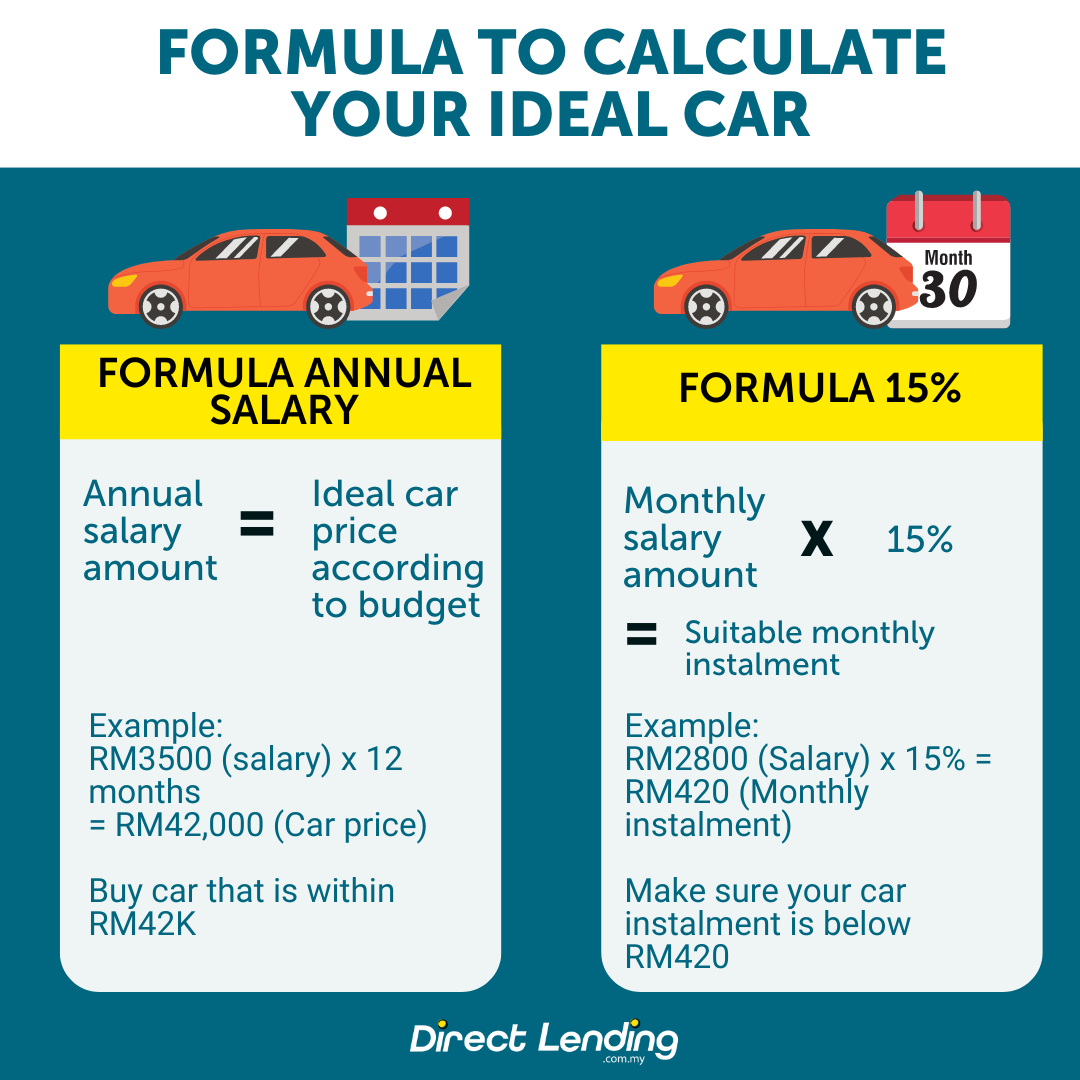
While understanding the simple interest calculation for a single payment period is straightforward, calculating your fixed monthly payment for an amortized loan over its entire term requires a more complex formula. Thankfully, modern tools make this process incredibly accessible.
Manual Calculation Limitations (for Monthly Payment)
Trying to manually calculate the exact fixed monthly payment for an amortized loan using the basic interest formula for each period would be incredibly tedious and prone to error. Because the principal balance changes with every payment, and the interest portion of each payment also changes, a simple linear calculation isn’t sufficient to determine the single, consistent payment amount that will fully amortize the loan by the end of its term.
The Amortization Formula (for Fixed Monthly Payments)
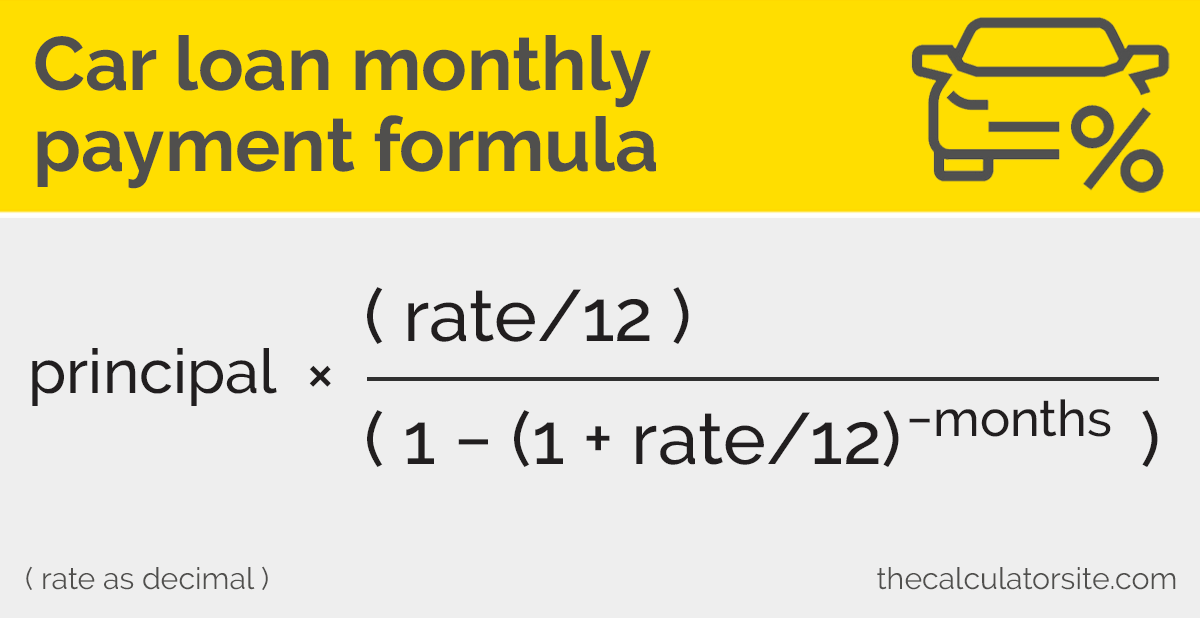
The industry standard formula used by lenders and financial calculators to determine a fixed monthly payment (M) for an amortized loan is:
$M = P [ i(1 + i)^n ] / [ (1 + i)^n – 1]$
Where:
- M = Monthly Payment
- P = Principal Loan Amount (the amount you’re borrowing)
- i = Monthly Interest Rate (Annual Interest Rate / 12)
- n = Total Number of Payments (Loan Term in years × 12)
Let’s use an example:
- P = $25,000
- Annual Interest Rate = 5% (0.05)
- Loan Term = 60 months (5 years)
- Calculate monthly interest rate (i): 0.05 / 12 = 0.00416667
- Total number of payments (n): 5 years * 12 months/year = 60
Plugging these values into the formula would yield the precise monthly payment. As you can see, performing this calculation by hand is cumbersome and typically unnecessary for consumers.
Leveraging Online Calculators
Fortunately, you don’t need to be a math wizard to figure out your car loan payments. Online car loan calculators are widely available from banks, credit unions, automotive websites, and personal finance sites. These tools simplify the process immensely:
- Ease of Use: You simply input the principal amount, interest rate (APR), and loan term. The calculator instantly provides your estimated monthly payment and often the total interest paid over the life of the loan.
- Scenario Planning: These calculators are invaluable for “what-if” scenarios. You can quickly see how changing the loan term, increasing your down payment (reducing principal), or securing a lower interest rate impacts your monthly payment and total interest.
- Example: Compare a 60-month loan at 5% APR versus a 72-month loan at 5.5% APR. You’ll instantly see the trade-off between lower monthly payments and higher total interest.
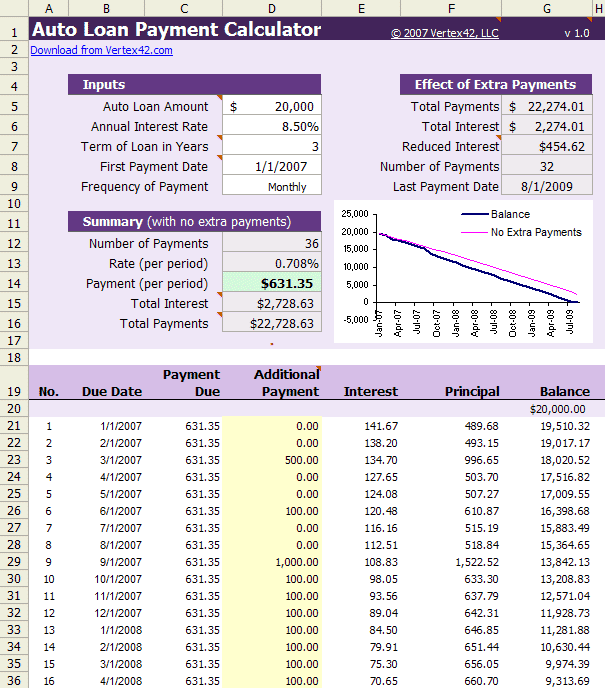
- Total Cost Understanding: Many advanced calculators also provide an amortization schedule, breaking down how much principal and interest you’ll pay with each monthly installment. This helps you visualize the “interest-heavy” start of the loan.
Always use online calculators as a primary tool for estimating payments and understanding the financial implications of different loan structures. They are accurate, fast, and provide clear insights into the long-term cost of your borrowing.
Understanding Your Amortization Schedule
An amortization schedule is a table detailing each payment over the life of a loan. For each payment, it typically shows:
- Payment Number: The sequence of the payment (1st, 2nd, etc.).
- Payment Date: The scheduled date of the payment.
- Beginning Principal Balance: The amount owed at the start of that payment period.
- Interest Paid: The portion of the payment that goes towards interest for that period.
- Principal Paid: The portion of the payment that goes towards reducing the principal balance.
- Ending Principal Balance: The remaining amount owed after the payment.
- Cumulative Interest: The total interest paid up to that point.
Reviewing an amortization schedule (which you can often generate through online calculators or request from your lender) is highly insightful. It visually demonstrates how your principal decreases over time and how the interest component shrinks as the loan matures, providing a transparent view of your loan’s progress.
Strategies to Minimize Interest Paid
Understanding how interest is calculated is the first step; the next is to use that knowledge strategically to reduce the total amount you pay. By making informed choices, you can significantly cut down on the cost of borrowing for your car.
Improve Your Credit Score Before Applying
Your credit score is the most powerful determinant of your interest rate. Before you even start shopping for a car, take steps to boost your score:
- Pay Bills on Time: Payment history is the biggest factor in your score.
- Reduce Existing Debt: Lowering your credit utilization (the amount of credit you’re using vs. your available credit) can quickly improve your score.
- Check Your Credit Report: Dispute any errors that could be dragging down your score.
A higher score signals less risk to lenders, qualifying you for lower APRs and saving you potentially thousands of dollars in interest.
Make a Larger Down Payment
Putting more money down upfront directly reduces the principal amount you need to borrow.
- Lower Principal = Less Interest: Since interest is calculated on the outstanding principal, a smaller initial loan amount means less interest will accrue over the life of the loan.
- Reduced Lender Risk: A larger down payment can also make you a more attractive borrower, potentially leading to an even better interest rate from the lender.
Choose a Shorter Loan Term
While longer loan terms offer lower monthly payments, they come at the cost of significantly more total interest paid.
- Accelerated Principal Reduction: A shorter term means you pay off the principal faster, giving interest less time to accrue.
- Often Lower APR: Lenders typically offer slightly lower interest rates for shorter terms because their risk exposure is reduced. If you can afford the higher monthly payments, a shorter term is almost always more cost-effective in the long run.
Shop Around for Lenders
Never take the first loan offer you receive, especially from the dealership. Different lenders (banks, credit unions, online lenders, manufacturer finance companies) have varying rates, terms, and eligibility requirements.
- Get Pre-Approved: Apply for pre-approval from several lenders before you visit the dealership. This provides you with a benchmark interest rate and empowers you to negotiate better at the dealership.
- Compare APRs, Not Just Monthly Payments: Focus on the Annual Percentage Rate (APR) as it reflects the true annual cost of the loan, including most fees.
Consider Refinancing Your Loan
If your financial situation improves after you’ve taken out a car loan, refinancing could be a smart move.
- Improved Credit Score: If you’ve worked to boost your credit score since getting your initial loan, you might qualify for a significantly lower interest rate.
- Lower Market Rates: If general interest rates have fallen, you could save money by refinancing.
- Shorter Term: You might refinance to a shorter term if you can now afford higher monthly payments, reducing total interest.
Refinancing involves taking out a new loan to pay off your existing one, ideally at a lower interest rate or with more favorable terms.
Make Extra Payments or Bi-Weekly Payments
Any additional payments you make directly reduce your principal balance, which in turn reduces the amount of interest calculated for subsequent periods.
- Lump-Sum Extra Payments: If you receive a bonus or tax refund, applying it directly to your loan principal can shave months off your loan term and save substantial interest. Ensure your lender applies extra payments to the principal, not just prepaying future installments.
- Bi-Weekly Payments: Instead of 12 monthly payments, you make 26 bi-weekly payments. This effectively adds one extra monthly payment per year, accelerating principal reduction and significantly reducing total interest. Confirm with your lender if they support bi-weekly payments and how they are applied.
By actively employing one or more of these strategies, you move beyond merely understanding car loan interest calculation to actively controlling and minimizing your borrowing costs, putting more money back in your pocket over the life of your vehicle.
Conclusion
Understanding “how interest is calculated on a car loan” is not just about crunching numbers; it’s about empowering yourself to make smarter financial decisions. We’ve explored the foundational concepts, from the simple interest method to the powerful role of amortization in structuring your payments. We’ve also highlighted the critical factors—your credit score, loan term, down payment, and market conditions—that dictate the interest rate you receive.
By leveraging online calculators, diligently comparing APRs, and actively pursuing strategies like improving your credit or making extra payments, you gain control over the total cost of your car loan. This knowledge transforms you from a passive borrower into an engaged financial manager, capable of navigating the complexities of car financing with confidence and an eye towards significant savings. Your car is a major investment; ensure your loan is managed just as intelligently.
aViewFromTheCave is a participant in the Amazon Services LLC Associates Program, an affiliate advertising program designed to provide a means for sites to earn advertising fees by advertising and linking to Amazon.com. Amazon, the Amazon logo, AmazonSupply, and the AmazonSupply logo are trademarks of Amazon.com, Inc. or its affiliates. As an Amazon Associate we earn affiliate commissions from qualifying purchases.