
Bitcoin, the world’s first decentralized digital currency, has captivated global attention since its mysterious inception in 2009. While often discussed in terms of its value or potential as an investment, the fundamental question of “how is bitcoin created” delves deep into a fascinating realm of computer science, cryptography, and network engineering. This article will unravel the intricate technological process behind Bitcoin’s birth, focusing on the blockchain, mining, and the innovative mechanisms that underpin its existence, security, and controlled supply. Understanding its creation is key to appreciating Bitcoin not just as a financial asset, but as a groundbreaking technological achievement.
The Foundational Technology: Blockchain and Cryptography
At the heart of Bitcoin’s creation lies the blockchain, an ingenious distributed ledger technology. Far from a mere database, the blockchain is a constantly growing list of records, called blocks, which are linked together using cryptography. This foundational structure dictates not only how transactions are recorded but also how new units of Bitcoin come into existence.
What is a Blockchain?
A blockchain is, in essence, a digital ledger that is decentralized and distributed across a vast network of computers. Imagine a chain where each link is a “block” containing a list of verified transactions. Once a block is completed, it is added to the end of the chain, creating an immutable and chronological record. Each new block contains a cryptographic hash of the previous block, linking them together in an unbreakable sequence. This interdependency means that altering any past transaction would require redoing all subsequent blocks, an computationally infeasible task, thus ensuring the integrity of the entire chain. This transparency and immutability are critical for maintaining trust in a system without a central authority.
Decentralization and Distributed Ledgers
The decentralized nature of the blockchain is a core tenet of Bitcoin. Unlike traditional financial systems that rely on central banks or intermediaries to validate and record transactions, Bitcoin’s blockchain is maintained by a global network of independent participants. Each participant (or node) holds a copy of the entire ledger. When a new block is created, it is broadcast to all nodes, which then verify its authenticity against a set of predetermined rules. This distributed architecture eliminates single points of failure, making the network incredibly resilient to attacks and censorship. No single entity has control over the network, ensuring that the rules of Bitcoin, including its creation process, are enforced by consensus rather than decree.
Cryptographic Security and Immutability
Cryptography plays a pivotal role in securing the Bitcoin blockchain and, consequently, its creation. Public-key cryptography ensures that only the owner of a Bitcoin can spend it, while cryptographic hash functions are fundamental to linking blocks and verifying their integrity. A cryptographic hash function takes an input (like a block of transaction data) and produces a fixed-size string of characters, known as a hash. Even a tiny change in the input will result in a completely different hash, making it incredibly difficult to tamper with data without detection. The immutability of the blockchain, enforced by these cryptographic links, means that once a transaction is recorded and confirmed, it cannot be reversed or altered. This technological assurance is what gives users confidence in the ledger and the supply of newly created bitcoins.
The Mining Process: Securing the Network and Creating New Bitcoins
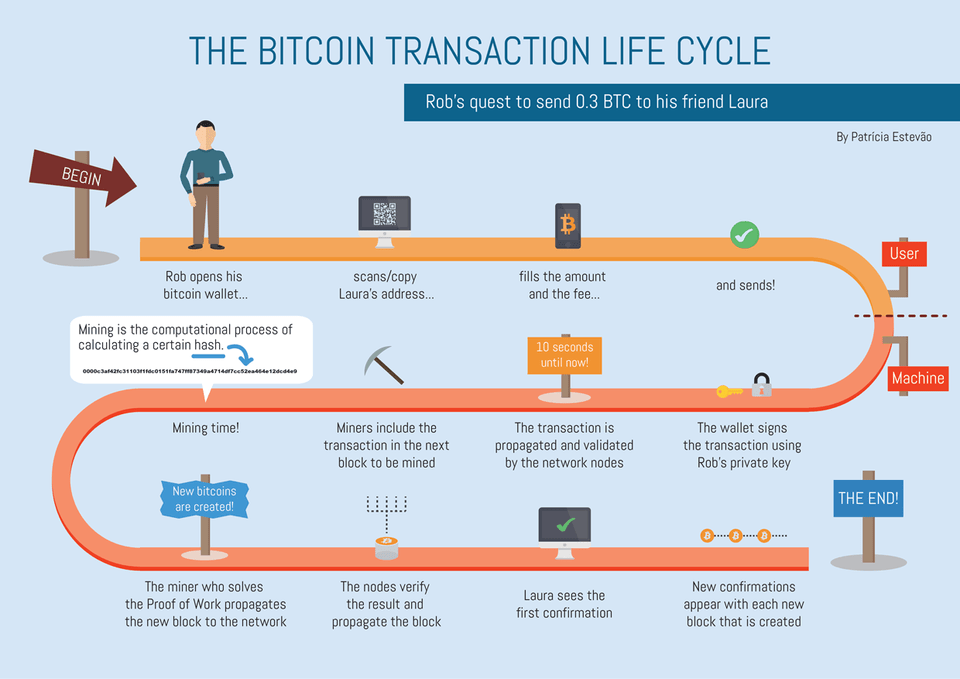
The process by which new bitcoins are introduced into circulation and transactions are validated is known as “mining.” Bitcoin mining is a sophisticated computational endeavor that combines economic incentives with advanced cryptography and distributed consensus mechanisms. It’s the engine that powers the Bitcoin network, ensuring its security and maintaining its integrity.
Proof-of-Work Consensus Mechanism
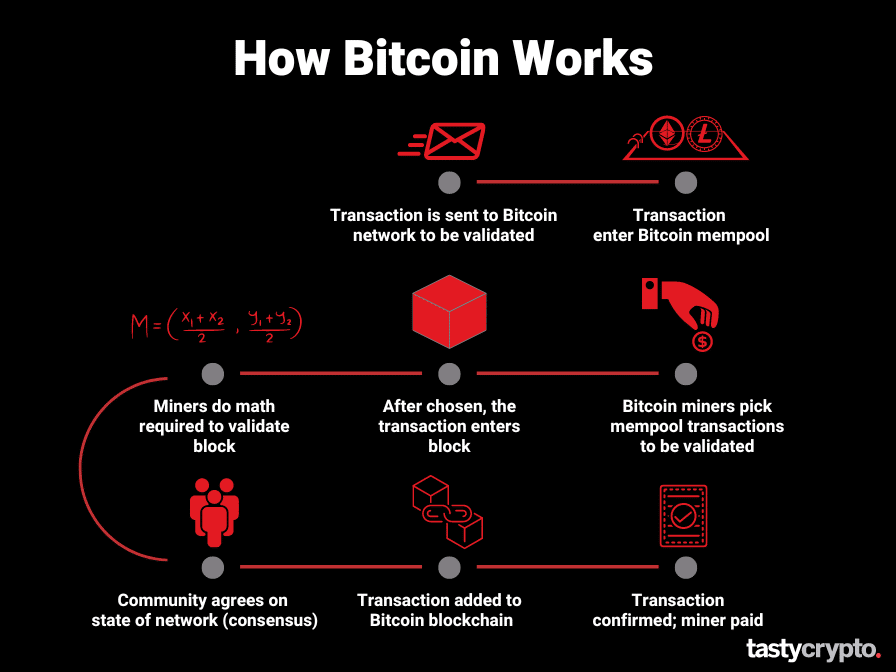
Bitcoin relies on a consensus mechanism called Proof-of-Work (PoW). This mechanism is designed to be intentionally resource-intensive and difficult to perform, but easy for others to verify. Miners compete to solve a complex cryptographic puzzle that requires significant computational power. The first miner to find the solution gets the right to add the next block of verified transactions to the blockchain. This “work” serves several crucial purposes: it prevents malicious actors from easily altering the chain (as they would need to outpace the entire network’s computational power), it orders transactions chronologically, and it provides a fair and decentralized method for introducing new bitcoins. Without Proof-of-Work, the network would be vulnerable to various attacks, such as double-spending.
The Role of Miners and Hashing
Miners are specialized computers (or groups of computers) that dedicate their processing power to the Bitcoin network. Their primary role is to verify and aggregate pending transactions into new blocks. For each block, miners combine a set of unconfirmed transactions with other metadata, including a timestamp and the hash of the previous block. They then repeatedly run this data through a cryptographic hash function, trying to find a specific output. This output, known as the “nonce,” is a numerical value that, when combined with the block data and hashed, produces a result that meets a predefined difficulty target. This difficulty target is adjusted approximately every two weeks (or every 2016 blocks) to ensure that, on average, a new block is found every 10 minutes, regardless of the total hashing power of the network.
Solving the Cryptographic Puzzle
The cryptographic puzzle miners solve is essentially a brute-force guessing game. Miners must find a nonce (a “number used once”) such that when it’s added to the block’s data and all of it is hashed using SHA-256 (a specific cryptographic hash algorithm), the resulting hash starts with a certain number of zeroes. For example, if the difficulty target requires a hash starting with twenty zeroes, miners will try billions upon billions of different nonces until one produces a hash that fits this criteria. This process is purely random; there’s no shortcut to finding the correct nonce other than trying many possibilities very quickly. Once a miner finds a valid nonce, they broadcast the new block to the network. Other nodes then verify the block’s validity by quickly re-hashing it with the proposed nonce. If it meets the difficulty target and all transactions are valid, the block is accepted and added to their copy of the blockchain. This arduous process is the “creation” event for new bitcoins.
Bitcoin Reward and Transaction Fees
The successful miner who finds the solution to the cryptographic puzzle is rewarded in two ways: with newly minted bitcoins and with the transaction fees from the transactions included in their block. These incentives are crucial for motivating miners to dedicate their resources to securing the network and ensuring the continuous creation of new blocks.
Block Rewards and Halving Events
The primary incentive for mining is the “block reward.” When a miner successfully adds a new block to the blockchain, they receive a fixed amount of newly created bitcoins. This block reward is the mechanism by which new bitcoins are introduced into the total supply. However, this reward is not constant. Bitcoin’s protocol includes an event known as “halving” (or “halvening”), which occurs approximately every four years (or every 210,000 blocks). During a halving event, the block reward is automatically cut in half. For instance, in 2009, the reward was 50 BTC per block. After the first halving in 2012, it became 25 BTC, then 12.5 BTC in 2016, and 6.25 BTC in 2020. This programmatic reduction in supply growth is a core feature that drives Bitcoin’s scarcity model and is hard-coded into its protocol.

Transaction Fees and Network Incentives
In addition to the block reward, miners also collect the transaction fees associated with all the transactions they include in a successfully mined block. When users send Bitcoin, they typically include a small fee to incentivize miners to prioritize their transaction. Transactions with higher fees are usually picked up by miners faster, especially during periods of high network congestion. As block rewards continue to halve, transaction fees are expected to play an increasingly important role in compensating miners, ensuring that there is still a strong economic incentive to secure the network even as the supply of new bitcoins diminishes. This dynamic transition from block rewards to transaction fees as the primary incentive ensures the long-term sustainability of the mining ecosystem.
The Finite Supply of Bitcoin
One of the most defining technological characteristics of Bitcoin is its finite supply. The Bitcoin protocol is hard-coded to never exceed 21 million coins. This hard cap is a deliberate design choice that mimics the scarcity of precious metals like gold, contrasting sharply with traditional fiat currencies which can be printed indefinitely by central banks. The block reward halving mechanism ensures that new bitcoins are introduced into circulation at a progressively slower rate until the final bitcoin is mined, which is estimated to occur around the year 2140. After that point, miners will rely solely on transaction fees for their compensation. This predictable and limited supply is a key technological feature that underpins Bitcoin’s store-of-value proposition and is critical to its long-term economic model.
The Evolution of Bitcoin Mining
Bitcoin mining has undergone a dramatic technological transformation since its inception. What began as an activity performable on standard home computers has evolved into a highly specialized, industrial-scale operation, driven by continuous innovation in hardware and methodologies.
From CPUs to ASICs: Hardware Advancements
In the early days of Bitcoin, mining could be performed using general-purpose computer processors (CPUs). As the network grew and the difficulty of mining increased, more powerful hardware became necessary. Miners soon discovered that graphics processing units (GPUs), typically used for gaming and graphic rendering, were significantly more efficient at performing the repetitive cryptographic calculations required for mining. This led to a boom in GPU-based mining rigs. However, the biggest leap came with the introduction of Application-Specific Integrated Circuits (ASICs). ASICs are custom-designed microchips built solely for one purpose: Bitcoin mining. These devices are orders of magnitude more efficient and powerful than GPUs for SHA-256 hashing, rendering all other forms of hardware economically unviable for serious mining operations. This specialization transformed mining into a highly competitive industry requiring significant capital investment.
Mining Pools and Economies of Scale
The increasing difficulty and capital expenditure associated with ASIC mining led to the rise of “mining pools.” A mining pool is a collaborative group of miners who combine their computational power to increase their chances of finding a block. When the pool successfully mines a block, the block reward and transaction fees are shared among all participants in proportion to the amount of hashing power they contributed. This pooling mechanism allows individual miners to earn a more consistent, albeit smaller, share of rewards, rather than waiting potentially years for a solo miner to find a block. Mining pools have become an essential part of the Bitcoin ecosystem, demonstrating how collective technological effort can overcome the challenges of an increasingly difficult solo endeavor.
Environmental and Energy Considerations
The immense computational power required for Bitcoin’s Proof-of-Work mechanism translates into significant energy consumption. The environmental impact of Bitcoin mining has become a prominent discussion point, prompting technological solutions and debates. Miners are increasingly seeking out renewable energy sources (hydro, solar, wind) to power their operations, not only for environmental reasons but also for economic efficiency, as renewable energy can often be cheaper. Furthermore, research and development are ongoing to improve the energy efficiency of ASIC hardware and explore alternative consensus mechanisms in other cryptocurrencies that consume less energy, though Bitcoin remains committed to PoW for its unparalleled security properties. The industry is actively working on innovations like capturing waste heat and utilizing stranded energy sources to mitigate its environmental footprint.
Beyond Creation: The Future of Bitcoin Technology
While the core mechanism of Bitcoin creation is well-established, the underlying technology continues to evolve. Ongoing development aims to enhance scalability, introduce new functionalities, and reinforce its position as a robust decentralized network.
Scalability Solutions (e.g., Lightning Network)
The inherent design of Bitcoin’s blockchain, with its 10-minute block time and limited block size, presents challenges for processing a high volume of transactions quickly and cheaply. To address these scalability concerns, developers are building “layer-2” solutions on top of the main Bitcoin blockchain. The most prominent example is the Lightning Network, which allows for off-chain transactions that are significantly faster and cheaper than on-chain transactions. Users can open payment channels with each other or through a network of connected channels, conducting multiple transactions almost instantly. Only the opening and closing of these channels are recorded on the main blockchain, dramatically reducing the load. This technological innovation demonstrates how Bitcoin’s core layer can remain secure and decentralized while offloading routine transactions to more efficient secondary layers.
Scripting and Smart Contracts
While not as broadly capable as platforms like Ethereum, Bitcoin’s underlying scripting language (Script) allows for basic forms of smart contracts and multi-signature transactions. Script is a simple, stack-based language that enables complex conditions to be set for spending bitcoins. This technology permits the creation of escrow services, time-locked transactions, and other sophisticated financial instruments without the need for trusted third parties. Ongoing research and soft fork proposals, such as Taproot, aim to enhance Bitcoin’s scripting capabilities further, allowing for more privacy, flexibility, and efficiency in these advanced transaction types, broadening the potential applications of the base protocol.
Continued Decentralized Development
The technological trajectory of Bitcoin is guided by a decentralized community of developers, researchers, and users. There is no central company or CEO dictating its path. Changes and upgrades to the protocol are proposed, discussed, and ultimately adopted through a rough consensus process that ensures the integrity and decentralized nature of the network are maintained. This open-source, community-driven development model is a unique technological characteristic that ensures Bitcoin remains adaptable and resilient, continuously improving while staying true to its foundational principles.
Conclusion
The creation of Bitcoin is not a singular event but a continuous, technologically sophisticated process driven by cryptography, decentralized consensus, and economic incentives. From the immutable ledger of the blockchain to the competitive “Proof-of-Work” mining, every aspect is meticulously designed to ensure security, transparency, and a controlled supply. Understanding “how Bitcoin is created” reveals a deep appreciation for the ingenuity of its original design and the ongoing technological advancements that sustain its global network. It stands as a testament to the power of distributed systems and cryptographic engineering, fundamentally reshaping our understanding of digital currency and decentralized technology.
aViewFromTheCave is a participant in the Amazon Services LLC Associates Program, an affiliate advertising program designed to provide a means for sites to earn advertising fees by advertising and linking to Amazon.com. Amazon, the Amazon logo, AmazonSupply, and the AmazonSupply logo are trademarks of Amazon.com, Inc. or its affiliates. As an Amazon Associate we earn affiliate commissions from qualifying purchases.