
In the rapidly evolving landscape of digital assets, few cryptocurrencies have sparked as much debate, loyalty, and speculation as XRP. Originally designed by Ripple Labs to revolutionize the way money moves across borders, XRP has positioned itself as the “bridge currency” for the global banking sector. For investors, the central question remains: how high can XRP go? To answer this, one must look beyond simple market hype and delve into the intersection of institutional utility, regulatory frameworks, and the cold mathematics of market capitalization.
The Institutional Utility: XRP as a Tool for Global Settlement
At its core, the value proposition of XRP is fundamentally different from that of Bitcoin or Ethereum. While Bitcoin is often viewed as “digital gold” and Ethereum as a decentralized computer, XRP was built for enterprise use. Its primary function is to facilitate On-Demand Liquidity (ODL), allowing financial institutions to settle cross-border transactions in seconds rather than days.

Revolutionizing Cross-Border Payments
Currently, the global financial system relies on the aging SWIFT network, which requires banks to maintain pre-funded accounts (nostro/vostro) in various currencies around the world. This traps trillions of dollars in dormant capital. XRP’s technology allows banks to convert a localized currency into XRP and then into the destination currency almost instantaneously. If XRP captures even a small percentage of the trillions of dollars moved daily by SWIFT, the demand for the token could skyrocket.
The Role of Central Bank Digital Currencies (CBDCs)
As nations explore Central Bank Digital Currencies (CBDCs), Ripple has positioned XRP as a neutral bridge asset that can link different national digital currencies. By acting as the connective tissue between the Digital Dollar, Digital Euro, and Digital Yen, XRP’s utility would shift from a speculative asset to a critical component of global financial infrastructure. The more “work” the token has to do in the global economy, the higher its intrinsic price floor becomes.
The Regulatory Landscape: Navigating the SEC and Market Clarity
For several years, XRP’s price was suppressed by a high-stakes legal battle between Ripple Labs and the U.S. Securities and Exchange Commission (SEC). The primary point of contention was whether XRP should be classified as a security. The resolution of this conflict—and the resulting legal clarity—is one of the most significant drivers of XRP’s future price potential.
The Significance of Legal Precedent
In 2023, a landmark court ruling determined that XRP, in and of itself, is not necessarily a security when sold on public exchanges. This gave XRP a status that few other cryptocurrencies possess: regulatory clarity in the United States. For institutional investors—who are often risk-averse—this clarity is a green light. Large-scale hedge funds and institutional desks that were previously sidelined by legal uncertainty can now consider XRP as a viable part of their digital asset portfolios.
Global Adoption vs. U.S. Constraints
While the U.S. legal battle captured headlines, Ripple continued to expand its footprint in the Middle East, Asia, and Europe. Countries like the UAE and Singapore have established clear frameworks for digital assets, allowing Ripple to sign partnerships with major regional banks. As the U.S. market catches up to the regulatory standards set abroad, the influx of domestic capital could provide the momentum needed to challenge previous all-time highs.
The Mathematics of Market Capitalization and Supply
To understand how high XRP can realistically go, investors must grapple with the concept of market capitalization—the total value of all coins in circulation. This is where “moon” theories often clash with financial reality.
Managing Expectations: The Supply Factor
XRP has a total supply of 100 billion tokens, with a significant portion held in escrow by Ripple Labs. Unlike Bitcoin, which has a maximum supply of 21 million, XRP’s large supply means that for the price to reach $100 or $1,000, the market cap would need to exceed the total wealth of the entire planet. While price appreciation is certain in a bull market, investors must be wary of “low-unit-bias” traps. A $10 XRP is a far more realistic mid-to-long-term target than a $500 XRP, as the former would put the market cap in the realm of tech giants like Apple or Microsoft.
Deflationary Mechanisms and Burn Rates
XRP is a deflationary asset. Every transaction on the XRP Ledger (XRPL) requires a tiny amount of XRP to be “burned” or destroyed to prevent spamming of the network. While the burn rate is currently low, a massive increase in institutional transaction volume would accelerate the removal of XRP from the circulating supply. Over a period of decades, this shrinking supply combined with increasing demand creates a classic economic recipe for price appreciation.
Projecting the Price: Short-Term Volatility vs. Long-Term Value
Predicting the exact price of any cryptocurrency is an exercise in probability, not certainty. However, by looking at historical cycles and current adoption trends, we can map out potential trajectories for XRP.
The Bull Case: Breaking Previous Highs
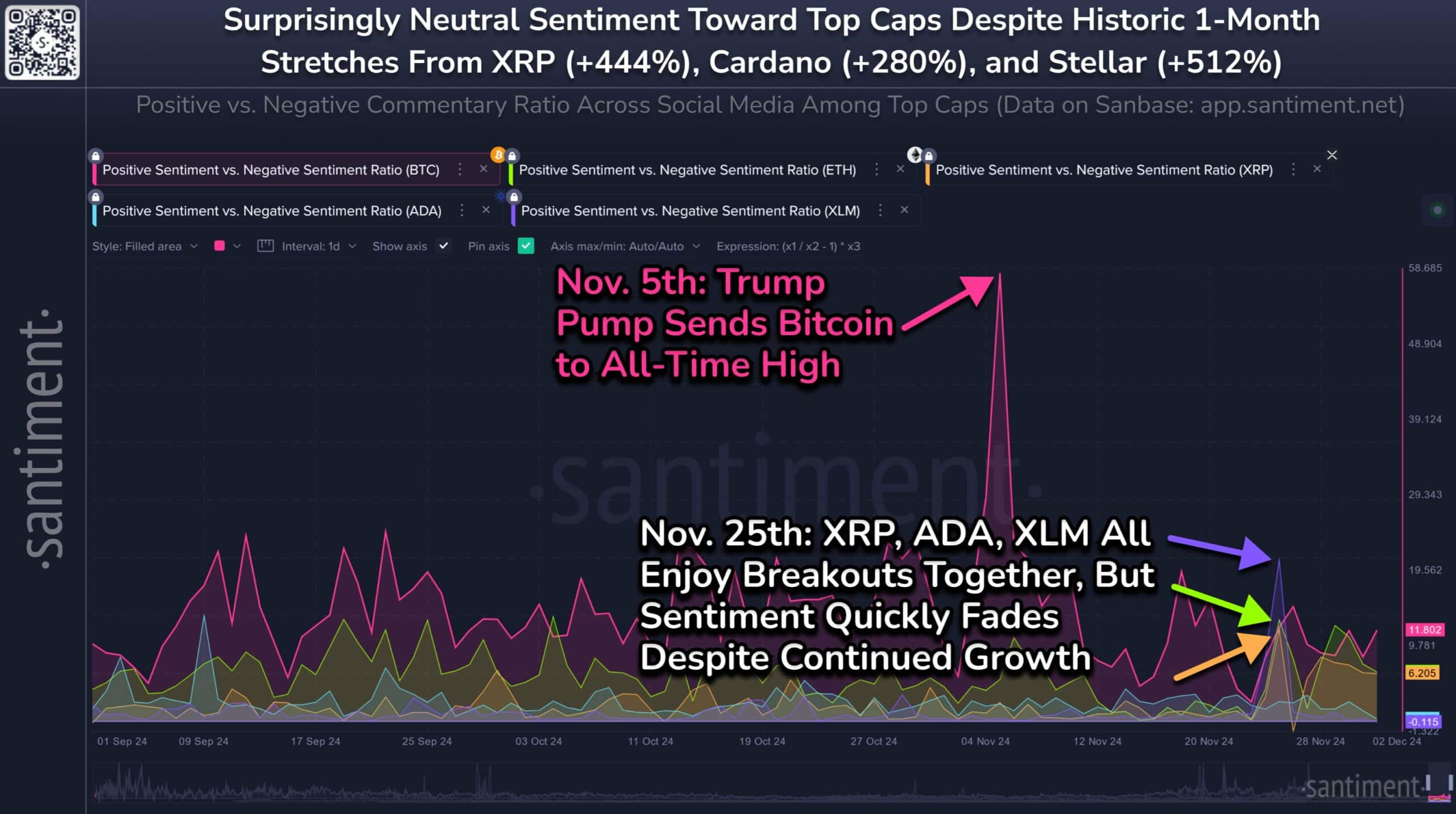
In the 2017-2018 bull run, XRP reached an all-time high of roughly $3.84. At that time, the asset had almost no institutional utility and was driven entirely by retail speculation. In the next major market cycle, many analysts believe that the combination of retail FOMO (Fear Of Missing Out) and genuine institutional liquidity needs could push XRP toward the $5 to $10 range. This would require XRP to reclaim its position as the second or third largest cryptocurrency by market cap.
The Bear Case: Competition and Displacement
The path to higher prices is not without obstacles. XRP faces stiff competition from other “payment” coins like Stellar (XLM) and even from traditional banking consortiums developing their own private blockchain solutions (like J.P. Morgan’s JPM Coin). If Ripple fails to maintain its partnerships or if the XRP Ledger loses its technological edge, the token could struggle to maintain its value, potentially stagnating in the $0.50 to $1.00 range despite broader market growth.
Strategic Outlook: How to Value XRP in a Modern Portfolio
For the serious investor, XRP should be viewed through the lens of a “utility-play” rather than a “store-of-value” play. Its price is likely to be tethered to its adoption as a financial tool rather than its popularity as a meme.
Diversification and Risk Management
Given XRP’s history of volatility and regulatory scrutiny, it is rarely advisable for an investor to be “all-in.” Instead, XRP often fits into a diversified “Money” niche portfolio as a high-upside bet on the future of the global financial plumbing. By balancing XRP with more established assets like Bitcoin or traditional equities, investors can gain exposure to the potential 10x or 20x gains without being wiped out by the inherent risks of the crypto market.
Conclusion: The Ceiling of Opportunity
How high can XRP go? While the triple-digit dreams of the internet’s most vocal “XRP Army” members may be mathematically improbable in the near term, a move into the high single digits or low double digits is well within the realm of possibility. The “ceiling” for XRP is defined by two things: the total volume of global cross-border payments it can capture and the willingness of the traditional financial system to integrate blockchain technology.
If Ripple succeeds in its mission to become the “Internet of Value,” XRP won’t just be another ticker symbol on a screen; it will be the lubricant that keeps the gears of global commerce turning. For those who believe in this vision, the current price is merely a footnote in a much longer and more lucrative story of financial evolution.
aViewFromTheCave is a participant in the Amazon Services LLC Associates Program, an affiliate advertising program designed to provide a means for sites to earn advertising fees by advertising and linking to Amazon.com. Amazon, the Amazon logo, AmazonSupply, and the AmazonSupply logo are trademarks of Amazon.com, Inc. or its affiliates. As an Amazon Associate we earn affiliate commissions from qualifying purchases.