
The stock market is often viewed as a complex, intimidating labyrinth of numbers, flashing green and red tickers, and high-stakes decision-making. However, at its core, the stock market is one of the most powerful engines for wealth creation ever devised. It is the heartbeat of the global economy, providing a platform where individual dreams of financial independence meet the capital needs of the world’s most innovative companies. To participate effectively in this ecosystem, one must look beyond the surface-level fluctuations and understand the structural “how” and “why” of equity markets.
The Fundamentals of Equity: What is a Stock?
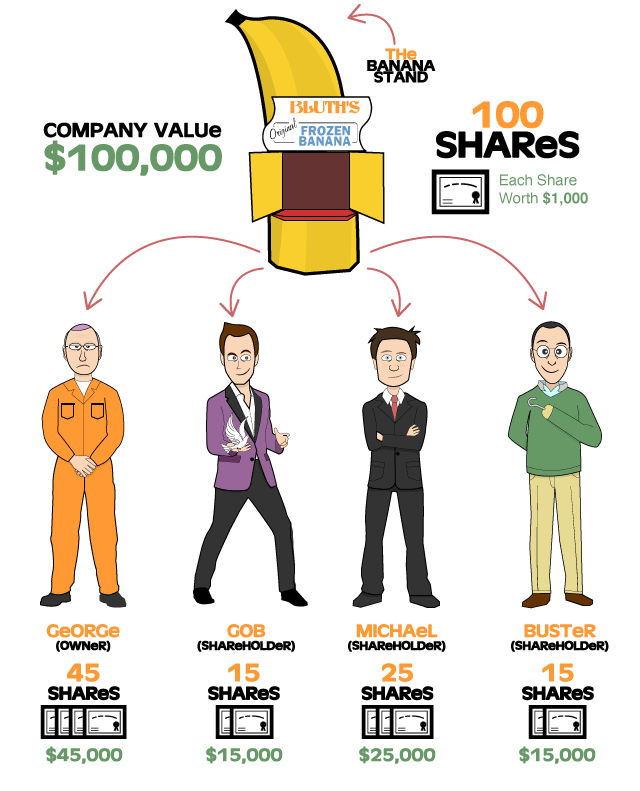
Before diving into the complexities of trading and portfolio management, it is essential to define what a stock actually represents. When you buy a stock, you are not merely betting on a price movement; you are purchasing a tangible stake in a business enterprise.
Units of Ownership and Shareholder Rights
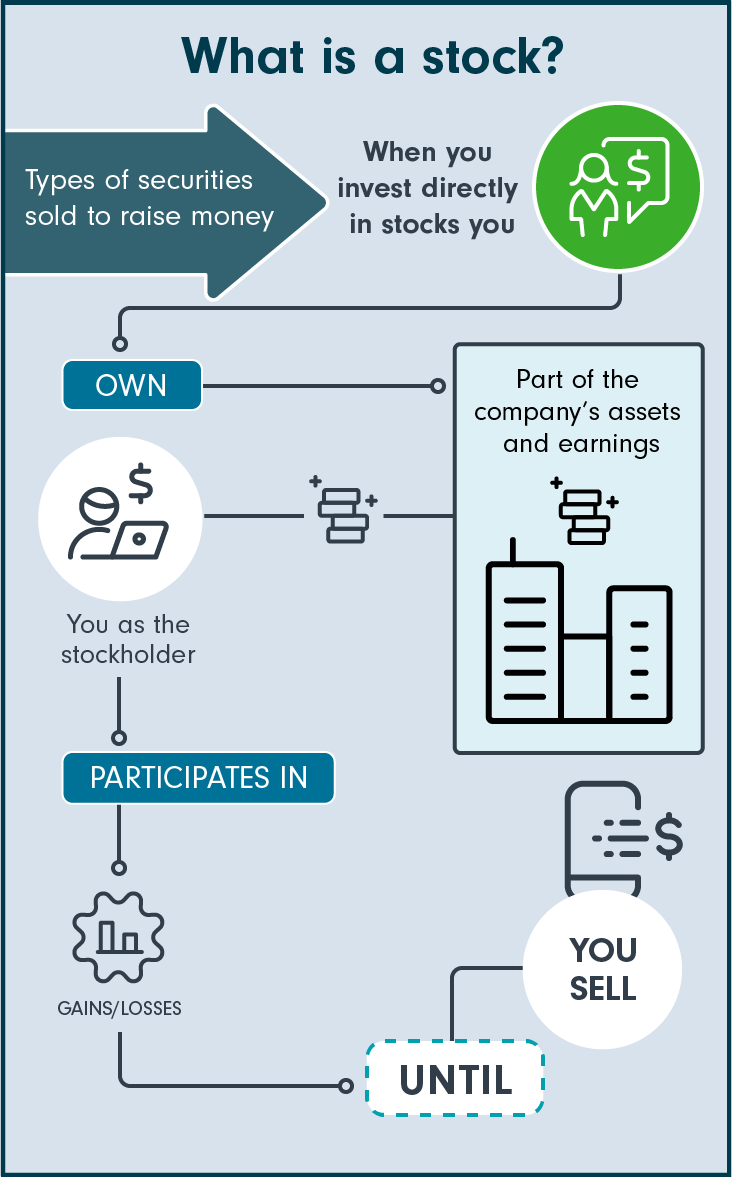
A stock, also known as equity, represents a fractional ownership interest in a corporation. Companies divide their ownership into millions of small units called “shares.” When an investor purchases a share, they become a shareholder. This status confers specific rights, the most significant being a claim on a portion of the company’s assets and earnings.
Beyond the potential for financial gain, shareholders often hold voting rights. This allows them to participate in corporate governance by voting on the board of directors and other major corporate policies. While a single share in a trillion-dollar company might seem insignificant, the collective power of shareholders is what holds corporate leadership accountable to the owners of the business.
Why Companies Issue Stock: The Path to the IPO
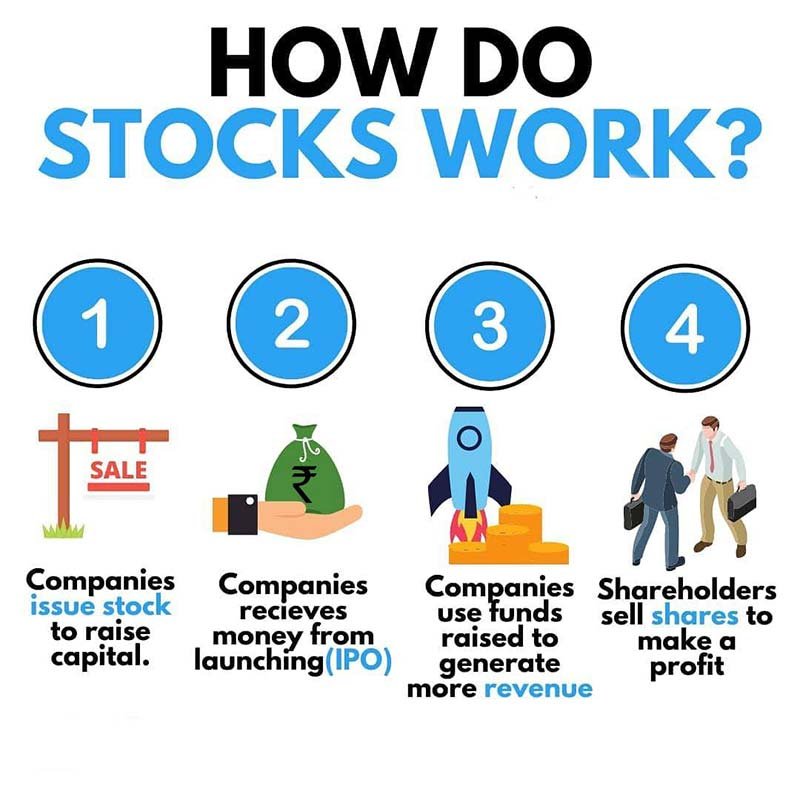
Companies do not issue stock out of benevolence; they do it to raise capital. In the early stages of a business, founders might rely on personal savings or venture capital. However, to scale—whether by building new factories, investing in research and development, or expanding into international markets—companies require vast amounts of cash.
The process of “going public” through an Initial Public Offering (IPO) allows a private company to sell shares to the general public for the first time. This transition provides the company with a massive influx of capital that does not need to be paid back like a traditional bank loan. In exchange for this capital, the original owners give up a percentage of their control and future profits.
How the Marketplace Operates: Exchanges and Participants
Once a stock is issued in the primary market (the IPO), it begins to trade on the secondary market. This is what most people refer to when they talk about “the stock market.” It is a continuous auction where investors buy and sell shares from one another rather than from the company itself.
The Role of Stock Exchanges
Stock exchanges are the centralized platforms where these transactions occur. Historically, these were physical locations like the floor of the New York Stock Exchange (NYSE), where traders shouted orders. Today, the vast majority of trading is electronic, facilitated by exchanges like the NASDAQ.
The exchange acts as a regulated environment that ensures transparency, liquidity, and fairness. It sets the rules for listing, monitors trading activity to prevent fraud, and ensures that when a buyer and seller agree on a price, the transfer of ownership happens instantaneously and securely.
Market Makers and the Bid-Ask Spread
In the digital age, we often take for granted that a stock can be bought or sold at the click of a button. This is made possible by “market makers”—specialized firms or individuals who stand ready to buy or sell a particular stock at any given time.
Market makers earn their profit through the “bid-ask spread.” The “bid” is the highest price a buyer is willing to pay, and the “ask” is the lowest price a seller is willing to accept. The difference between these two prices is the spread. By constantly quoting both prices, market makers ensure that there is always “liquidity,” meaning you can exit or enter a position without waiting days for a counterparty to appear.
The Role of the Modern Brokerage
For the individual investor, the gateway to these exchanges is the brokerage. A broker is a regulated intermediary that executes trades on behalf of the client. In the past, this involved high commissions and personal financial advisors. Today, the “Money” niche has been revolutionized by discount and zero-commission brokers that allow anyone with a smartphone to access global markets. These platforms handle the complex plumbing of the financial system—clearing trades, managing tax documentation, and providing the user interface for portfolio management.
Factors that Influence Stock Prices
The most common question in investing is: “Why did the price go up or down?” While the short-term movements of the stock market can appear random or “noisy,” they are driven by a combination of mathematical reality and human psychology.
Supply, Demand, and Market Sentiment
At the most basic level, stock prices are governed by the law of supply and demand. If more people want to buy a stock (demand) than sell it (supply), the price rises. Conversely, if bad news breaks and everyone rushes to sell, the price falls.
However, demand is often driven by “sentiment”—the collective mood of investors. Sentiment can be influenced by fear, greed, or hype. This is why a company’s stock might soar even if it isn’t currently profitable; investors are “pricing in” the expectation of massive future success. This speculative element is why the market is often described as a “voting machine” in the short term but a “weighing machine” in the long term.
Earnings Reports and Corporate Health
In the long run, a stock’s price tends to track the company’s “fundamentals”—its ability to generate profit. Publicly traded companies are required by law to release quarterly earnings reports. These documents provide a transparent look at revenue, expenses, debt, and net income.
If a company consistently grows its earnings per share (EPS), its stock price generally follows an upward trajectory. Investors look for “moats”—competitive advantages that protect a company’s profits from rivals—such as a strong brand, proprietary technology, or high barriers to entry.
Macroeconomic Indicators and Interest Rates
Stocks do not exist in a vacuum. They are deeply affected by the broader economy. One of the most significant external factors is the prevailing interest rate set by central banks (like the Federal Reserve).
When interest rates are low, borrowing is cheap, businesses can expand easily, and investors seek higher returns in the stock market because “safe” investments like bonds offer poor yields. When interest rates rise, the cost of debt increases, corporate profits may shrink, and investors may shift money out of stocks and into the safety of high-interest savings or bonds. This inverse relationship is a cornerstone of financial market cycles.
Strategies for Long-term Wealth Creation
Understanding how the market works is only half the battle; the other half is applying that knowledge to build a sustainable investment strategy. Successful investing in the “Money” niche requires discipline, patience, and a clear understanding of risk.
Growth vs. Value Investing
Investors generally fall into two philosophical camps: Growth and Value.
- Growth Investors look for companies that are expected to grow at a rate significantly above the average for the market. These companies often reinvest all their profits back into the business rather than paying dividends.
- Value Investors, popularized by figures like Warren Buffett, look for “bargains.” They search for companies whose stock prices are trading for less than their intrinsic value, often due to temporary market overreactions or being in “unfashionable” industries.
The Power of Compound Interest and Dividends
One of the most effective ways to build wealth is through the “snowball effect” of compounding. This occurs when you earn a return on your initial investment, and then in the next period, you earn a return on both your original money and your previous gains.
Dividends play a crucial role here. Some established companies pay out a portion of their profits to shareholders in cash. By choosing to “reinvest” these dividends to buy more shares, an investor can exponentially increase their ownership stake over decades without ever contributing more of their own “new” capital.
Risk Management and Diversification
The stock market involves inherent risk; there are no guarantees. The primary tool for managing this risk is diversification—the practice of spreading investments across different companies, industries, and geographic regions.
The logic is simple: if you own only one stock and that company goes bankrupt, you lose 100% of your money. If you own 500 stocks (as in an S&P 500 index fund) and one company goes bankrupt, the impact on your total portfolio is negligible. Diversification protects you from the failure of a single entity while allowing you to capture the overall upward trend of the market.
The Digital Evolution of Trading
The modern landscape of personal finance has been reshaped by technology, making the “how” of stock trading more accessible than at any point in history.
Fractional Shares and Accessibility
In the past, if a single share of a high-priced company cost $3,000, a small investor might be priced out. Today, many financial tools offer “fractional shares,” allowing investors to buy $5 or $10 worth of a stock regardless of its full share price. This has “democratized” the market, allowing individuals to start building a portfolio with very small amounts of capital.
Index Funds and ETFs
Perhaps the most significant development for the average person is the rise of the Exchange-Traded Fund (ETF) and the Index Fund. Instead of trying to pick the “next big winner,” these funds allow you to buy a “basket” of hundreds or thousands of stocks in a single transaction.
This “passive” investing strategy is based on the reality that most professional fund managers fail to beat the market average over the long term. By buying the entire market through a low-cost index fund, the individual investor can match the market’s performance with minimal effort and lower fees, which is often the most reliable path to long-term financial success in the world of money and personal finance.
aViewFromTheCave is a participant in the Amazon Services LLC Associates Program, an affiliate advertising program designed to provide a means for sites to earn advertising fees by advertising and linking to Amazon.com. Amazon, the Amazon logo, AmazonSupply, and the AmazonSupply logo are trademarks of Amazon.com, Inc. or its affiliates. As an Amazon Associate we earn affiliate commissions from qualifying purchases.