
The service industry represents a massive segment of the global workforce, and in the United States alone, millions of workers rely on tips to supplement—or even provide the bulk of—their income. Traditionally, the Internal Revenue Service (IRS) has treated tips as ordinary income, subject to the same federal income tax and payroll tax rates as hourly wages or salaries. However, recent economic discourse and political proposals have centered on the idea of a “No Tax on Tips” policy.
Understanding how such a system would function requires a deep dive into the mechanics of current tax law, the nuances of payroll accounting, and the broader implications for personal finance and the national economy. If implemented, this shift would represent one of the most significant changes to service-industry compensation in decades.
The Current Framework: How Tips Are Taxed Today
To understand how a “no tax” policy would work, one must first grasp the complexities of the existing system. Currently, the IRS classifies tips as taxable income. This includes cash tips left by customers, tips through credit and debit card transactions, and even non-cash tips (like tickets or items of value).
The Difference Between Tips and Wages
From a financial perspective, tips are distinct from wages. Wages are the guaranteed hourly rate paid by the employer, while tips are discretionary payments made by customers. Under the Fair Labor Standards Act (FLSA), employers in many states can claim a “tip credit,” allowing them to pay a base wage as low as $2.13 per hour, provided that the employee’s tips bring their total earnings up to the federal minimum wage of $7.25. Regardless of the source, both the $2.13 wage and the tips are subject to Federal Income Tax and FICA (Federal Insurance Contributions Act) taxes, which fund Social Security and Medicare.
Employer Obligations and the FICA Tip Credit
Employers have a significant role in the current tax ecosystem. They are responsible for collecting and reporting tipped income, withholding the employee’s portion of taxes, and paying the employer’s share of payroll taxes (7.65%). To mitigate the burden on businesses, the tax code currently offers the “Section 45B Credit.” This allows employers to claim a credit for the Social Security and Medicare taxes they pay on employee tips that exceed the federal minimum wage. A “no tax on tips” policy would likely disrupt this specific accounting balance, requiring a complete overhaul of how businesses report and pay into the system.
Deconstructing the “No Tax on Tips” Proposal
The fundamental concept of “No Tax on Tips” is to allow service workers to keep 100% of their gratuities without federal intervention. However, “tax” is a broad term in the financial world, and the mechanics of the exclusion would dictate its actual value to the worker.
Income Tax vs. Payroll Tax
The most critical question in a “no tax” scenario is whether the exemption applies only to federal income tax or if it also extends to payroll taxes (Social Security and Medicare). If the policy only eliminates federal income tax, a worker making $40,000 a year ($15,000 in wages and $25,000 in tips) would still see 7.65% deducted from their tips for FICA. If the policy eliminates both, the worker’s take-home pay increases significantly, but it raises questions about how that worker earns credits toward future Social Security benefits. Most financial analysts assume the proposal primarily targets federal income tax to simplify the legislative transition.
The Legislative Process and Implementation
For this policy to work, Congress would need to amend the Internal Revenue Code. It would likely be implemented as an “above-the-line” deduction or a total exclusion from Gross Income. In practical terms, when a worker files their annual 1040 tax return, they would report their total tips, but that amount would be subtracted from their taxable income. For payroll departments, this would require updated software to differentiate between “Taxable Wage Income” and “Non-Taxable Tipped Income” for withholding purposes.
The Financial Impact on Service Industry Workers
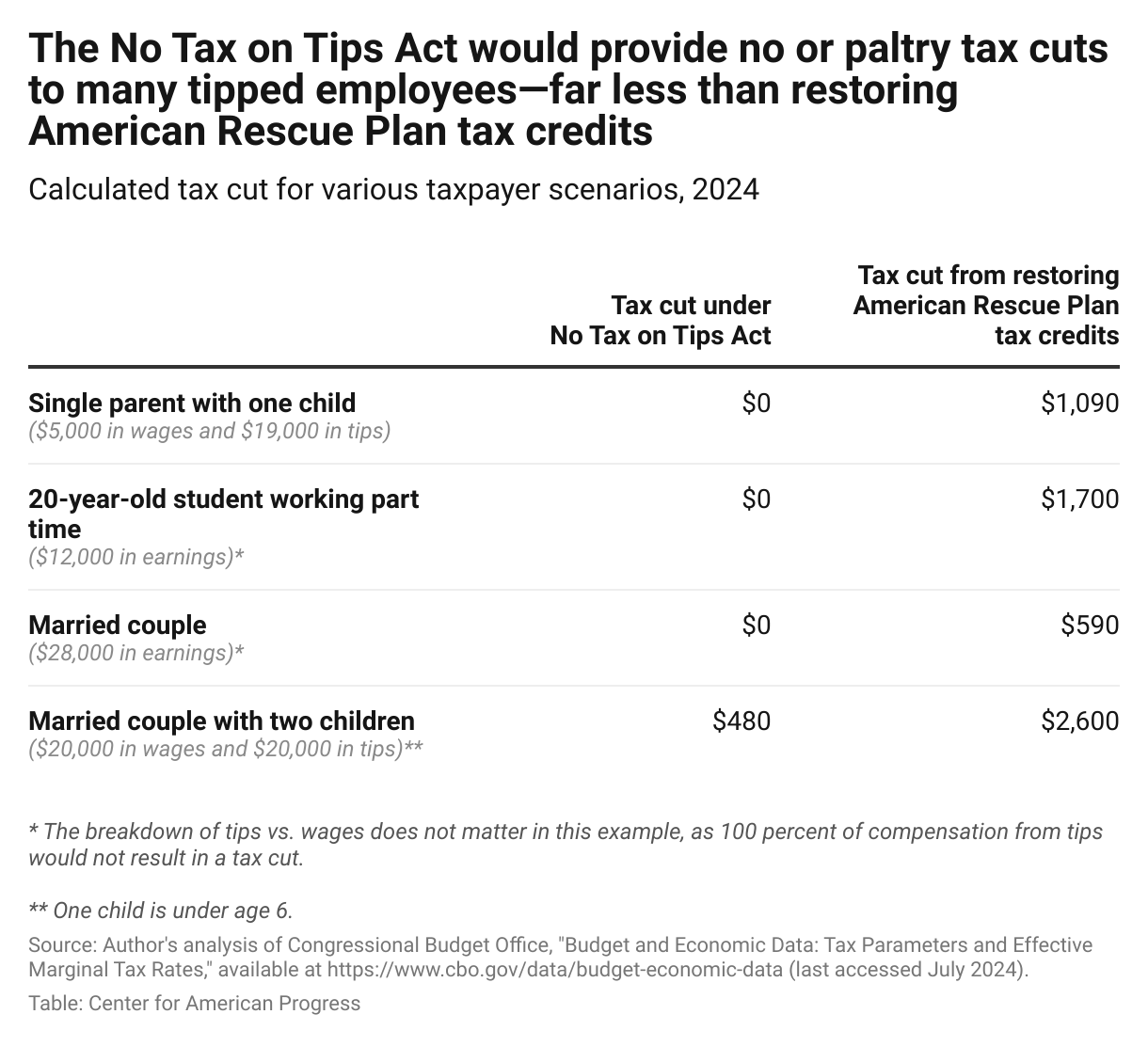
From a personal finance perspective, the elimination of taxes on tips is an immediate liquidity injection for low-to-middle-income earners. However, the long-term financial consequences are more nuanced than a simple increase in take-home pay.
Take-Home Pay vs. Long-Term Social Security Benefits
While an immediate 10% to 20% increase in take-home pay is a boon for monthly budgeting, the “Money” niche must consider the time value of money and retirement security. If tips are no longer subject to FICA taxes, the worker’s “reported earnings” for Social Security purposes would drop. Since Social Security benefits are calculated based on a worker’s highest 35 years of indexed earnings, a career spent in a “no-tax-on-tips” environment could lead to significantly lower monthly checks in retirement. Workers would need to be disciplined enough to divert their tax savings into private retirement accounts like a Roth IRA to compensate for this gap.
The Risk of Wage Compression
There is an economic theory that if tips become tax-free, employers may feel less pressure to raise base wages. Furthermore, customers, knowing that workers are keeping more of their tips, might feel less “social pressure” to tip generously. From a financial planning standpoint, this creates a volatility risk. Wages are guaranteed; tips are variable. If the market shifts toward higher tips and lower base wages because of tax incentives, the worker’s income becomes more susceptible to economic downturns or slow business seasons.
Business Finance and Operational Considerations
For business owners in the hospitality and service sectors, “No Tax on Tips” would change the cost-benefit analysis of their operations. It presents both an opportunity for easier recruitment and a challenge for compliance.
Accounting for Non-Taxable Income
Modern Point of Sale (POS) systems are currently designed to track tips for the purpose of tax withholding. Under a new policy, accounting departments would need to ensure that tips are not “commingled” with taxable wages in a way that triggers IRS audits. Businesses would also need to re-evaluate their benefits packages. If a worker’s taxable income appears lower on paper (because tips are excluded), they might qualify for more government subsidies (like the ACA or EITC), which could change how businesses structure their own health insurance offerings.
Potential for “Income Reclassification” Audits
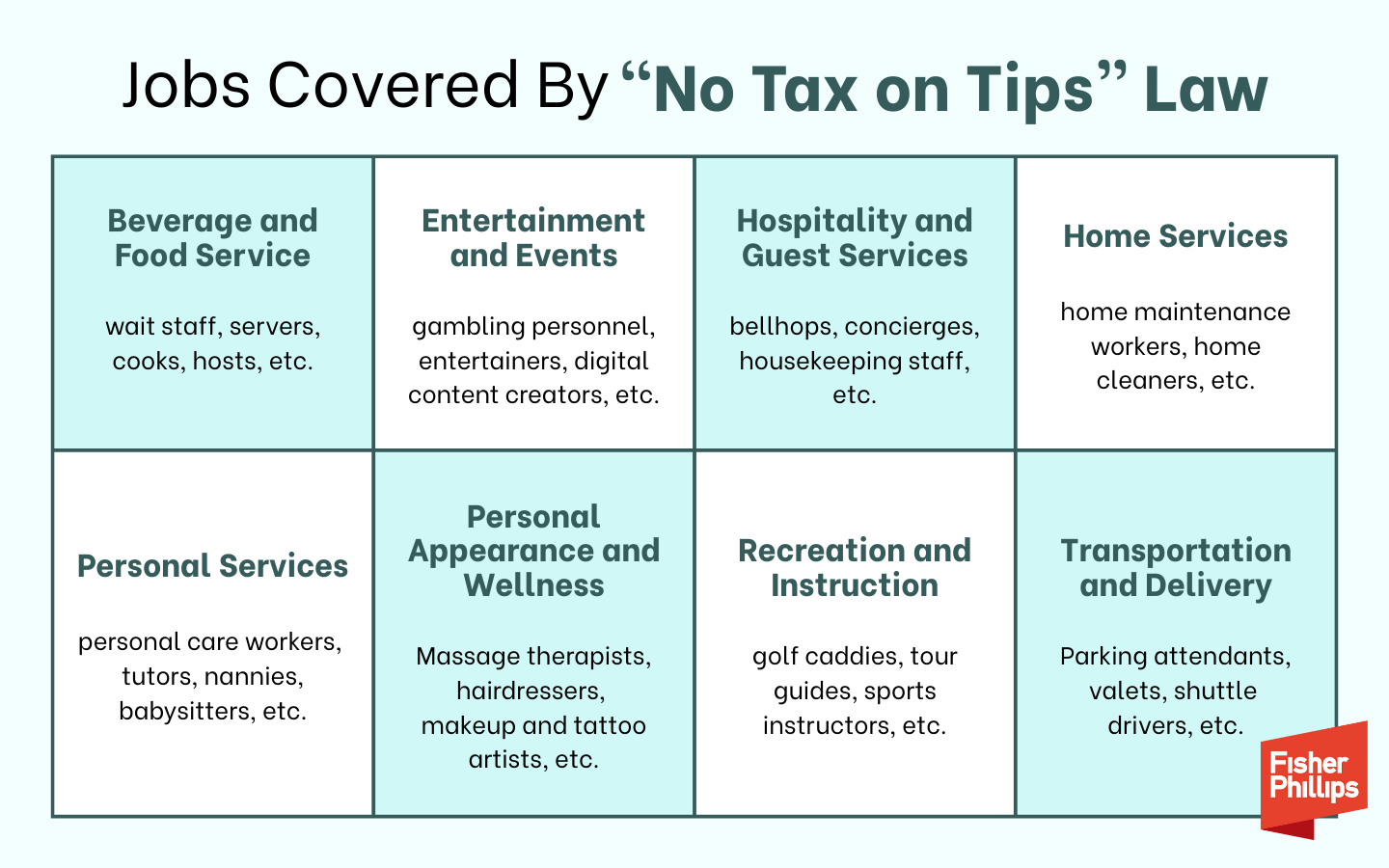
One of the largest concerns for the Treasury is “income reclassification.” If tips are tax-free, there is a massive incentive for high-earning professionals in other industries to find ways to classify their income as “tips.” For example, a lawyer or a consultant might lower their hourly rate and suggest a “discretionary gratuity” instead. To prevent this, the IRS would likely implement strict definitions of what constitutes a “tipped occupation,” focusing heavily on traditional service roles in restaurants, hotels, and salons. Businesses would need to maintain meticulous records to prove that payments categorized as tips meet the legal definition of being “voluntary” and “discretionary.”
Strategic Financial Planning in a Changing Tax Environment
If a “No Tax on Tips” policy becomes law, service workers and business owners will need to pivot their financial strategies to maximize the benefit while mitigating the risks.
Maximizing Tax-Advantaged Savings
For the individual worker, the extra cash flow should not simply be absorbed into lifestyle inflation. The smartest financial move would be to treat the “tax savings” as a self-funded pension. By contributing the amount that would have gone to the IRS into a diversified portfolio or a high-yield savings account, the worker can build a safety net that the current Social Security system may no longer adequately provide for them. This shift requires a high level of financial literacy and discipline, moving the responsibility of tax planning from the government to the individual.
Professional Record Keeping for Tipped Professionals
Even if tips are not taxed, they must still be documented. For workers looking to secure a mortgage or a car loan, lenders look at “Total Verifiable Income.” If a worker does not report their tips because they aren’t taxed, a bank might only see the $2.13 per hour base wage, making the worker appear “unbankable.” To navigate this, workers would need to maintain professional-grade logs of their income. From a business perspective, transparency in tip pooling and distribution becomes even more critical to avoid internal disputes and to provide employees with the documentation they need for their personal financial goals.
The transition to a “No Tax on Tips” system would be a landmark shift in American fiscal policy. While the immediate goal is to provide relief to service workers, the ripple effects would touch everything from payroll software architecture to long-term retirement planning. By understanding these financial mechanics now, stakeholders can prepare for a future where the “tip” is no longer just a gesture of gratitude, but a specialized, tax-advantaged asset class.
aViewFromTheCave is a participant in the Amazon Services LLC Associates Program, an affiliate advertising program designed to provide a means for sites to earn advertising fees by advertising and linking to Amazon.com. Amazon, the Amazon logo, AmazonSupply, and the AmazonSupply logo are trademarks of Amazon.com, Inc. or its affiliates. As an Amazon Associate we earn affiliate commissions from qualifying purchases.