
In an increasingly digitized world, few financial innovations have sparked as much debate and fascination as Bitcoin. Emerging from the ashes of the 2008 financial crisis, this enigmatic digital asset, created by the pseudonymous Satoshi Nakamoto, defied traditional economic paradigms from its inception. Unlike fiat currencies backed by governments or commodities like gold with intrinsic physical properties, Bitcoin exists purely in the digital realm, built upon complex cryptography and a decentralized network. For many, its value remains a perplexing question: how can something intangible, with no central authority, command such significant financial worth and garner the attention of individual investors, corporate treasuries, and even nation-states?
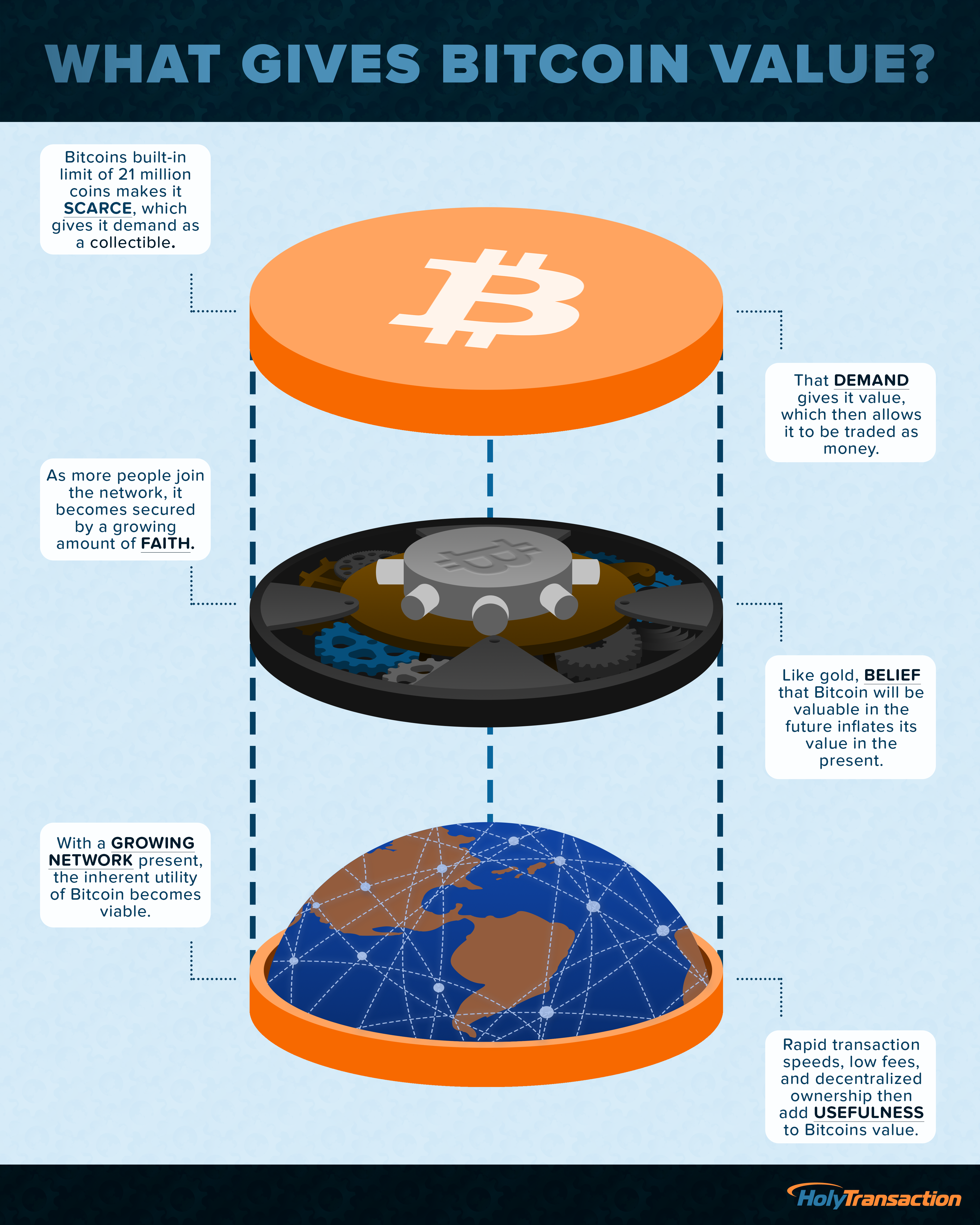
The answer is multifaceted, rooted in a confluence of economic principles, technological innovation, and evolving market dynamics. Bitcoin’s value proposition extends far beyond mere speculation; it is derived from a unique blend of scarcity, utility, network effects, robust security, and its growing acceptance as a legitimate financial asset. Understanding “how Bitcoin has value” requires an exploration of these pillars, each contributing to its narrative as a store of value, a medium of exchange, and a potentially transformative financial tool for the 21st century.
The Scarcity Principle: Digital Gold in a Finite World
One of the most powerful drivers of Bitcoin’s value is its inherent scarcity, a fundamental economic principle that underpins the value of many traditional assets, most notably gold. In a world accustomed to fiat currencies that can be printed in unlimited quantities, Bitcoin offers a starkly different model.
Capped Supply and Predictable Emission
At its core, Bitcoin is designed with a hard cap of 21 million coins. This fixed, immutable supply is encoded into its protocol, meaning no more Bitcoins will ever be created beyond this limit. This stands in stark contrast to traditional central banks, which can increase the money supply at will, often leading to inflation and a devaluation of purchasing power. The predictable emission schedule of new Bitcoins is further governed by a process known as “halving,” which occurs approximately every four years. Each halving event reduces the reward miners receive for validating transactions by half, effectively slowing the rate at which new Bitcoins enter circulation. This programmatic scarcity creates a powerful deflationary pressure, making Bitcoin an attractive asset for those seeking to preserve wealth against inflation.
Deflationary vs. Inflationary Currencies
The comparison to gold, often dubbed “digital gold,” is apt because gold’s value is also derived in part from its finite supply and the cost of extracting it. Bitcoin mimics this scarcity, but with an added layer of transparency and verifiability. Its predictable, diminishing supply schedule makes it a powerful hedge against the inflationary tendencies inherent in modern fiat monetary systems. As governments continue to engage in quantitative easing and expand their balance sheets, the appeal of a mathematically scarce asset that cannot be debased by political whims becomes increasingly evident, drawing investors concerned about the long-term erosion of their savings.
Utility and Functionality: Beyond a Simple Asset
While scarcity establishes a foundation, Bitcoin’s value is further enhanced by its practical utility and multifaceted functionality within the financial landscape. It isn’t merely a collectible; it serves distinct economic roles.
Medium of Exchange (Digital Cash)
Initially conceived as “peer-to-peer electronic cash,” Bitcoin’s primary utility was envisioned as a medium of exchange. It allows for direct transactions between parties without the need for intermediaries like banks or payment processors. This capability is particularly potent for international remittances, where traditional systems are slow, expensive, and subject to censorship. While its volatility and network congestion have sometimes hindered its widespread adoption for everyday purchases, ongoing scaling solutions (like the Lightning Network) and stablecoin integrations are continuously improving its transactional efficiency. Its censorship-resistant nature also offers a vital lifeline for individuals in oppressive regimes or those cut off from traditional financial systems.
Store of Value (SoV)
Beyond its transactional utility, Bitcoin has increasingly solidified its position as a robust store of value. Its characteristics—scarcity, durability (digital permanence), divisibility (into tiny units called satoshis), and transferability—make it an ideal candidate for preserving wealth over time. In times of economic uncertainty, geopolitical instability, or market volatility, investors often seek safe-haven assets. Bitcoin’s independence from any single government or financial institution, combined with its programmatic scarcity, has led many to view it as a modern-day safe haven, a digital alternative to gold for protecting purchasing power. This role as a long-term savings vehicle is a significant component of its market valuation.
Unit of Account (Future Potential)
While Bitcoin is not yet widely used as a unit of account—meaning goods and services are typically not priced directly in BTC—its potential to fulfill this role in the future contributes to its long-term value narrative. For an asset to become a unit of account, it needs stability and widespread acceptance, attributes that Bitcoin is gradually acquiring. As its network effects grow and volatility potentially stabilizes with increased liquidity, the idea of pricing assets and conducting accounting in Bitcoin could become more feasible, further integrating it into the global financial fabric and solidifying its fundamental economic value.
Network Effects and Adoption: The Power of Community
The value of any communication or financial network grows exponentially with the number of its users. Bitcoin is no exception; its value is deeply intertwined with its ever-expanding network effects and increasing mainstream adoption.

Decentralization and Trustlessness
A cornerstone of Bitcoin’s value is its decentralized nature. Unlike traditional financial systems that rely on trusted third parties (banks, governments), Bitcoin operates on a distributed ledger (blockchain) maintained by a global network of participants. This decentralization ensures trustlessness, meaning users don’t need to trust a central entity to validate or secure their transactions. This revolutionary paradigm grants users unprecedented financial sovereignty and security. The more participants (miners, node operators, users) join and secure the network, the stronger and more resilient it becomes, thereby enhancing its inherent value as a truly independent financial system.
Growing User Base and Infrastructure
Since its inception, Bitcoin’s user base has expanded dramatically, moving from a niche community of tech enthusiasts to a global phenomenon. This growth is mirrored by a burgeoning ecosystem of supporting infrastructure: cryptocurrency exchanges, digital wallets, payment processors, Bitcoin ATMs, and various financial services built around the asset. Each new user, each new merchant accepting Bitcoin, and each new financial tool that integrates it adds to its utility and perceived value. This expanding network creates a powerful positive feedback loop, attracting more users and further solidifying its presence in the global financial system.
Institutional and Corporate Adoption
Perhaps one of the most significant shifts in Bitcoin’s value narrative has been the increasing institutional and corporate adoption. Once dismissed as a speculative fringe asset, Bitcoin is now a legitimate component of investment portfolios for hedge funds, asset managers, and public corporations. Major financial institutions are offering Bitcoin-related products and services, including spot ETFs, and some countries have even adopted it as legal tender. This influx of large-scale capital and the endorsement from established financial players not only injects liquidity but also adds a crucial layer of legitimacy and stability, significantly bolstering Bitcoin’s perceived and actual financial value.
Security and Immutability: The Foundation of Trust
In any financial system, trust is paramount. Bitcoin’s value is intrinsically linked to the unparalleled security and immutability offered by its underlying blockchain technology, which provides a level of integrity unmatched by traditional digital record-keeping.
Cryptographic Security
Every Bitcoin transaction is secured using advanced cryptography. Public-key cryptography ensures that only the rightful owner of a Bitcoin can authorize its transfer, and cryptographic hashes link transaction blocks together, making it incredibly difficult to tamper with past records. This robust security prevents fraud, counterfeiting, and unauthorized access, creating a highly trustworthy digital financial environment. The mathematical assurances provided by cryptography are a fundamental component of why users trust the system with their financial assets.
Blockchain’s Immutable Ledger
The core innovation behind Bitcoin is the blockchain—a distributed, public ledger that records all transactions in a chronological and tamper-proof manner. Once a transaction is added to a block and that block is added to the chain, it becomes virtually impossible to alter or remove it. This immutability ensures an unprecedented level of transparency and auditability. For financial transactions, this means an unchangeable historical record, eliminating disputes and providing a reliable foundation for asset ownership. This permanence instills confidence in users that their holdings and transaction history are secure and accurate, thus contributing directly to Bitcoin’s value as a reliable financial instrument.
Proof-of-Work (PoW) and Network Consensus
The security of the Bitcoin network is further reinforced by its “Proof-of-Work” (PoW) consensus mechanism. Miners compete to solve complex computational puzzles to validate transactions and add new blocks to the blockchain. This process is energy-intensive and requires significant investment in hardware, creating a powerful economic incentive to act honestly. A malicious actor would need to control a majority of the network’s computing power (a “51% attack”) to alter transaction history, which becomes exponentially more difficult and expensive as the network grows. The sheer economic cost of attacking the network, combined with the distributed nature of its consensus, makes Bitcoin arguably the most secure financial network in existence, underpinning its reliability and, consequently, its value.
Market Dynamics and Speculation: Price Discovery in Action
While the fundamental drivers of scarcity, utility, network effects, and security establish Bitcoin’s intrinsic worth, its day-to-day market price is also heavily influenced by supply and demand dynamics, investor sentiment, and speculative activity.
Supply and Demand Fundamentals
Like any asset, Bitcoin’s market price is determined by the interplay of supply and demand. Limited supply, combined with increasing demand from a growing pool of investors (retail, institutional, and corporate), puts upward pressure on its price. Conversely, periods of high selling pressure or decreased interest can lead to price drops. Economic news, regulatory developments, technological advancements, and broader market sentiment all play a role in shifting this balance, reflecting the ongoing process of price discovery for a nascent asset class.
Investor Sentiment and Narrative
The narrative surrounding Bitcoin significantly impacts its value. Is it primarily seen as an inflation hedge, a speculative high-growth asset, a payment network, or a technological revolution? Different narratives attract different types of investors and influence their willingness to buy or sell. Fear, uncertainty, doubt (FUD), and conversely, fear of missing out (FOMO), are powerful psychological forces in the market. The collective sentiment, fueled by media coverage, social media discussions, and influential figures, can create significant price swings, reflecting the market’s ongoing attempt to rationalize and price this new form of money.

Liquidity and Market Capitalization
As Bitcoin’s market capitalization has grown into the trillions and its liquidity deepened across numerous exchanges, it has become more resilient to sudden price shocks and more accessible to a wider range of investors. High liquidity means that large buy or sell orders can be executed without drastically moving the price, making it a more attractive asset for institutional players. This increasing market depth and accessibility further solidifies its position as a globally relevant financial asset, allowing for more efficient price discovery and enhancing its overall financial relevance and value.
In conclusion, Bitcoin’s value is not an arbitrary phenomenon but rather a complex interplay of foundational economic principles, groundbreaking technological design, and evolving market adoption. Its scarcity, enshrined in a fixed supply and halving mechanism, positions it as a robust store of value and an inflation hedge, earning it the moniker “digital gold.” Its utility as a peer-to-peer medium of exchange, coupled with its increasing institutional integration, expands its practical financial applications. The formidable security provided by its cryptographic backbone and decentralized blockchain ensures trust and immutability, making it a reliable ledger for wealth. Finally, its growing network effects and a global ecosystem of users, developers, and investors continue to reinforce its legitimacy and drive its market valuation through fundamental supply-demand dynamics and collective sentiment. Bitcoin represents not just a new asset, but a paradigm shift in understanding money, decentralization, and financial sovereignty in the digital age, continually reshaping its perceived and actual value in the global financial landscape.
aViewFromTheCave is a participant in the Amazon Services LLC Associates Program, an affiliate advertising program designed to provide a means for sites to earn advertising fees by advertising and linking to Amazon.com. Amazon, the Amazon logo, AmazonSupply, and the AmazonSupply logo are trademarks of Amazon.com, Inc. or its affiliates. As an Amazon Associate we earn affiliate commissions from qualifying purchases.