
In the realms of personal finance and corporate strategy, numbers alone rarely tell the full story. If a company reports a profit of $1 million, that figure is meaningless without the context of its previous performance. Was the profit $100,000 last year (a massive success) or $10 million (a catastrophic decline)? This is why understanding how to determine percentage increase is perhaps the most fundamental skill in financial literacy. It allows investors, entrepreneurs, and savers to quantify growth, compare disparate assets, and make data-driven decisions that secure their financial future.
Calculating percentage increase is the process of defining the relative change between an initial value and a final value. While the math is straightforward, the implications of these calculations drive the global economy—from the way the Federal Reserve tracks inflation to how venture capitalists evaluate a startup’s “hockey stick” growth.
The Fundamental Mathematics of Growth
Before applying the concept to complex investment portfolios or corporate balance sheets, one must master the core formula. At its heart, percentage increase measures how much a value has grown in relation to its starting point.
The Basic Equation
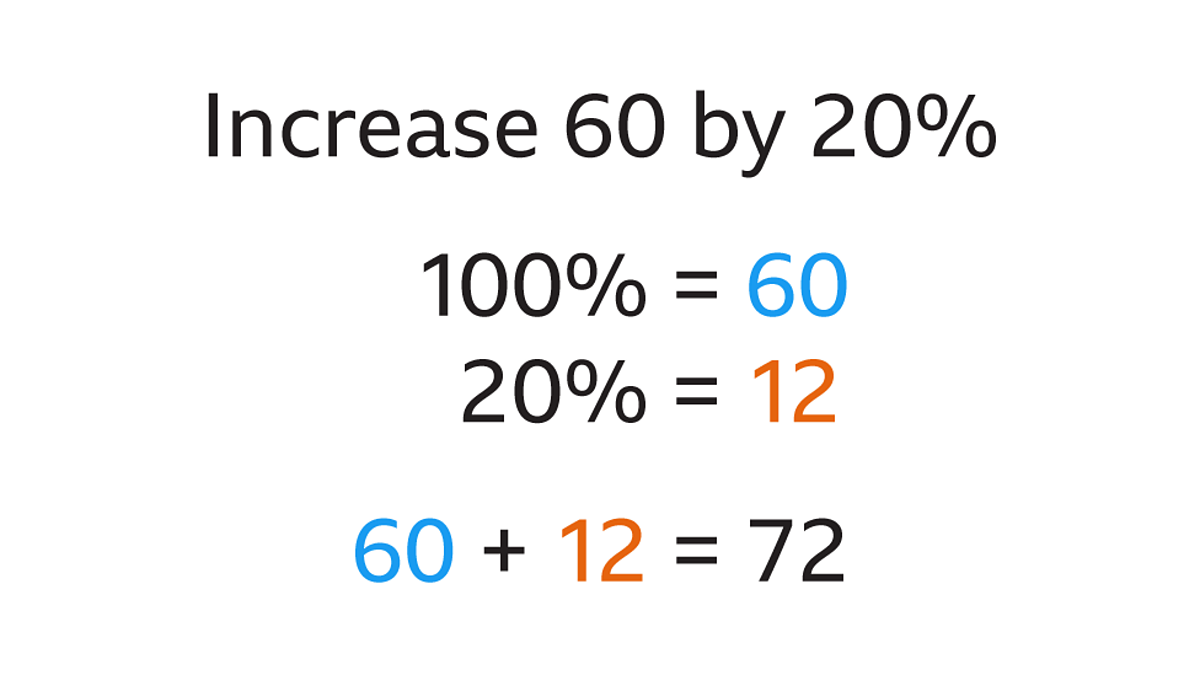
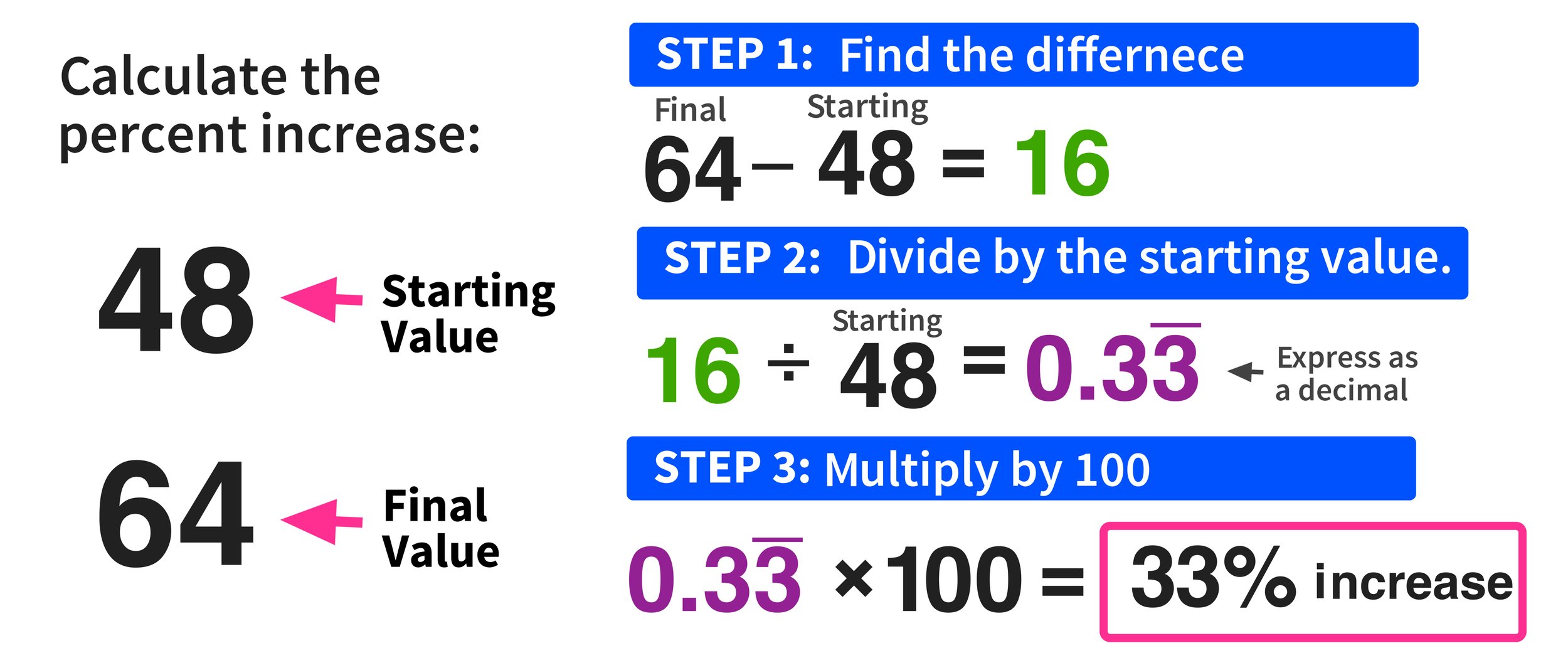
The formula for percentage increase is universal. To find the percentage increase, you follow three specific steps:
- Subtract the original value (the starting point) from the new value (the current point) to find the “increase” or “delta.”
- Divide that increase by the original value.
- Multiply the resulting decimal by 100 to convert it into a percentage.
Mathematically, it looks like this:
Percentage Increase = [(New Value – Original Value) / Original Value] * 100
For example, if you purchased a share of a technology company for $200 and its value rose to $250, your calculation would be:
($250 – $200) / $200 = 50 / 200 = 0.25.
Multiplying by 100 gives you a 25% increase.
Understanding Positive vs. Negative Change
In the financial world, “increase” is the goal, but “change” is the reality. It is vital to distinguish between a percentage increase and a percentage decrease. If your calculation results in a negative number, you are looking at a percentage decrease (or a loss).
A common psychological trap for investors is failing to realize that a 50% decrease requires a 100% increase just to get back to the “break-even” point. If a stock drops from $100 to $50, that is a 50% drop. However, to get from $50 back to $100, the stock must increase by $50—which is 100% of its new $50 value. Mastering the math of percentage increase helps you understand the gravity of financial risks and the necessity of protecting your capital.
Percentage Increase in Personal Finance and Investing
For the individual investor, percentage increase is the primary metric for evaluating the “health” of wealth-building activities. Whether you are looking at your 401(k), a high-yield savings account, or a rental property, you are looking for a positive percentage change over time.
Calculating Return on Investment (ROI)
The most common application of percentage increase in “Money” is the Return on Investment (ROI). ROI tells you how efficiently your capital is working for you. If you invest $10,000 into a mutual fund and, after five years, the balance is $15,000, the percentage increase is 50%.
However, professional investors often look deeper. They use the percentage increase to compare different asset classes. If your real estate investment increased by 10% this year while the S&P 500 increased by 18%, the percentage increase calculation reveals that your capital might have been more productive elsewhere. By constantly determining the percentage increase of various assets, you can rebalance your portfolio to favor higher-growth opportunities.
Factoring in Inflation and Purchasing Power
A critical nuance in personal finance is the difference between “nominal” and “real” percentage increases. If your salary increases by 5% this year, but the cost of living (inflation) increases by 7%, your “real” percentage increase is actually a 2% decrease in purchasing power.
Understanding how to calculate percentage increase allows you to see through the “money illusion.” Savvy financial planners use these calculations to ensure that their clients’ wealth is not just growing in numerical terms, but growing at a rate that outpaces the rising costs of goods and services. If your savings account offers a 4% interest rate (a 4% annual percentage increase), but inflation is 5%, you are technically losing value every year.
Dividend Growth and Compound Interest
Percentage increase is also the engine behind compound interest—what Albert Einstein famously called the “eighth wonder of the world.” When you earn a percentage increase on an amount that has already increased, you are experiencing exponential growth.
For dividend investors, “Dividend Growth Rate” is a vital metric. It is the percentage increase in the dollar amount of dividends paid by a company over time. If a company paid $1.00 per share last year and $1.10 this year, that is a 10% dividend increase. Over decades, a consistent 10% annual increase in dividends can result in a massive yield on the original cost of the investment, illustrating how small percentage increases compound into significant wealth.

Business Finance: Tracking Growth and Performance
For business owners and financial analysts, the ability to determine percentage increase is essential for survival. It provides a standardized way to measure a company’s trajectory, regardless of its size.
Revenue and Profit Margin Increases
Revenue growth is often the first metric a business evaluates. If a startup generates $500,000 in its first year and $1.2 million in its second, the 140% increase suggests a strong product-market fit.
However, revenue is only half the story. High-level financial management requires looking at the percentage increase in profit margins. If revenue increases by 50% but operating expenses increase by 70%, the business is actually becoming less efficient. By calculating the percentage increase of both the “top line” (revenue) and the “bottom line” (net income), executives can identify where costs are spiraling out of control and where the business is most profitable.
Year-over-Year (YoY) Analysis
In corporate finance, the most standard way to report growth is Year-over-Year (YoY). This involves comparing the financial results of one period (like Q3 2023) with the same period in the previous year (Q3 2022).
Using YoY percentage increases helps eliminate “seasonality.” For example, a retail business will almost always see a massive increase in sales in December compared to November. Comparing December to November doesn’t tell you much about the health of the business. However, comparing December 2023 to December 2022 tells you exactly how much the business has grown relative to its historical performance during the same peak season.
Customer Acquisition and Scalability Metrics
For modern digital businesses and SaaS (Software as a Service) companies, percentage increase is used to measure scalability. Key Performance Indicators (KPIs) like Monthly Recurring Revenue (MRR) and User Growth are tracked via percentage change.
If a subscription service increases its user base from 10,000 to 11,000 in one month, that is a 10% Month-over-Month (MoM) increase. If they can maintain that 10% increase every month, the business will grow at an compounding rate, making it highly attractive to investors. Entrepreneurs use these percentages to pitch to Venture Capitalists, demonstrating that their business model has the momentum required for a high-value exit or IPO.
Common Pitfalls and Advanced Financial Contexts
While the math is simple, the interpretation of percentage increase can be deceptive. Professional financial analysts must look beyond the raw percentage to see the underlying reality.
The Danger of Low Base Effects
One of the most common ways statistics are manipulated in business is through the “low base effect.” If a company sells 1 unit last year and 10 units this year, that is a staggering 900% increase. While technically true, the percentage increase is exaggerated because the starting point was so small.
Conversely, a massive corporation like Apple increasing its revenue by 5% might represent billions of dollars in new cash flow—far more significant than a small company’s 900% increase. When evaluating “Money” opportunities, always consider the absolute dollar amount alongside the percentage increase to get a true sense of scale.
Percentage Points vs. Percentages
In the world of interest rates and banking, there is a crucial distinction between a “percentage increase” and “percentage points.”
If the central bank raises interest rates from 3% to 4%, that is an increase of one percentage point. However, in terms of the percentage increase of the rate itself, it is a 33.3% increase [(4-3)/3]. This distinction is vital when calculating mortgage costs or bond yields. Confusing the two can lead to massive errors in financial forecasting.
Real-World Scenarios and Spreadsheet Automation
In a modern financial environment, you don’t always need a handheld calculator to determine percentage increase. Tools like Microsoft Excel or Google Sheets are the industry standards for these calculations.
The formula used in these programs is usually: =(New_Cell - Old_Cell) / Old_Cell. By formatting the cell as a “Percentage,” the software handles the “multiply by 100” step for you. This allows business owners to build dashboards that automatically track growth across hundreds of different product lines or expense categories in real-time.
By mastering how to determine and interpret percentage increase, you gain more than just a mathematical tool; you gain a lens through which to view your entire financial life. Whether you are negotiating a salary raise, evaluating a stock, or scaling a global enterprise, the percentage increase is the ultimate metric of progress. It transforms raw data into actionable intelligence, ensuring that every dollar you earn, save, or invest is moving in the right direction.
aViewFromTheCave is a participant in the Amazon Services LLC Associates Program, an affiliate advertising program designed to provide a means for sites to earn advertising fees by advertising and linking to Amazon.com. Amazon, the Amazon logo, AmazonSupply, and the AmazonSupply logo are trademarks of Amazon.com, Inc. or its affiliates. As an Amazon Associate we earn affiliate commissions from qualifying purchases.