
Understanding how your Social Security benefits are calculated is a crucial step in effective retirement planning. For many Americans, Social Security represents a significant, if not primary, source of income in their later years. Yet, the precise methodology used by the Social Security Administration (SSA) can seem like a labyrinth of percentages, indexing, and age-related adjustments. Far from being a simple, one-size-fits-all equation, your benefit amount is a highly personalized figure, intricately tied to your unique work history and claiming decisions.
This guide aims to demystify the calculation process, breaking it down into understandable components. We’ll explore the core concepts that dictate your monthly payout, from your earnings record to the pivotal role of your claiming age, and highlight practical steps you can take to estimate and potentially optimize your future benefits. By grasping these fundamentals, you empower yourself to make informed decisions that can profoundly impact your financial well-being throughout retirement.

Understanding the Foundation: Your Earnings Record
The bedrock of your Social Security benefit calculation is your lifetime earnings record. The more you’ve earned and paid into the system through FICA taxes (Federal Insurance Contributions Act), the higher your potential benefit. However, it’s not simply a raw tally of every dollar earned; the SSA uses a specific method to assess your contribution.
What is AIME? (Average Indexed Monthly Earnings)
The most critical figure derived from your earnings record is your Average Indexed Monthly Earnings (AIME). This isn’t just a simple average; it’s a sophisticated calculation designed to reflect your lifetime earnings in a way that accounts for wage inflation over time. Here’s how it generally works:
- Identify Your Highest Earning Years: The SSA takes your highest 35 years of earnings from your entire work history. If you have fewer than 35 years of earnings, the missing years are counted as zeros, which will lower your AIME. This underscores the importance of a long and consistent work history.
- Index Your Earnings: Before averaging, most of your past earnings are “indexed.” This means your earnings from prior years are adjusted to reflect the general increase in wages and living standards since those years. For example, $10,000 earned in 1980 had a different purchasing power than $10,000 today. Indexing brings those past earnings into current dollar terms, making them comparable across different decades. This indexing applies up to the year you turn age 60. Earnings after age 60 are typically counted at their nominal (actual) value.
- Calculate the Average: Once indexed, the total indexed earnings from your highest 35 years are summed up and then divided by 420 (which is 35 years x 12 months) to arrive at your Average Indexed Monthly Earnings (AIME). This AIME is the foundation upon which your Primary Insurance Amount (PIA) is built.
Understanding your AIME is crucial because it directly feeds into the calculation of your Primary Insurance Amount, which we’ll discuss next. A higher AIME generally translates to a higher benefit.
The Importance of a Complete Work History
As highlighted above, having fewer than 35 years of earnings will result in years of zero earnings being included in your AIME calculation, significantly lowering your overall average. This is particularly relevant for individuals who:
- Took extended breaks from the workforce (e.g., for childcare, education, or career changes).
- Worked part-time for many years.
- Immigrated to the U.S. later in life.
It’s vital to regularly check your Social Security earnings record for accuracy. You can do this by creating an account on the SSA website (ssa.gov). Mistakes, though rare, can happen, such as employers misreporting earnings or administrative errors. Correcting these errors early can ensure that your future benefits are accurately calculated based on your actual contributions.
The Primary Insurance Amount (PIA): Your Core Benefit
Once your Average Indexed Monthly Earnings (AIME) are determined, the SSA uses a progressive formula to calculate your Primary Insurance Amount (PIA). The PIA is the benefit amount you would receive if you began collecting Social Security benefits at your Full Retirement Age (FRA). It’s essentially your “base” monthly benefit, before any adjustments for claiming early or late, or for other factors like spousal benefits.
PIA Formula: Bend Points Explained
The PIA formula is progressive, meaning it replaces a higher percentage of earnings for lower-income workers than for higher-income workers. This is achieved through what are called “bend points.” These bend points are specific dollar amounts for AIME that divide your earnings into three tiers. A different percentage is applied to the earnings within each tier:
- 90% of the first segment of AIME: A high percentage applies to the lowest tier of your indexed earnings. This ensures a decent safety net for those with lower lifetime incomes.
- 32% of the next segment of AIME: A moderate percentage applies to the middle tier of your indexed earnings.
- 15% of the highest segment of AIME: A smaller percentage applies to the highest tier of your indexed earnings, up to the maximum taxable earnings limit for Social Security.
These bend points are adjusted annually based on national average wage index changes, ensuring the formula remains relevant over time. For example, in 2024, the bend points are $1,174 and $7,078. This means:
- You get 90% of your AIME up to $1,174.
- You get 32% of your AIME between $1,174 and $7,078.
- You get 15% of your AIME above $7,078.
Let’s say your AIME is $4,000. Your PIA would be calculated as:
- 90% of $1,174 = $1,056.60
- 32% of ($4,000 – $1,174) = 32% of $2,826 = $904.32
- Total PIA = $1,056.60 + $904.32 = $1,960.92 (This is a simplified example; actual calculation can be more nuanced).
This progressive structure is a hallmark of the Social Security system, designed to provide a more significant income replacement ratio for lower earners.
Factors Affecting Your PIA
Ultimately, your PIA is primarily a function of two key elements:
- Your indexed lifetime earnings: As discussed with AIME, higher and more consistent earnings over 35 years lead to a higher PIA.
- The annual bend points: These adjust over time, slightly altering the PIA calculation from year to year.
It’s important to remember that your PIA is a fixed amount based on these factors at your Full Retirement Age. Your actual monthly benefit will then be adjusted based on when you choose to start receiving payments.
When to Claim: Impact on Your Monthly Benefit
While your AIME and PIA form the core of your benefit, the single most impactful decision you make regarding your Social Security is when you choose to start collecting benefits. This decision can permanently alter your monthly payout by hundreds of dollars and profoundly influence your total lifetime benefits.
Full Retirement Age (FRA)
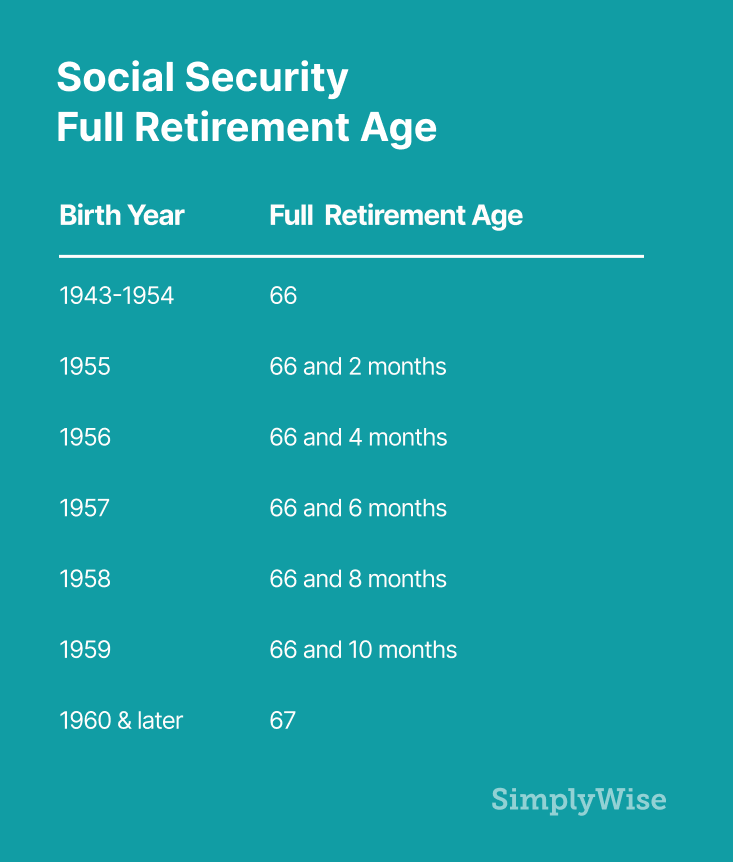
Your Full Retirement Age (FRA) is the age at which you are entitled to receive 100% of your Primary Insurance Amount (PIA). This age is not universal; it depends on your birth year. For those born in 1943 through 1954, FRA is 66. For those born between 1955 and 1959, FRA gradually increases by a few months each year until it reaches 67 for those born in 1960 or later. Knowing your specific FRA is critical for strategic claiming.
Claiming Early: Reductions
You can elect to start receiving Social Security benefits as early as age 62. However, choosing to claim before your FRA results in a permanent reduction of your monthly benefit. The reduction is applied for each month you claim early, meaning the earlier you claim, the greater the reduction.
- Standard Reduction: If your FRA is 67, claiming at age 62 will reduce your monthly benefit by about 30%. This is because you will receive more payments over a longer period, so each individual payment is smaller to compensate.
- Calculation: The reduction is typically 5/9 of 1% for each of the first 36 months before FRA, and 5/12 of 1% for each additional month. These percentages compound to create a significant permanent reduction. For instance, if your PIA is $2,000 and your FRA is 67, claiming at 62 would reduce your monthly benefit to approximately $1,400.
While claiming early means receiving benefits sooner, it also means a permanently lower monthly income. This strategy might be considered by individuals with pressing financial needs, those in poor health with a shortened life expectancy, or those who simply prefer to have the income earlier, even if reduced.
Claiming Late: Delayed Retirement Credits (DRCs)
Conversely, you can delay claiming Social Security benefits beyond your FRA. For each year you defer claiming past your FRA, up to age 70, you earn Delayed Retirement Credits (DRCs). These credits permanently increase your monthly benefit.
- Annual Increase: DRCs increase your annual benefit by 8% per year (or 2/3 of 1% for each month) you delay past your FRA, up to age 70.
- Maximizing Benefits: If your FRA is 67, and you delay claiming until age 70, you will receive an additional 24% on top of your PIA (3 years x 8% per year). Using the previous example of a $2,000 PIA, waiting until 70 would increase your monthly benefit to $2,480.
Delaying benefits is often a powerful strategy for maximizing your monthly income, especially if you expect to live a long life, have other income sources to support you in the interim, or wish to provide a higher survivor benefit for a spouse. It acts as a significant hedge against longevity risk.
Other Factors Influencing Your Social Security Payments
While your earnings record and claiming age are paramount, several other factors can affect your Social Security payments, both in terms of eligibility and the final amount you receive.
Spousal and Survivor Benefits
Social Security isn’t just for primary workers; it also provides crucial protections for families:
- Spousal Benefits: If you are married, your spouse may be eligible to receive benefits based on your earnings record, even if they never worked or had low earnings. A spouse can receive up to 50% of your PIA (if they claim at their FRA). If they claim early, their spousal benefit will also be reduced. Importantly, claiming a spousal benefit does not reduce the primary worker’s benefit.
- Survivor Benefits: In the event of your death, certain family members (e.g., a surviving spouse, minor children, or dependent parents) may be eligible for survivor benefits. A surviving spouse can receive up to 100% of your benefit (if they claim at their FRA, or a reduced amount if claimed earlier), while other beneficiaries have different percentages. These benefits provide a critical financial lifeline during a difficult time.
Taxation of Benefits
A significant consideration for many retirees is that Social Security benefits can be subject to federal income tax. Whether and how much of your benefits are taxed depends on your “provisional income,” which is calculated as: Adjusted Gross Income (AGI) + nontaxable interest + one-half of your Social Security benefits.
- Thresholds:
- If your provisional income is between $25,000 and $34,000 (for individuals) or between $32,000 and $44,000 (for those filing jointly), up to 50% of your benefits may be taxable.
- If your provisional income is above $34,000 (for individuals) or $44,000 (for those filing jointly), up to 85% of your benefits may be taxable.
Understanding these thresholds is vital for tax planning in retirement, as drawing from other retirement accounts (like 401(k)s or IRAs) can push your provisional income into taxable territory.
The Earnings Test (for those claiming before FRA while still working)
If you claim Social Security benefits before your Full Retirement Age (FRA) and continue to work, your benefits may be temporarily reduced or withheld if your earnings exceed certain annual limits. This is known as the “earnings test.”
- Before Year of FRA: For those under FRA, the SSA will deduct $1 from your benefits for every $2 you earn above a specific annual limit (e.g., $22,320 in 2024).
- Year of FRA: In the year you reach your FRA, the deduction rate is more lenient: $1 for every $3 earned above a higher annual limit (e.g., $59,520 in 2024), but only for earnings before the month you reach FRA.
- At or After FRA: Once you reach your FRA, the earnings test no longer applies, and you can earn any amount without your Social Security benefits being reduced.
It’s important to note that any benefits withheld due to the earnings test are not permanently lost. When you reach your FRA, your future monthly benefits are recalculated to give you credit for those withheld amounts, essentially increasing your PIA slightly.
Practical Steps to Estimate Your Benefits
While the intricacies of Social Security calculations can seem daunting, the SSA provides user-friendly tools to help you understand and estimate your potential benefits.
Utilizing the SSA Website and Online Account
The most direct and reliable way to estimate your Social Security benefits is through the official Social Security Administration website (ssa.gov).
- Create Your Online Account: If you haven’t already, create a “my Social Security” account. This secure online portal is your gateway to your personal Social Security information.
- Access Your Earnings Record: Your online account allows you to review your complete earnings history as reported to the SSA. This is crucial for verifying accuracy and understanding the foundation of your benefits.
- View Your Social Security Statement: Your statement provides personalized estimates of your retirement, disability, and survivor benefits at various claiming ages (early, full, and delayed). These estimates are based on your actual earnings record.
- Use Their Retirement Estimators: The SSA website also hosts various online calculators and estimators. These tools allow you to model different scenarios, such as the impact of claiming at different ages, or how future earnings projections might affect your benefit. This interactive capability is invaluable for planning.

Consulting Financial Professionals
For a more comprehensive and personalized approach, especially when integrating Social Security into a broader retirement strategy, consulting a qualified financial professional is highly recommended.
- Holistic Planning: A financial advisor can help you understand how Social Security fits into your overall financial picture, considering other income sources (pensions, 401(k)s, IRAs), investments, tax implications, and healthcare costs.
- Strategic Claiming Advice: They can offer tailored advice on the optimal claiming strategy for your unique circumstances, taking into account factors like your health, marital status, spousal benefits, desired retirement lifestyle, and longevity expectations.
- Tax Optimization: Financial planners can also help you develop strategies to minimize the taxation of your Social Security benefits and other retirement income.
Understanding how your Social Security benefits are calculated is not just an academic exercise; it’s a critical component of securing your financial future. By familiarizing yourself with your earnings record, the PIA formula, and the significant impact of your claiming age, you gain the knowledge to make informed decisions. Leveraging the SSA’s online tools and, when necessary, seeking professional guidance, can empower you to maximize this vital retirement income stream and build a more secure financial foundation for your golden years. Proactive planning today directly translates to greater peace of mind tomorrow.
aViewFromTheCave is a participant in the Amazon Services LLC Associates Program, an affiliate advertising program designed to provide a means for sites to earn advertising fees by advertising and linking to Amazon.com. Amazon, the Amazon logo, AmazonSupply, and the AmazonSupply logo are trademarks of Amazon.com, Inc. or its affiliates. As an Amazon Associate we earn affiliate commissions from qualifying purchases.