
Understanding your yearly income is the cornerstone of effective personal finance. Whether you are applying for a mortgage, planning a rigorous household budget, or setting goals for your next career move, having a precise grasp of your annual earnings is essential. While the question “how do I calculate my yearly income” might seem straightforward, the answer varies significantly depending on your employment structure, your tax situation, and the various streams of revenue you may possess.
To achieve financial clarity, you must look beyond the simple number printed on a pay stub. This guide explores the multifaceted nature of annual income, providing you with the methodologies needed to calculate your gross and net earnings across various professional scenarios.
1. Defining the Core Metrics: Gross vs. Net Annual Income
Before diving into the mathematical formulas, it is vital to distinguish between two primary figures: gross income and net income. These two numbers serve different purposes in your financial life, and confusing them can lead to significant errors in budgeting or tax planning.
Understanding Gross Annual Income
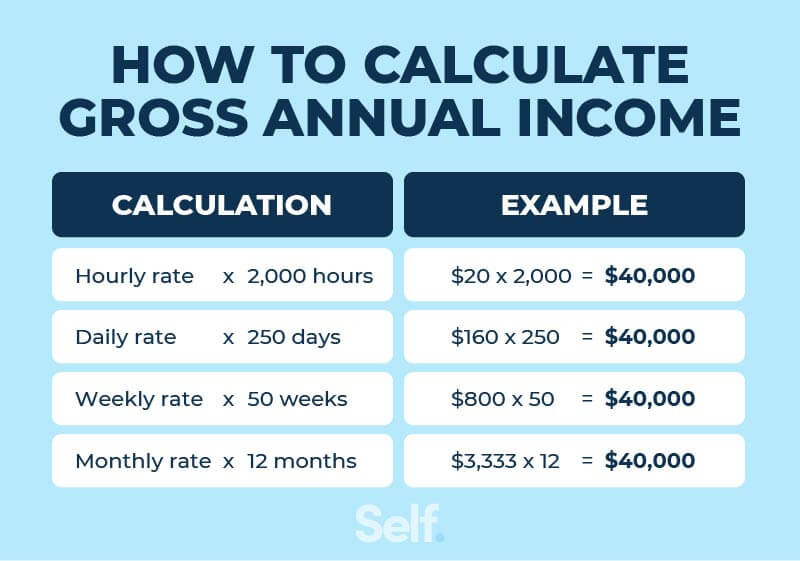
Gross annual income is the total amount of money you earn in a calendar year before any taxes or deductions are removed. For salaried employees, this is often the “sticker price” of their employment contract. If a job offer states a salary of $85,000, that is your gross annual income. For hourly workers, it is the sum of all hourly wages, overtime, and bonuses.
Lenders and creditors almost always look at your gross income. When you apply for a car loan or a rental agreement, the “debt-to-income” ratio is calculated based on this pre-tax figure. It represents your total earning power in the eyes of the economy.
The Reality of Net Annual Income
Net annual income, commonly referred to as “take-home pay,” is the amount of money that actually lands in your bank account. This is the figure that dictates your lifestyle and your ability to save. To find this number, you must subtract all mandatory and voluntary deductions from your gross income.
Mandatory deductions typically include federal, state, and local income taxes, as well as Social Security and Medicare contributions (FICA). Voluntary deductions might include health insurance premiums, 401(k) or 403(b) retirement contributions, and life insurance payments. Calculating your net income is essential for day-to-day survival; it ensures that your monthly expenses never exceed what you actually receive.
2. Calculation Methodologies for Different Employment Types
The process for calculating your income depends heavily on how you are compensated. A salaried executive, an hourly retail worker, and a freelance graphic designer will all use different approaches to reach their final yearly total.
Calculating Income for Salaried Employees
For those on a fixed salary, the calculation is the most straightforward. However, you must still account for the frequency of your pay periods to understand your cash flow.
- Weekly: Multiply your gross weekly check by 52.
- Bi-weekly: Multiply your gross check by 26.
- Semi-monthly: Multiply your gross check by 24.
To find your net yearly income as a salaried worker, the most efficient method is to look at your year-end pay stub, which lists “Year-to-Date” (YTD) totals for both earnings and deductions. If you are projecting for the future, subtract your estimated tax bracket and benefit costs from your base salary.
The Hourly Formula and the “2,080” Rule
Hourly employees face more variability due to fluctuating schedules. The standard baseline for a full-time employee working 40 hours per week is 2,080 hours per year (40 hours x 52 weeks).
If you earn $30 per hour and work a consistent full-time schedule, your calculation would be:
$30 x 40 hours x 52 weeks = $62,400.
However, you must also factor in overtime. In many regions, overtime is paid at 1.5 times the base rate for any hours worked over 40 in a week. To calculate this accurately, review your previous six months of work history to find an average of overtime hours worked and add that projected sum to your base 2,080-hour calculation.
Navigating Self-Employment and Variable Income
For freelancers, contractors, and business owners, calculating yearly income is more complex because it involves “Net Profit” rather than just “Revenue.” If you are self-employed, your yearly income is your total business revenue minus your business expenses (such as software, office space, and equipment).

Because variable income changes monthly, the best practice is to use a “rolling average.” Add up your total earnings from the last 12 months to find your current annual rate. If you are a new business owner, you may need to project your income by looking at signed contracts and historical seasonal trends in your industry.
3. Factoring in Bonuses, Commissions, and Side Hustles
In the modern economy, many individuals do not rely on a single paycheck. To get a true picture of your yearly income, you must aggregate all secondary streams of revenue, which are often taxed differently or arrive at irregular intervals.
Bonuses and Performance Incentives
Bonuses can represent a significant portion of a professional’s annual compensation, particularly in finance, sales, and tech. When calculating your yearly income, distinguish between “guaranteed” bonuses and “discretionary” bonuses.
A guaranteed bonus (such as a sign-on bonus) should be included in your yearly projection. Discretionary bonuses, which depend on company performance or individual KPIs, should be treated with caution. For conservative budgeting, it is often wise to exclude discretionary bonuses from your net income calculations and treat them as “windfall” savings when they arrive.
The Impact of Commissions and Tips
For professionals in real estate, sales, or the service industry, commissions and tips are the primary drivers of income. The most accurate way to calculate this is to look at a two-year average. This accounts for the “peaks and valleys” of the market. If you earned $40,000 in commissions last year and $60,000 this year, your projected yearly income for the upcoming year should be estimated at the $50,000 midpoint for safety.
Incorporating Side Hustles and Passive Income
The rise of the “side hustle” means many people have income from platforms like Uber, Etsy, or Airbnb. Additionally, you may have passive income from dividend-paying stocks or rental properties.
- Side Hustles: Track these using dedicated accounting software. Remember that as an independent contractor (1099), you are responsible for the employer’s portion of Social Security and Medicare taxes, which effectively reduces your net income.
- Passive Income: Include interest from high-yield savings accounts and dividends. While these may seem small month-to-month, they can contribute thousands of dollars to your total yearly gross income.
4. Advanced Considerations: Total Compensation and Taxes
When calculating your income for the purpose of long-term wealth building, you should consider “Total Compensation.” This goes beyond the cash in your pocket and includes the total value your employer provides.
The Value of Benefits and RSUs
Many modern corporations offer Restricted Stock Units (RSUs) or stock options. These are a form of income that “vests” over time. To calculate your yearly income in a high-growth tech environment, you must include the market value of the stocks that vest within that calendar year.
Furthermore, consider the “employer match” on your 401(k). If your employer matches 5% of your salary, that is essentially a 5% increase in your yearly gross income that is being redirected into an investment vehicle. While you can’t spend it today, it is a vital part of your annual financial growth.
The Importance of Tax Brackets
As your yearly income increases, you may move into a higher tax bracket. In a progressive tax system, only the income within a specific range is taxed at the higher rate. However, a higher gross income doesn’t always mean a proportional increase in net income. By understanding your “Effective Tax Rate”—the actual percentage of your total income that goes to the government—you can more accurately predict your take-home pay for the following year.
5. Tools and Strategies for Annual Income Tracking
To maintain an accurate view of your yearly income, you should move away from mental math and toward systematic tracking. This ensures that you are prepared for tax season and can make informed decisions about large purchases.
Leveraging Financial Software and Spreadsheets
Automation is the friend of financial clarity. Tools like Mint, YNAB (You Need A Budget), or specialized freelance software like QuickBooks can automatically categorize your income streams. For those who prefer a manual touch, a simple Excel or Google Sheets document remains the gold standard. Create columns for:
- Source of Income
- Gross Amount
- Tax Withheld
- Retirement/Insurance Deductions
- Net Amount
Conducting a Mid-Year Financial Audit
Calculating your income shouldn’t be a once-a-year event during tax season. Conduct a “Mid-Year Audit” every July. Compare your actual earnings for the first six months against your initial projections. This allows you to adjust your tax withholdings if you are earning more than expected, preventing a massive tax bill in April. It also helps you recalibrate your savings goals if your income has dipped.

Conclusion: The Power of the Number
Knowing how to calculate your yearly income is about more than just satisfying a bank’s requirement; it is about taking agency over your financial future. When you know exactly what you earn—down to the dollar—you can optimize your tax strategy, maximize your investments, and negotiate your next salary with confidence. Whether you are a salaried professional or a multi-passionate entrepreneur, the clarity provided by an accurate annual income calculation is the first step toward lasting financial independence.
aViewFromTheCave is a participant in the Amazon Services LLC Associates Program, an affiliate advertising program designed to provide a means for sites to earn advertising fees by advertising and linking to Amazon.com. Amazon, the Amazon logo, AmazonSupply, and the AmazonSupply logo are trademarks of Amazon.com, Inc. or its affiliates. As an Amazon Associate we earn affiliate commissions from qualifying purchases.