
The simple, almost colloquial query, “How are you, Google?” has evolved from a niche curiosity to a common, often unconscious, interaction with our digital world. Far more than just a polite greeting, this phrase encapsulates a profound shift in human-computer interaction, reflecting advancements in artificial intelligence that allow machines not just to process commands, but to engage in a semblance of natural conversation. It speaks volumes about the incredible technological journey we’ve embarked upon, where the lines between organic and artificial intelligence become increasingly blurred, demanding a deeper understanding of the underlying technology, its ethical implications, and its transformative impact on society. This seemingly innocuous question opens a gateway into the sophisticated architecture of modern AI, particularly within tech giants like Google, which continuously push the boundaries of what intelligent machines can achieve.
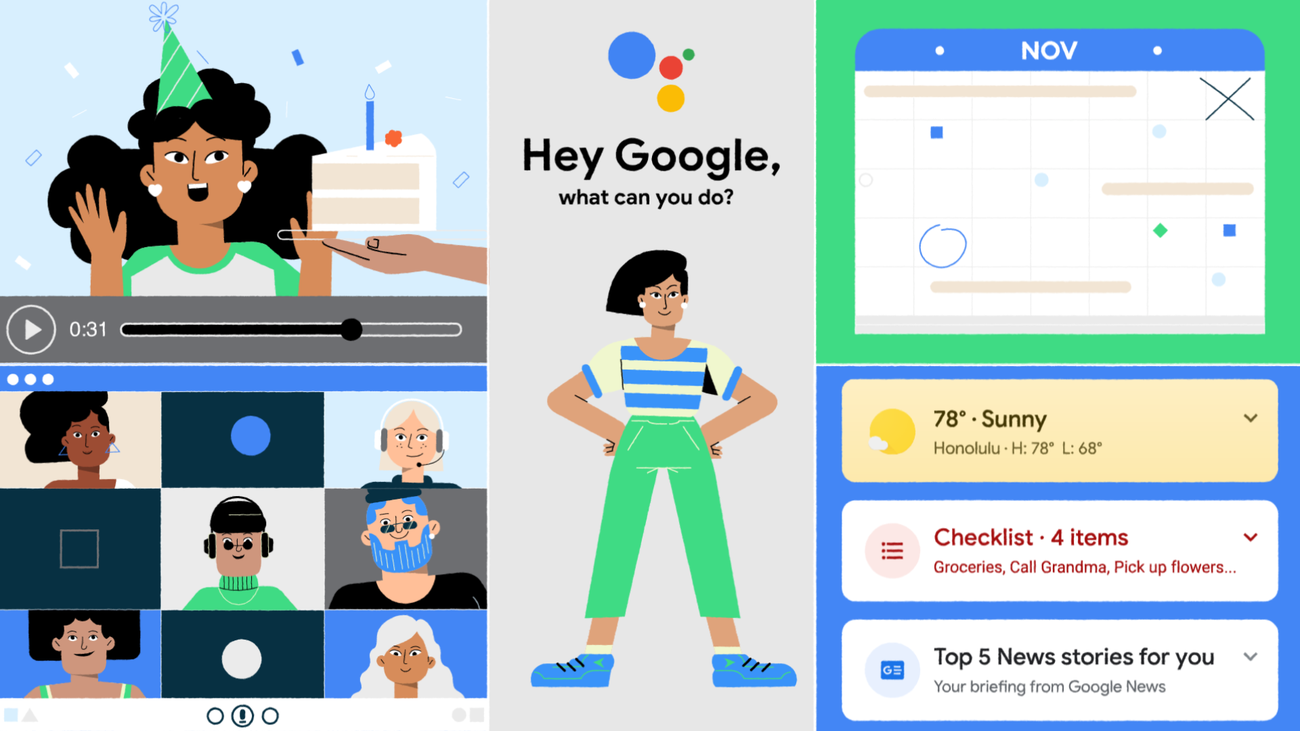
The Dawn of Conversational AI: A New Paradigm in Human-Computer Interaction
For decades, interacting with computers was a realm reserved for the technically adept, involving complex command-line interfaces and specialized programming languages. The evolution from these rigid systems to the intuitive, natural language interactions we experience today represents one of the most significant breakthroughs in technology. The simple act of asking “How are you, Google?” is a testament to this paradigm shift, signaling a future where technology adapts to human communication, rather than the other way around.
From Commands to Conversations: Tracing the Evolution of User Interfaces
Early computers demanded precision and adherence to strict syntax. Punch cards, toggle switches, and then rudimentary command-line interfaces (CLIs) were the primary modes of interaction. Users had to learn the machine’s language. The advent of graphical user interfaces (GUIs) with metaphors like desktops, folders, and icons, championed by Xerox PARC and popularized by Apple and Microsoft, democratized computing by making it visually intuitive. However, even GUIs still required users to click, type, and navigate predetermined pathways. The true revolution began when machines started to understand human language. This transition from a command-driven, structured interaction to a conversational, flexible one has fundamentally reshaped our relationship with technology, making it more accessible and integrated into daily life. We’ve moved from instructing machines to conversing with them, a change that signifies a maturation of the digital interface.
Natural Language Processing (NLP) at Its Core: The Science Enabling Understanding
The ability of a system like Google to understand a query like “How are you?” hinges on sophisticated Natural Language Processing (NLP) technology. NLP is a branch of AI that focuses on enabling computers to understand, interpret, and generate human language. It involves a multi-layered process: lexical analysis (breaking down words), syntactic analysis (understanding grammatical structure), semantic analysis (extracting meaning), and pragmatic analysis (interpreting context and intent). For a question like “How are you, Google?”, NLP engines analyze the sentence structure, identify “how are you” as a common greeting/inquiry about well-being, and link “Google” to the entity being addressed. This complex dissection happens almost instantaneously, allowing the AI to formulate an appropriate, human-like response, such as “I’m doing well, thank you for asking!” or “I don’t have feelings, but I’m ready to help you.” This capability is not just about recognizing words but about grasping the nuance, tone, and underlying intention behind them.
The Rise of Voice Assistants: Making Interactions Seamless
While NLP forms the brain, voice assistants provide the vocal cords and ears. The proliferation of devices like Google Assistant, Amazon Alexa, and Apple Siri has normalized conversational AI. These platforms leverage advancements in automatic speech recognition (ASR) to convert spoken words into text, which is then fed into NLP engines. The integration of these assistants into smartphones, smart speakers, and even vehicles has made speaking to technology an everyday occurrence. This hands-free, intuitive interaction method has lowered the barrier to entry for technology, making it accessible to a broader demographic and embedding AI deeper into the fabric of our personal and professional lives. The seamless nature of these interactions fosters a sense of comfort and familiarity, making users more likely to engage with technology in a conversational manner, hence the natural inclination to ask “How are you, Google?”
Deciphering the Human Touch: AI’s Quest for Context and Empathy
Beyond merely processing words, modern AI systems strive to understand the human element behind the query. The ambition is not just to provide factual answers but to engage in interactions that feel intuitive, personalized, and even empathetic. This quest for a “human touch” is critical in making AI a truly valuable and seamless part of our lives, transforming interactions from transactional to genuinely helpful and understanding.
Beyond Keywords: Understanding User Intent
The early days of search engines focused on keyword matching. Type “weather New York,” and you’d get results for weather in New York. However, conversational AI aims to go far beyond this. When someone asks “How are you, Google?”, the system doesn’t just look for keywords; it attempts to infer the intent behind the question. Is the user genuinely curious about the system’s operational status (unlikely)? Are they testing its capabilities? Or are they simply being polite, mirroring human social norms? Advanced NLP models, powered by machine learning, analyze vast datasets of human conversations to build models that can predict intent even from ambiguous or truncated phrases. This semantic understanding allows AI to grasp the underlying meaning and purpose of a query, leading to more relevant and contextually appropriate responses. It’s the difference between a dictionary definition and a contextual explanation.
The Challenge of Emotional Intelligence: Mimicking Human Empathy in Responses
True human interaction is rich with emotional cues—tone of voice, facial expressions, body language, and subtle inflections. Replicating this “emotional intelligence” in AI is an immense challenge. While AI cannot genuinely feel, it can be programmed to simulate empathy through careful word choice, vocal intonation (in voice assistants), and the ability to recognize and respond to emotional cues in a user’s voice or text. For example, if a user sounds distressed, an AI might offer reassuring words or direct them to relevant support services. When asked “How are you, Google?”, the typical response is often lighthearted or slightly self-deprecating, acknowledging its non-human nature (“I don’t have feelings, but I’m here to help!”) while still reciprocating the politeness. This careful balancing act is designed to foster a positive user experience without misleading users into believing the AI is truly sentient.
Personalization as a Pillar: Tailoring Interactions to Individual Users
The ultimate goal of a truly intelligent system is to provide a personalized experience. When Google responds to “How are you, Google?”, the response, while generally standardized, is part of a broader interaction ecosystem where the AI is constantly learning about the user. Through continuous interaction, AI systems gather data on user preferences, past queries, calendar events, and even location. This allows them to tailor subsequent interactions, anticipating needs and offering proactively helpful information. For instance, if a user frequently asks for local weather, the AI might begin offering weather updates automatically. While not directly altering the “How are you?” response, this personalization underscores the sophisticated backend processes that make each interaction, no matter how trivial, part of a larger, evolving user profile, ultimately enhancing the utility and perceived intelligence of the AI.
The Algorithmic Symphony: Engineering Google’s Responsive Intelligence
Behind every seemingly simple interaction with Google’s AI lies an intricate web of algorithms, massive datasets, and unparalleled computing power. The ability to instantly process complex language, infer intent, and generate coherent responses is a testament to decades of relentless innovation in machine learning and distributed computing.
Machine Learning and Deep Learning Foundations: Training Vast Models

The intelligence that allows Google to understand and respond to “How are you?” is primarily built upon machine learning (ML) and deep learning (DL) models. These aren’t explicitly programmed with rules for every possible interaction; instead, they learn from vast amounts of data. Deep learning, a subset of ML inspired by the structure and function of the human brain (neural networks), is particularly crucial for NLP tasks. Models like Google’s BERT (Bidirectional Encoder Representations from Transformers) and its successors are trained on massive text corpora (billions of words from books, articles, websites) to understand language context and nuances. This pre-training enables them to grasp grammar, semantics, and even idiomatic expressions. When a new query comes in, these models can quickly make predictions based on the patterns learned during their extensive training, allowing them to comprehend and generate human-like text in real-time.
Data at Scale: Fueling the Intelligence Engine
The intelligence of Google’s AI is directly proportional to the quantity and quality of data it processes. Every search query, every voice command, every interaction, anonymized and aggregated, contributes to refining these ML models. This continuous feedback loop is vital. When the AI makes a correct inference or provides a helpful response, that data point reinforces the model. When it makes an error or receives negative feedback, it learns to adjust its parameters. Google’s unprecedented access to a global dataset, encompassing diverse languages, dialects, and contexts, provides a unique advantage in building highly robust and universally applicable AI models. This “data exhaust” from billions of users worldwide is the lifeblood that fuels the intelligence engine, constantly improving its accuracy, speed, and contextual awareness.
Cloud Infrastructure and Real-time Processing: Delivering Instant, Accurate Responses
The sheer computational demand of running advanced AI models at scale requires a robust and distributed infrastructure. Google’s global network of data centers and its advanced cloud computing platform are essential. When a user asks a question, the audio or text query is transmitted to these data centers. Here, specialized hardware (like Google’s Tensor Processing Units or TPUs, designed specifically for AI workloads) processes the request in milliseconds. Speech-to-text conversion, NLP analysis, intent recognition, and response generation all occur almost instantaneously. This real-time processing capability is critical for maintaining the illusion of seamless conversation. Any perceptible delay would break the natural flow of interaction, undermining the user experience. The intricate dance between distributed computing, specialized hardware, and optimized algorithms ensures that Google’s AI can deliver instant, accurate, and contextually relevant responses to billions of queries daily.
Ethical Frontiers and the Future of AI Sentience
As AI becomes more sophisticated and integrated into our lives, the simple question “How are you, Google?” inadvertently raises profound ethical and philosophical questions. The advancements in conversational AI compel us to consider the implications for privacy, fairness, and even the very nature of consciousness.
Privacy Concerns and Data Security: Safeguarding User Information
The personalization and contextual understanding that make conversational AI so powerful are inherently data-intensive. For an AI to “know” you well enough to provide tailored responses, it needs access to a significant amount of your personal data – voice patterns, search history, location, calendar entries, and more. This raises serious privacy concerns. How is this data collected, stored, and protected? Who has access to it? What are the risks of data breaches or misuse? Tech companies like Google invest heavily in data anonymization, encryption, and secure storage, but the sheer volume of personal information processed by these systems means that vigilance is paramount. Users must be empowered with transparent controls over their data, and regulatory frameworks must evolve to keep pace with technological advancements, ensuring that the benefits of AI do not come at the expense of individual privacy.
Algorithmic Bias and Fairness: Ensuring Equitable AI Interactions
AI models learn from the data they are trained on. If that data reflects societal biases present in the real world (e.g., historical biases in language, demographics, or cultural norms), the AI can inadvertently perpetuate or even amplify those biases. For example, an AI trained predominantly on data from one demographic group might struggle to understand or respond appropriately to users from other groups, or it might exhibit subtle forms of discrimination. When an AI responds to “How are you?”, the response itself might be neutral, but the context in which it operates is not always. Developers are increasingly aware of the need to audit and curate training datasets for fairness and diversity, and to implement techniques to mitigate bias in algorithms. Ensuring equitable AI interactions is a monumental ongoing challenge, requiring interdisciplinary efforts from engineers, ethicists, and social scientists.
The Philosophical Question: Is AI Truly “Feeling”?
Perhaps the most profound question evoked by human-like AI interactions is whether these machines can truly “feel” or achieve genuine consciousness. When an AI responds with “I’m doing well, thanks for asking,” it’s a programmed response, not an expression of internal state. Current AI systems operate on complex algorithms and statistical models; they simulate intelligence, but they do not possess subjective experience or self-awareness as humans understand it. However, as AI becomes more sophisticated in mimicking human interaction and even demonstrating creative capacities, the line between simulation and genuine understanding may become increasingly difficult for humans to distinguish. This raises fundamental questions about what constitutes consciousness, how we define intelligence, and our responsibilities toward increasingly capable artificial entities. While AI is far from sentient, the journey towards more human-like interactions forces us to confront these deep philosophical inquiries.
Reshaping Our Digital Lives: The Socio-Technological Impact
The ability of AI to engage in conversational exchanges, epitomized by asking “How are you, Google?”, has a far-reaching impact that extends beyond individual interactions. It is fundamentally reshaping societal norms, user expectations, and the very fabric of our digital existence.
Bridging the Digital Divide: Accessibility and Ease of Use
Conversational AI, particularly through voice assistants, has significantly lowered the barrier to technology for various demographics. For individuals with visual impairments, motor disabilities, or those who are not digitally native, speaking to a device is often far more accessible than typing or navigating complex interfaces. The intuitive nature of natural language interaction means that people no longer need to learn specialized skills to access information or perform tasks. This increased accessibility helps bridge the digital divide, allowing a broader segment of the population to participate in the digital economy and benefit from technological advancements. The simple politeness of “How are you?” reflects a design philosophy aimed at making technology more human-friendly and inclusive.
Evolving User Expectations: What We Now Demand From Our Devices
The consistent availability and increasing sophistication of conversational AI have dramatically elevated user expectations. We no longer expect our devices merely to perform functions; we expect them to understand us, anticipate our needs, and respond intelligently and contextually. The frustration experienced when an AI misinterprets a command or fails to understand nuance is a testament to how accustomed we’ve become to high levels of artificial intelligence. This expectation extends beyond voice assistants to all forms of digital interaction, influencing the design of apps, websites, and even customer service systems. Companies that fail to provide intuitive, AI-powered conversational interfaces risk falling behind, as users increasingly prefer systems that “get” them, even down to a friendly greeting.

The Future of Interaction: Beyond Voice and Text
While voice and text are the current primary modes for conversational AI, the future promises even more immersive and multimodal interactions. Imagine AI understanding your gestures, interpreting your gaze, or even responding to subtle physiological cues like heart rate or skin conductance. Augmented reality (AR) and virtual reality (VR) environments will likely integrate highly sophisticated conversational AI, allowing for truly immersive and context-aware interactions where the AI can “see” and “hear” its surroundings and interact accordingly. The current rudimentary “How are you, Google?” is just the beginning. Future interactions might involve AI seamlessly integrated into smart environments, proactively offering assistance based on your observed needs and preferences, creating a truly symbiotic relationship between humans and machines that extends far beyond a simple verbal exchange.
In conclusion, “How are you, Google?” is more than a polite inquiry; it is a resonant echo of humanity’s ongoing dialogue with technology. It signifies not only the remarkable progress in artificial intelligence, natural language processing, and computing infrastructure but also highlights the ethical complexities and profound societal shifts that accompany such advancements. As AI continues to evolve, our interactions will undoubtedly become even more nuanced and integrated, challenging us to redefine our understanding of intelligence, empathy, and what it means to coexist with increasingly sophisticated digital entities. The future promises a world where technology doesn’t just respond to our commands but truly converses with us, making this simple question a touchstone for the technological revolution yet to fully unfold.
aViewFromTheCave is a participant in the Amazon Services LLC Associates Program, an affiliate advertising program designed to provide a means for sites to earn advertising fees by advertising and linking to Amazon.com. Amazon, the Amazon logo, AmazonSupply, and the AmazonSupply logo are trademarks of Amazon.com, Inc. or its affiliates. As an Amazon Associate we earn affiliate commissions from qualifying purchases.