
The story of who created Microsoft is not merely a tale of two young men starting a business in a garage; it is the foundational narrative of the modern computing era. While the world now knows Microsoft as a trillion-dollar titan of software, cloud computing, and artificial intelligence, its origins lie in a singular, radical vision: a computer on every desk and in every home. To understand who created Microsoft is to understand the technical synergy between two childhood friends, Bill Gates and Paul Allen, whose combined expertise in software architecture and hardware potential sparked the personal computer revolution.
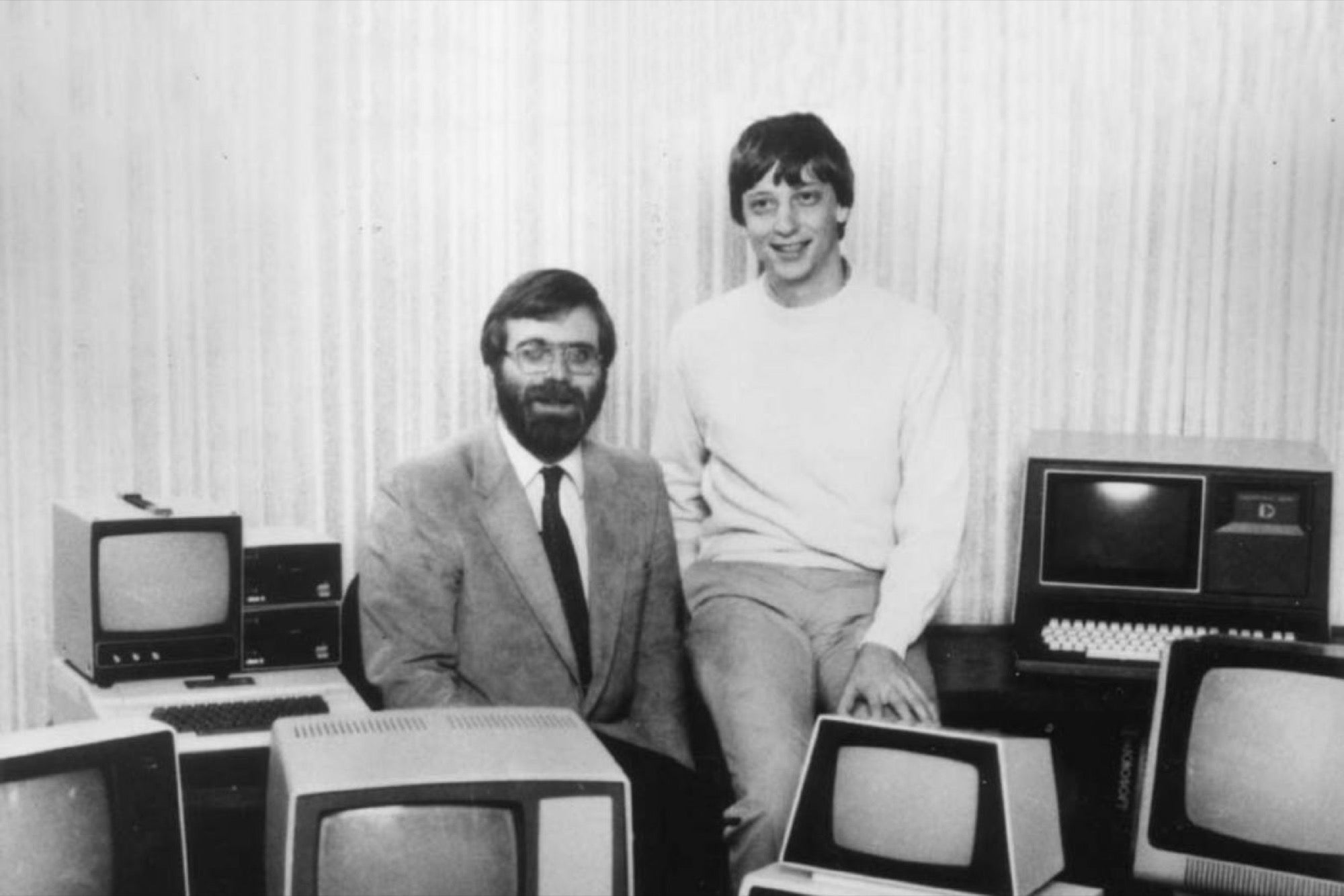
The Genesis of Microsoft: Bill Gates, Paul Allen, and the Altair 8800
The partnership that would eventually birth Microsoft began long before the company was officially registered. Bill Gates and Paul Allen met at Lakeside School in Seattle, where they spent their formative years obsessing over the school’s Teletype Model 33 ASR terminal. This early exposure to mainframe computers and the intricacies of machine code allowed them to develop a technical shorthand that most professional engineers of the 1960s lacked.
The Lakeside School Connection and Early Coding
Gates and Allen were prototypical “hackers” in the original sense of the word. They spent nights debugging systems for local companies in exchange for computer time. This period was crucial because it allowed them to master various programming languages and understand the limitations of hardware. While Gates was often seen as the aggressive business strategist, Allen was the visionary who kept his finger on the pulse of hardware evolution. It was this technical balance—Gates’s proficiency in optimizing code and Allen’s foresight regarding semiconductor trends—that made their partnership viable.
“Micro-Soft”: From New Mexico to the World
The definitive turning point occurred in December 1974. Paul Allen saw a cover of Popular Electronics magazine featuring the MITS Altair 8800, the world’s first successful microcomputer kit. He rushed to Gates, realizing that the “hardware revolution” had begun, and it desperately needed software to be useful.
The two contacted Ed Roberts, the creator of the Altair, claiming they had developed a BASIC (Beginners’ All-purpose Symbolic Instruction Code) interpreter for the machine. In reality, they hadn’t written a single line of code for the Altair’s Intel 8080 chip yet. Working feverishly at Harvard, Allen wrote a simulator for the Intel 8080 on a PDP-10 mainframe, while Gates wrote the actual BASIC interpreter. When Allen flew to Albuquerque to demonstrate the software, it worked on the very first try. This success led to the formation of “Micro-Soft” (a portmanteau of microcomputer and software) in 1975, initially headquartered in Albuquerque to be near MITS.
Engineering the Software Revolution: The MS-DOS Pivot
As Microsoft transitioned from a provider of programming languages to a platform company, the technical landscape of the 1980s shifted. The founders realized that the real power in the tech industry did not lie in the hardware itself, but in the Operating System (OS) that acted as the intermediary between the user and the silicon.
The IBM Partnership and the Licensing Paradigm
In 1980, IBM approached Microsoft to provide an operating system for their upcoming IBM PC. In a move that would define the software industry’s economic and technical structure for decades, Microsoft did not actually have an OS to sell. Instead, they purchased “Q-DOS” (Quick and Dirty Operating System) from Seattle Computer Products, refined it, and renamed it MS-DOS.
The technical genius of this move was not just in the code, but in the licensing agreement. Gates and Allen insisted on a non-exclusive license. This allowed Microsoft to license MS-DOS to other hardware manufacturers who were looking to “clone” the IBM PC. By maintaining control over the software layer while the hardware became a commodity, Microsoft ensured that their code would become the universal language of the office and the home.
Defining the Modern OS Interface
MS-DOS was a command-line interface, requiring users to type specific instructions to execute tasks. While technically robust, it was intimidating for the average consumer. The founders recognized that for computing to become truly ubiquitous, the technical barrier to entry had to be lowered. This realization set the stage for the development of a Graphical User Interface (GUI), a move that would eventually lead to the creation of Windows.

The Windows Era and the GUI Transformation
The transition from MS-DOS to Windows represented one of the most significant technical leaps in software history. It moved the computing experience from text-based instructions to visual metaphors: folders, trash cans, and windows.
Breaking the Command Line Barrier
Windows 1.0, released in 1985, was initially a graphical shell that ran on top of MS-DOS. It was an ambitious attempt to bring multitasking to the PC. Throughout the late 80s and early 90s, Microsoft’s engineering teams worked to refine the memory management and graphics rendering capabilities of the system. With the release of Windows 3.0 and 3.1, the software finally achieved the stability and aesthetic appeal required for mass adoption. This era saw Microsoft become the standard for “Interoperability”—the idea that software from different vendors could work together seamlessly within a single environment.
Windows 95: The Technical and Cultural Phenomenon
If the early versions of Windows were incremental steps, Windows 95 was a giant leap. It introduced the Start menu, the taskbar, and “Plug and Play” capabilities, which automated the installation of hardware drivers. Technically, it marked the transition from a 16-bit to a 32-bit architecture, allowing for more complex software and better performance. This release effectively ended the era of the specialized computer hobbyist and ushered in the era of the “user.” Microsoft’s ability to package complex system calls into a user-friendly interface became the blueprint for every modern operating system that followed.
Beyond Desktop: Modern Microsoft and the AI Frontier
The creators of Microsoft did not just build an OS; they built a legacy of adaptation. As the world moved away from local desktop computing toward distributed networks, Microsoft underwent a radical technical transformation, particularly under the leadership of Satya Nadella, who carried the founders’ torch into the 21st century.
Cloud Computing and the Azure Infrastructure
The shift to the “Cloud” represented a fundamental change in how software is deployed and consumed. Microsoft Azure, the company’s cloud computing platform, transformed Microsoft from a shrink-wrapped software vendor into a global utility provider. By building massive data centers across the globe, Microsoft allowed businesses to offload their computational needs to the cloud. This required a massive engineering effort in virtualization, cybersecurity, and global networking, proving that the company could innovate far beyond the confines of the Windows desktop.
The Integration of Generative AI and the Future of Productivity
Today, the spirit of innovation that led Gates and Allen to write BASIC for the Altair is directed toward Artificial Intelligence. Microsoft’s partnership with OpenAI and the integration of “Copilot” across its software suite marks the beginning of the “AI-first” era.
The technical goal is to move beyond the GUI to a “Natural Language Interface,” where the computer understands human intent. By embedding Large Language Models (LLMs) into Excel, Word, and Windows, Microsoft is once again redefining the relationship between humans and machines. The creator’s original vision—a computer on every desk—has evolved into an “intelligent assistant for every person,” powered by massive neural networks and hyperscale computing.

The Legacy of Innovation: How the Founders’ Vision Persists
When we ask “who created Microsoft,” we often look for names, but we should also look for the technical philosophy they established. Bill Gates and Paul Allen pioneered the idea that software is the most valuable component of the technological ecosystem. They understood that while hardware provides the “body” of a computer, software provides the “mind.”
The company’s journey from a two-man operation in New Mexico to a global leader in AI is a testament to the power of technical foresight. Gates’s obsession with rigorous coding standards and Allen’s passion for hardware potential created a culture of perpetual evolution. Even as the company navigates the complexities of the mobile era, the cloud revolution, and the rise of autonomous agents, the core mission remains the same: to create the tools that empower others to create.
Microsoft’s history is a map of the digital age itself. From the first line of code written for a hobbyist machine in 1975 to the billions of parameters in a modern AI model, the creators of Microsoft didn’t just build a company; they engineered the digital infrastructure of the modern world. Their legacy is not found in the boardrooms or the stock tickers, but in the code that runs nearly every office, school, and research facility on the planet.
aViewFromTheCave is a participant in the Amazon Services LLC Associates Program, an affiliate advertising program designed to provide a means for sites to earn advertising fees by advertising and linking to Amazon.com. Amazon, the Amazon logo, AmazonSupply, and the AmazonSupply logo are trademarks of Amazon.com, Inc. or its affiliates. As an Amazon Associate we earn affiliate commissions from qualifying purchases.