
In an increasingly digitized world, the concept of “what time is the best” transcends simple clock-watching, evolving into a complex interplay of data analytics, technological orchestration, and strategic planning. For technology professionals, developers, and users alike, understanding optimal timing can dramatically influence everything from system performance and digital security to user engagement and personal productivity. This exploration delves into how technology helps identify, leverage, and even predict the best times for various digital activities and operational necessities, ensuring efficiency, impact, and resilience.
Leveraging Data Analytics for Optimal Digital Engagement
The digital landscape thrives on timely interactions. For anyone disseminating information or engaging with an audience through technology, identifying the “best time” is paramount to maximizing reach and impact. Data analytics tools have become indispensable for this purpose, transforming guesswork into precise, data-driven strategies.

Email Campaign Timing: A Data-Driven Approach
Email marketing platforms are sophisticated ecosystems that collect vast amounts of data on subscriber behavior. Analyzing metrics like open rates, click-through rates (CTRs), and conversion rates across different send times can reveal patterns unique to an audience. For instance, a B2B audience might engage more during working hours (9 AM – 5 PM on weekdays), while a consumer audience might be more responsive in the evenings or on weekends. AI-powered email platforms now go a step further, using machine learning to personalize send times for individual subscribers based on their historical interaction data, optimizing delivery for when each specific recipient is most likely to open and click. This granular approach moves beyond general best practices to hyper-personalized, effective communication.
Social Media Presence: Identifying Peak Audience Activity
Social media algorithms prioritize content that generates early engagement, making timing a critical factor for visibility. Platforms offer built-in analytics that provide insights into when an audience is most active and responsive. Tools like Sprout Social, Hootsuite, and Buffer integrate with multiple platforms, offering comprehensive dashboards that visualize peak engagement times based on historical data specific to a brand’s followers. Beyond general recommendations, these tools can analyze content performance at different times, helping refine strategies for various content types—be it short-form videos, articles, or interactive polls. The goal is to synchronize content delivery with audience availability, ensuring posts appear when the maximum number of eyes are ready to engage.
Predictive Analytics in Content Delivery
The next frontier in digital engagement timing involves predictive analytics. Leveraging AI and machine learning, systems can analyze historical data, current trends, and even external factors like news cycles or weather patterns to forecast optimal content delivery times. This isn’t just about scheduling; it’s about dynamic, real-time adjustments. For example, a news aggregator might use predictive analytics to identify the best moment to push a breaking story notification, considering user habits, current events, and device usage patterns, all to maximize immediate consumption and engagement. This proactive approach ensures content reaches users not just when they are active, but when they are most receptive and likely to act on the information.
Strategic Timing in Software Development and Operations (DevOps)
In the realm of software, timing is critical for stability, efficiency, and user experience. DevOps practices heavily rely on strategic scheduling for everything from code deployment to resource allocation, minimizing risks and maximizing performance.
Minimizing Disruption: Software Release Windows
Software updates and new feature deployments carry the inherent risk of introducing bugs or causing system outages. Identifying the “best time” for these releases is a cornerstone of responsible DevOps. Typically, low-traffic periods—late nights, early mornings, or weekends—are chosen to minimize the impact on active users. However, “best time” can also mean a phased rollout, releasing updates to a small segment of users first to monitor performance and gather feedback before a wider release. This strategy, often facilitated by feature flags and A/B testing frameworks, allows for rapid iteration and risk mitigation.
Efficient Patch Management and System Updates
Maintaining digital security and system integrity requires regular patching and updates. The “best time” for these critical operations balances security imperatives with operational continuity. Automated patch management systems can be configured to deploy updates during off-peak hours, or in a rolling fashion across servers to avoid complete system downtime. For mission-critical systems, maintenance windows are meticulously planned and communicated, often taking into account global user bases to identify the least disruptive time across all time zones.
Cloud Resource Scheduling for Cost-Efficiency
Cloud computing offers immense scalability but also demands careful resource management to control costs. Identifying the “best time” to scale resources up or down, or to provision/de-provision virtual machines, is crucial for financial efficiency. Automated scheduling tools and serverless architectures allow developers to define policies that automatically adjust computing power based on anticipated demand (e.g., scaling up during business hours, scaling down overnight). Machine learning models can further optimize this by predicting usage patterns, ensuring resources are optimally allocated and paid for only when needed, significantly reducing operational expenditure.
Proactive Timing for Digital Security and Data Integrity
Digital security isn’t just about reacting to threats; it’s about proactive measures, many of which are time-sensitive. Establishing the “best time” for security protocols fortifies defenses and ensures data resilience without impeding ongoing operations.
Automated Backup Schedules: Ensuring Data Resilience

Regular data backups are the bedrock of any disaster recovery plan. The “best time” for automated backups is typically during periods of low system activity to minimize performance impact and ensure data consistency. Modern backup solutions allow for incremental backups throughout the day and full backups during off-peak hours. Cloud-based backup solutions can leverage global data centers to manage redundancy and recovery times effectively, allowing for near real-time recovery point objectives (RPOs) and recovery time objectives (RTOs) depending on the criticality of the data.
Vulnerability Scans and Penetration Testing Cadence
Proactive security involves regularly scanning systems for vulnerabilities and conducting penetration tests. While these activities are essential, they can be resource-intensive or even disruptive. Scheduling vulnerability scans for off-peak hours or during planned maintenance windows ensures that performance is not degraded during critical operational times. Penetration tests, by their very nature, simulate attacks and often require coordination, so their timing is meticulously planned to provide realistic assessments without inadvertently causing harm or disruption to live services. The “best time” for such tests often considers development cycles, major releases, and compliance audits.
Incident Response Timelines and Recovery Planning
While not about scheduling a proactive action, the “best time” in incident response refers to the speed and efficiency with which an organization detects, contains, eradicates, and recovers from a security incident. Establishing clear, pre-defined incident response timelines and recovery plans is paramount. This involves having systems for real-time threat detection (e.g., SIEM solutions), automated alert systems that notify the right personnel at any time, and well-rehearsed recovery procedures. The goal is to minimize the “dwell time”—the period an attacker remains undetected—and to achieve the fastest possible recovery time, ensuring business continuity despite a breach.
Optimizing Personal and Professional Productivity with Tech Tools
Beyond organizational strategies, individuals can harness technology to identify their “best times” for various tasks, dramatically boosting personal and professional productivity.
Time Management Apps and AI Assistants
Modern time management applications (e.g., Todoist, Trello, Notion) and AI assistants (e.g., Google Assistant, Siri, Alexa) are more than just digital notepads. They integrate with calendars, project management tools, and communication platforms to help users organize their day. Many feature smart scheduling capabilities, allowing users to block out time for specific tasks, set reminders, and even analyze how they spend their time. AI assistants can proactively suggest meeting times, schedule reminders based on location or context, and automate routine tasks, freeing up cognitive load for more demanding work.
Synchronizing Across Gadgets for Seamless Workflows
The interconnectedness of personal gadgets plays a crucial role in optimizing one’s day. The “best time” for switching between tasks or locations is made seamless when devices are synchronized. Cloud-based document sharing, universal clipboard features, and cross-device notification management ensure that work can pick up exactly where it left off, regardless of the device or physical location. This seamless transition minimizes friction and context-switching costs, making every moment productive.
Best Times for Focused Work vs. Collaborative Efforts
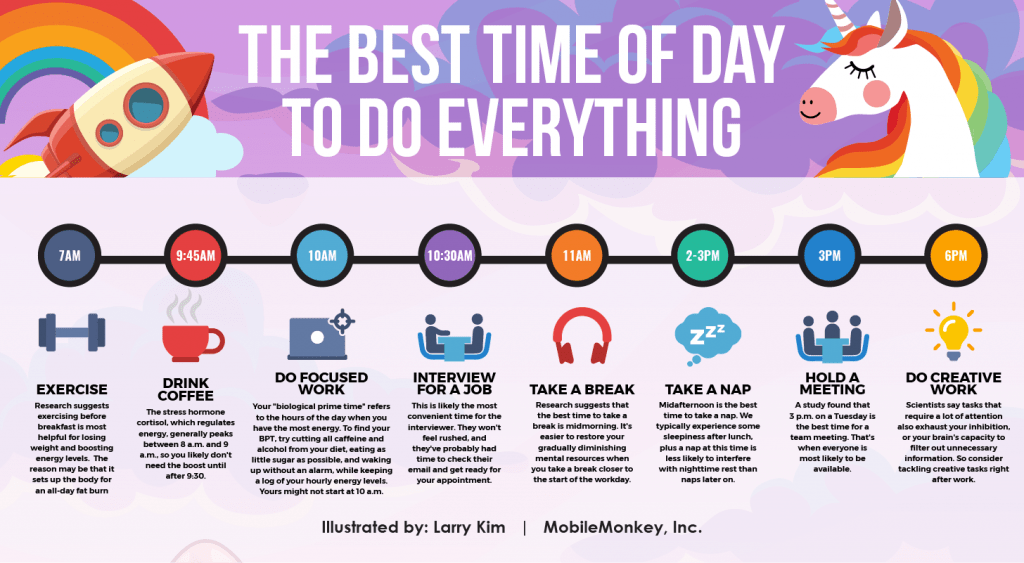
Understanding one’s own ultradian rhythms—the body’s natural 90-minute cycles of high-alertness and fatigue—can help identify personal “best times” for deep work. Leveraging tools like focus timers (e.g., Pomodoro apps) or noise-canceling technology allows individuals to carve out periods for intense concentration. Conversely, scheduling collaborative meetings and brainstorming sessions during periods when collective energy and availability are highest, often facilitated by shared calendar apps and meeting schedulers, ensures maximum engagement and productivity from the team.
The Evolution of Timely Technology: AI and Automation
The future of identifying the “best time” is inextricably linked with advancements in AI and automation. These technologies are moving beyond mere scheduling to intelligent, adaptive, and proactive optimization.
Real-Time Optimization Through Machine Learning
Machine learning algorithms are constantly refining their ability to identify optimal timing. From dynamic pricing models that determine the best time to offer a discount to smart home systems that learn preferred temperature settings based on occupancy and weather, real-time optimization is becoming ubiquitous. In complex enterprise environments, AI-driven operations platforms monitor thousands of metrics, identifying anomalies and recommending interventions at the precise moment they are most effective, often before human operators are even aware of an issue.
Automated Task Scheduling and Workflow Orchestration
Automation platforms are evolving from simple rule-based systems to intelligent workflow orchestrators. These systems can dynamically schedule tasks, allocate resources, and even adjust project timelines based on real-time data, dependencies, and available capacity. For example, in a content publishing pipeline, AI might automatically schedule an article for publication based on predicted audience engagement, editor availability, and related trending topics, ensuring optimal impact without manual intervention.
The Future of Proactive Tech Decisions
The ultimate goal of identifying the “best time” through technology is to make systems and processes entirely proactive. Imagine AI systems that not only recommend but execute decisions like patching vulnerabilities before they become critical, scaling infrastructure anticipating a surge in traffic, or even suggesting a new product feature based on predicted market shifts. This predictive and autonomous decision-making, powered by advanced analytics and artificial intelligence, represents the pinnacle of technological timing, transforming reactive responses into foresightful action. The question “what time is the best?” will increasingly be answered, and acted upon, by the very technologies we create.
aViewFromTheCave is a participant in the Amazon Services LLC Associates Program, an affiliate advertising program designed to provide a means for sites to earn advertising fees by advertising and linking to Amazon.com. Amazon, the Amazon logo, AmazonSupply, and the AmazonSupply logo are trademarks of Amazon.com, Inc. or its affiliates. As an Amazon Associate we earn affiliate commissions from qualifying purchases.