
The 30-year fixed-rate mortgage is more than just a financial product; it is the cornerstone of the American dream. For decades, it has provided a predictable path to homeownership, allowing millions of individuals to lock in a consistent monthly payment for three full decades. However, in the current economic climate, the question “what is the current 30-year mortgage rate?” has become a moving target, dictated by complex global forces, central bank policies, and shifting market expectations. Understanding these rates requires looking beyond a single percentage point and analyzing the financial ecosystem that drives them.
The Dynamics of the 30-Year Fixed-Rate Mortgage
To understand where rates are today, one must first understand the mechanics of the 30-year fixed-rate mortgage. Unlike adjustable-rate mortgages (ARMs), the 30-year fixed rate offers stability. Your principal and interest payment remains identical from the first month to the 360th month. This predictability is why it remains the most popular choice for U.S. homebuyers, despite often carrying a slightly higher interest rate than shorter-term or variable options.
What Defines the 30-Year Rate?
The interest rate on a 30-year mortgage is essentially the price a borrower pays to “rent” money for a long duration. Lenders set these rates based on the risk of inflation, the likelihood of default, and the opportunity cost of not investing that money elsewhere. Because 30 years is a significant amount of time, lenders must account for the eroding power of inflation, which explains why mortgage rates are inherently higher than the Federal Reserve’s short-term benchmark rates.
Why It Remains the Industry Standard
The longevity of the 30-year term allows for lower monthly payments compared to 15-year or 20-year loans, making high-priced real estate accessible to a broader demographic. Furthermore, it provides a unique financial hedge. If inflation rises, the homeowner continues to pay back the loan with “cheaper” dollars, while the value of the underlying asset—the home—typically appreciates. This dual benefit of payment stability and inflation hedging solidifies its status as the “gold standard” of personal finance.
The Relationship Between Mortgage Rates and Treasury Yields
A common misconception is that mortgage rates are set directly by the Federal Reserve. In reality, 30-year mortgage rates track most closely with the 10-year Treasury note yield. When investors feel the economy is risky, they flock to the safety of government bonds, driving bond prices up and yields down; mortgage rates often follow suit. Conversely, when the economy is booming or inflation is high, investors demand higher yields on bonds, which pushes mortgage rates upward.
Factors Influencing Current Rates
The “current” rate is never static; it is a reflection of real-time data and psychological shifts in the financial markets. Several macroeconomic levers determine whether you will see a quote of 6%, 7%, or even 8% when you call a lender.
The Role of Federal Reserve Policy
While the Federal Reserve does not set mortgage rates, its influence is profound. The Fed controls the federal funds rate—the rate banks charge each other for overnight loans. When the Fed raises this rate to combat inflation, it increases the cost of borrowing across the entire economy. This ripple effect eventually reaches the mortgage market. Furthermore, the Fed’s “Quantitative Tightening” (the selling off of mortgage-backed securities) can reduce demand for these assets, forcing lenders to raise rates to attract investors.
Inflation and Economic Indicators
Inflation is the natural enemy of fixed-income investments like mortgages. If a lender locks in a 6% rate for 30 years, but inflation rises to 5%, their “real” return is only 1%. To protect themselves, lenders raise rates whenever inflation data—such as the Consumer Price Index (CPI)—comes in higher than expected. Conversely, signs of a cooling economy or a potential recession often lead to a drop in mortgage rates as the market anticipates lower future demand for credit.

Global Market Sentiment and Geopolitical Shifts
We live in a globalized financial world. If there is political instability in Europe or a slowdown in Asian manufacturing, international investors often move their capital into U.S. Treasuries as a “safe haven.” This influx of capital can inadvertently drive down U.S. mortgage rates, even if domestic conditions are unchanged. Therefore, the current rate is as much a reflection of global stability as it is of local housing demand.
How to Secure the Best Possible Rate Today
Even when national averages are high, not every borrower receives the same quote. In the world of personal finance, your “individual” rate is a reflection of your perceived risk as a borrower. To navigate the current market effectively, prospective homeowners must optimize their financial profile.
The Impact of Credit Scores on Your Quote
Your FICO score is perhaps the single most important factor in determining your specific 30-year mortgage rate. Lenders categorize borrowers into tiers. A borrower with a score of 760 or higher is viewed as “prime” and will receive the lowest advertised rates. A borrower with a score in the 620-660 range may face a “Loan Level Price Adjustment” (LLPA), which can add significant percentage points to the base rate. Improving your credit score by just 20 points before applying can save you tens of thousands of dollars over the life of the loan.
Loan-to-Value (LTV) Ratios and Down Payments
The amount of “skin in the game” you have influences the lender’s risk. A higher down payment leads to a lower Loan-to-Value (LTV) ratio. Typically, an LTV of 80% or lower (a 20% down payment) not only helps you avoid Private Mortgage Insurance (PMI) but also signals to the lender that you are less likely to walk away from the property in a downturn. This reduced risk often translates into a more competitive interest rate offer.
Shopping Around: Comparing Lenders and Points
Mortgage rates are not uniform across all institutions. Large commercial banks, credit unions, and independent mortgage brokers all have different overhead costs and “appetites” for risk. It is essential to obtain “Loan Estimates” from at least three different sources. Additionally, borrowers should consider “discount points.” By paying an upfront fee (one point equals 1% of the loan amount), you can “buy down” the interest rate. In a high-rate environment, calculating the “break-even point”—how many years it takes for the monthly savings to exceed the upfront cost—is a vital piece of financial strategy.
The Economic Outlook: Predicting Future Movements
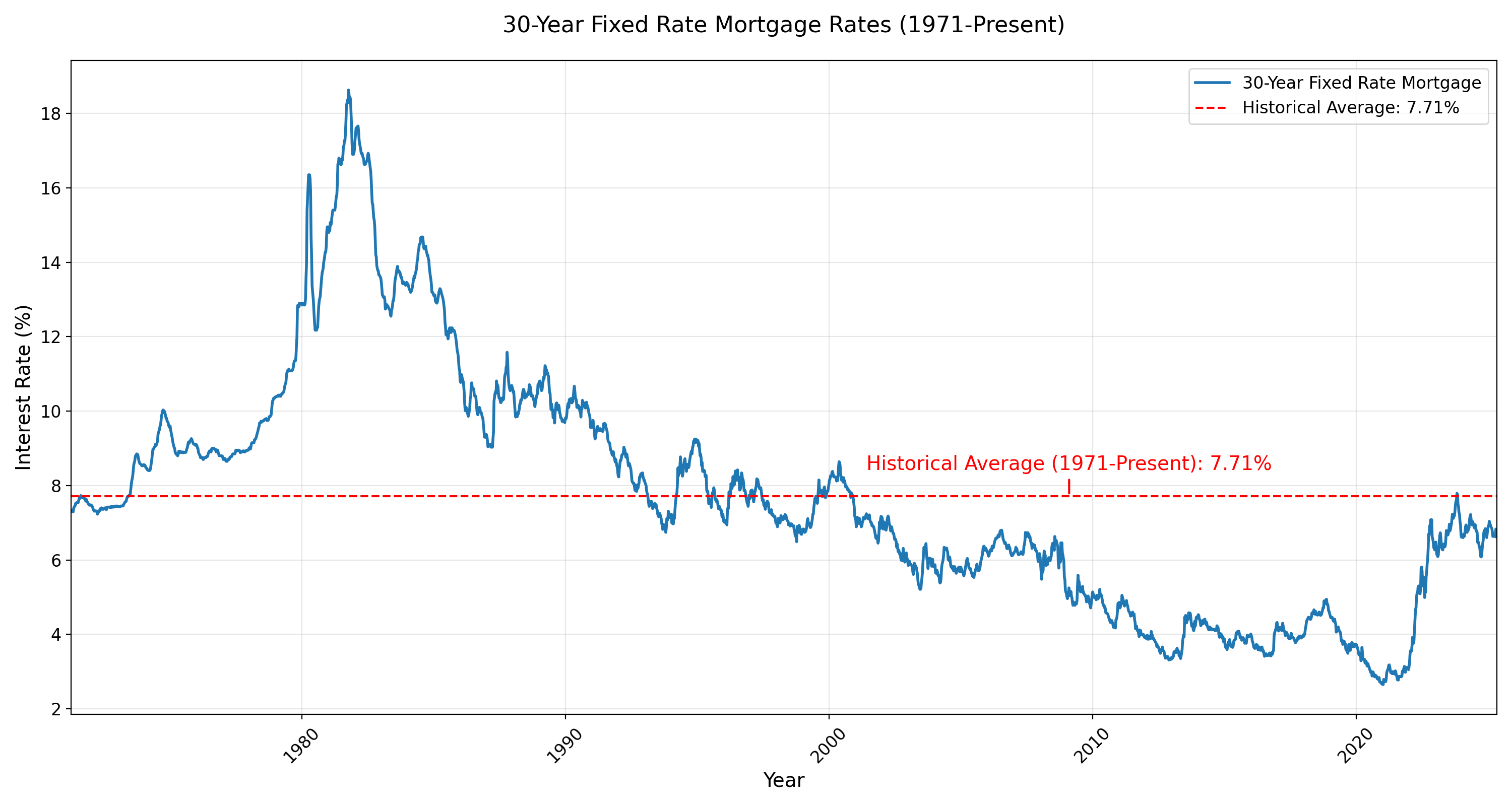
Predicting where 30-year mortgage rates will be in six months is notoriously difficult, yet it is a necessary exercise for anyone planning a major purchase or refinance. The current trajectory suggests a market that is searching for a new “normal” after a decade of historically low rates.
Short-Term Volatility vs. Long-Term Stability
In the short term, expect volatility. Every time the Department of Labor releases jobs data or the Fed chair gives a speech, mortgage rates can jump or dip by 0.25% in a single afternoon. For buyers currently in the market, “locking” a rate is a critical decision. A rate lock protects you from increases while you are under contract, though it also prevents you from benefiting if rates drop significantly before closing.
Is Now the Right Time to Buy or Refinance?
The mantra “marry the house, date the rate” has become popular in recent years. This philosophy suggests that if you find the right property at a fair price, you should proceed with the purchase even if rates are higher than you’d like. The rationale is that you can always refinance into a lower rate later if the market improves. However, this strategy assumes two things: that rates will eventually drop, and that your home value will remain high enough to maintain the necessary equity for a refinance. From a personal finance perspective, you must ensure that the current monthly payment is affordable within your existing budget, regardless of future refinance opportunities.
Preparing for a “Higher for Longer” Environment
The era of 3% mortgage rates was an anomaly driven by unprecedented global crises. Historically, 30-year rates have averaged closer to 7% or 8%. Financial planning in the current era should involve preparing for a “higher for longer” interest rate environment. This means focusing on reducing other high-interest debts, such as credit cards or auto loans, to free up cash flow for housing. It also means being more conservative with your home-buying budget; when rates are high, your purchasing power decreases, and it is crucial not to overextend.
In conclusion, the current 30-year mortgage rate is more than just a number on a screen; it is a complex barometer of the global economy and your personal financial health. By understanding the forces that move these rates—from Federal Reserve policy to your own credit score—you can make informed decisions that protect your long-term wealth. Whether you choose to buy now or wait for a shift in the market, staying educated on these financial mechanics is the best way to ensure that your path to homeownership is both sustainable and successful.
aViewFromTheCave is a participant in the Amazon Services LLC Associates Program, an affiliate advertising program designed to provide a means for sites to earn advertising fees by advertising and linking to Amazon.com. Amazon, the Amazon logo, AmazonSupply, and the AmazonSupply logo are trademarks of Amazon.com, Inc. or its affiliates. As an Amazon Associate we earn affiliate commissions from qualifying purchases.