
The healthcare sector, a colossal global industry, consistently grapples with the intricate challenge of delivering high-quality care while managing escalating costs. For decades, stakeholders from policymakers to providers have sought a unifying framework to guide improvement efforts. Enter the Triple Aim – a concept introduced by the Institute for Healthcare Improvement (IHI) in 2007, which proposes a fundamental reorientation of healthcare systems to achieve three interdependent goals. Far from being a mere clinical directive, the Triple Aim serves as a critical strategic and financial roadmap for healthcare organizations, aiming to optimize value and ensure sustainable business models within the complex world of health service delivery. Understanding its financial underpinnings is crucial for any entity operating within or impacted by the healthcare economy.

Origin and Core Components of the Triple Aim
The Triple Aim framework emerged from a recognition that piecemeal improvements in healthcare often failed to yield system-wide benefits or even inadvertently worsened other aspects of care. The IHI posited that for sustainable and impactful change, leaders must pursue three dimensions simultaneously. These three aims are not isolated objectives but rather interconnected pillars, each with profound implications for the financial viability and strategic direction of healthcare enterprises.
Improving the Patient Experience of Care
This aim focuses on making healthcare more effective, safe, and patient-centered. It encompasses aspects such as quality, satisfaction, access, and reliability of care. From a business finance perspective, a superior patient experience translates directly into tangible economic benefits. High patient satisfaction can lead to improved patient retention, stronger market reputation, and reduced risk of litigation, all of which bolster revenue streams and mitigate financial liabilities. Moreover, with the rise of value-based care models, patient experience metrics often directly influence reimbursement rates and bonus payments, making it a direct contributor to an organization’s bottom line. Investing in patient-centric processes, therefore, is not merely altruistic but a strategic financial decision designed to secure future income and reduce operational inefficiencies stemming from dissatisfied patients.
Improving the Health of Populations
This objective shifts the focus from individual patient treatment to the overall health outcomes of defined groups. It emphasizes prevention, public health initiatives, and managing chronic conditions across communities. The financial imperative here is clear: healthier populations require fewer acute interventions, less emergency care, and shorter hospital stays. This aim drives investment in primary care, preventative screenings, wellness programs, and addressing social determinants of health. While the returns on these investments may be long-term, they are foundational for reducing per capita healthcare costs in the long run. For systems operating under capitated payments or risk-sharing agreements, improving population health directly reduces the financial burden of managing illness, thereby improving profitability and resource allocation efficiency. It encourages proactive financial planning that prioritizes upstream interventions over costly downstream treatments.
Reducing the Per Capita Cost of Healthcare
This is the most direct financial aim, addressing the unsustainable growth of healthcare expenditures. It demands efficiency, waste reduction, and the delivery of care that provides maximum value for the money spent. This aim pushes organizations to scrutinize every aspect of their operations – from supply chain management and administrative overhead to clinical pathways and resource utilization. It champions the elimination of redundant tests, unnecessary procedures, and inefficient workflows. Financially, this means optimizing budgets, negotiating better terms with suppliers, implementing lean management principles, and moving away from volume-based payment models that incentivize more services rather than better outcomes. Achieving this aim is paramount for maintaining the affordability and accessibility of healthcare, preventing financial strain on individuals, businesses, and government budgets alike.
The Financial Imperative Behind the Triple Aim
Healthcare represents a significant portion of GDP in many developed nations, and its costs continue to rise at an alarming rate. This unsustainable trajectory poses a severe economic threat, impacting national budgets, corporate profitability, and individual financial well-being. The Triple Aim is, at its heart, an economic framework designed to bend this cost curve while simultaneously enhancing the value derived from healthcare spending.
The historical fee-for-service (FFS) model, which rewards volume over value, has long been identified as a primary driver of inefficiency and high costs. The Triple Aim provides the conceptual architecture for transitioning away from FFS to value-based care (VBC) models. Under VBC, providers are reimbursed based on patient outcomes, quality metrics, and cost efficiency, fundamentally aligning financial incentives with the Triple Aim’s objectives.
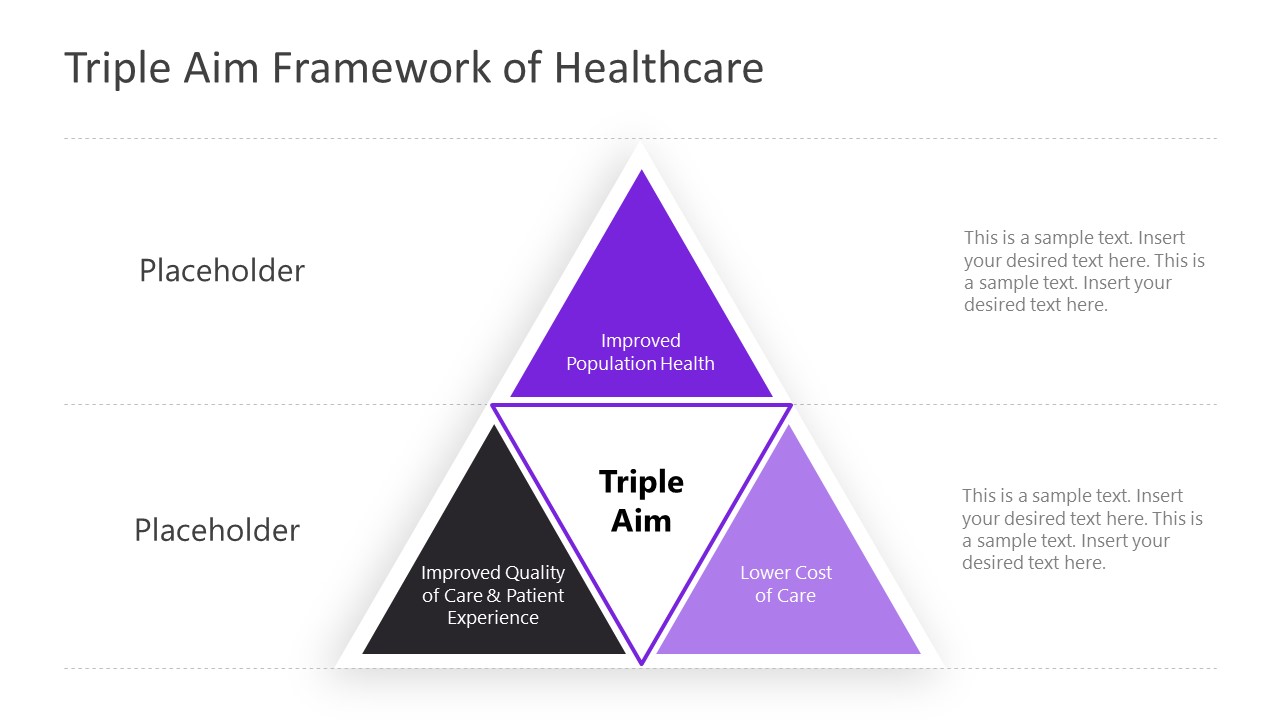
For instance, improving patient experience (Aim 1) can reduce readmission rates, which incur financial penalties under many VBC contracts and strain hospital resources. A satisfied patient is also more likely to adhere to treatment plans, leading to better outcomes and lower long-term costs. Similarly, improving population health (Aim 2) by preventing chronic diseases or managing them effectively through proactive primary care means fewer expensive hospitalizations and emergency visits, translating into significant savings for payers and providers sharing financial risk. Finally, direct cost reduction (Aim 3) through operational efficiencies, evidence-based practices, and appropriate resource allocation directly enhances the financial sustainability of healthcare organizations and systems. Each aim, therefore, contributes to a healthier financial ecosystem for healthcare delivery.
Strategies for Achieving the Triple Aim with Financial Prudence
Implementing the Triple Aim requires a strategic overhaul of traditional healthcare operations, with a strong emphasis on financial planning and resource allocation. Organizations must invest in new models of care, technology, and analytics to achieve these interconnected goals.
Value-Based Care Models
Transitioning to value-based care is perhaps the most critical financial strategy for aligning with the Triple Aim. Models like Accountable Care Organizations (ACOs), bundled payments for specific episodes of care, and capitated payments incentivize providers to manage costs while improving quality and outcomes. Under these models, providers assume greater financial risk but also have the opportunity to share in savings generated through efficient, high-quality care. This necessitates robust financial modeling, risk assessment capabilities, and performance measurement systems to ensure profitability within these new frameworks.
Technology and Data Analytics
Leveraging advanced technology and data analytics is indispensable for achieving financial prudence within the Triple Aim. Electronic Health Records (EHRs), telehealth platforms, artificial intelligence (AI) for predictive analytics, and sophisticated business intelligence tools enable organizations to:
- Identify high-risk patient populations for proactive intervention, reducing future costly events.
- Optimize resource utilization, from staffing levels to equipment deployment.
- Track and analyze performance metrics across all three aims, identifying areas for financial improvement and strategic investment.
- Streamline administrative processes, reducing overhead and improving revenue cycle management.
Telehealth, in particular, offers a cost-effective alternative for routine consultations, follow-ups, and chronic disease management, expanding access while reducing patient and provider costs.
Care Coordination and Population Health Management
Investing in robust care coordination programs and population health management initiatives is a financially sound strategy for improving outcomes and controlling costs. This involves:
- Establishing integrated care teams that connect patients with primary care, specialists, and community resources.
- Implementing comprehensive chronic disease management programs to prevent exacerbations and hospitalizations.
- Addressing social determinants of health (e.g., food insecurity, housing, transportation) that significantly impact health outcomes and often lead to costly emergent care.
While requiring upfront investment, these strategies yield substantial long-term financial benefits by reducing expensive acute care episodes and fostering a healthier, more productive community.
Operational Efficiency and Waste Reduction
Directly targeting the “reducing per capita cost” aim, organizations must adopt rigorous operational efficiency strategies. This includes:
- Applying Lean and Six Sigma methodologies to streamline clinical and administrative workflows, eliminating waste and improving throughput.
- Optimizing supply chain management to reduce procurement costs and inventory waste.
- Minimizing medical errors and hospital-acquired infections, which not only harm patients but also incur significant financial penalties and increased treatment costs.
- Enhancing revenue cycle management through efficient claims processing, accurate coding, and effective denial management to maximize legitimate revenue capture.
Financial Benefits and Challenges of Triple Aim Implementation
The journey towards the Triple Aim is not without its complexities, yet the potential financial rewards for healthcare systems, payers, and society at large are substantial.
Potential Financial Benefits
Organizations that successfully implement the Triple Aim stand to gain significant financial advantages. These include long-term cost savings for payers and patients through more efficient care delivery and healthier populations. Providers can achieve improved financial sustainability by shifting from a volume-based to a value-based compensation model, where higher quality and better outcomes are rewarded. Enhanced market competitiveness can result from a reputation for delivering superior, cost-effective care. Furthermore, managing population health proactively can lead to reduced financial risk exposure for health systems that take on financial accountability for patient populations. This strategic alignment can ultimately lead to a more financially robust and resilient healthcare enterprise.

Common Financial Challenges
Despite the clear benefits, the transition to a Triple Aim-focused model presents notable financial challenges. There is often a significant upfront investment required for new IT infrastructure, data analytics capabilities, redesigned care models, and workforce training. This initial outlay can be a hurdle, particularly for organizations with limited capital. Resistance to change, deeply ingrained in the traditional fee-for-service mindset, can impede progress and hinder financial alignment with new incentives. Accurately measuring and attributing costs and outcomes, especially across disparate systems and for population-level interventions, remains a complex financial and analytical task. Finally, balancing short-term financial pressures, such as maintaining positive operating margins, with the long-term strategic goals of Triple Aim implementation requires sophisticated financial leadership and consistent commitment. Overcoming these challenges necessitates strong leadership, innovative financing models, and a clear understanding of the long-term economic dividends.
aViewFromTheCave is a participant in the Amazon Services LLC Associates Program, an affiliate advertising program designed to provide a means for sites to earn advertising fees by advertising and linking to Amazon.com. Amazon, the Amazon logo, AmazonSupply, and the AmazonSupply logo are trademarks of Amazon.com, Inc. or its affiliates. As an Amazon Associate we earn affiliate commissions from qualifying purchases.