
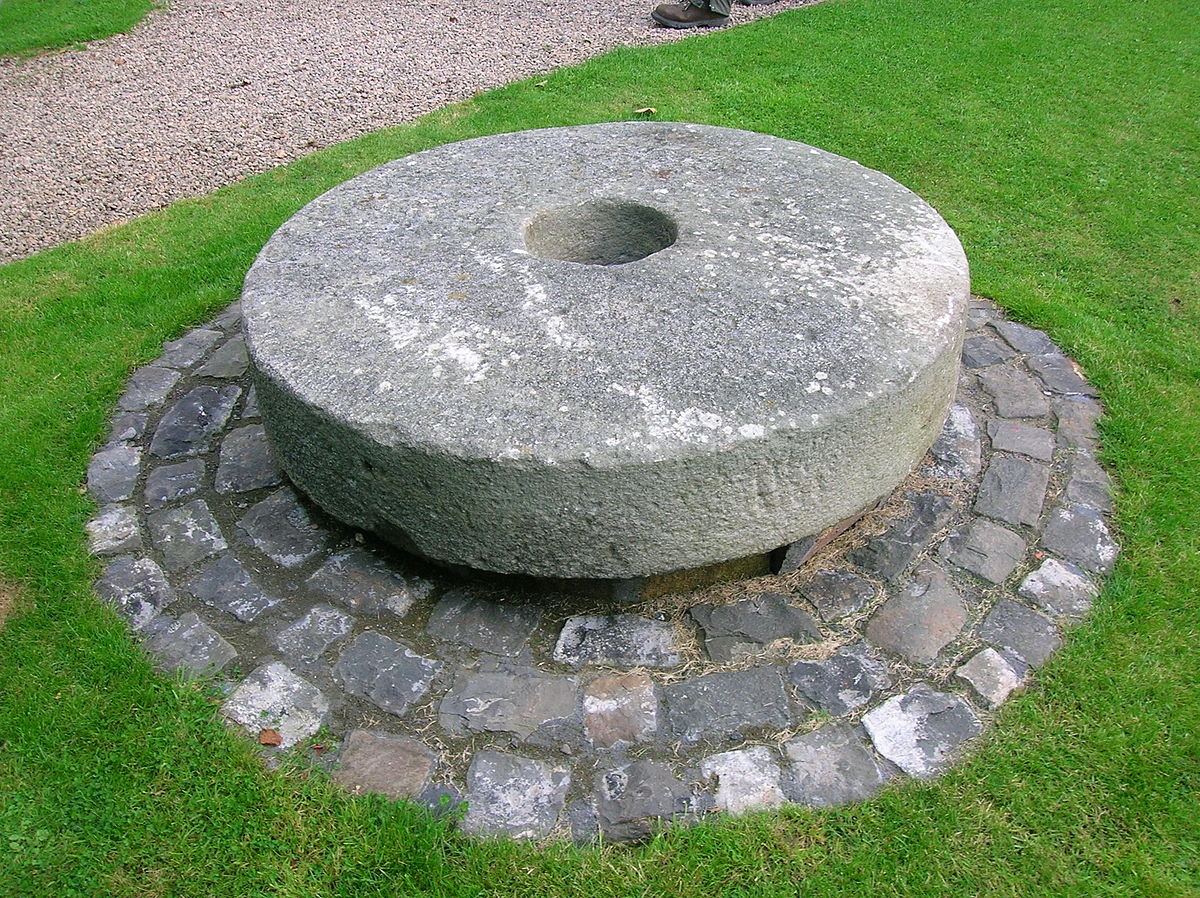
The term “millstone” conjures images of ancient agrarian societies, the rhythmic grinding of grain, and the creation of sustenance. Historically, a millstone was a heavy, circular stone used in a mill to grind various materials, primarily grain into flour. These foundational tools were instrumental in shaping early economies, dictating the pace of production, and establishing centers of commerce. Far from being a mere relic of the past, the concept of a millstone—both its literal function and its enduring metaphor—offers profound insights into the principles of finance, economic growth, and the burdens that can impede progress in personal and business wealth management.
The Ancient Engine of Economic Production
To truly understand the “millstone” in a financial context, one must first appreciate its pivotal role in the development of early economies. Before industrialized processes, the millstone was a critical piece of technology, a marvel of engineering for its time, enabling the transformation of raw agricultural output into consumable goods. This transformation was not just about food; it was about value creation, resource allocation, and the establishment of foundational business models.
Early Business Models and Value Creation
The ownership and operation of a mill, equipped with its essential millstones, represented a significant capital investment and a powerful business venture. Millers were often influential figures in their communities, providing an indispensable service. Their business model was straightforward yet effective: they charged a fee, known as a “toll,” for grinding grain, usually a portion of the processed flour. This toll was an early form of transaction fee, a direct revenue stream based on a utility service.
This system highlights several enduring financial principles:
- Infrastructure Investment: The construction and maintenance of a mill required substantial capital and labor, akin to modern-day infrastructure projects that underpin economic activity.
- Service-Based Revenue: The miller generated income by providing a critical service, demonstrating the viability of utility-driven business models.
- Monopoly/Oligopoly Power: Often, a village or region might have only one or a few mills, granting millers considerable economic power and stable demand for their services. This illustrates the financial advantages of possessing a unique or scarce asset.
- Supply Chain Integration: Mills were central to the food supply chain, converting raw materials into finished products. Their efficiency directly impacted food availability and, consequently, local economic stability.
The millstone, therefore, was not merely a tool but the heart of an economic enterprise, a testament to how essential services, properly managed, can generate wealth and drive regional development.
The Nexus of Local Economies
Mills were more than just processing centers; they were economic hubs. Farmers brought their grain, merchants traded goods, and villagers gathered, creating marketplaces and fostering broader economic interactions. The flow of grain to the mill, and flour from it, dictated the rhythm of commerce. This centralized activity facilitated:
- Trade and Barter: Beyond the milling toll, the congregation of people at the mill encouraged the exchange of other goods and services, laying the groundwork for more complex market structures.
- Banking and Lending: Millers, often wealthy, sometimes served as informal lenders or held grain in storage, acting as early custodians of value, blurring the lines between commerce and finance.
- Taxation and Revenue for Rulers: The importance of mills was such that they were often subject to specific taxes or tithes, demonstrating their recognition as key generators of economic value for governing authorities.
In essence, the millstone represented an early form of capital asset, vital for the creation of wealth, the provision of essential services, and the organization of economic life. Understanding this historical context enriches our modern interpretation of “millstone” in financial discourse.
Millstones in Modern Finance: Identifying Burdens
Beyond its literal historical significance, “millstone” has long served as a powerful metaphor. The phrase “a millstone around one’s neck” perfectly encapsulates a heavy burden or a persistent impediment. In modern finance, this metaphor is particularly resonant, referring to unproductive assets, debilitating debt, or outdated strategies that weigh down individuals and businesses, hindering their ability to achieve financial prosperity.
The Weight of Unproductive Assets
Just as a broken or unused millstone would be a financial drain on a miller, unproductive assets can be a significant “millstone” in a financial portfolio. These are investments or possessions that tie up capital without generating sufficient returns or, worse, incur ongoing costs. Examples include:
- Underperforming Investments: Stocks, funds, or real estate that consistently fail to meet market benchmarks or personal financial goals, consuming capital that could be better allocated elsewhere.
- Depreciating Assets with High Carrying Costs: Luxury items, oversized properties, or vehicles that rapidly lose value while requiring substantial maintenance, insurance, and taxes. While they may offer personal utility, their financial burden can outweigh their benefits.
- Legacy Systems or Outdated Technology: For businesses, clinging to obsolete equipment or software due to inertia can be a significant financial drain, reducing efficiency and competitive edge.
Identifying these financial millstones requires regular portfolio reviews, honest assessment of asset performance, and a willingness to divest or repurpose resources that are no longer serving their intended financial purpose.
Debt as a Financial Millstone
Perhaps the most common and acutely felt financial millstone is debt. While certain types of debt (e.g., mortgages, student loans, or strategic business loans) can be productive, enabling asset acquisition or future income, excessive or high-interest debt can become an unbearable burden.
- High-Interest Consumer Debt: Credit card balances, personal loans, or payday loans can quickly spiral out of control, with interest payments consuming a disproportionate share of income and preventing savings or investment.
- Underwater Mortgages or Loans: When the value of an asset (like a home) falls below the outstanding loan amount, it creates a psychological and financial trap, limiting mobility and flexibility.
- Business Debt Servicing: For businesses, excessive leverage can lead to a significant portion of operating income being diverted to interest payments, stifling growth and investment in core operations.
The constant “grinding” of interest payments can prevent individuals and businesses from building wealth, acting as a perpetual drag on financial progress. Strategic debt management and aggressive repayment plans are crucial to shedding this particular millstone.

Outdated Strategies and Inertia
Another insidious financial millstone is the adherence to outdated strategies or a general inertia in adapting to changing economic landscapes. Markets evolve, regulations shift, and new opportunities emerge, yet many individuals and businesses cling to familiar, but no longer optimal, approaches.
- Passive Investment in Stagnant Sectors: Failing to rebalance portfolios or adjust to sector shifts can leave investors heavily exposed to industries that are in decline.
- Resistance to Digital Transformation: Businesses that fail to adopt new technologies or embrace digital channels often find themselves outmaneuvered by more agile competitors, leading to reduced market share and profitability.
- Fixed Mindsets: An unwillingness to learn new financial concepts, seek professional advice, or challenge existing assumptions about money can prevent individuals from optimizing their financial decisions.
Breaking free from these strategic millstones requires continuous learning, proactive adaptation, and a willingness to pivot when market conditions or personal circumstances demand it.
The Grinding Process: Building Enduring Wealth
While the “millstone” can symbolize a burden, its primary function—the steady, consistent grinding—also offers a powerful analogy for the methodical, long-term process of building enduring wealth. Just as a millstone slowly but surely transforms grain into flour, financial success often comes from consistent effort, patience, and adherence to foundational principles.
Patience and Compounding Returns
The most profound financial application of the millstone’s grinding nature is found in the concept of compounding returns. Like the continuous rotation of a millstone, consistently reinvesting earnings and allowing them to generate further earnings over extended periods leads to exponential growth.
- Early and Consistent Saving: The “grinding” starts early. Regularly contributing to retirement accounts, investment portfolios, or savings funds, even small amounts, sets the millstones in motion.
- Long-Term Investing: Resisting the urge for short-term gains and maintaining a disciplined approach to investing through market fluctuations allows the power of compounding to work its magic over decades.
- Dividend Reinvestment: Reinvesting dividends and interest back into the principal can significantly accelerate the wealth-building process, turning small returns into substantial capital over time.
This patient, consistent approach, much like the slow but powerful grind of the millstone, is the bedrock of significant wealth accumulation.
The Foundational Principles of Sustainable Business
For businesses, the “grinding process” reflects the persistent application of core principles that lead to sustainable growth and profitability. It’s about building a robust foundation, one careful step at a time, rather than chasing fleeting trends.
- Operational Efficiency: Continuously optimizing processes, reducing waste, and improving productivity is a constant grind that strengthens a business’s financial resilience.
- Customer Centricity: Building strong customer relationships through consistent service quality and understanding evolving needs ensures a steady demand for products or services.
- Prudent Financial Management: Meticulous budgeting, cash flow management, and responsible debt utilization form the core financial infrastructure that allows a business to weather storms and grow organically.
- Innovation and Adaptation: While resistance to change is a millstone, a consistent, methodical approach to innovation—testing, iterating, and improving—is a productive grind that keeps a business relevant and competitive.
These foundational practices, executed with persistence, ensure that a business’s financial engine continues to grind out profits and value year after year.
Removing Your Financial Millstones
The identification of financial millstones is only the first step; the true challenge lies in their removal. This requires deliberate action, strategic planning, and often, a disciplined shift in financial habits and perspectives.
Strategic Debt Management
Confronting and systematically dismantling burdensome debt is paramount. This often involves:
- Prioritization: Focusing on high-interest debts first (e.g., credit cards) using methods like the “debt avalanche” or “debt snowball.”
- Negotiation: Exploring options to consolidate debt, negotiate lower interest rates, or restructure payment plans with lenders.
- Budgeting and Lifestyle Adjustments: Creating a strict budget to free up cash flow specifically for debt repayment, and temporarily cutting back on non-essential spending.
- Avoiding New Debt: A crucial step is to stop adding to the problem, ensuring new debt is only taken on for truly productive purposes after careful consideration.
Asset Optimization and Portfolio Rebalancing
Regularly reviewing and optimizing investment portfolios is essential to ensure assets are productive and aligned with current financial goals and risk tolerance.
- Performance Review: Objectively assess the performance of all investments against benchmarks and personal objectives.
- Divestment of Underperformers: Be willing to sell assets that are consistently underperforming or have become obsolete, even if it means realizing a loss in some cases.
- Reallocation: Reinvest capital from underperforming assets into more promising opportunities or rebalance the portfolio to maintain desired asset allocation.
- Tax Efficiency: Consider the tax implications of selling and buying assets, utilizing strategies like tax-loss harvesting where appropriate.
Adapting to Economic Currents
Shedding the millstone of inertia and outdated strategies demands a proactive and adaptive mindset.
- Continuous Learning: Stay informed about market trends, new financial products, and economic forecasts. Financial literacy is an ongoing process.
- Professional Guidance: Don’t hesitate to seek advice from qualified financial advisors who can provide objective insights and help tailor strategies to changing circumstances.
- Embracing New Technologies: For businesses and individuals, leveraging new financial tools, software, and platforms can significantly improve efficiency and decision-making.
- Strategic Planning and Flexibility: Regularly revisit financial plans, both personal and business, and be prepared to adjust strategies in response to new information or unforeseen events.
In conclusion, “what is millstone” transcends a simple historical definition. It serves as a potent reminder of the foundational economic processes that build wealth, the burdens that can impede it, and the consistent, disciplined effort required to achieve financial freedom. By understanding and applying these lessons, individuals and businesses can navigate the complexities of finance, shedding their millstones and empowering their journey towards sustainable prosperity.
aViewFromTheCave is a participant in the Amazon Services LLC Associates Program, an affiliate advertising program designed to provide a means for sites to earn advertising fees by advertising and linking to Amazon.com. Amazon, the Amazon logo, AmazonSupply, and the AmazonSupply logo are trademarks of Amazon.com, Inc. or its affiliates. As an Amazon Associate we earn affiliate commissions from qualifying purchases.