
In the rapidly evolving landscape of technology, the term “inference” holds a pivotal, yet often misunderstood, position, particularly within the domains of artificial intelligence (AI) and machine learning (ML). Far from being a mere academic concept, inference is the practical application of trained intelligence, transforming raw data into actionable insights, predictions, and automated decisions across a myriad of digital systems. Understanding inference is crucial for anyone navigating the current technological frontier, from software developers and data scientists to business strategists leveraging AI-driven solutions.
The Core Concept of Inference in Technology
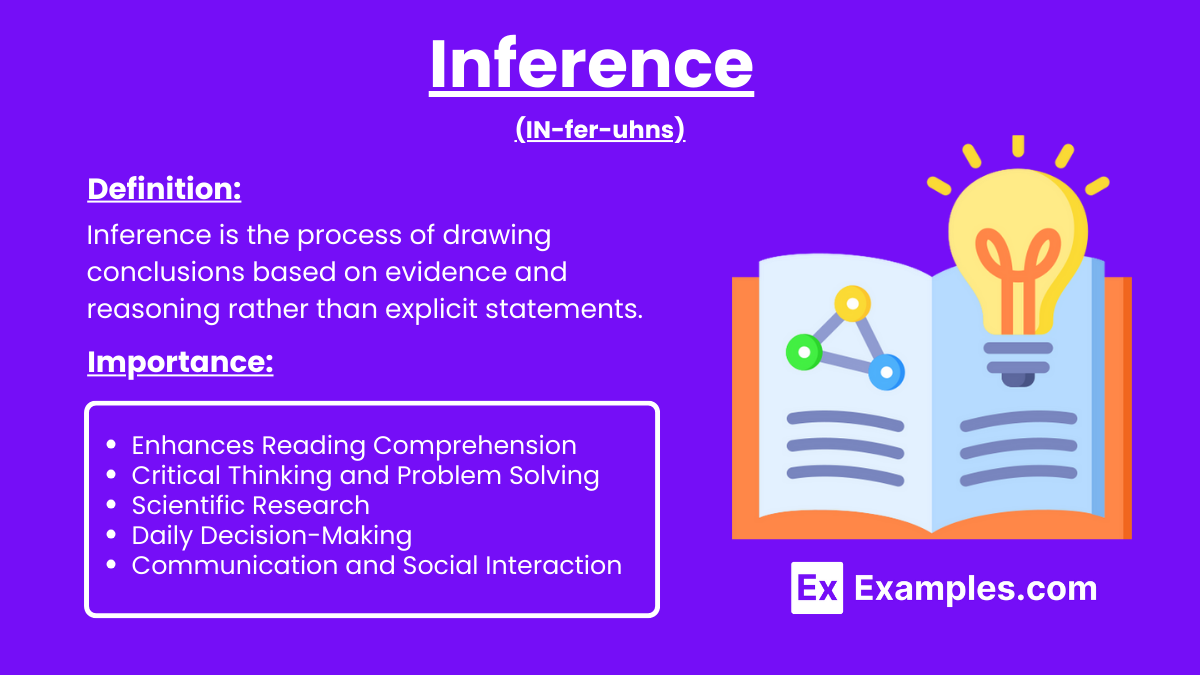
At its heart, inference in technology refers to the process where a trained machine learning model makes predictions or decisions based on new, previously unseen data. Once an AI model has undergone a rigorous training phase, where it learns patterns and relationships from vast datasets, it enters the inference phase. This is where the model is put to work, applying the knowledge it has acquired to solve real-world problems.

Imagine an AI model designed to detect fraudulent transactions. During its training, it processes millions of legitimate and fraudulent transaction records, learning the subtle indicators of fraud. Once trained, it’s deployed for inference. When a new transaction occurs, the model infers whether it’s legitimate or fraudulent by applying its learned patterns, making a prediction in real-time. This ability to generalize from learned examples to new instances is the essence of technological inference.
Training vs. Inference: A Crucial Distinction
To fully grasp inference, it’s essential to differentiate it from the training process. Training is the initial, computationally intensive phase where an AI model, such as a neural network, learns from labeled data. During training, the model’s parameters (e.g., weights and biases in a neural network) are adjusted iteratively to minimize errors in its predictions. This phase requires significant computing resources, often involving powerful GPUs and specialized hardware, and can take hours, days, or even weeks depending on the model’s complexity and data volume. The goal of training is to build a robust model capable of accurate predictions.
Inference, on the other hand, is the deployment phase. Once the model is trained and its parameters are fixed, it’s ready to process new data. This process is generally less computationally demanding than training, as it only involves a forward pass through the network to generate an output. While training focuses on learning from data, inference focuses on applying that learning to new data. The efficiency and speed of inference are often critical, especially in applications requiring real-time responses like autonomous driving, voice assistants, or high-frequency trading.
How Inference Works
The mechanism of inference varies slightly depending on the type of AI model (e.g., deep neural networks, support vector machines, decision trees). However, the general workflow remains consistent:
- Input Data Preprocessing: New, raw data is first preprocessed to match the format and features the model was trained on. This might involve scaling, normalization, tokenization, or image resizing.
- Model Forward Pass: The preprocessed data is fed into the trained model. The model’s internal architecture and parameters perform a series of mathematical operations on the input. For a neural network, this involves passing data through layers of interconnected nodes, activating them based on learned weights.
- Output Generation: The final layer of the model produces an output. This output can be a classification (e.g., “cat” or “dog”), a regression value (e.g., a predicted stock price), a sequence (e.g., translated text), or a probability score (e.g., likelihood of fraud).
- Post-processing and Action: The model’s raw output is often post-processed to convert it into a human-readable format or to trigger a specific action. For instance, a probability score might be compared against a threshold to make a final “yes/no” decision, or a predicted sentiment score might inform a customer service routing decision.
The speed and accuracy of this entire cycle determine the effectiveness of an AI system in a real-world application.
Applications of Inference Across Tech Industries
The utility of inference permeates almost every sector touched by technology, driving innovation and efficiency. Its ability to extract meaning and make predictions from data empowers a wide array of tools and services.
Predictive Analytics and Business Intelligence
In enterprise software, inference models are the backbone of advanced predictive analytics. Businesses use these models to forecast sales, predict customer churn, optimize inventory levels, and identify emerging market trends. For example, an e-commerce platform might use an inference model to predict which products a customer is most likely to buy next, enabling personalized marketing campaigns. Financial institutions leverage inference for credit scoring, risk assessment, and fraud detection, processing millions of transactions in real-time to maintain security and operational integrity.
Natural Language Processing and Computer Vision
Two of the most impactful fields benefiting from inference are Natural Language Processing (NLP) and Computer Vision. NLP models, once trained on vast text corpora, perform inference to understand, generate, and translate human language. This powers applications like spam filters, sentiment analysis tools, chatbots, virtual assistants (e.g., Siri, Alexa), and machine translation services. When you ask a smart speaker a question, an inference engine quickly processes your speech, understands your intent, and retrieves an answer.
Similarly, computer vision models, after training on massive image and video datasets, perform inference to interpret visual information. This capability is critical for facial recognition systems, object detection in autonomous vehicles, medical image analysis, quality control in manufacturing, and even enhancing digital camera features. The instantaneous recognition of a stop sign by a self-driving car or the tagging of faces in social media photos are direct results of high-speed inference.
Recommendation Systems and Personalization
Perhaps one of the most ubiquitous applications of inference is in recommendation systems. Platforms like Netflix, Amazon, Spotify, and YouTube rely heavily on inference models to suggest movies, products, music, and videos tailored to individual user preferences. By analyzing historical viewing/purchasing patterns, user ratings, and interactions with millions of other users, these models infer what content a specific user is likely to enjoy next, driving engagement and content consumption. This personalization extends to news feeds, advertisements, and even job recommendations, making digital experiences more relevant and compelling.
The Technical Underpinnings of Inference Engines
Achieving efficient and scalable inference requires sophisticated engineering beyond just model training. The performance of an inference system depends on various technical choices and optimizations.
Model Deployment and Optimization
Once a model is trained, it needs to be deployed in an operational environment, often referred to as an “inference engine” or “serving system.” This involves packaging the model in a format suitable for deployment (e.g., ONNX, TensorFlow Lite, OpenVINO) and integrating it into an application or service. Key considerations include latency (how fast a prediction is made), throughput (how many predictions can be made per second), and resource utilization (CPU, GPU, memory).
To optimize inference performance, various techniques are employed. Model quantization reduces the precision of model weights and activations (e.g., from 32-bit floating point to 8-bit integers), significantly decreasing model size and memory footprint while often maintaining acceptable accuracy. Model pruning removes redundant connections or neurons from a neural network. Knowledge distillation involves training a smaller, “student” model to mimic the behavior of a larger, more complex “teacher” model, resulting in a more efficient inference model. Hardware accelerators, such as GPUs, TPUs, and specialized AI chips, are also crucial for high-performance inference, especially for deep learning models.
Edge Inference and Real-time Processing
A significant trend in inference is the shift towards “edge inference,” where models are deployed and executed directly on edge devices (e.g., smartphones, IoT sensors, smart cameras, autonomous vehicles) rather than relying solely on cloud servers. This approach offers several advantages:
- Reduced Latency: Predictions are made locally, eliminating network delays.
- Enhanced Privacy: Sensitive data doesn’t need to be sent to the cloud for processing.
- Improved Reliability: Operations can continue even without an internet connection.
- Lower Bandwidth Costs: Less data needs to be transmitted.
Edge inference is vital for applications requiring real-time responses and immediate action, such as collision avoidance systems in cars, real-time augmented reality experiences, and industrial predictive maintenance. The development of compact, efficient AI models and specialized edge AI hardware continues to push the boundaries of what’s possible at the device level.

The Future Landscape of Inference
The importance of inference in technology is only set to grow. As AI models become more complex and data volumes continue to explode, the demand for faster, more efficient, and more robust inference solutions will intensify. Innovations in AI hardware, such as neuromorphic chips and quantum computing, promise to unlock unprecedented levels of inference speed and energy efficiency.
Furthermore, the rise of MLOps (Machine Learning Operations) is streamlining the entire lifecycle of AI models, from training to deployment and continuous inference monitoring. This ensures that models remain performant and relevant over time, adapting to changing data patterns and business requirements. The ongoing democratization of AI tools and frameworks will also make sophisticated inference capabilities accessible to a broader range of developers and businesses, further accelerating the integration of AI into everyday technologies. Inference is not merely a technical step; it is the critical bridge that transforms raw AI potential into tangible value, driving the intelligent systems that define our modern world.
aViewFromTheCave is a participant in the Amazon Services LLC Associates Program, an affiliate advertising program designed to provide a means for sites to earn advertising fees by advertising and linking to Amazon.com. Amazon, the Amazon logo, AmazonSupply, and the AmazonSupply logo are trademarks of Amazon.com, Inc. or its affiliates. As an Amazon Associate we earn affiliate commissions from qualifying purchases.