
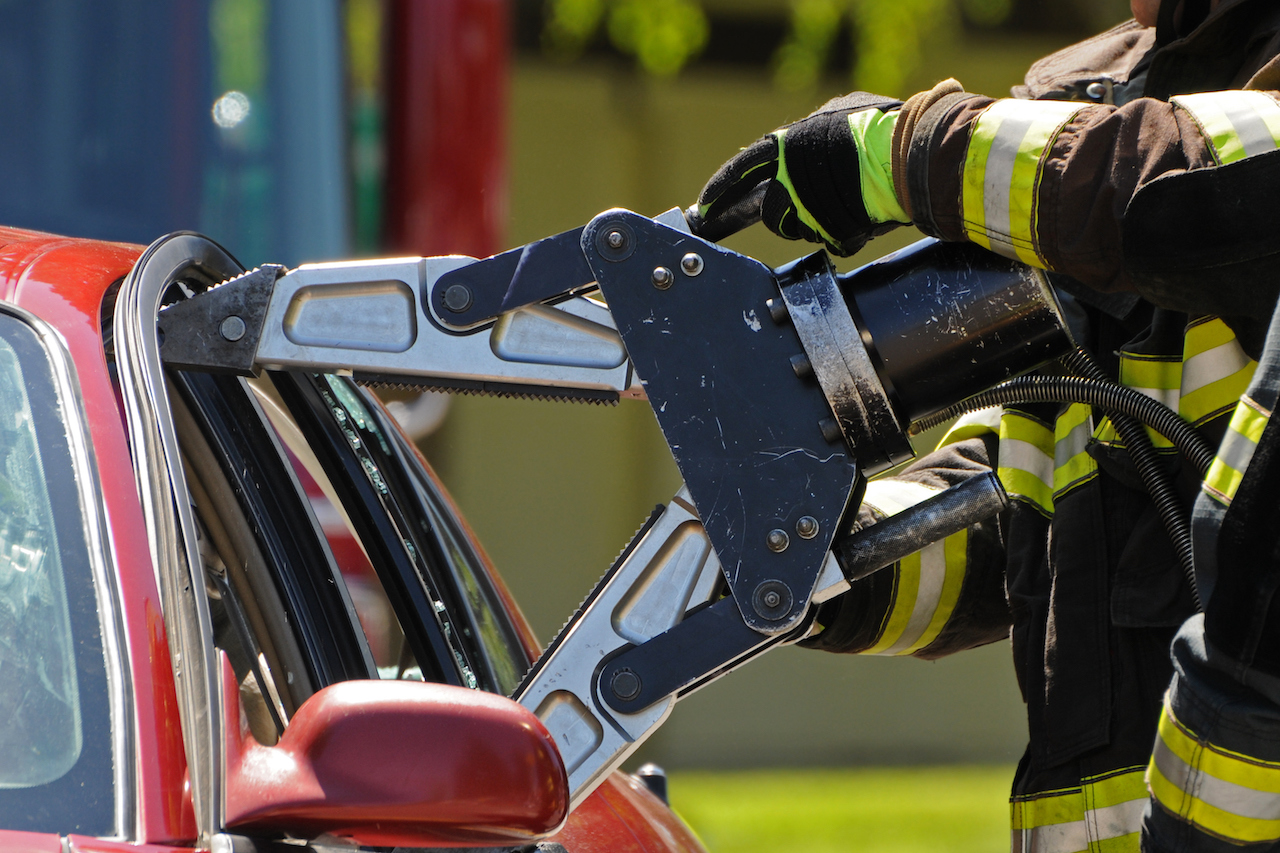
The term “Jaws of Life” has become synonymous with hydraulic rescue tools, a powerful and indispensable set of equipment used by emergency services worldwide to extricate victims from entrapped situations, most commonly vehicle accidents. While often used generically, “Jaws of Life” was originally a brand name for a specific line of hydraulic rescue tools developed by Hurst Performance. Its introduction marked a revolutionary leap in rescue technology, transforming the speed and safety with which accident victims could be freed. At its core, the Jaws of Life represents a sophisticated application of hydraulic principles to generate immense force, enabling first responders to overcome the structural integrity of modern materials like steel and composites that would otherwise impede rapid rescue efforts.
The Lifesaving Technology Behind the Name
Before the advent of modern hydraulic rescue tools, extricating victims from crashed vehicles was a perilous and time-consuming endeavor. Rescuers often relied on rudimentary tools like crowbars, axes, and cutting torches, methods that were slow, less effective, and posed significant risks to both victims and responders due to sparks, heat, and unpredictable structural failures. The breakthrough came in the early 1960s, driven by advancements in hydraulic systems used in industrial applications. George Hurst, a pioneer in high-performance automotive parts, collaborated with Mike Brick, a volunteer firefighter, to develop a tool specifically designed to quickly and safely cut into race cars after crashes. This initial invention, dubbed “The Jaws of Life,” was patented in 1972 and quickly gained traction beyond the racing circuit, becoming a vital asset for fire departments and emergency medical services.
The fundamental genius of the Jaws of Life lies in its ability to harness hydraulic power to perform three critical functions: cutting, spreading, and ramming. This suite of capabilities addresses the complex challenges of vehicle extrication, where victims might be pinned by twisted metal, trapped within collapsed structures, or inaccessible due to jammed doors and deformed chassis. The primary goal is always to create safe access to the victim, stabilize their environment, and facilitate their swift removal, minimizing the “golden hour”—the critical period after a traumatic injury during which rapid medical intervention significantly improves survival chances. By providing unparalleled speed and precision in manipulating vehicle structures, these tools dramatically reduced extrication times from hours to mere minutes, directly contributing to higher survival rates and reduced severity of injuries for accident victims.
Core Components and Operational Principles
The Jaws of Life system is a cohesive unit comprising several key components that work in concert to deliver powerful rescue capabilities. Understanding these components and their operational principles is essential to appreciating the technological marvel they represent.
Power Unit
At the heart of any hydraulic rescue system is the power unit. This component generates the immense pressure required to operate the tools. Early versions, and many contemporary professional models, utilize gasoline-powered engines coupled with hydraulic pumps. These pumps draw hydraulic fluid from a reservoir and pressurize it to thousands of pounds per square inch (PSI). More recently, battery-powered power units have gained significant popularity. These units offer the advantages of portability, quieter operation, and zero emissions, making them ideal for confined spaces or situations where exhaust fumes are undesirable. Regardless of the power source, the unit’s primary function is to convert mechanical energy into hydraulic pressure, which is then transmitted to the working tools.
Hydraulic Hoses
Connecting the power unit to the individual rescue tools are high-pressure hydraulic hoses. These specialized hoses are engineered to withstand extreme pressures and are often reinforced with multiple layers of synthetic fibers or steel mesh. They are robust, flexible, and designed for quick connection and disconnection, allowing responders to rapidly switch between tools or extend their reach. The hoses typically come in pairs (a pressure line and a return line) to facilitate the flow of fluid to and from the tool’s hydraulic cylinder, enabling both extension and retraction of the tool’s working parts. The integrity of these hoses is paramount, as any failure could lead to a loss of pressure and potential hazards.
The Tools Themselves
The term “Jaws of Life” often brings to mind a single, iconic tool, but in reality, it refers to a family of specialized instruments, each designed for a specific extrication task. These tools are often referred to as “cutters,” “spreaders,” and “rams.”
Cutters
Hydraulic cutters resemble heavy-duty shears or giant bolt cutters. They consist of two blades that pivot against each other, driven by a hydraulic cylinder. With operating pressures often exceeding 10,000 PSI, these tools can generate cutting forces upwards of 100,000 pounds. This allows them to effortlessly slice through hardened steel, door pillars, roof supports, steering columns, and even heavy-duty rebar, making quick work of structural components that would be impossible to breach with manual tools. The design of the blades and the geometry of their pivot point are critical for maximizing cutting efficiency and preventing slippage.

Spreaders
Spreaders are characterized by their pincer-like jaws that, instead of closing to cut, open with immense force to push materials apart. They are primarily used for prying open jammed vehicle doors, creating initial openings in twisted metal, or forcing structural components away from trapped occupants. The tips of the spreader jaws are designed to get into tight gaps, and once engaged, the hydraulic power allows them to create and enlarge openings with significant leverage. The spreading force can often exceed 20,000 pounds, making it possible to bend or tear apart heavy-gauge steel.
Rams (Extension Rams)
Hydraulic rams are linear extension tools designed to push objects away from each other or to stabilize structures. They consist of a hydraulic cylinder with a movable piston rod that extends outwards when pressurized. Rams come in various lengths and can generate pushing forces upwards of 30,000 pounds. They are invaluable for pushing dashboards away from pinned occupants, lifting heavy vehicle components, or creating space in collapsed structures. Rams are also crucial for stabilizing vehicles during extrication, preventing further movement that could injure victims or rescuers.
Combi-Tools
A combi-tool, as its name suggests, combines the functions of both a cutter and a spreader into a single unit. These tools feature jaws that can both open to spread and close to cut, offering versatility for scenarios where space or the need for multiple tools is limited. While often slightly less powerful than dedicated cutters or spreaders, combi-tools are highly valued for their efficiency and suitability for lighter extrication tasks or as a primary tool for rapid intervention.
The operational principle underlying all these tools is Pascal’s principle, which states that a pressure change at any point in a confined incompressible fluid is transmitted throughout the fluid such that the same change occurs everywhere. A small force applied over a small area (e.g., in the pump) can generate a much larger force over a larger area (e.g., in the tool’s cylinder), providing a mechanical advantage that is essential for overcoming the robust materials found in modern vehicles and structures.
Technological Evolution and Modern Innovations
The Jaws of Life and similar hydraulic rescue tools have not remained static since their inception. Decades of research and development have led to continuous innovation, driven by changes in vehicle manufacturing, the need for enhanced portability, and improved safety for both victims and rescuers.
Power Sources
One of the most significant evolutionary steps has been the shift in power sources. While early units were predominantly tethered to large, gas-powered hydraulic pumps, modern rescue tools increasingly leverage advanced battery technology. Cordless, battery-powered tools eliminate the need for cumbersome hoses, speeding up deployment, enhancing maneuverability in tight spaces, and removing the hazards associated with gasoline engines (noise, fumes, fuel storage). These innovations are particularly critical in scenarios like confined space rescue or urban search and rescue, where traditional setups might be impractical. Advancements in lithium-ion battery technology have focused on extended run times, rapid charging, and increased power output without significantly adding to the tool’s weight.
Material Science
The automotive industry continuously develops stronger, lighter, and more complex materials, such as advanced high-strength steels (AHSS), boron steel, and composite materials, to improve vehicle safety and fuel efficiency. This constant evolution presents a challenge for rescue tools, requiring corresponding advancements in tool material science. Modern cutters feature blades made from proprietary, ultra-hardened steel alloys and specialized geometries designed to cleanly and efficiently cut through these new-generation materials without premature wear or failure. Spreaders and rams are also constructed from lighter, yet stronger, alloys to reduce overall tool weight while maintaining or increasing their force output.
Ergonomics and Safety Features
User experience and safety are paramount in emergency situations. Modern hydraulic rescue tools are designed with improved ergonomics to reduce rescuer fatigue and enhance control. This includes features like optimized weight distribution, comfortable non-slip grips, and intuitive control mechanisms. Integrated LED lighting is now common, illuminating the work area, which is crucial during night operations or in dark environments. Safety features have also advanced, incorporating pressure relief valves to prevent over-pressurization, dead-man switches that stop operation if the trigger is released, and protected hydraulic couplings to minimize fluid leaks.
Data and Connectivity (Emerging)
While still an emerging trend, the integration of smart technology into rescue tools is on the horizon. This could include sensors that provide real-time feedback on cutting force, battery life, or even tool diagnostics. Connectivity options could allow for data logging, remote monitoring of tool status, or integration with incident command systems, providing valuable information for operational efficiency and post-incident analysis. Such advancements promise to make rescue operations even more intelligent, efficient, and data-driven.

Impact and Future Trends in Rescue Technology
The impact of the Jaws of Life and similar hydraulic rescue tools on emergency response cannot be overstated. They have fundamentally reshaped extrication techniques, significantly reducing the time it takes to free entrapped individuals and thereby directly improving patient outcomes. Beyond vehicle accidents, these tools are invaluable in various other scenarios, including structural collapses, industrial accidents, and situations involving heavy machinery where cutting, spreading, or lifting capabilities are required. They empower first responders with the ability to overcome formidable physical barriers, turning previously impossible rescues into routine operations.
Looking ahead, the field of rescue technology will continue to evolve, driven by ongoing advancements in materials science, robotics, and artificial intelligence. Future trends are likely to include:
- Miniaturization and Increased Power-to-Weight Ratio: Continued efforts to make tools smaller and lighter while simultaneously increasing their power output, enhancing portability and ease of use, especially in confined or difficult-to-access areas.
- AI-Assisted Guidance: Integration of AI and machine learning could lead to tools that provide real-time guidance to responders, identifying optimal cutting points on new vehicle models or suggesting the most efficient extrication strategies based on vehicle damage and occupant location.
- Robotics Integration: For extremely hazardous or inaccessible environments, robotic platforms equipped with miniature hydraulic cutting and spreading tools could be deployed, minimizing risk to human rescuers.
- Advanced Battery Technology: Further breakthroughs in battery chemistry and energy density will continue to improve battery life, reduce charging times, and lighten the load of cordless tools, making them even more dominant in the field.
- Adaptive Tool Attachments: The development of more modular and customizable tool attachments tailored for specific challenges, such as cutting specialized materials or performing delicate operations, will enhance versatility.
The ongoing challenge for rescue tool manufacturers is to constantly adapt to new vehicle designs, propulsion systems (e.g., electric and hydrogen vehicles with unique hazards), and construction materials. As the automotive industry pushes the boundaries of engineering, rescue technology must keep pace, ensuring that emergency responders always have the most effective and safest tools at their disposal to save lives. The Jaws of Life, in its modern iteration, stands as a testament to ingenuity and continuous technological improvement in the face of ever-evolving challenges.
aViewFromTheCave is a participant in the Amazon Services LLC Associates Program, an affiliate advertising program designed to provide a means for sites to earn advertising fees by advertising and linking to Amazon.com. Amazon, the Amazon logo, AmazonSupply, and the AmazonSupply logo are trademarks of Amazon.com, Inc. or its affiliates. As an Amazon Associate we earn affiliate commissions from qualifying purchases.