
The Technological Evolution of a Core Medical Procedure
Intramuscular (IM) injection stands as a foundational method for delivering medication and vaccines directly into muscle tissue, enabling rapid absorption into the bloodstream. Historically, this procedure relied heavily on manual skill and anatomical knowledge, with simple syringes and needles serving as the primary tools. While the fundamental principle of delivering a substance into muscle remains unchanged, the landscape surrounding IM injections has been profoundly transformed by advancements in technology. Today, IM injections are not merely a manual task but are increasingly integrated with sophisticated digital tools, automated systems, and data-driven insights, enhancing precision, safety, and patient outcomes across various healthcare settings. This technological evolution spans from the devices used for administration to the digital infrastructure that manages patient data and optimizes treatment protocols. Understanding “what is intramuscular injection” in the modern era thus requires an appreciation of its technological underpinnings and future trajectory within the digital health ecosystem.
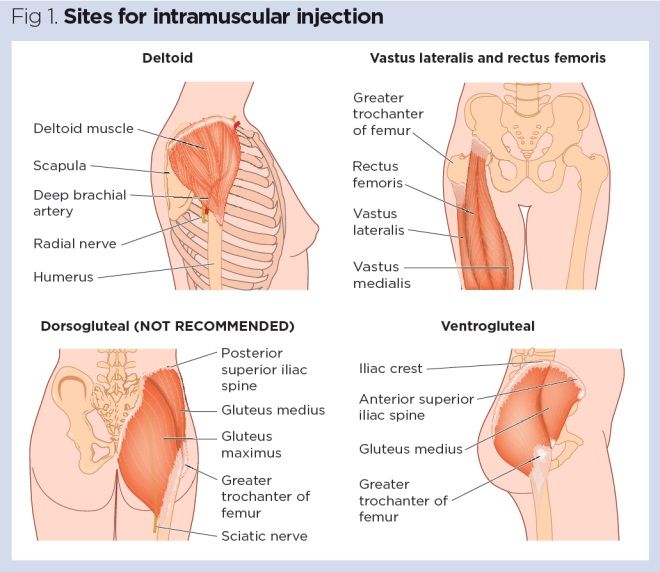
Precision and Automation in Intramuscular Delivery
Modern technology has dramatically refined the process of IM injection, moving beyond basic manual administration to incorporate features that boost accuracy, minimize patient discomfort, and reduce risks. These innovations are critical for ensuring effective drug delivery and patient compliance.
Smart Syringes and Auto-Injectors
The advent of smart syringes and auto-injectors represents a significant leap forward in IM injection technology. Auto-injectors, pre-filled with a single dose of medication, simplify the injection process, making it feasible for patients to self-administer critical treatments such as epinephrine for allergic reactions or insulin. These devices often feature built-in safety mechanisms, such as needle shields that deploy after use, to prevent accidental needlestick injuries. More advanced “smart” versions incorporate connectivity, allowing them to record injection time, dose, and even patient adherence, transmitting this data wirelessly to a patient’s mobile app or directly to their electronic health record (EHR). This connectivity not only aids in compliance tracking but also provides valuable real-world data on drug efficacy and patient experience. These devices minimize human variability, ensuring consistent depth and speed of injection, which can be crucial for optimal drug absorption.
Robotic-Assisted Injection Systems
While still largely in the research and development phase for widespread clinical use, robotic-assisted injection systems are emerging as a frontier in IM delivery, particularly for mass vaccination campaigns or in situations requiring extreme precision. These systems utilize advanced robotics and computer vision to identify optimal injection sites, prepare the skin, and administer injections with unparalleled accuracy and consistency. Benefits include reduced human error, increased throughput, and the potential to alleviate the burden on healthcare staff in high-volume scenarios. Furthermore, robots can operate in environments that might be hazardous for humans, or deliver ultra-precise micro-injections for highly potent or targeted therapies, pushing the boundaries of current manual capabilities.
Imaging Guidance Technologies
For specific therapeutic injections or in patients with complex anatomy, traditional palpation-based site selection can be insufficient. Imaging guidance technologies, primarily ultrasound, have become invaluable tools for enhancing the safety and efficacy of IM injections. By providing real-time visualization of muscle, bone, nerves, and blood vessels, ultrasound guidance allows clinicians to precisely locate the target muscle and avoid critical structures. This is particularly beneficial for deep muscle injections, or in pediatric or critically ill patients where anatomical landmarks might be less distinct. Integrating ultrasound with augmented reality (AR) technologies further promises to overlay anatomical data directly onto the patient’s skin, guiding the clinician with an even higher degree of precision during the injection process.
Digital Health Platforms and IM Injection Management
Beyond the physical act of injection, digital health platforms play an indispensable role in managing the entire lifecycle of IM injection treatments, from scheduling and administration to monitoring and follow-up. These platforms enhance efficiency, improve patient safety, and provide a holistic view of treatment adherence and outcomes.
Electronic Health Records (EHR) Integration
The backbone of modern healthcare, Electronic Health Records (EHRs), are fundamental to the management of IM injections. EHRs meticulously track a patient’s entire injection history, including the specific medication, dosage, lot number, administration site, and date. They also flag crucial information like allergies and contraindications, preventing adverse reactions. Integration with prescribing systems ensures that the correct medication and dose are ordered and administered. Furthermore, EHRs facilitate seamless communication between different healthcare providers, ensuring continuity of care and preventing redundant or conflicting treatments. The digital storage of this data allows for easy retrieval, analysis, and auditing, which is vital for quality control and regulatory compliance.
Telehealth and Remote Monitoring
Telehealth has revolutionized how patients receive care, and its application extends to IM injection management. For patients who self-administer IM injections at home, telehealth platforms can provide virtual training and support, ensuring proper technique and addressing any concerns. Clinicians can use video consultations to observe and guide patients, improving confidence and adherence. Post-injection, remote monitoring systems, often utilizing wearable devices or patient-reported outcome measures (PROMs) via mobile apps, can track symptoms, side effects, and overall well-being. This proactive approach allows healthcare providers to intervene quickly if issues arise, reducing the need for in-person visits and enhancing patient convenience.
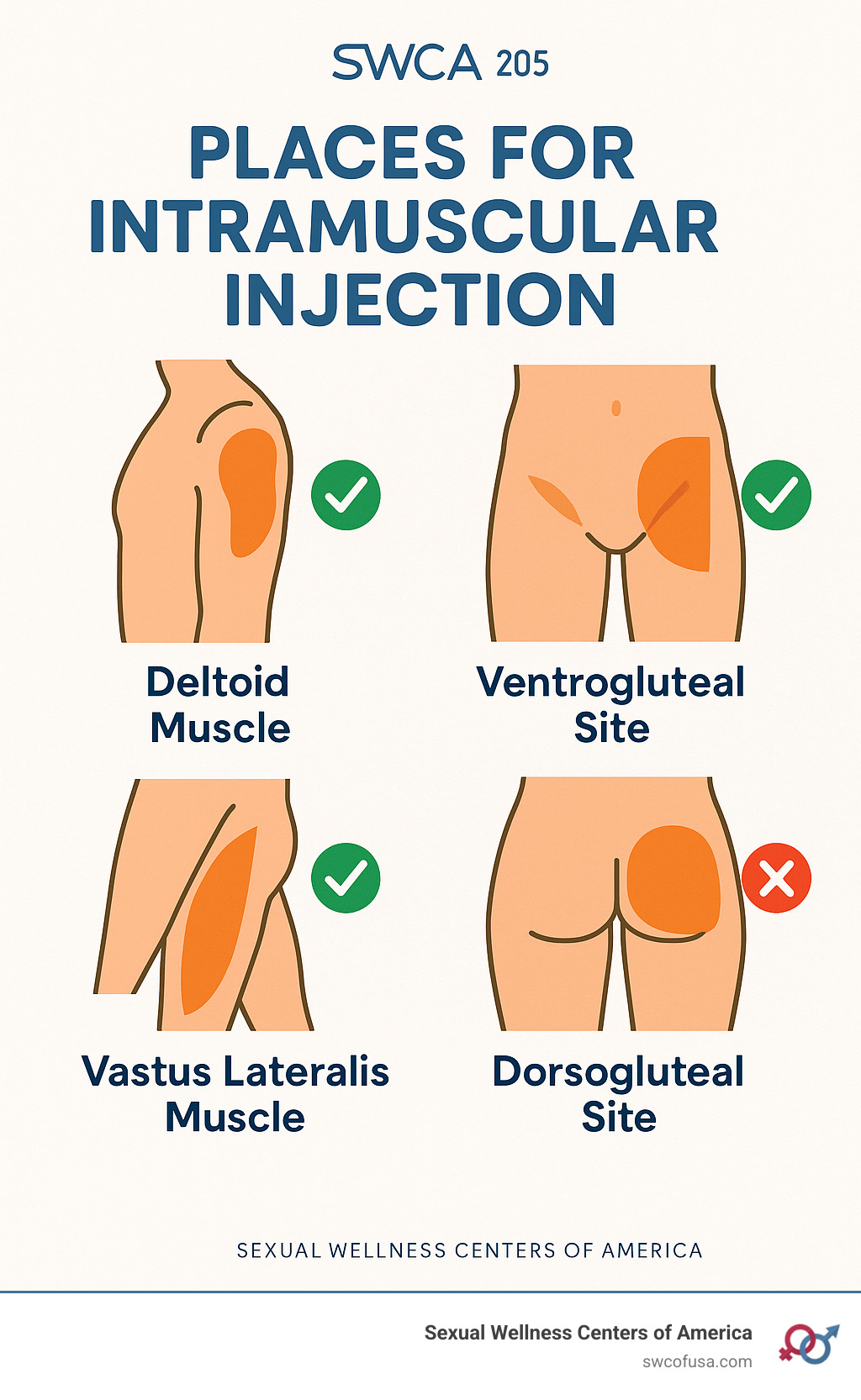
Patient Engagement Apps
Mobile applications designed for patient engagement have become powerful tools for supporting individuals undergoing IM injection therapies. These apps can send automated reminders for upcoming injections, provide step-by-step instructional videos on proper self-administration techniques, and offer educational content about their medication. Patients can also use these apps to log their injections, track symptoms, monitor potential side effects, and communicate directly with their care team. The ability to record and visualize their treatment journey empowers patients, fosters greater adherence, and provides clinicians with valuable real-world data outside of clinic visits, leading to more personalized and effective care plans.
AI and Data Analytics for Optimized Intramuscular Treatment
The burgeoning fields of artificial intelligence (AI) and data analytics are beginning to unlock new levels of optimization and personalization in IM injection therapies. By processing vast amounts of patient data, these technologies can refine treatment strategies, predict outcomes, and enhance overall efficiency.
Predictive Analytics for Treatment Efficacy
AI algorithms can analyze aggregated patient data from EHRs, wearable devices, and genomic profiles to predict how individual patients might respond to specific IM injection therapies. This predictive capability can help clinicians tailor dosages, frequency, and even the type of medication, moving towards truly personalized medicine. For instance, AI can identify patterns in patient demographics, medical history, and past treatment responses to forecast the likelihood of successful outcomes or potential adverse drug reactions, allowing for proactive adjustments to the treatment plan. This leads to more effective therapies and reduces the risk of ineffective or harmful interventions.
AI-Powered Site Selection
While imaging guidance provides real-time visual aid, AI can take site selection a step further. Machine learning models, trained on large datasets of anatomical scans, patient body mass index (BMI), muscle density, and previous injection outcomes, can develop sophisticated algorithms to recommend the optimal IM injection site for a given individual. These AI tools can consider factors beyond immediate visibility, such as vascularity, nerve proximity, and even muscle activity patterns, to suggest the safest and most efficacious site, particularly for complex or repeated injections. This minimizes discomfort and maximizes drug absorption.
Supply Chain Optimization
The administration of IM injections relies heavily on the consistent availability of medications and devices. AI-powered supply chain management systems can predict demand fluctuations based on historical data, disease outbreaks (for vaccines), and seasonal trends. This allows for more efficient inventory management, reducing waste due to expiration and ensuring that necessary supplies are always available where and when they are needed. By optimizing logistics and distribution, AI contributes to the overall accessibility and reliability of IM injection services, particularly crucial during public health crises or for geographically dispersed populations.
Digital Security in Intramuscular Injection Data
As IM injection management becomes increasingly digitalized, the protection of sensitive patient data and the security of connected devices emerge as paramount concerns within the tech landscape of healthcare. Safeguarding this information is not just a matter of compliance but a fundamental ethical imperative.
Protecting Patient Information
The data generated and managed through digital health platforms concerning IM injections—including medication details, dosages, injection sites, adverse reactions, and personal health identifiers—is highly sensitive. Robust cybersecurity measures are essential to protect this information from unauthorized access, breaches, and misuse. This involves advanced encryption protocols, multi-factor authentication for access, regular security audits, and strict access controls based on the “least privilege” principle. Any compromise of this data could lead to severe privacy violations, identity theft, and a catastrophic loss of patient trust in the healthcare system.
Device Security
With the rise of smart syringes, connected auto-injectors, and robotic systems, the security of these physical devices themselves becomes a critical consideration. These devices can potentially be vulnerable to cyberattacks, which could lead to manipulation of dosage, disruption of functionality, or unauthorized data exfiltration. Manufacturers must embed security by design, implementing secure boot processes, secure firmware updates, and robust authentication mechanisms to prevent tampering and ensure the integrity of the device’s operation. Regular vulnerability assessments and penetration testing are crucial to identify and mitigate potential weaknesses before they can be exploited.

Compliance and Regulations
The digital management of IM injection data is subject to stringent regulatory frameworks globally. Regulations such as the Health Insurance Portability and Accountability Act (HIPAA) in the United States, the General Data Protection Regulation (GDPR) in Europe, and various national health data privacy laws dictate how patient data must be collected, stored, processed, and shared. Adherence to these regulations is non-negotiable, requiring healthcare providers and technology vendors to implement comprehensive privacy policies, data governance frameworks, and audit trails. Ensuring compliance protects patient rights, avoids legal penalties, and maintains the trust essential for the successful adoption and expansion of technological solutions in IM injection administration.
aViewFromTheCave is a participant in the Amazon Services LLC Associates Program, an affiliate advertising program designed to provide a means for sites to earn advertising fees by advertising and linking to Amazon.com. Amazon, the Amazon logo, AmazonSupply, and the AmazonSupply logo are trademarks of Amazon.com, Inc. or its affiliates. As an Amazon Associate we earn affiliate commissions from qualifying purchases.