
Roblox, a platform that began as a niche virtual world for building and playing games, has transcended its initial scope to become a pioneering force in the burgeoning metaverse. What started as a simple idea for user-generated content has evolved into a complex, multi-faceted digital ecosystem facing both immense opportunities and significant technical challenges. The question “what is going on with Roblox” encapsulates a dynamic period of intense technological development, platform expansion, and a persistent drive to define the future of online social interaction and digital ownership. From its foundational technology to its ambitious vision for an immersive, interoperable metaverse, Roblox is in a perpetual state of engineering and strategic evolution.
The Technological Core of the Metaverse Vision
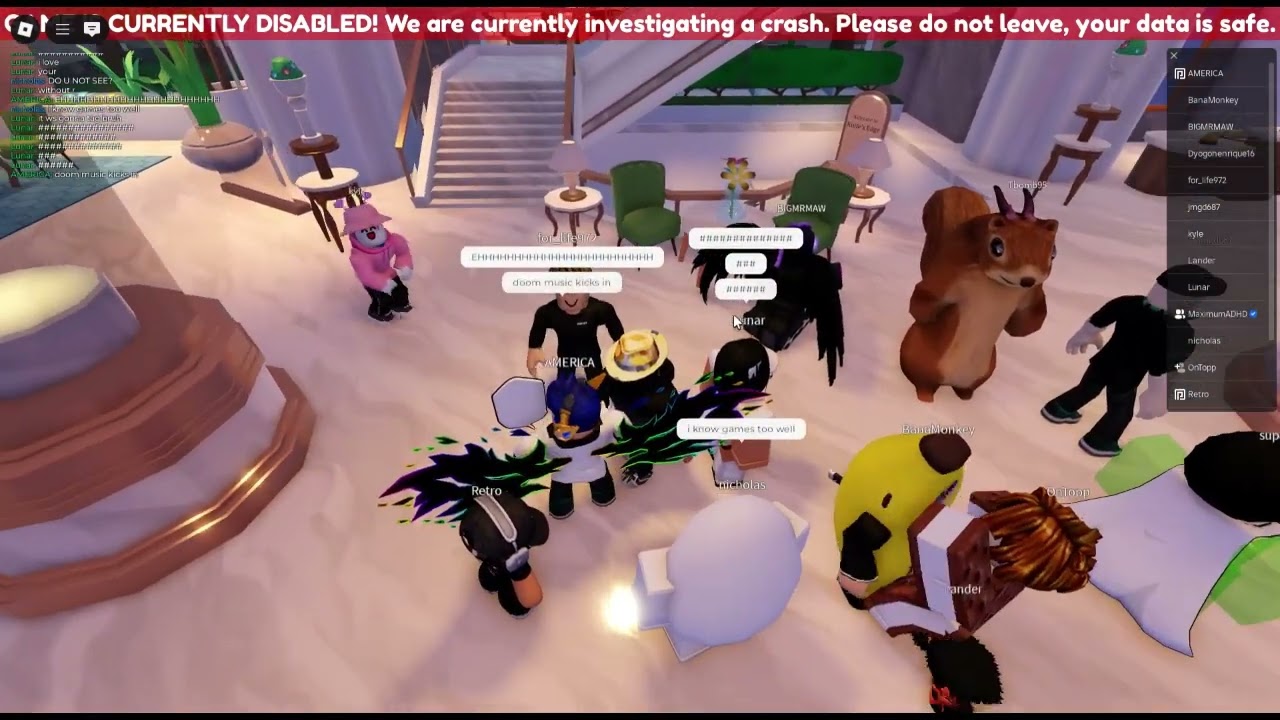
At its heart, Roblox is an intricate technological marvel, enabling millions of concurrent users to interact in diverse virtual experiences created by its community. The platform’s commitment to the metaverse is not merely a buzzword but a deeply ingrained strategic directive that influences every aspect of its software development and infrastructure. Roblox’s metaverse vision hinges on creating an immersive, persistent, and highly customizable digital space where users can not only play games but also learn, socialize, work, and engage in commerce. This ambition demands cutting-edge advancements in rendering, networking, physics engines, and cloud computing to deliver seamless, high-fidelity experiences at scale.
Central to this vision is Roblox’s proprietary engine, which empowers creators with sophisticated tools to build intricate 3D worlds and interactive experiences without requiring deep programming knowledge. The continuous iteration on this engine, integrating advanced graphics capabilities, spatial audio, and haptic feedback, is crucial for elevating the immersive quality of the platform. Furthermore, the push towards interoperability, while still in its nascent stages, represents a significant technological hurdle. Achieving a state where digital assets and identities can seamlessly traverse different experiences within Roblox, and potentially beyond, requires robust blockchain-agnostic solutions and secure identity management systems, pushing the boundaries of current distributed ledger technologies and identity protocols. The underlying architecture must support a dynamic, ever-expanding content library while maintaining stability and performance, a testament to the ongoing engineering challenges in real-time, large-scale distributed systems.
Empowering the Creator Economy Through Advanced Tools
The unparalleled growth and diversity of content on Roblox are direct results of its powerful and accessible creator tools, primarily Roblox Studio. This integrated development environment (IDE) provides a comprehensive suite for building, scripting, and publishing experiences, democratizing game development to an unprecedented degree. What distinguishes Roblox Studio is its balance of simplicity for beginners with depth for experienced developers, leveraging Lua scripting language for game logic and offering robust asset creation pipelines. The platform continually invests in enhancing these tools, rolling out updates that include advanced UI frameworks, improved debugging capabilities, and more sophisticated asset management systems, including PBR textures and mesh deformation, allowing for more realistic and expressive creations.
The drive to empower creators extends beyond the core Studio environment. Roblox is actively developing and integrating new technologies aimed at streamlining workflows and fostering innovation. This includes AI-powered tools for content generation, such as automated asset creation or script suggestions, which can significantly reduce development time and complexity. Furthermore, the platform is exploring cloud-based collaborative development environments, allowing multiple creators to work simultaneously on a single project, akin to professional game studios. These advancements are not just about making creation easier; they are about fostering a vibrant, self-sustaining digital economy where creators are incentivized to build compelling experiences. The technical infrastructure supporting this creator economy includes robust backend services for content distribution, analytics to help developers understand user engagement, and a secure payment processing system (Robux) that facilitates monetization and transparent payouts. The ongoing technical challenge lies in scaling these services to support millions of creators and billions of daily transactions while maintaining security and performance.

Navigating Digital Safety and Moderation Technologies
As a platform predominantly populated by a young demographic, digital safety and content moderation are paramount for Roblox, presenting some of its most complex technical and ethical challenges. Ensuring a safe environment where users can freely interact requires a multi-layered approach that combines cutting-edge AI, machine learning, human moderation, and robust reporting systems. Roblox continuously refines its technological arsenal to combat inappropriate content, harassment, and exploitation. This includes advanced natural language processing (NLP) models capable of real-time analysis of chat communications in over a dozen languages, identifying nuanced threats and context-specific risks beyond mere keyword filtering.
The challenge is significant due to the sheer volume and dynamic nature of user-generated content, encompassing text, images, 3D models, and interactive experiences. Moderation technologies must evolve rapidly to keep pace with new forms of harmful content and user behavior. Roblox employs computer vision algorithms to scan uploaded assets for policy violations and machine learning models to identify problematic patterns in user-created games. Furthermore, the platform is investing in proactive safety measures, such as age-gating content and experiences based on robust rating systems, and implementing identity verification technologies to enable more secure social interactions for older users. Developing these systems requires massive datasets, sophisticated neural networks, and a deep understanding of human behavior, all while striving to minimize false positives and preserve freedom of expression. The balance between comprehensive safety and user autonomy is a delicate one, pushing the boundaries of what is technically achievable in automated content moderation. Continuous improvement in these areas is not just a regulatory requirement but a fundamental pillar of user trust and platform longevity.
Scaling Infrastructure for Global Real-Time Engagement
Roblox’s phenomenal success is built on a robust and scalable technical infrastructure designed to support billions of hours of engagement from millions of simultaneous users worldwide. This massive scale presents engineering challenges akin to those faced by major cloud providers and social media giants. The platform’s architecture relies on a distributed network of servers and data centers, optimized for low-latency communication to ensure smooth, real-time interactions across geographically dispersed users. A critical component is its highly optimized networking stack, which minimizes data transfer and intelligently routes traffic to maintain connectivity and responsiveness even in high-load scenarios.
The continuous demand for more complex, graphics-intensive experiences pushes the limits of Roblox’s rendering and physics capabilities, necessitating ongoing innovation in server-side computation and client-side optimization. The company invests heavily in cloud technologies, leveraging both proprietary infrastructure and partnerships with major cloud providers to dynamically scale resources up and down based on user demand, ensuring seamless performance during peak times. This elasticity is crucial for a platform experiencing unpredictable surges in activity. Furthermore, data management at this scale is an enormous undertaking. Roblox handles petabytes of user data, game assets, and analytics, requiring sophisticated database solutions, real-time data streaming pipelines, and robust data warehousing capabilities. The engineering teams are constantly refining algorithms for resource allocation, load balancing, and data caching to maximize efficiency and minimize operational costs. As the platform looks towards even greater fidelity and user concurrency in the metaverse, advancements in edge computing and decentralized network architectures will become increasingly vital to reduce latency and enhance the global user experience.
The Competitive Landscape and Future Technological Trajectories
Roblox operates within an increasingly competitive and rapidly evolving technological landscape, particularly concerning the race to define the metaverse. While often compared to traditional gaming platforms, Roblox’s unique position as a user-generated content platform with a robust creator economy places it in a distinct category, vying for attention with social media giants, other virtual worlds (like Fortnite and Minecraft), and emerging Web3 platforms. Its core technological advantage lies in its mature creator ecosystem and established user base. However, the future demands continuous innovation to maintain this lead.
Key technological trajectories for Roblox include further investments in AI, particularly for enhancing content creation, personalized user experiences, and advanced moderation. The integration of generative AI tools could revolutionize how users and developers create assets, worlds, and interactive narratives, potentially lowering the barrier to entry even further. Furthermore, Roblox is closely watching developments in Web3 technologies, including blockchain for digital ownership, NFTs, and decentralized identity. While not fully embracing these technologies in their current form, strategic exploration of their potential to enhance user ownership, interoperability, and creator monetization is ongoing. The goal is to integrate the most beneficial aspects of Web3 into its existing framework in a secure and user-friendly manner. The future also entails pushing the boundaries of hardware compatibility, extending Roblox experiences to virtual and augmented reality devices with increased fidelity and immersion. Navigating these complex technological frontiers while upholding its core values of safety, creativity, and community will define Roblox’s trajectory in the next generation of digital interaction.
aViewFromTheCave is a participant in the Amazon Services LLC Associates Program, an affiliate advertising program designed to provide a means for sites to earn advertising fees by advertising and linking to Amazon.com. Amazon, the Amazon logo, AmazonSupply, and the AmazonSupply logo are trademarks of Amazon.com, Inc. or its affiliates. As an Amazon Associate we earn affiliate commissions from qualifying purchases.