
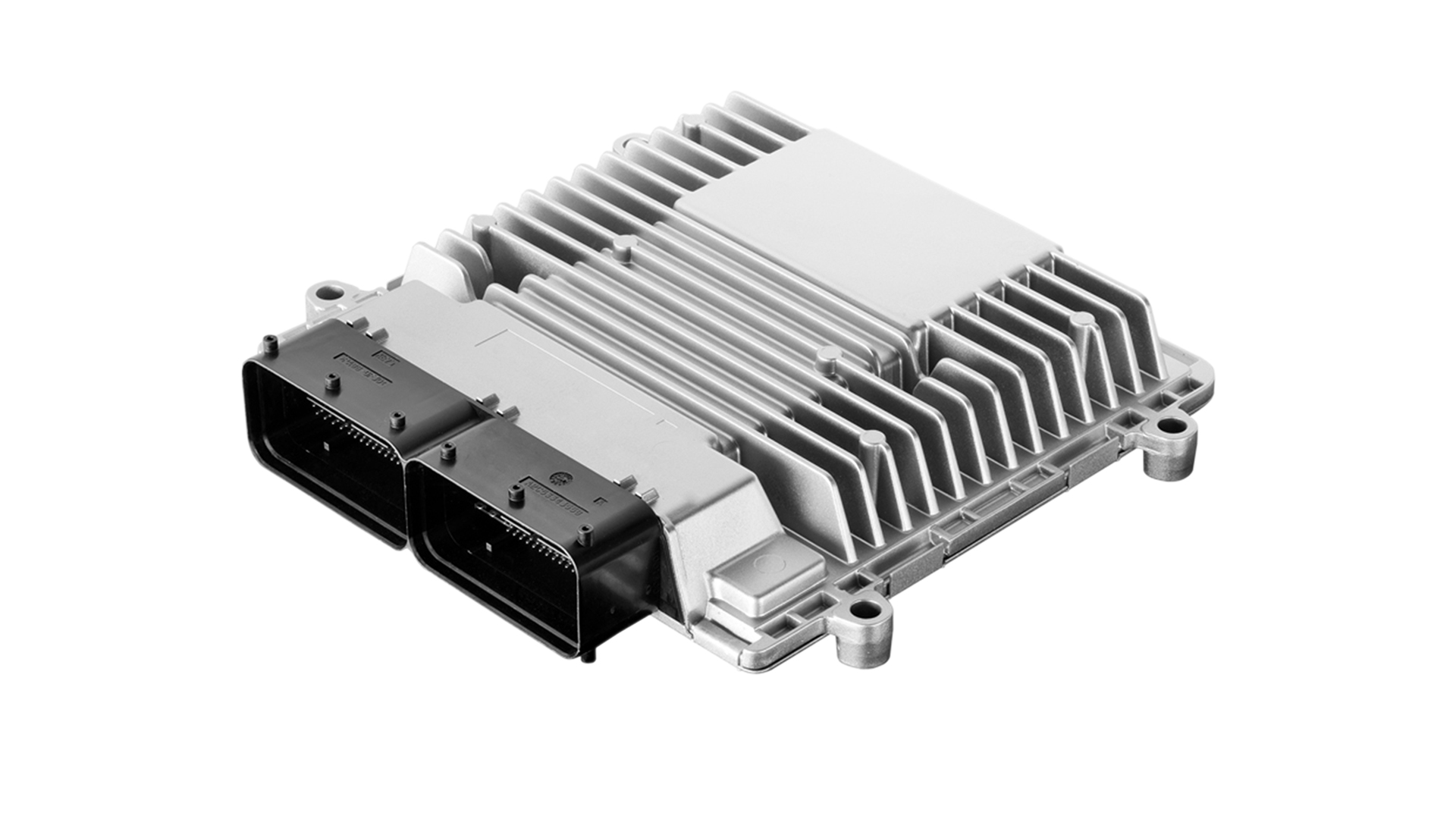
The Engine Control Unit (ECU), often referred to as the Engine Control Module (ECM), is arguably the most critical electronic component in a modern vehicle’s internal combustion engine system. Far more than just a simple circuit board, the ECU serves as the central nervous system, constantly monitoring and regulating an astonishing array of engine parameters to ensure optimal performance, efficiency, and emissions control. Understanding its role is fundamental to grasping the sophisticated technology that powers today’s automobiles.
The Brain of Your Vehicle’s Engine
At its core, the ECU is a specialized computer designed to interpret data from numerous sensors around the engine and then execute commands to various actuators to maintain precise control over engine operation. Without a functional ECU, a contemporary vehicle simply cannot run optimally, if at all.
Core Functionality and Importance
The primary function of an ECU is to manage the intricate dance of combustion within an engine. This involves precisely metering fuel, timing spark ignition, and regulating airflow to achieve the perfect air-fuel ratio under varying operating conditions—from cold starts to wide-open throttle. Its importance cannot be overstated, as it directly impacts fuel economy, power output, emissions, and even the longevity of engine components. Modern vehicles have become so reliant on these electronic brains that the performance characteristics, safety features, and environmental compliance are inextricably linked to the ECU’s sophisticated algorithms and processing power.
Historical Evolution and Modern Complexity
The concept of electronic engine control began to emerge in the late 1970s and early 1980s, primarily driven by increasingly stringent emissions regulations and the desire for improved fuel efficiency. Early ECUs were relatively simple, often managing only fuel injection and ignition timing. These systems replaced mechanical and vacuum-operated controls, offering far greater precision.
Over the decades, as microprocessors became more powerful and compact, the scope of the ECU expanded dramatically. Today’s ECUs are highly complex embedded systems, often featuring multi-core processors, gigabytes of flash memory, and sophisticated operating systems. They manage not just basic engine functions but also integrate with transmission control units (TCUs), anti-lock braking systems (ABS), traction control systems (TCS), and advanced driver-assistance systems (ADAS), forming a cohesive network across the vehicle. This evolution has transformed vehicles from purely mechanical machines into sophisticated cyber-physical systems.
How an ECU Works: Sensors, Processing, and Actuators
The operational paradigm of an ECU can be broken down into three fundamental stages: input, processing, and output. This closed-loop system allows the ECU to continuously monitor, adapt, and control the engine’s behavior in real-time.
Input from Sensors: The Vehicle’s Senses
The ECU relies on a vast network of sensors strategically placed throughout the engine and vehicle. These sensors act as the ECU’s “senses,” providing critical data points about the engine’s current state and the driver’s demands. Key sensors include:
- Oxygen Sensors (O2 Sensors): Measure the oxygen content in the exhaust gas to determine the richness or leanness of the air-fuel mixture.
- Mass Air Flow (MAF) Sensor: Measures the amount of air entering the engine.
- Manifold Absolute Pressure (MAP) Sensor: Measures the pressure inside the intake manifold.
- Throttle Position Sensor (TPS): Detects the position of the throttle pedal, indicating driver demand for power.
- Coolant Temperature Sensor (CTS): Monitors engine operating temperature.
- Crankshaft Position Sensor (CPS) and Camshaft Position Sensor (CMP): Determine the rotational speed and position of the crankshaft and camshaft, crucial for ignition timing and fuel injection synchronization.
- Knock Sensor: Detects engine knocking or pre-ignition, allowing the ECU to adjust ignition timing to prevent damage.
- Vehicle Speed Sensor (VSS): Provides data on the vehicle’s speed.
These sensors convert physical parameters into electrical signals, which are then sent to the ECU for interpretation.
Data Processing and Decision Making: The ECU’s Logic
Upon receiving sensor data, the ECU’s microprocessors rapidly analyze this information. It compares the real-time sensor readings against pre-programmed “maps” or tables stored in its memory. These maps contain optimal values for fuel delivery, ignition timing, and other parameters under various load, RPM, and environmental conditions.
The ECU executes complex algorithms that consider factors like engine load, temperature, speed, atmospheric pressure, and driver input. For instance, if the MAF sensor indicates a high volume of incoming air and the TPS indicates wide-open throttle, the ECU will consult its maps to determine the appropriate amount of fuel to inject and the precise moment to fire the spark plugs to maximize power. If an O2 sensor detects a lean condition, the ECU will command an increase in fuel delivery. This constant comparison and calculation ensure the engine operates within its designed parameters for efficiency and performance.
Output to Actuators: Executing Commands
Based on its processing and decision-making, the ECU sends electrical signals to various actuators, which are the components that physically carry out its commands. These outputs directly influence engine operation:
- Fuel Injectors: The ECU controls the pulse width and timing of the fuel injectors, precisely metering the amount of fuel sprayed into the combustion chambers.
- Ignition Coils/Spark Plugs: The ECU determines the exact moment to trigger the spark plugs, igniting the air-fuel mixture for combustion.
- Electronic Throttle Body: In “drive-by-wire” systems, the ECU controls the opening and closing of the throttle plate based on driver pedal input, rather than a direct mechanical linkage.
- Idle Air Control (IAC) Valve: Regulates the amount of air bypassing the throttle plate to maintain a stable idle speed.
- Exhaust Gas Recirculation (EGR) Valve: Controls the amount of exhaust gas recirculated back into the intake manifold to reduce NOx emissions.
- Variable Valve Timing (VVT) Solenoids: Adjust the timing of intake and exhaust valves for optimized performance across the RPM range.
Through this continuous loop of sensing, processing, and actuating, the ECU dynamically manages engine behavior to meet current demands.
Key Functions and Control Systems Managed by the ECU
The ECU’s responsibilities extend to nearly every aspect of engine operation, orchestrating multiple intricate control systems simultaneously.
Fuel Management and Injection
Perhaps its most critical role, the ECU precisely controls fuel injection. It calculates the ideal fuel-to-air ratio (stoichiometric ratio, typically 14.7:1 for gasoline) and determines the duration and timing of injector pulses. This ensures efficient combustion, minimizes fuel waste, and reduces emissions. Systems like multi-point fuel injection (MPI) and gasoline direct injection (GDI) rely entirely on the ECU for their precision.
Ignition Timing Optimization

The ECU constantly adjusts the ignition timing—the exact moment the spark plugs fire—based on engine speed, load, temperature, and even fuel quality (via knock sensors). Advancing the spark too much can cause pre-ignition or “knocking,” while retarding it too much can reduce power and efficiency. The ECU finds the optimal balance to maximize power and fuel economy without engine damage.
Emissions Control and Compliance
Modern ECUs play a pivotal role in meeting strict global emissions standards. They manage systems like the EGR valve to reduce nitrogen oxides (NOx), monitor catalytic converter efficiency via oxygen sensors, and control evaporative emissions systems (EVAP) to prevent fuel vapor from escaping into the atmosphere. The ECU ensures the engine operates within a narrow window for the catalytic converter to function effectively, converting harmful pollutants into less harmful gases.
Variable Valve Timing (VVT) and Turbocharger Management
Many modern engines incorporate VVT to optimize valve overlap and lift for different RPMs, improving both power and efficiency. The ECU controls the actuators that shift camshafts or adjust valve timing. Similarly, in turbocharged engines, the ECU manages the wastegate or variable geometry turbocharger (VGT) to control boost pressure, ensuring optimal power delivery across the rev range while preventing over-boosting.
Idle Speed Control
The ECU maintains a stable and appropriate engine idle speed, regardless of accessory loads (e.g., air conditioning, power steering). It does this by adjusting the amount of air bypassing the throttle plate (via an IAC valve or by slightly opening the electronic throttle body) to compensate for varying loads and engine temperatures.
Advanced Features and Future Trends in ECU Technology
The evolution of the ECU continues at a rapid pace, driven by advancements in automotive technology, connectivity, and artificial intelligence.
Integration with ADAS and Autonomous Systems
As vehicles become more autonomous, the ECU is integrating more tightly with ADAS (Advanced Driver-Assistance Systems) like adaptive cruise control, lane-keeping assist, and automatic emergency braking. In future autonomous vehicles, the engine control will be seamlessly coordinated with navigation, sensor data, and decision-making algorithms from central vehicle computers, moving beyond simple engine management to comprehensive powertrain control within a broader autonomous driving framework.
Over-the-Air (OTA) Updates and Cybersecurity
Modern ECUs are increasingly capable of receiving Over-the-Air (OTA) software updates, similar to smartphones. This allows manufacturers to deploy performance enhancements, bug fixes, or even add new features without a trip to the dealership. However, this connectivity also introduces cybersecurity risks, making robust encryption and secure boot processes critical to protect the ECU from unauthorized access or malicious attacks.
Diagnostics and Prognostics
ECUs include sophisticated diagnostic capabilities, storing “trouble codes” (DTCs) when a sensor or system fault occurs. These codes can be read by diagnostic tools, allowing technicians to quickly identify issues. Emerging trends include prognostic capabilities, where the ECU can analyze patterns in sensor data to predict potential component failures before they happen, enabling proactive maintenance.
Performance Tuning and Aftermarket Customization
The ECU’s software maps are a common target for aftermarket tuners. By modifying these maps, enthusiasts can unlock additional horsepower and torque, adjust shift points, or even optimize for different fuel types. However, such modifications require expertise, as improper tuning can lead to engine damage or increased emissions.
The Rise of Domain Controllers and Zonal Architectures
While current vehicles often have many separate ECUs for different systems (engine, transmission, body control, infotainment), the trend is moving towards fewer, more powerful domain controllers or even a zonal architecture. In this model, high-performance central computers would handle broader functions, and local zonal gateways would aggregate sensor data and control actuators within specific physical zones of the vehicle. This simplifies wiring, enhances data processing, and facilitates more complex cross-system functionalities.
The Impact of ECU on Vehicle Performance and Efficiency
The sophisticated control exerted by the ECU has fundamentally transformed how vehicles perform, consume fuel, and interact with the environment.
Enhancing Drivability and Power Output
By continuously optimizing fuel delivery and ignition timing, the ECU ensures smooth power delivery across the entire RPM range. It eliminates the “flat spots” or hesitation common in older, mechanically controlled engines, providing a more responsive and engaging driving experience. Turbocharged engines, in particular, benefit from precise ECU management to deliver impressive power figures.
Optimizing Fuel Economy
One of the ECU’s most significant contributions is its ability to maximize fuel efficiency. By ensuring the engine always runs at the optimal air-fuel ratio and adjusting parameters based on driving conditions, it minimizes fuel consumption. This includes features like cylinder deactivation, start-stop systems, and advanced transmission control, all orchestrated by the ECU to save fuel.

Reducing Environmental Footprint
The ECU is instrumental in reducing harmful exhaust emissions. Its precise control over combustion, combined with management of emissions control systems, ensures that vehicles comply with increasingly strict environmental regulations worldwide. By optimizing catalytic converter efficiency and controlling pollutants at their source, the ECU helps minimize the environmental impact of internal combustion engines.
In essence, the Engine Control Unit is far more than a component; it is the intelligent core that enables modern internal combustion engines to be powerful, efficient, clean, and reliable, continually evolving to meet the demands of an ever-changing automotive landscape.
aViewFromTheCave is a participant in the Amazon Services LLC Associates Program, an affiliate advertising program designed to provide a means for sites to earn advertising fees by advertising and linking to Amazon.com. Amazon, the Amazon logo, AmazonSupply, and the AmazonSupply logo are trademarks of Amazon.com, Inc. or its affiliates. As an Amazon Associate we earn affiliate commissions from qualifying purchases.