
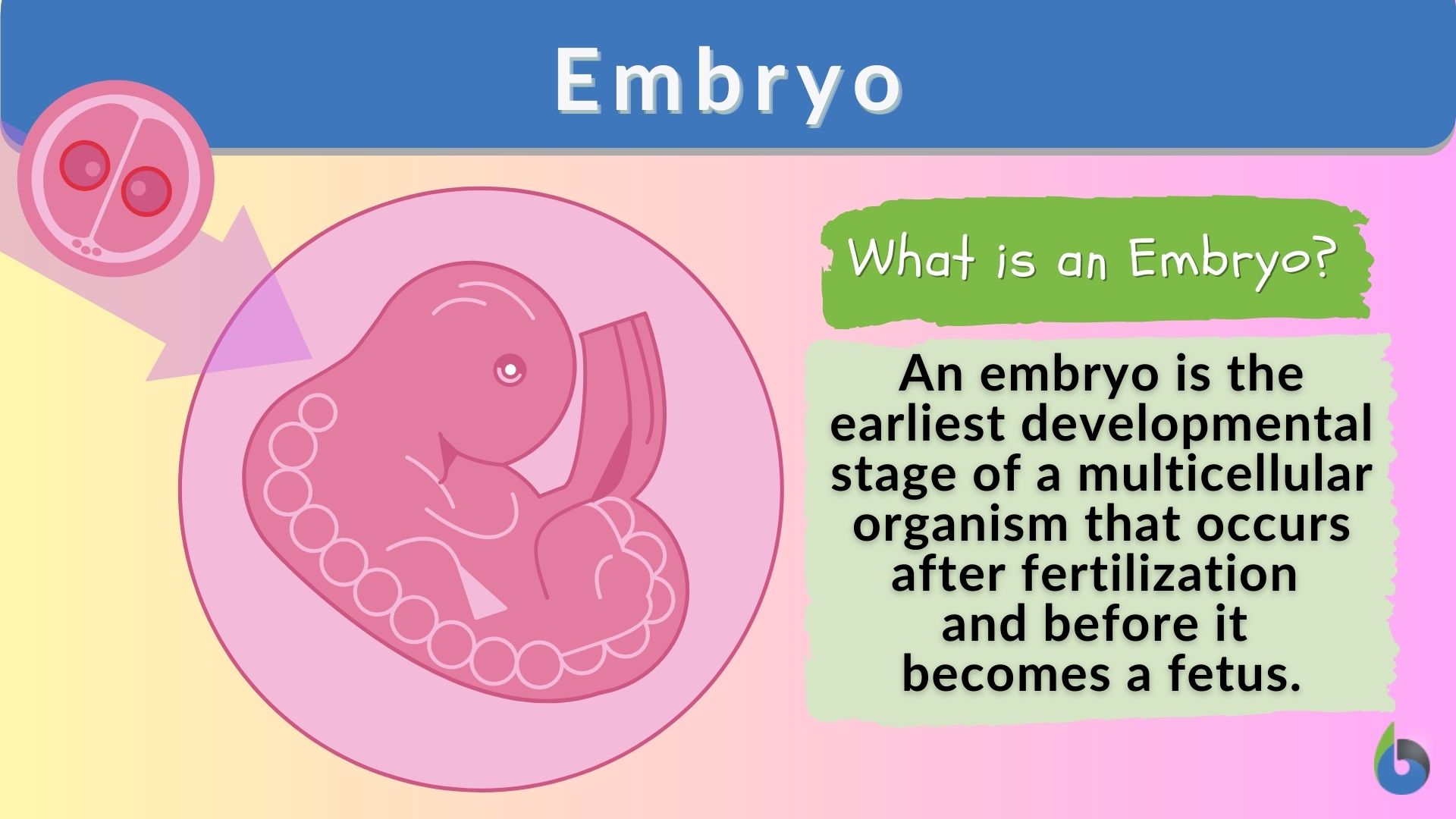
The term “embryonic” traditionally refers to the earliest stages of development in biological organisms, a period characterized by fundamental formation, rapid change, and immense potential. When applied to the realm of technology, “embryonic” takes on a powerful metaphorical meaning, describing innovations that are in their nascent, formative stages. These are the ideas, prototypes, and scientific breakthroughs that hold the promise of transforming industries, solving complex problems, and reshaping human experience, yet are still far from widespread adoption or commercial maturity. Understanding what constitutes embryonic technology is crucial for investors, innovators, and anyone seeking to anticipate the next wave of disruptive change.
The Nascent Stages of Technological Innovation
Embryonic technology represents the frontier of human ingenuity, residing at the intersection of scientific discovery and practical application. It’s where theoretical concepts begin to coalesce into tangible forms, undergoing rigorous testing, refinement, and early-stage validation. This phase is marked by high uncertainty, significant technical challenges, and often a limited understanding of the technology’s eventual market impact or societal implications.
Defining “Embryonic” in Tech Context
In the technological landscape, an “embryonic” innovation is typically characterized by several key attributes. Firstly, it possesses a novel core principle or approach that significantly departs from existing solutions. This novelty might stem from a new scientific understanding, a groundbreaking engineering method, or a radical reinterpretation of an old problem. Secondly, embryonic technologies are often unproven at scale. While laboratory prototypes or proof-of-concept demonstrations may exist, the ability to reliably produce, deploy, or integrate the technology into real-world systems remains largely unexplored or underdeveloped. Thirdly, the market for embryonic technology is usually undefined or extremely niche. Early adopters might be researchers or highly specialized industries, rather than a broad consumer base. Finally, these technologies are frequently capital-intensive and require substantial investment in research and development, often without immediate returns. Their long-term value, however, can be exponential.
Characteristics of Embryonic Tech
Several defining characteristics set embryonic technologies apart:
- High Risk, High Reward: The potential for failure is substantial due to technical hurdles, lack of market fit, or unforeseen complications. Conversely, successful embryonic technologies can yield transformative benefits and astronomical returns.
- Rapid Iteration and Evolution: The early stages are characterized by constant experimentation, revision, and adaptation as developers learn what works and what doesn’t. Specifications, designs, and even core functionalities can change dramatically.
- Limited Infrastructure and Ecosystem: Supporting infrastructure, supply chains, regulatory frameworks, and complementary technologies may not yet exist, requiring the embryonic tech to either create its own ecosystem or wait for others to emerge.
- Fundamental Research-Driven: Many embryonic technologies originate from pure scientific research rather than market demand, gradually finding their applications as understanding matures.
- Scalability Challenges: Moving from a proof-of-concept to a viable, mass-producible product or service often presents formidable challenges in terms of cost, manufacturing, and operational complexity.
Exploring Key Embryonic Technologies
The current technological landscape is rich with innovations in their embryonic stages, each holding the potential to reshape various facets of life and industry. Identifying and understanding these nascent fields is critical for anticipating future trends.
Artificial Intelligence and Machine Learning
While AI and ML have seen significant maturity in areas like natural language processing and computer vision, many sub-fields remain embryonic. This includes advanced forms of General AI (AGI), which aims to replicate human cognitive abilities across a wide range of tasks, moving beyond narrow, specialized AI. Research into neuromorphic computing, which seeks to mimic the structure and function of the human brain directly in hardware, is also deeply embryonic. Similarly, robust and interpretable causal AI, which can understand cause-and-effect relationships rather than just correlations, is an emerging area with vast implications for decision-making and scientific discovery. These areas are still grappling with fundamental theoretical challenges, computational power requirements, and ethical considerations.
Quantum Computing
Quantum computing is arguably one of the most prominent examples of embryonic technology. Rather than using binary bits (0s and 1s), quantum computers leverage quantum-mechanical phenomena like superposition and entanglement to process information. This promises to solve certain problems currently intractable for even the most powerful supercomputers, with applications in drug discovery, materials science, cryptography, and complex optimization. However, quantum computers are still largely experimental. Building stable, error-corrected qubits (quantum bits) is incredibly challenging, and current machines are prone to decoherence, requiring cryogenic temperatures and precise isolation. The development of quantum algorithms is also in its infancy, and a “killer application” that clearly demonstrates quantum supremacy over classical computing for practical problems is still being sought.
Biotechnology and Gene Editing
Biotechnology, particularly in areas like CRISPR-based gene editing, has moved rapidly but still harbors many embryonic components. While CRISPR offers unprecedented precision in modifying DNA, its widespread therapeutic application is still in early clinical trials, facing hurdles related to off-target edits, delivery mechanisms, and long-term safety. Beyond CRISPR, the broader field of synthetic biology, which involves designing and building new biological parts, devices, and systems, is embryonic. This includes efforts to engineer microorganisms for novel purposes, create entirely new forms of life, or develop biological sensors and actuators. The potential to create sustainable chemicals, advanced biofuels, and revolutionary medical diagnostics is immense, but the complexity of biological systems and ethical considerations pose significant developmental challenges.
Advanced Robotics and Automation
While industrial robots are mature, the development of truly autonomous, adaptive, and collaborative robots remains in its embryonic stage. This encompasses robots capable of learning from their environment, interacting safely and intuitively with humans in unstructured settings, and performing complex tasks that require fine motor skills and cognitive reasoning. Fields like soft robotics, which uses compliant materials to create more dexterous and safer robots, are also embryonic. Advances in AI, sensors, and materials science are gradually pushing these capabilities forward, but creating robots that can seamlessly navigate and operate in unpredictable human environments is a formidable challenge, requiring breakthroughs in perception, decision-making, and manipulation.
Challenges and Opportunities in Embryonic Tech Development
The journey from an embryonic idea to a widely adopted technology is fraught with challenges but also offers unparalleled opportunities for innovation and economic growth.
Funding and Investment Landscape
Embryonic technologies typically require significant, patient capital. Traditional venture capital might be hesitant due to the high risk and long timeframes for commercialization. This often necessitates government grants, academic funding, corporate R&D investments, or specialized deep-tech venture funds. Early-stage investors must possess a high tolerance for risk and a long-term vision, understanding that many projects will not succeed, but the few that do can yield extraordinary returns. Opportunities exist for early investors to shape the direction of future industries and gain first-mover advantages.
Technical Hurdles and Iteration
The primary challenge for embryonic technologies is proving their technical viability and scalability. This involves overcoming fundamental scientific and engineering obstacles, developing robust prototypes, and demonstrating consistent performance. The iterative nature of development means constant testing, failure, and redesign, demanding relentless persistence and adaptability from researchers and engineers. This phase also involves significant intellectual property development, as foundational patents are established that can define future market leadership.
Ethical and Societal Considerations
Many embryonic technologies, especially in AI, biotechnology, and advanced robotics, raise profound ethical, legal, and societal questions. Issues like data privacy, algorithmic bias, human enhancement, environmental impact, and job displacement must be considered and addressed as the technology develops. Proactive engagement with policymakers, ethicists, and the public is crucial to ensure that these technologies develop responsibly and align with societal values, preventing potential backlash that could hinder their progress.
From Embryo to Mainstream: The Development Lifecycle
The transition of an embryonic technology to mainstream adoption is a multi-stage process, rarely linear, and often takes decades.
Prototyping and Proof-of-Concept
This initial phase focuses on demonstrating that the core idea is technically feasible. Researchers build laboratory-scale models, conduct controlled experiments, and publish their findings. The goal is to validate the underlying scientific principles and engineering approaches, attracting further research funding and early talent. This stage is crucial for de-risking the fundamental science before significant investment is made in product development.
Scaling and Market Adoption
Once technical viability is established, the focus shifts to scaling the technology for real-world applications. This involves optimizing performance, reducing costs, enhancing reliability, and developing user-friendly interfaces. Early commercial applications often target niche markets where the technology’s unique capabilities provide a significant advantage, even if imperfect or expensive. As the technology matures, economies of scale, improved manufacturing processes, and increased competition drive down costs and expand accessibility, leading to broader market adoption.
The Role of Early Adopters and Ecosystems
Early adopters, whether individual consumers, specialized industries, or government agencies, play a vital role in nurturing embryonic technologies. Their willingness to experiment, provide feedback, and sometimes even subsidize the nascent technology helps refine products and identify viable use cases. Simultaneously, the development of a supporting ecosystem – including complementary software, hardware, services, and educational programs – is essential for mainstream integration. This ecosystem helps standardize the technology, makes it easier to use, and builds trust among potential users.
Navigating the Future of Embryonic Innovation
Identifying and investing in embryonic technologies is not merely about predicting the future; it’s about actively shaping it. For businesses, strategic foresight in this area can lead to unparalleled competitive advantages and new revenue streams.
Identifying Disruptive Potential
Distinguishing between fleeting fads and truly transformative embryonic technologies requires deep expertise, critical thinking, and a willingness to look beyond immediate commercial viability. Key indicators include strong scientific backing, clear advantages over existing solutions for specific problems, and the potential for broad applicability across multiple sectors. Understanding the underlying scientific principles and the potential for a “platform effect”—where one technology enables many others—is crucial for recognizing genuine disruptive potential.

Strategic Investment in Future Tech
For investors, strategic engagement with embryonic technology involves not just financial capital but also intellectual capital. This means partnering with researchers, providing mentorship to startups, and actively participating in the development of ethical guidelines and regulatory frameworks. Investing in embryonic technology is an investment in the future, demanding patience, a tolerance for uncertainty, and a steadfast belief in the power of human innovation to solve the world’s most pressing challenges. By nurturing these nascent ideas, we pave the way for the next generation of breakthroughs that will define our world.
aViewFromTheCave is a participant in the Amazon Services LLC Associates Program, an affiliate advertising program designed to provide a means for sites to earn advertising fees by advertising and linking to Amazon.com. Amazon, the Amazon logo, AmazonSupply, and the AmazonSupply logo are trademarks of Amazon.com, Inc. or its affiliates. As an Amazon Associate we earn affiliate commissions from qualifying purchases.