
Day trading is a high-octane, short-term investment strategy that involves buying and selling financial instruments, most commonly stocks, within the same trading day. The fundamental objective is to profit from minuscule price fluctuations that occur over minutes or hours, rather than holding positions for weeks, months, or years as is typical in traditional long-term investing. Unlike investors who focus on a company’s fundamental value and future growth prospects, day traders are primarily concerned with immediate market dynamics, technical analysis, and price action. They aim to capitalize on intraday volatility, closing all positions before the market closes to avoid overnight risk, which can be substantial due to unexpected news or economic events.

The core premise of day trading revolves around liquidity and volatility. Traders actively seek out stocks that are heavily traded and experience frequent, discernible price swings, as these conditions offer the most fertile ground for quick entries and exits. This approach demands a deep understanding of market microstructure, chart patterns, and real-time news analysis. It’s a pursuit that requires intense focus, rapid decision-making capabilities, and meticulously disciplined risk management, as market movements can be swift, unpredictable, and unforgiving. Without a comprehensive grasp of the underlying mechanisms and inherent risks, aspiring day traders often find themselves quickly overwhelmed by the fast pace and potential for significant financial losses.
The Mechanics of Day Trading
Understanding how day trading operates within the broader financial markets is paramount for anyone considering this demanding path. It’s not merely about speculative guesses regarding price movements but about employing strategic approaches rigorously backed by data and technical analysis.
How Day Trading Works
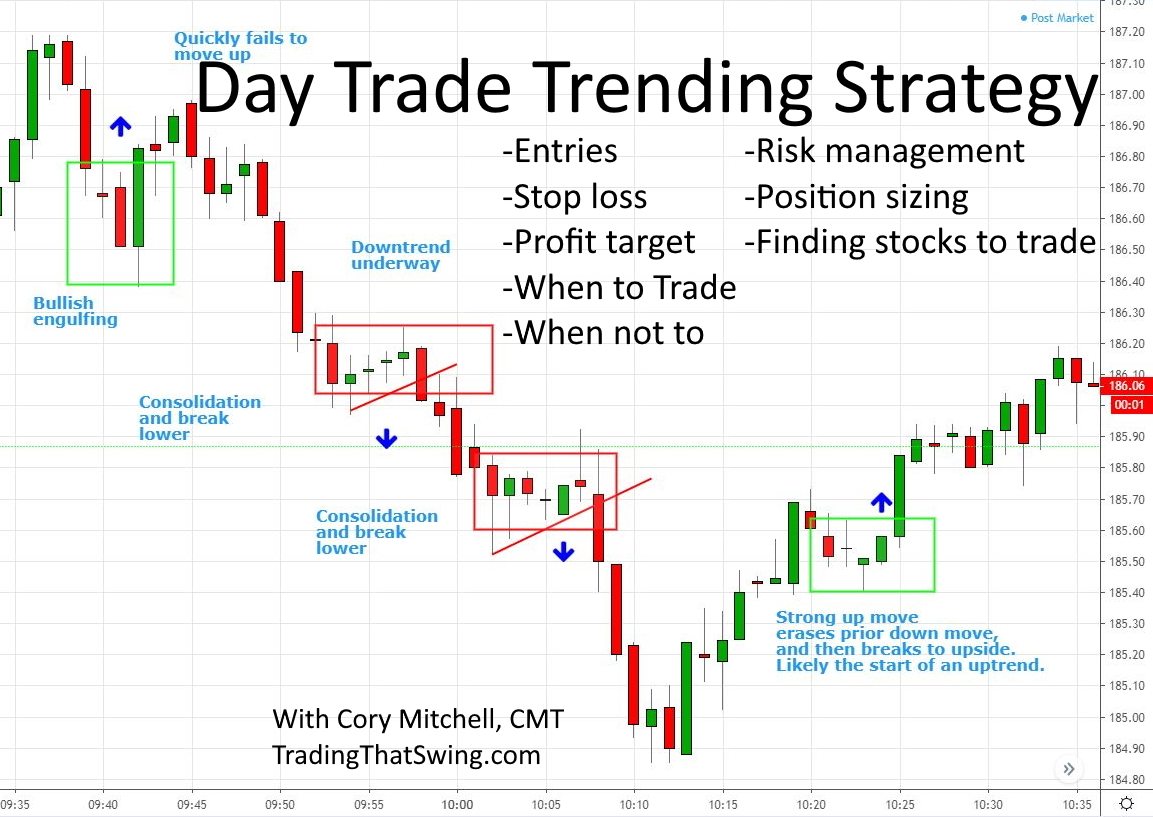
Day traders typically commence their trading day by meticulously scanning markets for high-probability opportunities. They might look for stocks that are gapping up or down due to breaking news, those exhibiting strong momentum fueled by high trading volume, or those displaying clear technical patterns such as established support and resistance levels. Once a potential trade is identified, they execute a buy or sell order with the expectation of closing that position for a small, incremental profit within minutes or hours. For instance, a day trader might acquire 1,000 shares of a particular stock at $50, anticipate a rise to $50.25 based on robust technical indicators, and then strategically sell all shares to lock in a $250 profit (before commissions) shortly thereafter. Conversely, if the stock’s price moves adversely against their prediction, a disciplined day trader will promptly execute a pre-defined stop-loss order, selling the shares to strictly limit potential losses. This rapid turnover and continuous recycling of capital are defining characteristics of day trading, where cumulative small gains are intended to lead to substantial overall profits over time.
Key Characteristics and Market Volatility
The defining characteristics that distinguish day trading include a high frequency of transactions, a heavy reliance on technical analysis, and the absolute avoidance of holding positions overnight. Day traders frequently utilize leverage, borrowing money from their brokerage to control a larger position size than their available cash capital would otherwise permit. While leverage undeniably possesses the power to amplify profits significantly, it simultaneously magnifies potential losses to an equal or greater extent, rendering stringent risk management an absolutely paramount concern. Market volatility, which can be instigated by critical economic data releases, specific company news, geopolitical events, or even broad market sentiment shifts, is the essential lifeblood of day trading. Without sufficient price movement and fluctuation, there are inherently fewer opportunities to profit from short-term swings. Day traders thrive in dynamic, active markets, constantly monitoring real-time news feeds, economic calendars, and Level 2 market data to gain a crucial informational edge. They meticulously analyze charts depicting price action across very short timeframes, such as one-minute or five-minute candlesticks, to precisely pinpoint optimal entry and exit points.
Essential Tools and Strategies for Day Traders
Consistent success in day trading hinges on a sophisticated amalgamation of advanced technological tools, robustly tested strategies, and an unshakeable, disciplined mindset. Without these critical elements meticulously integrated, the statistical odds are heavily stacked against the individual trader.
Technology and Platforms
Modern day trading is fundamentally intertwined with cutting-edge technology. Traders are reliant on ultra-high-speed internet connections, powerful multi-monitor computer setups, and sophisticated trading platforms. These platforms are indispensable, providing real-time streaming market data, highly customizable charting tools, and critically, lightning-fast order execution capabilities. Direct Market Access (DMA) brokers are frequently preferred as they offer superior speed and efficiency by routing orders directly to exchanges, thereby minimizing latency. Beyond the core trading platform itself, day traders extensively utilize market scanners to efficiently identify potential trades based on predefined, rigorous criteria; real-time news feeds for immediate access to breaking information; and advanced charting software equipped with a plethora of indicators (e.g., Moving Averages, Relative Strength Index (RSI), Moving Average Convergence Divergence (MACD), Volume Profile) to thoroughly analyze price action and formulate predictive insights into future movements. Access to robust, reliable, and high-performance technology is not merely a luxury but an absolute, fundamental necessity for competitive day trading.
Risk Management Principles
Effective risk management is arguably the single most critical component determining consistent profitability and long-term survival in day trading. Given the leveraged nature and rapid-fire pace of intraday trading, even a few poorly managed trades can swiftly decimate a trading account. Key principles include:
- Defining Risk Per Trade: Never risk more than a very small, predefined percentage (e.g., 0.5% to 2%) of one’s total trading capital on any single trade.
- Setting Stop-Loss Orders: Automatically selling a security when its price reaches a predetermined level to strictly limit potential losses. This is a non-negotiable directive for all serious day traders.
- Position Sizing: Meticulously calculating the appropriate number of shares to buy or sell based on the predefined risk per trade and the precise stop-loss level.
- Profit Targets: Establishing a clear, pre-planned exit strategy for profitable trades, often employing dynamic trailing stops or fixed price targets to lock in gains.
- Daily Loss Limits: Instituting a maximum allowable loss for the entire trading day, after which all trading ceases, irrespective of any perceived future opportunities.
- Understanding Drawdowns: Acknowledging that periods of losing streaks are an inevitable part of trading and possessing a well-defined strategy to manage capital and emotions during these challenging periods.

Common Day Trading Strategies
Day traders employ a diverse array of strategies, often carefully tailored to specific market conditions or their individual trading styles. Some of the most popular and widely adopted approaches include:
- Scalping: This aggressive strategy involves executing numerous trades throughout the trading day, frequently holding positions for only a few seconds to several minutes, with the aim of profiting from minuscule price changes (e.g., just a few cents per share). Scalpers rely heavily on Level 2 data and granular order flow analysis.
- Momentum Trading: Identifying stocks that are exhibiting strong directional movement (either upward or downward) propelled by high trading volume or recent breaking news. Traders aim to join these trends, riding the momentum for a short period before exiting.
- Reversal Trading: Attempting to precisely identify when an established trend is about to reverse its direction. This is inherently a higher-risk strategy that demands exceptionally precise timing and strong confirmation signals.
- News Trading: Reacting with extreme speed and precision to economic announcements, company earnings reports, or other significant news events that are highly likely to induce sharp and immediate price movements.
The Risks and Rewards of Day Trading
Day trading presents a unique and compelling blend of exhilarating potential for rapid profit and daunting, substantial risks. A realistic and unvarnished understanding of both facets is absolutely essential for anyone contemplating this field.
Potential for High Returns
The magnetic allure of day trading primarily stems from its inherent potential for significant, rapid returns on capital. Successful, consistently profitable day traders can generate substantial income streams, often exceeding what traditional employment avenues offer. The ability to systematically compound small, incremental gains repeatedly throughout the day or week can, theoretically, lead to impressive exponential growth in trading capital over time. Unlike long-term investing where capital might be tied up for extended periods, day trading offers immediate liquidity and the constant, recurring opportunity to redeploy capital. This high earning potential, coupled with the appealing perception of being one’s own boss and the freedom to work from virtually anywhere, attracts countless individuals to this dynamic field.
Significant Risks Involved
However, the landscape of day trading is inherently fraught with substantial risks. The stark reality is that the vast majority of aspiring day traders fail, often losing a significant portion, if not all, of their initial trading capital. Key risks include:
- Capital Loss: The most overt and immediate risk is the potential for losing money. Market movements are fundamentally unpredictable, and even the most sophisticated analyses can prove incorrect. Without strictly adhered-to risk management protocols, losses can escalate rapidly and disproportionately.
- Leverage Risk: While leverage offers the enticing possibility of amplifying gains, it equally and proportionally amplifies losses. Even a small, adverse price movement can swiftly wipe out a substantial portion of a trading account when positions are heavily leveraged.
- Emotional Stress: The unrelenting pressure of quick decision-making, the insidious fear of missing out (FOMO), and the profound frustration associated with losses can exert an immense psychological toll, often leading to impulsive, irrational, and ultimately detrimental trading decisions.
- Transaction Costs: The very high frequency of trading characteristic of day trading incurs significant cumulative commissions, fees, and other transaction costs, which can substantially erode potential profits, particularly for scalpers.
- Market Manipulation: Smaller, less liquid stocks can sometimes be susceptible to “pump-and-dump” schemes or other forms of illicit market manipulation, posing significant risks to unsuspecting individual traders.
- Pattern Day Trader Rule: In the United States, traders who execute four or more day trades within any five-business-day period in a margin account are officially designated as “Pattern Day Traders” and are legally mandated to maintain a minimum equity of $25,000 in their trading account. Falling below this crucial threshold can severely restrict trading activity, presenting a significant impediment for undercapitalized traders.
Psychological Demands
Beyond the purely financial risks, day trading places immense psychological demands on individuals. Unwavering discipline, profound patience, robust emotional control, and the critical ability to stoically accept losses are absolutely paramount. Fear and greed are incredibly powerful human emotions that can severely cloud judgment, leading to catastrophic execution errors. Successful day traders meticulously cultivate a detached, analytical mindset, treating trading as a rigorous business with precisely defined rules and processes rather than an emotional gamble. They possess the capacity to learn constructively from their mistakes, adapt swiftly to ever-changing market conditions, and maintain an unwavering commitment to their meticulously crafted trading plan.
Is Day Trading Right for You?
Deciding whether day trading is a suitable and sustainable endeavor necessitates a brutally honest self-assessment of one’s financial standing, personality traits, and the depth of their commitment. It is crucial to understand that day trading is unequivocally not a “get-rich-quick” scheme, but rather an exceptionally demanding and rigorous profession.
Required Knowledge and Skills
To achieve sustained success, a day trader requires an extensive and nuanced understanding of market mechanics, a mastery of technical analysis, and at least a contextual grasp of fundamental drivers of stock prices (even when primarily trading technically, understanding the broader context is invaluable). They must be proficient in meticulously reading charts, accurately interpreting a wide array of indicators, and deeply understanding order flow dynamics. Strong analytical skills are absolutely crucial for swiftly dissecting vast amounts of market data under pressure. Beyond theoretical knowledge, critical practical skills include rapid decision-making under intense pressure, exceptional and sustained focus, the iron discipline to rigidly adhere to a meticulously crafted trading plan, and profound emotional resilience to gracefully handle both wins and losses without deviating from their predefined strategy. Furthermore, a strong intrinsic capacity for continuous learning and swift adaptation to the perpetually evolving market conditions is not merely advantageous but utterly indispensable.
Capital Requirements
Day trading is inherently capital intensive. While some nascent platforms may permit trading with relatively small initial amounts, genuinely effective and sustainable day trading, particularly in regulated markets like the U.S. with its stringent Pattern Day Trader rule, typically necessitates a significant starting capital of at least $25,000 for margin accounts. This required capital should be unequivocally considered as “risk capital”—money that one can genuinely afford to lose without experiencing any detrimental impact on their overall financial stability or quality of life. Attempting to day trade with insufficient capital invariably leads to undue psychological stress, compromises sound decision-making, and critically, an inability to properly manage risk and position size effectively, ultimately almost guaranteeing the failure of the entire venture.
Time Commitment and Discipline
Day trading demands an extraordinarily substantial and unwavering time commitment. It is categorically not a casual hobby or a fleeting pastime; it must be approached as a full-time or at minimum, a very serious part-time job. Traders must dedicate numerous hours each and every trading day to meticulous market analysis, constant monitoring of open positions, and precise execution of trades. The entire trading day, spanning from diligent pre-market analysis to thorough post-market review, necessitates deep and continuous engagement. Furthermore, it requires an exceptional, unwavering level of discipline. This encompasses consistently adhering to a meticulously developed trading plan, rigorously respecting all stop-loss orders without hesitation, steadfastly resisting impulsive and emotional trades, and diligently avoiding overtrading. Without this rigorous, self-imposed discipline, even the most promising and analytically sound strategies are destined to fail.
In conclusion, day trading stocks is a dynamic, intellectually stimulating, and profoundly challenging financial pursuit offering the compelling potential for substantial short-term gains but accompanied by equally significant and ever-present risks. It demands a unique and formidable combination of deep financial knowledge, advanced technological proficiency, robust emotional fortitude, and exceptionally disciplined execution. It is most suitable for individuals who are well-capitalized, possess a high intrinsic tolerance for risk, exhibit strong analytical and emotional control skills, and are genuinely prepared to dedicate substantial time, effort, and continuous learning to mastering this intricate craft. For those embarking on this demanding journey, a thorough and ongoing education, extensive consistent practice with simulated trading environments, and an unwavering, uncompromising commitment to stringent risk management are not merely advisable suggestions but absolutely essential prerequisites for long-term survival, sustainability, and eventual success.
aViewFromTheCave is a participant in the Amazon Services LLC Associates Program, an affiliate advertising program designed to provide a means for sites to earn advertising fees by advertising and linking to Amazon.com. Amazon, the Amazon logo, AmazonSupply, and the AmazonSupply logo are trademarks of Amazon.com, Inc. or its affiliates. As an Amazon Associate we earn affiliate commissions from qualifying purchases.