
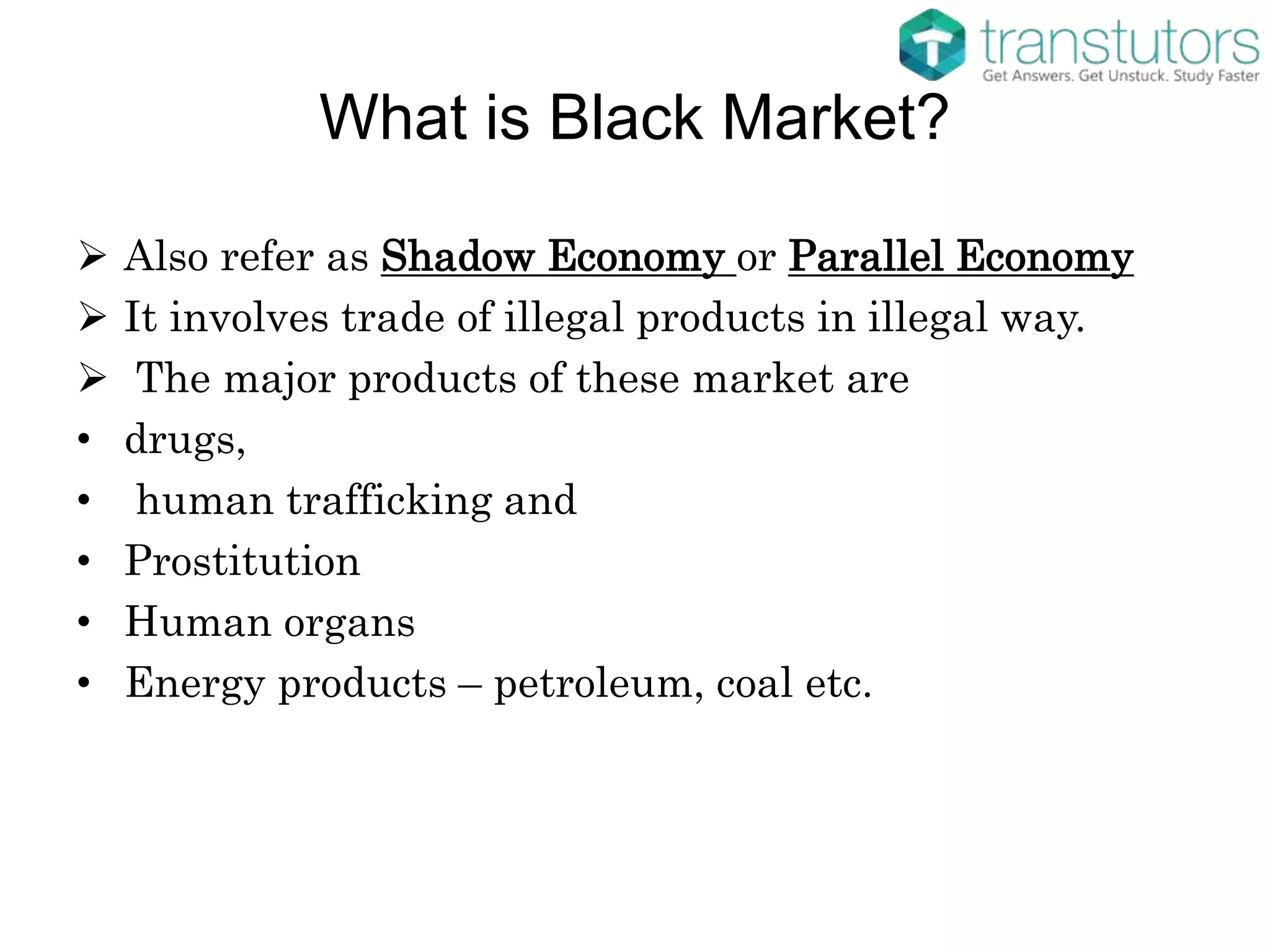
A black market, often referred to as an underground economy or shadow economy, constitutes a clandestine network of transactions that occurs outside the purview of legal and governmental oversight. It is characterized by the trade of goods, services, and financial instruments that are either explicitly illegal in nature (e.g., narcotics, weapons) or are traded illegally (e.g., un-taxed goods, smuggled items) to avoid taxes, regulations, or prohibitions. Fundamentally, a black market is an economic system operating entirely beyond the formal financial frameworks established by a nation-state, driven by demand for forbidden or restricted items and the pursuit of illicit profits.

The Financial Ecosystem of Illicit Trade
Understanding a black market requires delving into its unique financial ecosystem, which deviates significantly from legitimate commercial operations. This ecosystem is engineered to facilitate anonymity, bypass taxation, and evade regulatory scrutiny, all while moving significant sums of money.
Defining the Black Market’s Economic Scope
At its core, the black market represents an economic activity conducted without state sanction, meaning it operates outside the legal frameworks designed to regulate commerce, protect consumers, and collect revenue. This bypass has profound financial implications. Participants avoid sales taxes, import duties, excise taxes, and income taxes on their earnings, enabling them to offer goods and services at prices that would be impossible for legitimate businesses. This inherent cost advantage can lure buyers and sellers, further fueling the shadow economy. The scope can range from street-level peddling to sophisticated international networks dealing in billions of dollars. Key drivers include scarcity due to prohibition (e.g., drugs, banned substances), high taxation on legitimate goods (e.g., cigarettes, alcohol), price controls that create artificial shortages, and the demand for counterfeit or illicit financial products.
Goods and Services in the Shadows
The inventory of a black market is diverse, but from a financial perspective, certain categories stand out. Counterfeit currency is a direct assault on a nation’s monetary integrity, impacting its purchasing power and trust in its financial system. Illegal financial instruments, such as forged securities, fraudulent credit cards, or pyramid schemes operating under the guise of legitimate investments, are designed to siphon funds from unsuspecting victims. The trade in un-taxed or smuggled goods, ranging from luxury items to everyday commodities, deprives governments of vital revenue and creates unfair competition for businesses operating within legal parameters. Furthermore, stolen financial data, including credit card numbers, bank account details, and personal identification information, is a highly valuable commodity, often used for identity theft and other financial fraud, costing individuals and institutions billions annually.
Funding and Transaction Methods
The lifeblood of any market is its transaction system, and black markets employ methods designed to obscure financial trails. Physical cash has historically been the preferred medium due to its untraceable nature, facilitating large, anonymous transactions. However, with advancements in financial technology and increased surveillance, more sophisticated methods have emerged. Illicit money transfers often involve complex networks of shell companies, false invoices, and informal value transfer systems (like hawala), making it incredibly challenging for authorities to follow the money. Cryptocurrencies, particularly those emphasizing anonymity, have become increasingly popular due to their pseudo-anonymous nature and the ability to transfer value across borders quickly and without traditional banking intermediaries. While legitimate uses for cryptocurrencies abound, their decentralized nature makes them attractive for dark market transactions, despite efforts by law enforcement to trace such flows.
Economic Impact and Consequences
The financial repercussions of black market activities extend far beyond the direct transactions, reverberating through legitimate economies, posing significant risks to businesses, and imperiling personal finances.
Undermining Legitimate Economies
One of the most significant impacts of the black market is its corrosive effect on the formal economy. Governments lose substantial tax revenue that would otherwise fund public services, infrastructure, and social programs. This deficit can lead to increased taxes for law-abiding citizens or a reduction in essential services. Black markets foster unfair competition by allowing illicit operators to sell goods and services at lower prices, as they bear none of the costs associated with regulatory compliance, labor laws, and taxation. This can drive legitimate businesses out of market, reduce employment, and discourage investment. Furthermore, the prevalence of counterfeit goods and substandard products erodes consumer trust in brands and the overall quality of goods available in the market, making consumers wary of even legitimate purchases. Price distortions occur when black markets create artificial scarcity or surpluses, preventing prices from reflecting true supply and demand dynamics, which can lead to inefficient resource allocation.
Risks to Business Finance
Legitimate businesses face a myriad of financial threats from black markets. The proliferation of counterfeit goods directly impacts brand value, reputation, and sales. For industries like luxury goods, pharmaceuticals, and electronics, counterfeiting can lead to massive revenue losses, tarnishing carefully built brands and undermining consumer confidence. Businesses are also forced to increase their security costs – investing in anti-counterfeiting measures, supply chain integrity, and digital security – to combat the illicit trade. Legal liabilities can arise if their products are counterfeited and cause harm, or if their supply chain is inadvertently compromised by black market activities. Moreover, engaging with the black market, even unknowingly, can lead to severe penalties, fines, and reputational damage that can be devastating for a company’s financial standing and future viability.
Personal Financial Dangers

For individuals, the black market presents an array of personal financial dangers. Fraud and scams are rampant, with individuals lured into purchasing counterfeit goods that are worthless or unsafe, or participating in fraudulent investment schemes. Stolen identities and financial data, as mentioned, are primary commodities on the black market, leading to personal financial ruin, compromised bank accounts, and enduring credit issues. Purchasing illegal or unregulated products, such as unapproved medications or uncertified electronics, carries significant health and safety risks, potentially leading to medical expenses or property damage not covered by insurance. Furthermore, individuals who engage in black market activities, even as buyers, expose themselves to legal consequences, including fines, imprisonment, and the forfeiture of assets, all of which can have long-lasting negative impacts on their personal finances and future opportunities.
The Interplay with Global Finance and Regulation
Black markets are not isolated phenomena; their operations are deeply intertwined with global financial systems, presenting profound challenges for international regulation and national economic stability.
Money Laundering and Financial Crime
The vast profits generated by black market activities must eventually be integrated into the legitimate financial system to be usable by criminals. This process is known as money laundering. It involves a sophisticated series of transactions designed to obscure the illicit origin of funds, making them appear legitimate. Black markets act as primary generators of these “dirty” funds, necessitating complex money laundering operations that impact global financial institutions. Banks, investment firms, and other financial intermediaries are inadvertently or, in some cases, knowingly used to facilitate these processes, exposing them to significant legal and reputational risks. The sheer scale of money laundering tied to black market profits poses a systemic threat to the integrity of the global financial system.
Regulatory Challenges and Anti-Money Laundering (AML) Efforts
Combating the financial aspects of black markets is a monumental task for regulators worldwide. Organizations like the Financial Action Task Force (FATF) and national bodies such as FinCEN in the United States set international standards for anti-money laundering (AML) and counter-terrorist financing (CTF) efforts. These efforts require financial institutions to implement robust “Know Your Customer” (KYC) protocols, monitor suspicious transactions, and report unusual financial activity. However, the anonymous nature of many black market transactions, the use of intricate layering techniques in money laundering, and the borderless nature of digital currencies present persistent challenges. International cooperation is crucial but often hindered by varying legal frameworks, political priorities, and investigative capacities across jurisdictions.
Sovereign Risk and Economic Stability
Large-scale black market operations can have far-reaching implications for a nation’s sovereign risk and overall economic stability. A significant shadow economy reduces a government’s tax base, potentially leading to budget deficits, increased national debt, and a reduced capacity to invest in public goods. This can lead to a downgrade in a nation’s credit rating, increasing its borrowing costs and making it less attractive to foreign investors. Corruption, often fueled by black market profits, can erode institutional trust, weaken governance, and divert resources from productive economic activities. In extreme cases, pervasive black market activity can undermine the rule of law, destabilize political systems, and significantly impede a country’s long-term economic development and integration into the global economy.
Navigating the Shadows: Risks and Precautions for Individuals and Businesses
Protecting oneself and one’s financial interests from the pervasive influence of black markets requires vigilance, due diligence, and adherence to ethical and legal principles.
Identifying and Avoiding Illicit Schemes
For individuals, a critical precaution is to cultivate a healthy skepticism. “Too good to be true” deals, especially those involving unusually high returns for minimal risk, are classic red flags associated with black market-adjacent investment schemes or outright financial fraud. Requests for unusual payment methods—such as cryptocurrency from unfamiliar sources, wire transfers to offshore accounts, or prepaid gift cards—should immediately raise suspicion. For businesses, thorough due diligence on all partners, suppliers, and customers is paramount. Verifying the legitimacy of a business, understanding its financial flows, and scrutinizing the origins of goods are essential steps to avoid inadvertently becoming complicit in or victimized by black market operations.
Protecting Personal and Business Finances
Robust cybersecurity measures are fundamental. For individuals, this includes strong, unique passwords, two-factor authentication, and vigilance against phishing attempts that could compromise financial accounts or personal data. Regularly monitoring bank and credit card statements for unauthorized transactions is also crucial. Businesses must invest in comprehensive digital security infrastructure, including data encryption, intrusion detection systems, and employee training on cyber hygiene. Implementing secure transaction practices, such as encrypted payment gateways and verified payment processors, helps mitigate risks. Furthermore, businesses in vulnerable sectors should be proactive in identifying and tracking counterfeit versions of their products and educating consumers on how to distinguish genuine articles.
The Ethical and Legal Imperatives
Beyond direct financial impact, there are profound ethical and legal imperatives to consider. Engaging with black markets, even as a consumer, contributes to a global economy that funds criminal enterprises, exploitation, and even terrorism. It undermines labor standards, environmental protections, and human rights. Understanding the broader societal costs—including the erosion of public services due to tax evasion, the harm caused by dangerous counterfeit products, and the systemic damage to legitimate businesses—highlights the moral responsibility to avoid these illicit channels. Legally, participating in black market activities, whether buying or selling, carries severe penalties, including fines, asset forfeiture, and imprisonment, which can decimate an individual’s or business’s financial future. Upholding ethical business practices and operating strictly within legal frameworks is not just a compliance issue; it is a foundational pillar of sustainable financial well-being and a responsible contribution to global economic integrity.
aViewFromTheCave is a participant in the Amazon Services LLC Associates Program, an affiliate advertising program designed to provide a means for sites to earn advertising fees by advertising and linking to Amazon.com. Amazon, the Amazon logo, AmazonSupply, and the AmazonSupply logo are trademarks of Amazon.com, Inc. or its affiliates. As an Amazon Associate we earn affiliate commissions from qualifying purchases.